
When you run a learning program—whether it’s for employees, students, or customers—you need to know if it’s actually working. That’s where LP position management, the systematic process of monitoring, evaluating, and improving learning initiatives to align with business goals. Also known as learning program management, it’s not about how many people completed a course—it’s about whether their performance improved, errors dropped, or sales went up. Most companies track completion rates and satisfaction scores, but those are vanity metrics. Real LP position management digs deeper: it connects training to outcomes.
This isn’t just for big corporations. Even small teams using platforms like LearnWorlds or Teachable need to know if their courses are driving results. Performance benchmarks, clear, measurable targets tied to job skills or business KPIs turn vague goals like "improve engagement" into concrete ones like "reduce onboarding time by 30%" or "increase certification pass rates by 25%". And to build those benchmarks, you need data—clean, reliable data from your LMS analytics, the system that collects user behavior, quiz scores, time spent, and completion patterns. Without it, you’re guessing.
LP position management also means knowing when to stop spending money on training that doesn’t move the needle. A lot of teams keep running the same modules year after year because they’re easy to deliver, not because they work. But the best programs use training evaluation, the ongoing process of measuring learning impact through surveys, skill assessments, and performance data to cut what’s weak and double down on what’s strong. Think of it like a dashboard for your learning team—no more flying blind.
You’ll find posts here that show exactly how to build these systems. Some break down how to create performance benchmarks that employers actually trust. Others walk through setting up LMS analytics to track student progress without invading privacy. There are guides on using webhooks and APIs to connect your training data to HR systems, and even how behavioral nudges in your LMS can boost completion rates by 40% or more. You’ll see real examples from UK colleges and tech bootcamps that proved their training led to job placements—not just certificates.
There’s no magic formula. But if you’re serious about making your learning programs count, you need LP position management. It turns training from a cost center into a growth engine. And below, you’ll find the tools, methods, and case studies that show how to do it—without overcomplicating things.
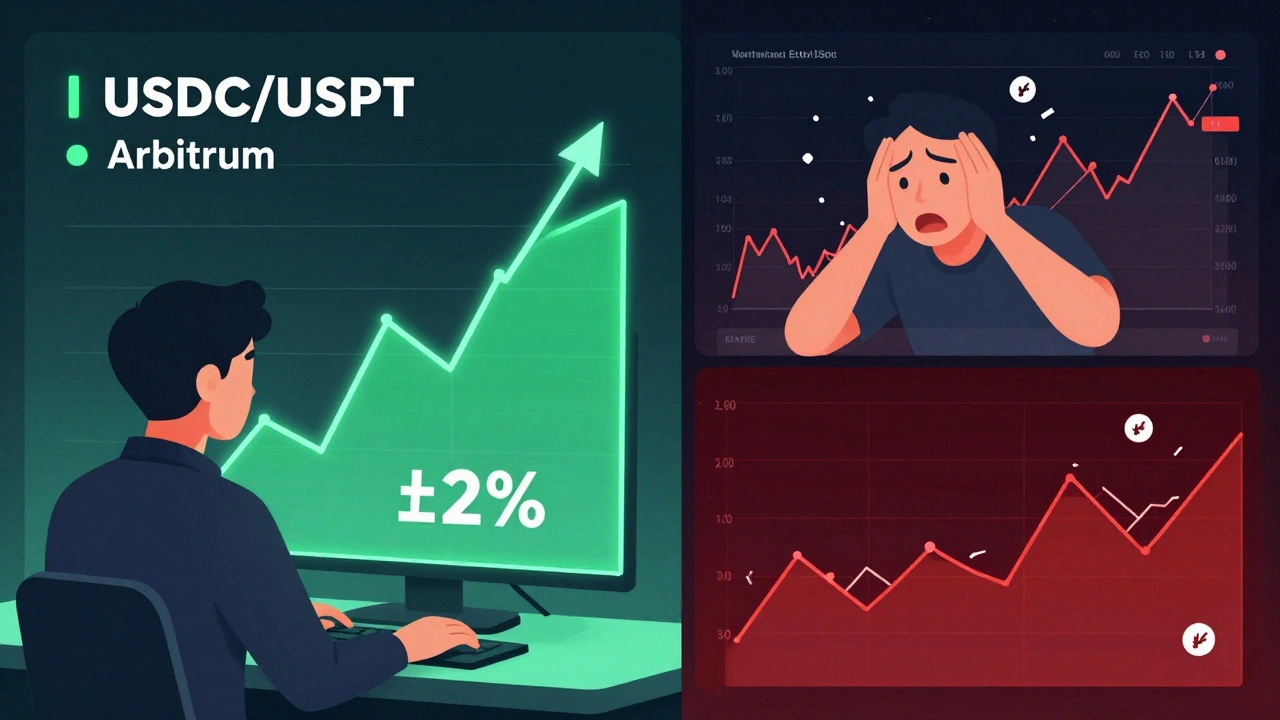
Learn how to manage your DeFi liquidity positions by rebalancing ranges and minimizing fees to maximize returns. Avoid common mistakes and use the right tools for better yields.
© 2026. All rights reserved.