
When you hear about power usage Bitcoin miner, the amount of electricity consumed by hardware used to validate Bitcoin transactions and add them to the blockchain. It’s not just a tech detail—it’s one of the biggest debates around cryptocurrency today. A single modern Bitcoin miner can pull as much power as a small household. Some models use over 3,000 watts running nonstop. That’s like leaving 30 LED bulbs on 24/7—except this machine is working nonstop to secure the world’s largest blockchain.
Why does this matter? Because Bitcoin energy consumption, the total electricity used by all Bitcoin mining operations globally rivals the annual usage of entire countries. In 2023, the Bitcoin network consumed more power than Argentina or the Netherlands. It’s not because miners are wasteful—it’s because the system is designed that way. Proof of Work energy, the consensus mechanism that requires miners to solve complex math problems to earn Bitcoin is intentionally energy-heavy. It’s the price of security. No central authority controls Bitcoin. Instead, thousands of machines compete to verify transactions, and the most powerful ones win. That competition drives up demand for electricity.
But here’s the thing: not all mining is the same. Some miners run on surplus hydroelectric power in upstate New York. Others use flared gas from oil fields in Texas. A few even tap into wind farms in Kazakhstan. The Bitcoin mining costs, the total financial and environmental expense of running mining hardware, including electricity, cooling, and hardware depreciation vary wildly by location. In places with cheap, clean power, mining can be surprisingly sustainable. In places reliant on coal, it’s a different story.
And it’s not just about the numbers. It’s about trade-offs. If you’re thinking about running your own miner, ask yourself: where’s your electricity coming from? What’s your local grid’s carbon intensity? Are you paying $0.05 or $0.20 per kilowatt-hour? That difference can mean profit—or loss. Most home miners lose money because they underestimate how much juice their rig needs and overestimate how easy it is to get cheap power.
The posts below cut through the noise. You’ll find real breakdowns of miner models, actual electricity bills from operators, and how energy prices in the UK and beyond are reshaping who can still mine profitably. You’ll see how miners are adapting—switching to renewables, using waste heat, or even shutting down during peak demand. This isn’t theory. It’s what’s happening right now.
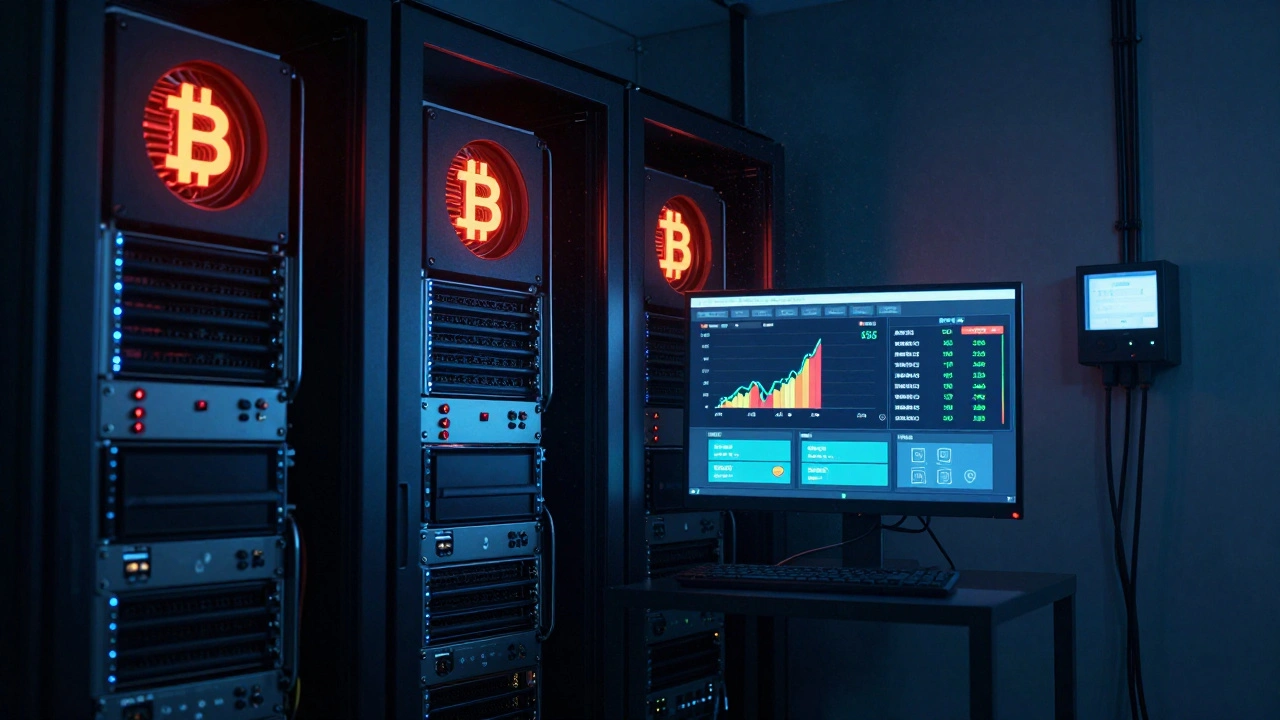
Learn how to track Bitcoin miner hash rate, temperature, and power usage with the best tools in 2025. Avoid hardware failure and boost profits with real-time monitoring.
© 2026. All rights reserved.