
When you provide liquidity on Uniswap V3, a decentralized exchange protocol that lets users trade crypto directly from their wallets using smart contracts. It's the third version of Uniswap, and unlike earlier versions, it lets you choose exactly where your funds work—this is called concentrated liquidity. This change turns liquidity provision from a passive, risky bet into an active strategy where fees become your main source of income, not just price swings.
Before Uniswap V3, liquidity providers (LPs) had to spread their funds across the entire price range of a token pair. That meant most of their money sat idle, earning little while being exposed to impermanent loss, the risk of losing value when the price of two tokens in a pool moves apart. Uniswap V3 fixes this by letting you set custom price ranges. If you think ETH will stay between $3,000 and $3,500, you put all your ETH and USDC in that range. When trades happen inside your range, you earn fees—every single time. Outside your range? You earn nothing, but you also avoid the worst of impermanent loss. This is why AMM pools, automated market makers that use algorithms instead of order books to set prices in V3 are now the most efficient way to earn in DeFi.
It’s not magic. It’s math. If you pick a narrow range and the price stays inside it, your fee earnings can be 10x higher than on V2. But if the price moves outside, you stop earning until it comes back. That’s why smart LPs watch price action, use tools to track volatility, and avoid putting money in ranges that are too tight or too wide. Some even layer in DeFi liquidity, the act of locking crypto into protocols to earn rewards or trading fees across multiple pools to hedge risk. The goal isn’t just to hold tokens—it’s to make your capital work harder by understanding where trading happens, not just guessing where prices might go.
Uniswap V3 fees don’t replace the need to understand market behavior—they make it essential. You’re no longer a passive investor. You’re a market maker. And the people who win are those who treat liquidity like a business: track volume, adjust ranges, and use fee income to offset losses. Below, you’ll find real guides on how to use this system, how to avoid common traps, and how to turn what looks like risk into a repeatable way to earn in crypto.
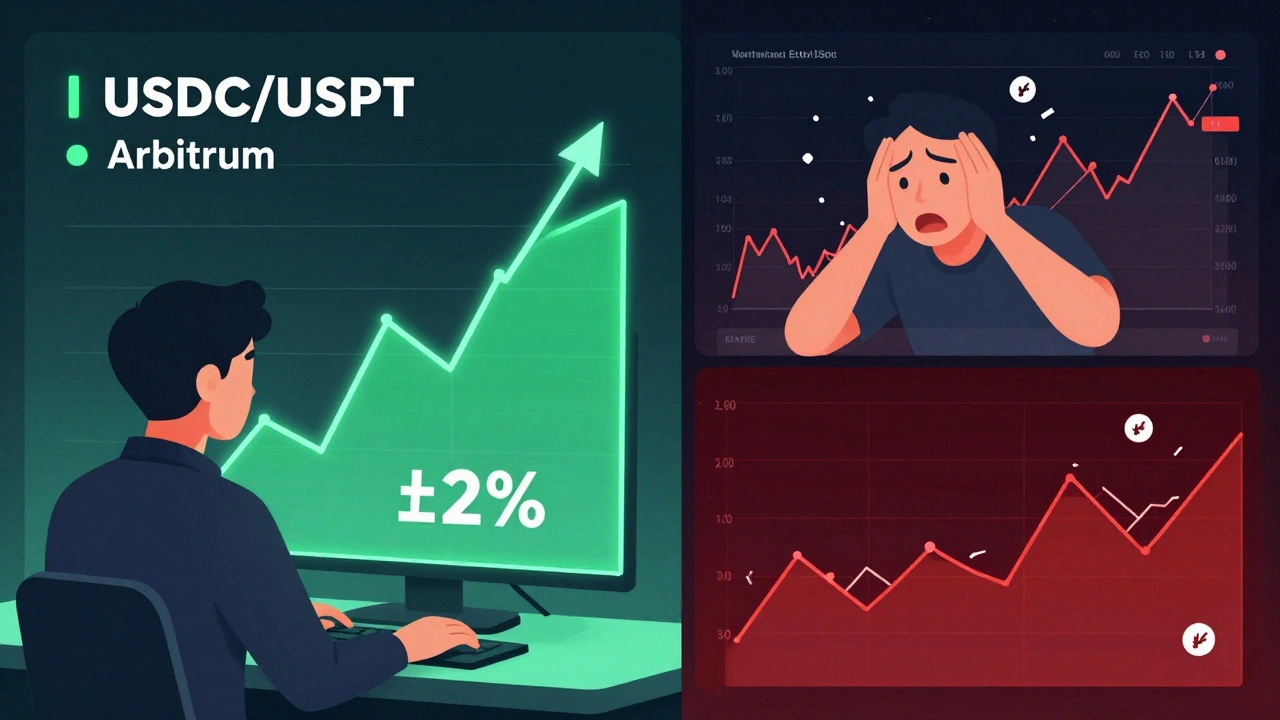
Learn how to manage your DeFi liquidity positions by rebalancing ranges and minimizing fees to maximize returns. Avoid common mistakes and use the right tools for better yields.
© 2026. All rights reserved.