
When you think about workflow automation, the use of technology to handle repetitive business tasks without human intervention. Also known as process automation, it’s not just about saving time—it’s about removing the friction that slows down small teams and growing companies. If your team is still copying data between spreadsheets, sending manual reminders, or approving requests via email chains, you’re wasting hours every week. Workflow automation turns those messy, manual steps into clean, reliable systems that run on their own.
It doesn’t require coding skills or big budgets. Tools like CRM software, systems that manage customer interactions and sales pipelines already include automation features—think automatic follow-ups after a lead fills out a form. In training, LMS platforms, learning management systems that deliver and track online courses use automation to send course reminders, track progress, and unlock modules based on completion. These aren’t fancy extras—they’re the backbone of efficient operations. And when you link automation to operational workflows, the sequence of tasks that make up a business process, you stop guessing who did what and start seeing real results: fewer mistakes, faster onboarding, and teams focused on high-value work.
UK businesses are catching on. A survey of Midlands SMEs found that companies using even basic automation saw a 30% drop in administrative time within six months. That’s not theory—it’s what happens when you replace manual approvals with triggered alerts, or turn paper-based onboarding into a digital checklist. It’s also why accessibility and compliance matter. If your automated training materials aren’t readable by screen readers, or if customer data flows across borders without proper safeguards, automation can backfire fast. That’s why the posts here cover more than just tools—they show you how to build automation that’s smart, legal, and actually used by your team.
Below, you’ll find real examples from UK businesses: how to turn course knowledge into step-by-step guides that stick, how to make sure your digital documents work for everyone, and how to use behavioral nudges to keep learners engaged without nagging. You’ll see how automation fits into certifications, training impact, and even startup visas—because when your systems run smoothly, you’ve got more room to grow.
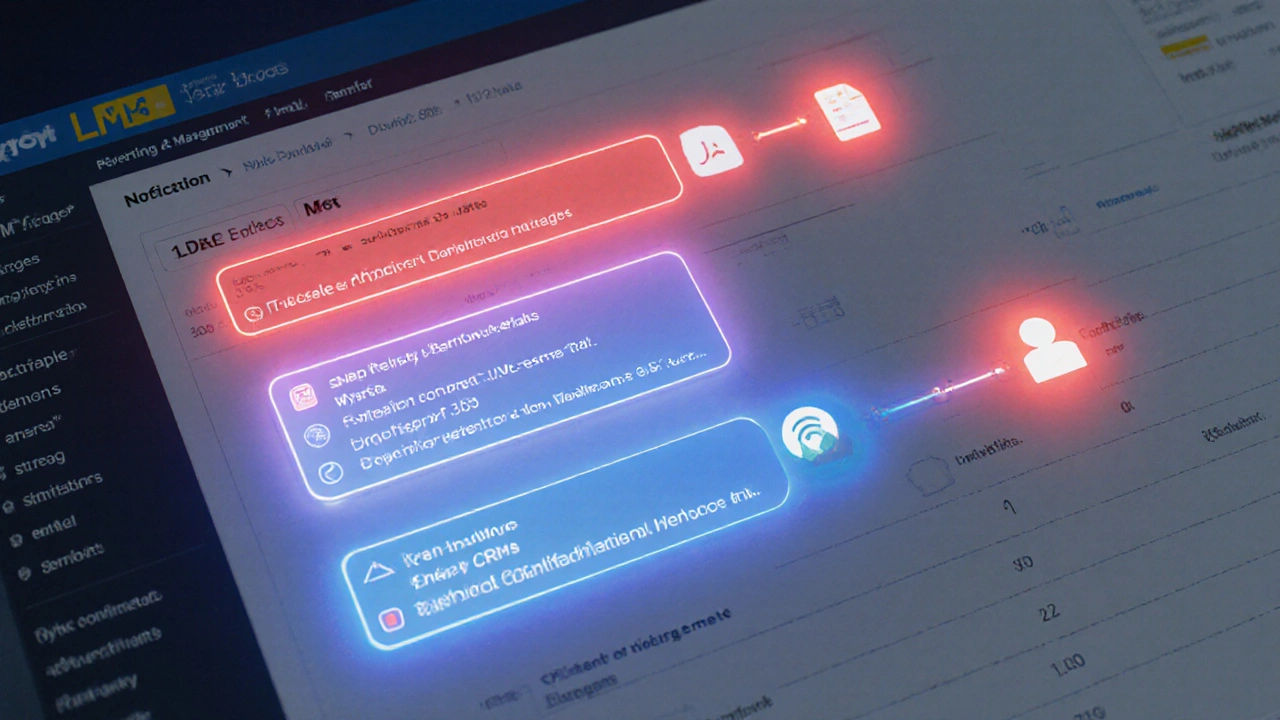
Learn how to set up webhooks for your LMS to automate tasks like course enrollment, certificate delivery, and user syncs. Reduce manual work and eliminate errors with real-time system connections.
© 2026. All rights reserved.