
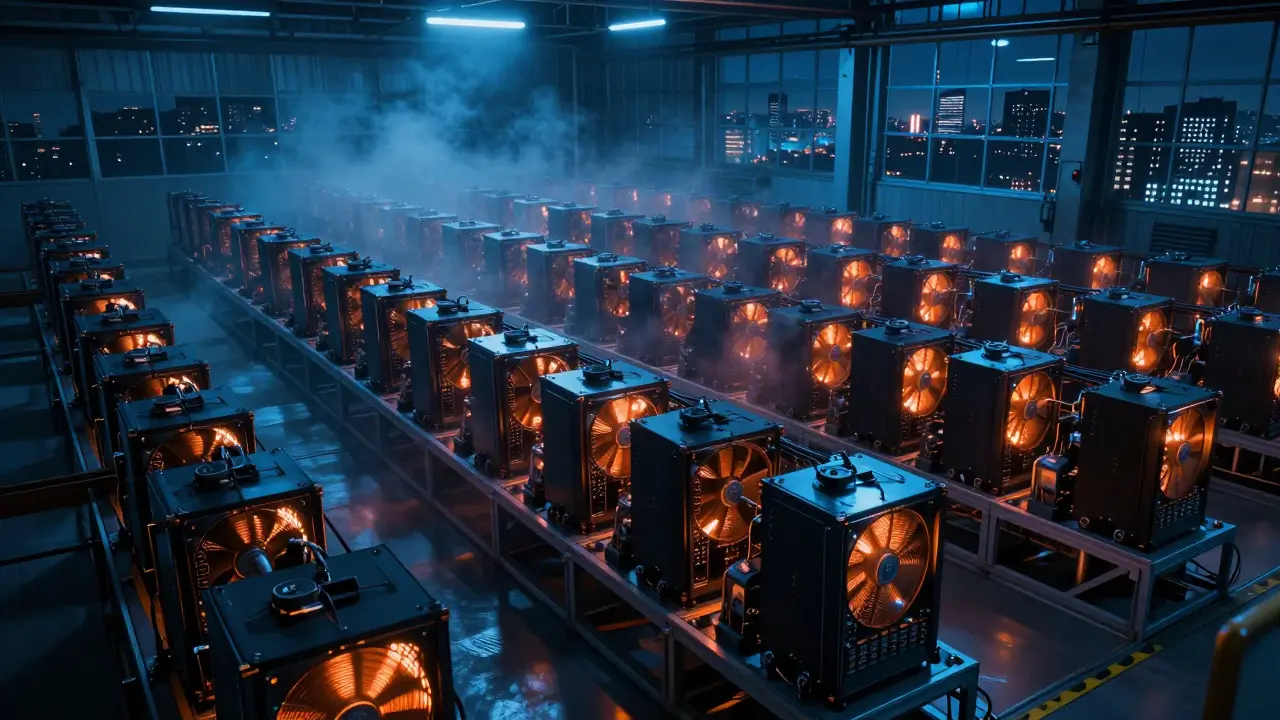
Imagine a network that uses as much electricity as the entire nation of Poland. That is not a hypothetical scenario; it is the daily reality for Bitcoin. Now imagine another major blockchain network that consumes less power than a few thousand homes. This stark contrast highlights one of the most critical debates in modern technology: how do different consensus mechanisms impact global energy consumption?
The answer lies in the fundamental difference between Proof-of-Work (PoW), which relies on brute-force computational power, and Proof-of-Stake (PoS), which selects validators based on economic stake. As we move through 2026, understanding these differences is no longer just an academic exercise. It is essential for investors, developers, and policymakers navigating a world increasingly focused on sustainability and regulatory compliance.
The High Cost of Security: Proof-of-Work Explained
To understand why some blockchains are so energy-intensive, you have to look at how they secure their networks. Proof-of-Work is the original consensus mechanism, introduced by Satoshi Nakamoto in the 2008 Bitcoin whitepaper. In this system, miners compete to solve complex cryptographic puzzles. The first miner to solve the puzzle gets to add the next block to the blockchain and receive a reward.
The problem is that this competition requires massive amounts of computing power. Miners use specialized hardware called ASICs (Application-Specific Integrated Circuits) that run 24/7, drawing hundreds or thousands of watts each. Because anyone can join the race, the difficulty adjusts automatically, leading to an arms race where more electricity equals more security.
- Bitcoin: Uses approximately 155-175 Terawatt-hours (TWh) per year. This is roughly 0.5% of global electricity generation.
- Litecoin: While smaller, it still operates on PoW, consuming significant energy relative to its transaction volume.
- Per-Transaction Impact: A single Bitcoin transaction can consume around 707 kilowatt-hours (kWh) of electricity. To put that in perspective, that is enough energy to power an average US home for about three weeks.
Critics argue that this energy expenditure is wasteful. Proponents counter that the energy cost is the price of true decentralization and security, anchoring the digital currency in physical reality. However, the environmental footprint remains a primary concern for regulators worldwide.
The Efficiency Revolution: Proof-of-Stake Dominance
In response to the energy concerns surrounding PoW, Proof-of-Stake emerged as a more sustainable alternative. Instead of competing with hardware, validators are chosen to create new blocks based on the number of coins they hold and are willing to "stake" as collateral. If they act maliciously, they lose their stake.
This shift eliminates the need for energy-intensive mining rigs. Validators can run on standard servers or even low-power devices like Raspberry Pis. The result is a dramatic reduction in energy usage without necessarily compromising security.
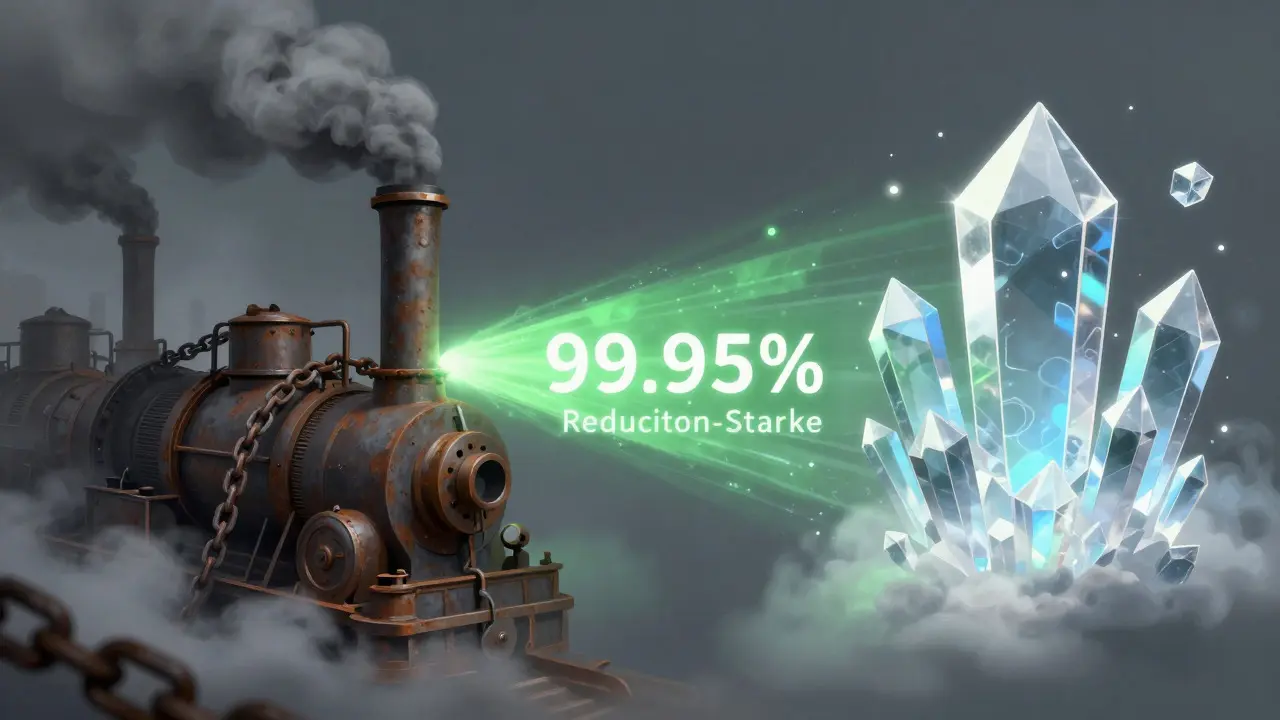
The most famous example is Ethereum. Before its transition known as "The Merge" in September 2022, Ethereum used PoW and consumed roughly 44-83 TWh per year. After switching to PoS, its energy consumption dropped by approximately 99.95%. Today, Ethereum’s annual energy use is estimated at just 0.0026-0.01 TWh, comparable to the power needs of a small town rather than a large country.
Comparing Major Networks: A Data-Driven Look
Not all Proof-of-Stake chains are created equal, but they all dwarf PoW systems in efficiency. Let’s look at how other major networks compare in 2026.
| Network | Consensus Type | Approx. Annual Energy Use | Energy Per Transaction |
|---|---|---|---|
| Bitcoin | PoW | 155-175 TWh | ~707 kWh |
| Ethereum (Post-Merge) | PoS | 0.0026-0.01 TWh | ~0.0015-35 Wh |
| Cardano | Ouroboros PoS | 0.7-6 GWh | ~0.014-0.8 kWh |
| Solana | Tower BFT PoS | 3.2-8.8 GWh | ~0.00051-0.00412 kWh |
| Algorand | Pure PoS | ~0.7 GWh | <0.001 kWh (mWh level) |
As the table shows, the gap is staggering. Solana and Algorand operate with energy footprints similar to large websites like Wikipedia. Solana’s energy per transaction is often cited as being less than the energy required for two Google searches. This efficiency allows these networks to handle high throughput-thousands of transactions per second-without straining the global power grid.
Beyond PoW and PoS: Other Consensus Models
While PoW and PoS dominate the conversation, other mechanisms offer unique trade-offs between energy, speed, and decentralization.
- Delegated Proof-of-Stake (DPoS): Used by networks like EOS, DPoS allows token holders to vote for delegates who validate transactions. This concentrates validation power in fewer nodes, reducing energy further but raising centralization concerns.
- Practical Byzantine Fault Tolerance (PBFT): Often used in enterprise blockchains like Hyperledger Fabric, PBFT relies on message passing among a fixed set of nodes. It is extremely energy-efficient but does not scale well to permissionless public networks due to communication overhead.
- Proof-of-History (PoH): A unique innovation by Solana, PoH creates a verifiable delay function that helps order events before consensus. It complements PoS to achieve high speed with low energy costs.
These alternatives show that there is no one-size-fits-all solution. Enterprise applications might prioritize privacy and finality over decentralization, opting for PBFT. Public networks aiming for mass adoption lean toward efficient PoS variants.

Regulatory Pressure and ESG Standards
In 2026, energy consumption is no longer just an environmental issue; it is a regulatory one. The European Union’s Markets in Crypto-Assets (MiCA) regulation requires issuers to disclose sustainability indicators. This has pushed networks like Cardano and Solana to publish detailed carbon footprint reports.
For instance, Cardano’s 2024 assessment calculated its annualized electricity consumption at roughly 704 MWh, with a carbon footprint of about 250 tonnes of CO₂e. This transparency helps institutional investors make informed decisions. Funds focusing on Environmental, Social, and Governance (ESG) criteria are increasingly favoring PoS assets because they align better with climate goals.
Conversely, PoW networks face growing scrutiny. Some countries have banned or restricted Bitcoin mining due to grid stress. Others have imposed taxes on energy-intensive operations. This regulatory divergence could fragment the global crypto market, making energy efficiency a key competitive advantage for long-term viability.
The Future of Blockchain Sustainability
Looking ahead, the trend is clear: energy efficiency will become the norm. Ethereum’s successful migration proved that a major network can switch consensus mechanisms without collapsing. This encourages other projects to consider similar transitions or build from scratch with green principles.
However, challenges remain. Critics of PoS argue that it leads to wealth concentration, as those with more tokens have more influence. They also point out that while PoS saves direct electricity, validators still run servers that consume power, and the broader ecosystem (exchanges, wallets, user devices) adds indirect energy costs.
Despite these nuances, the data is undeniable. PoS and related mechanisms reduce energy consumption by orders of magnitude compared to PoW. As blockchain technology integrates into finance, supply chain, and identity management, its ability to scale sustainably will determine its acceptance by the mainstream.
For users and developers, the choice of consensus mechanism is a statement of values. Do you prioritize absolute decentralization at any energy cost, or do you seek a balance of security, scalability, and sustainability? The numbers suggest that for most applications, the latter offers a more viable path forward.
Which consensus mechanism uses the least energy?
Pure Proof-of-Stake (PoS) mechanisms, such as those used by Algorand and Tezos, typically use the least energy. They operate at the milliwatt-hour level per transaction, consuming significantly less power than even other PoS networks like Ethereum or Solana.
How much energy did Ethereum save after The Merge?
Ethereum reduced its energy consumption by approximately 99.95% after switching from Proof-of-Work to Proof-of-Stake in September 2022. Its annual usage dropped from tens of terawatt-hours to roughly 0.0026-0.01 TWh.
Is Bitcoin mining really that energy-intensive?
Yes. Bitcoin’s Proof-of-Work consensus requires miners to solve complex puzzles using specialized hardware. This results in an annual electricity consumption of 155-175 TWh, comparable to mid-sized countries like Poland or Argentina.
Does Proof-of-Stake mean zero energy use?
No, Proof-of-Stake is not zero-energy. Validators still need to run servers to maintain the network. However, the energy draw is minimal-often comparable to running a few household appliances or a small web server-making it vastly more efficient than PoW.
How do regulations affect energy-consuming blockchains?
Regulations like the EU’s MiCA require transparency in sustainability metrics. This pressures high-energy PoW networks to justify their consumption or face restrictions, while encouraging the adoption of energy-efficient PoS networks that align with ESG standards.

Comments (10)
Elisabeth Ballet August 7 2026
Okay, let's look at the big picture here because this is exactly why we need to be talking about sustainability in tech right now. The numbers for Bitcoin are absolutely staggering when you compare them to the tiny footprint of Solana or Algorand. It’s not just about saving trees; it’s about making sure our financial infrastructure doesn’t choke the planet while trying to save our money. I really appreciate how this post breaks down the technical side without getting too bogged down in jargon that alienates newcomers. We have a responsibility as users to choose platforms that align with a greener future, and the data here makes that choice pretty clear. Let’s keep pushing for these efficient models because the environment can’t afford another decade of wasted energy on brute-force puzzles.
Meagan Mueller August 8 2026
they tell us pos is green but its just another way for the whales to control everything without using electricity who benefits from this narrative besides the banks wanting to regulate crypto into submission bitcoin is real money because it costs something to produce pos is just digital monopoly power dressed up in eco-friendly clothing
Sabrina Newland August 9 2026
i think there is a deeper philosophical question here about what value actually means 🤔 if we remove the physical cost of energy does the digital asset lose its anchor in reality? or is that just an old way of thinking that we need to evolve past? maybe security doesnt have to come from burning coal but from mathematical proof and economic incentive which feels much more elegant honestly i feel like we are witnessing a shift in human consciousness regarding resources ⚡️✨
Amara Akbar August 11 2026
It is truly inspiring to see such a detailed comparison of these mechanisms. The transition of Ethereum was a monumental achievement that proved scalability and sustainability are not mutually exclusive goals. We should all take pride in supporting networks that prioritize efficiency, as it reflects a mature approach to technological development. Your breakdown of the regulatory pressures in the EU is particularly enlightening for those of us navigating international markets. Thank you for sharing this valuable perspective.
Mark Harvey August 13 2026
great read man i love seeing the actual numbers laid out like this its crazy how much less solana uses compared to bitcoin i always knew it was more efficient but seeing the table really drives it home lets keep building cool stuff on low energy chains
Art HND August 14 2026
energy is not the only metric people ignore centralization risks pos rewards wealth concentration poW rewards hardware manufacturing which has its own footprint but at least anyone can mine if they have the rig pos requires capital to enter the game so you are trading one problem for another
Brandon Olvera August 15 2026
Bitcoin mining brings jobs to rural America where electricity is cheap and abundant. These coastal elites don't understand that PoW supports local economies and grid stability by absorbing excess renewable energy. Banning mining hurts American workers and sovereignty. Keep your foreign regulations out of our servers.
Elizabeth Brooks August 16 2026
honestly the part about MiCA regulation is super important for institutional investors who care about ESG scores. i work in compliance and we are constantly asked to justify exposure to high-energy assets. having that transparency from cardano and solana makes it so much easier to build portfolios that satisfy both yield hunters and sustainability officers. thanks for highlighting that aspect!
Deb Kortyna, MBA August 18 2026
This analysis is fundamentally sound and addresses the critical intersection of technology and environmental stewardship. The data presented regarding Ethereum’s reduction in consumption is irrefutable evidence of the efficacy of Proof-of-Stake. However, one must remain vigilant regarding the long-term implications of validator centralization. Nevertheless, the trend toward efficiency is undeniable and beneficial for global climate goals.
alex kobri August 18 2026
we often forget that the hardware for mining also ends up in landfills after a few years whereas pos validators can run on existing server infrastructure for years. the lifecycle analysis favors pos heavily even if you count the initial production of chips. its a holistic view that most critics miss completely