

Imagine losing the only key to your house. Now imagine that key is a string of twelve random words scribbled on a napkin, and if you lose it, your house-and everything inside it-vanishes forever. That is the reality of holding cryptocurrency. Unlike a bank account where you can reset your password with an email, crypto offers no "forgot password" link. The lifeline between you and your digital assets is the mnemonic phrase, often called a seed or recovery phrase. This article breaks down how these phrases work, why they are the single point of failure in most wallets, and how pairing them with a hardware wallet creates the strongest defense against theft and loss.
The Math Behind the Magic Words
At first glance, a mnemonic phrase looks like a simple list of English words. But under the hood, it is a sophisticated cryptographic encoding defined by BIP-39 (Bitcoin Improvement Proposal 39). When you initialize a new wallet, the software generates high-quality entropy-a measure of randomness. For a standard 12-word phrase, this involves 128 bits of entropy. If you opt for a 24-word phrase, you are securing 256 bits of entropy, which is exponentially harder to brute-force.
The software maps this binary data to a predefined list of 2,048 words. Each word represents a specific sequence of bits. A checksum, derived from the SHA-256 hash, ensures that if you mistype a word during restoration, the wallet will likely reject it rather than generating a valid but incorrect address. This isn't just convenience; it's a safety net. Without BIP-39, you would be trying to memorize or write down a 64-character hexadecimal string every time you needed to access your funds. The mnemonic phrase translates complex math into human-readable language, bridging the gap between cold storage and user experience.
Why Hardware Wallets Are Non-Negotiable
You might wonder why you can't just keep your keys in a mobile app. The answer lies in exposure. Software wallets reside on devices connected to the internet-your phone or laptop. These devices are vulnerable to malware, phishing attacks, and operating system bugs. If a keylogger infects your computer, it can capture your private keys as they are used to sign transactions.
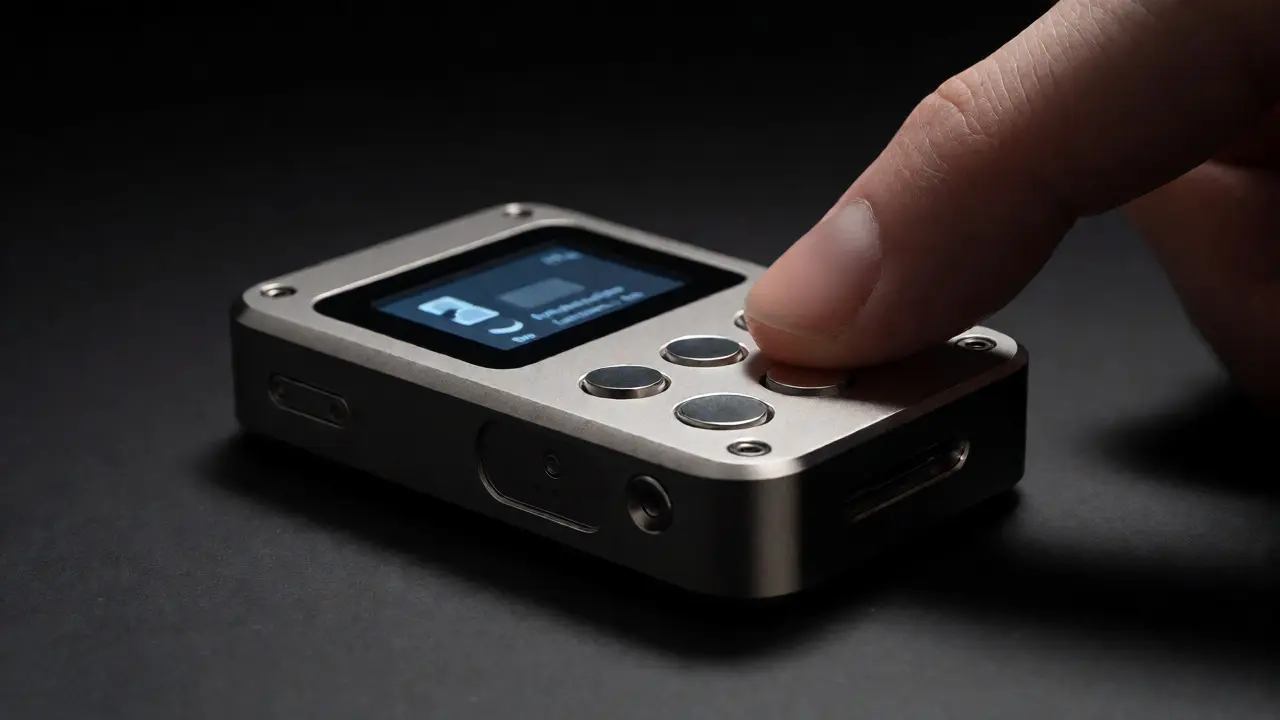
Hardware wallets, such as those made by Ledger or Trezor, solve this by keeping your private keys offline. They are essentially specialized computers with secure chips designed specifically for cryptography. When you set up a hardware wallet, the device generates the mnemonic phrase internally using its own true random number generator. Crucially, this phrase never leaves the device's secure element unless you explicitly choose to back it up. Even when you connect the wallet to your computer to send Bitcoin, the private key stays inside the hardware wallet. The device signs the transaction internally and sends only the signed signature back to your computer. This architecture means that even if your computer is completely compromised, the attacker cannot extract your private keys or move your funds without physically pressing the buttons on your hardware wallet.
Storage Mistakes That Cost Millions
The biggest threat to your crypto isn't usually sophisticated hacking; it's bad storage habits. Because the mnemonic phrase grants total control over all addresses derived from it, exposing it to the internet is fatal. Here are the most common pitfalls:
- Digital Notes and Screenshots: Taking a photo of your seed phrase or saving it in Evernote or iCloud syncs it across all your devices. If one device is hacked, your entire portfolio is at risk.
- Email and Cloud Storage: Never email your seed phrase to yourself. It sits on servers owned by third parties who could theoretically access it, or be targeted in data breaches.
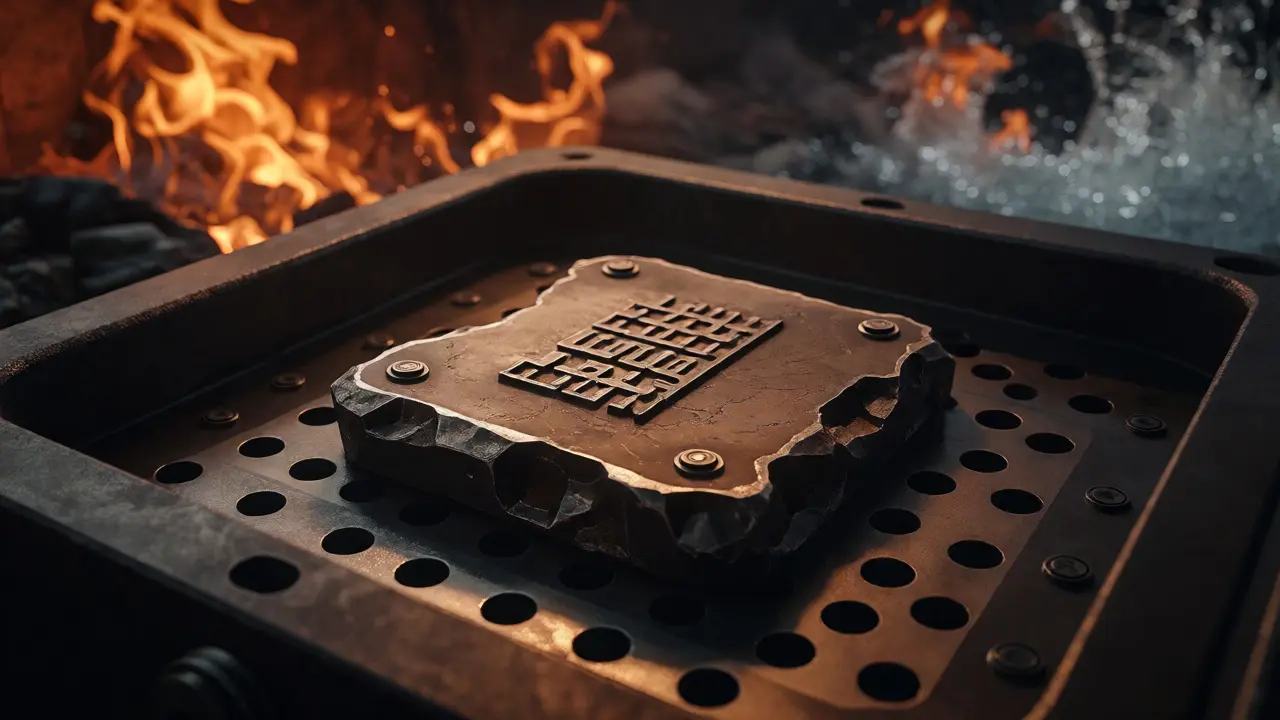
- Paper Vulnerability: Writing your phrase on paper is better than digital storage, but paper burns easily and dissolves in water. House fires and floods have destroyed countless backups.
A robust strategy involves redundancy and durability. Many experts recommend using metal backup plates, which are resistant to fire, water, and corrosion. You should also consider geographic redundancy. Storing two copies of your seed phrase in different physical locations (e.g., one at home in a safe, one in a bank deposit box) protects against local disasters. However, splitting the phrase itself (like Shamir's Secret Sharing) requires careful management; if you split a 12-word phrase into two halves and lose one half, you still need the other half plus knowledge of the split method to recover funds.
The Power of the Passphrase
BIP-39 allows for an optional 25th word, known as a passphrase. This feature transforms your mnemonic phrase into a hidden wallet. If someone steals your hardware wallet and knows your 12-word seed, they can restore your primary wallet. But if you use a passphrase, they see an empty or decoy wallet. Only by entering the correct passphrase alongside the seed can they access your main holdings. This adds a layer of plausible deniability and extra security. If you forget the passphrase, however, your funds are lost forever, so treat this word with the same care as the seed itself.
| Method | Security Level | Risk Factors | Best For |
|---|---|---|---|
| Hot Wallet (Software) | Low | Malware, Phishing, Device Theft | Small amounts, daily spending |
| Cold Wallet (Paper) | Medium | Fire, Water, Loss, Theft | Long-term holding, low budget |
| Hardware Wallet | High | Physical theft, supply chain attacks | Significant holdings, active trading |
| Metal Backup + Hardware | Very High | Complexity of setup | Large portfolios, maximum security |
Recovery: What Happens If You Lose Everything?
The beauty of the mnemonic phrase is portability. If your hardware wallet is stolen, broken, or lost, you don't lose your coins. The coins live on the blockchain, not in the device. To recover them, you simply buy a new compatible wallet, select "Restore from Seed," and enter your mnemonic phrase. Within minutes, your balance reappears. This process works because the phrase deterministically generates the exact same private keys and public addresses on any BIP-39 compliant device.
However, this ease of recovery is a double-edged sword. Anyone who obtains your phrase can do exactly what you did. There is no identity verification, no KYC check, and no way to reverse a transaction once the thief moves the funds. This is why testing your backup is crucial. After setting up your wallet, try restoring it on a temporary software wallet (using a fake amount or testnet) to ensure you wrote down the words correctly. Do not skip this step. A typo in word #7 renders your entire backup useless.
Final Thoughts on Self-Custody
Holding your own keys puts you in full control, but it also places the burden of security entirely on your shoulders. Mnemonic phrases are the master key to this kingdom. By understanding how BIP-39 works, utilizing hardware wallets to keep keys offline, and storing backups in durable, redundant locations, you mitigate the risks inherent in self-custody. Treat your seed phrase like cash: keep it secret, keep it safe, and never let it touch the internet.
What is the difference between a private key and a mnemonic phrase?
A private key is a long alphanumeric string used to sign transactions for a specific address. A mnemonic phrase is a human-readable representation of the master seed from which all private keys in a hierarchical deterministic (HD) wallet are derived. The mnemonic phrase backs up multiple private keys, whereas a single private key only controls one address.
Can I change my mnemonic phrase after creating a wallet?
No, you cannot change the mnemonic phrase of an existing wallet without moving all funds to a new wallet with a new seed. The phrase is generated once upon initialization. To change it, you must create a new wallet, generate a new seed, and transfer your assets to the new addresses.
Is it safe to store my seed phrase in a password manager?
It is safer than plain text files but less secure than offline storage. Password managers are convenient but rely on cloud synchronization and strong master passwords. If your password manager is breached or your master password is weak, your seed phrase is exposed. Offline metal backups are generally preferred for significant amounts.
What happens if I lose my hardware wallet but have my seed phrase?
You are safe. Buy a new hardware wallet or use a compatible software wallet. Select the option to restore from an existing seed phrase and enter your 12 or 24 words. Your funds will appear immediately, as they exist on the blockchain, not inside the physical device.
Why should I avoid brain wallets?
Brain wallets are passphrases chosen by humans. Humans are poor at generating true randomness and tend to pick predictable patterns or common phrases. Attackers can use dictionaries and algorithms to guess these phrases quickly. Wallet-generated mnemonics use cryptographic entropy, making them vastly more secure.

Comments (11)
tiffany King September 12 2026
Great read! It really helps to remember that the seed phrase is the only thing standing between you and total loss. Keeping it offline is key.
Art HND September 14 2026
Hardware wallets are overrated for small amounts.
The risk of losing the device or messing up the backup process outweighs the security benefit if you hold less than $1k. Software wallets with good hygiene are fine.
Elizabeth Brooks September 15 2026
I agree with Art on the small amounts part but I would add that even for small amounts, writing it down on paper and putting it in a safe place is way better than leaving it in your phone notes.
Also, please test your recovery before sending real money to it. I made that mistake once and spent two days panicing because I thought I wrote down a word wrong.
Meagan Mueller September 15 2026
they are watching us
every time you plug in a hardware wallet they know what you own. metal plates are just so they can sell more stuff to us. trust nothing digital.
Kim Edwards September 15 2026
OH MY GOD YES!!!
I literally lost my napkin backup last year and I nearly had a heart attack thinking all my ETH was gone forever!! I screamed at my cat like he stole it!! The panic was REAL. Never again will I rely on flimsy paper. Metal backups or die trying!
Brenna Gonedrman September 15 2026
Actually this is completely wrong about the entropy.
You need 24 words for proper security not 12. 12 words is basically child's play now with modern computing power. Anyone who uses 12 words is asking to be hacked. You should always use the maximum entropy available. Simple as that.
Art HND September 17 2026
Wrong. Brute forcing 128 bits is still computationally infeasible with current tech. Your fear is misplaced.
Courtney Wagstaff September 18 2026
Love the vibe here. Just remember that your brain is the weakest link in the chain.
We tend to get lazy and skip the passphrase step because we think "it won't happen to me." But then one day you realize you forgot where you hid the second half of your split seed. Keep it simple, keep it secure, and maybe buy that fireproof box today.
Deb Kortyna, MBA September 20 2026
I must emphasize the critical importance of redundancy in your storage strategy.
It is insufficient to merely store your mnemonic phrase; one must ensure that the medium of storage is resilient against environmental hazards such as fire and water. Furthermore, geographic separation of these backups is paramount to mitigate the risk of localized disasters. Failure to adhere to these protocols constitutes a significant negligence in asset management.
Joanna Mucha September 20 2026
We cling to these strings of words as if they are sacred relics, yet they are merely mathematical abstractions given form by human desperation.
To possess the key is to possess the burden. We seek security in silicon and steel, forgetting that the true vulnerability lies in the fallibility of our own memory and the fragility of our physical world. The seed phrase is not a savior; it is a mirror reflecting our inability to trust anything but ourselves. And even that self-trust is tenuous at best.
Brandon Olvera September 21 2026
Good info. Stick to US-made hardware if possible.
Avoid those cheap knockoffs from overseas. They have backdoors. I learned that the hard way when my Ledger started acting weird after a firmware update. Now I only buy directly from the manufacturer site. No middlemen. No risks.