
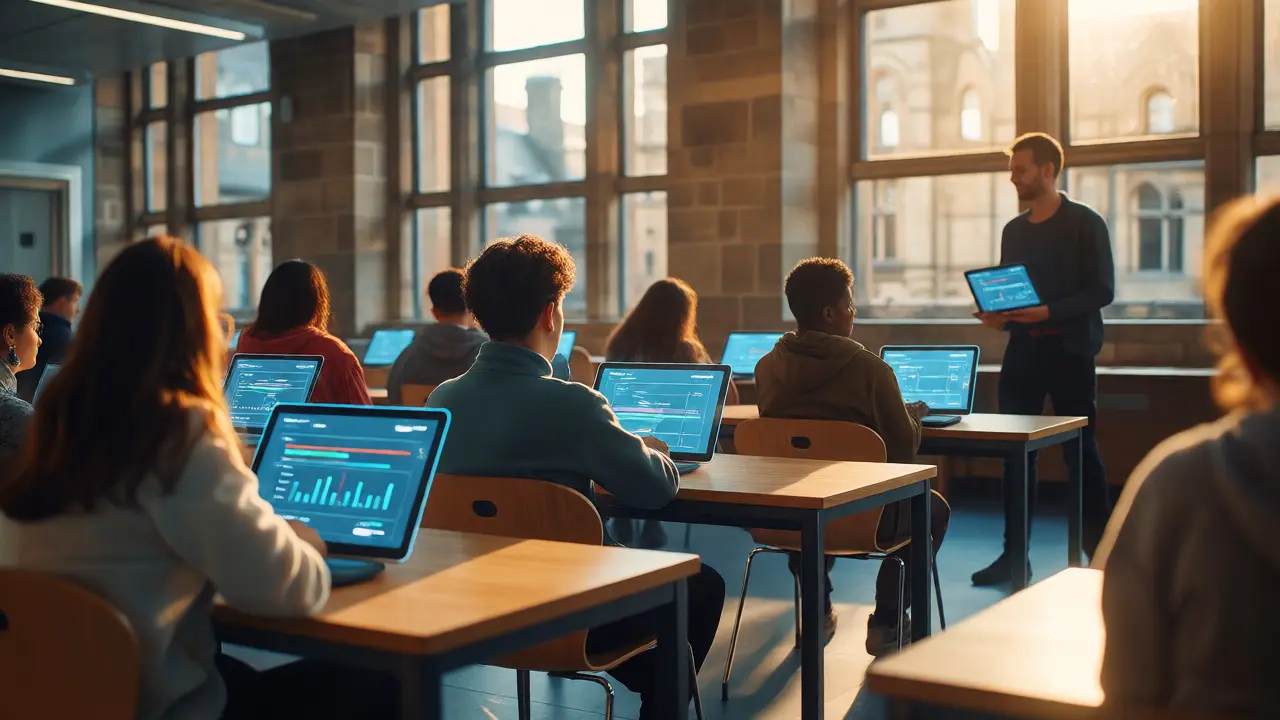
You’ve probably noticed it already. The way students learn and professionals train is shifting under our feet. It’s not just about swapping textbooks for tablets anymore. Artificial Intelligence (AI) is actively rewriting the rules of how knowledge gets from a teacher’s head to a learner’s brain. For educators in Edinburgh or anywhere else, this isn’t some distant sci-fi scenario; it’s happening right now in classrooms and corporate boardrooms alike.
The promise is huge, but so are the pitfalls. We’re talking about systems that can grade essays in seconds, tutors that never sleep, and curricula that adapt faster than a student can blink. But does this mean the human teacher is obsolete? Absolutely not. Instead, we’re moving toward a hybrid model where technology handles the heavy lifting of data analysis, freeing up humans to do what they do best: mentor, inspire, and connect.
| Area of Impact | Traditional Method | AI-Enhanced Method | Benefit |
|---|---|---|---|
| Personalization | One-size-fits-all curriculum | Adaptive learning paths based on real-time performance | Higher engagement and retention |
| Assessment | Manual grading with delays | Instant feedback loops via NLP | Faster correction cycles |
| Accessibility | Limited by language or disability | Real-time translation and speech-to-text | Inclusive learning environments |
| Admin Work | Hours of paperwork | Automated scheduling and reporting | More time for student interaction |
Hyper-Personalized Learning Paths
Think back to your own school days. You likely followed the same pace as everyone else, whether you were bored stiff or completely lost. Adaptive Learning Platforms like Knewton or DreamBox use algorithms to change the difficulty of problems in real time. If you ace a math problem, the next one gets harder. If you stumble, the system offers a hint or a simpler example before moving on.
This isn’t just convenient; it’s effective. Research indicates that students using adaptive software often outperform peers in traditional settings because they spend less time on concepts they already know and more time on gaps in their understanding. It turns education into a game where the difficulty scales perfectly to your skill level, keeping you in that "flow state" where learning sticks.
The End of Administrative Burnout
Teachers hate paperwork. They didn’t go into education to fill out spreadsheets. Yet, administrative tasks consume nearly half of a typical educator's working week. This is where Generative AI shines as an assistant rather than a replacement. Tools can now draft lesson plans, summarize meeting notes, and even communicate with parents in polite, clear English.
For trainers in the corporate world, this means creating onboarding modules used to take weeks. Now, AI can generate quizzes from existing PDFs or videos in minutes. It doesn’t replace the trainer’s expertise, but it removes the drudgery. When teachers aren’t drowning in admin, they have energy left to actually teach.
Intelligent Tutoring Systems
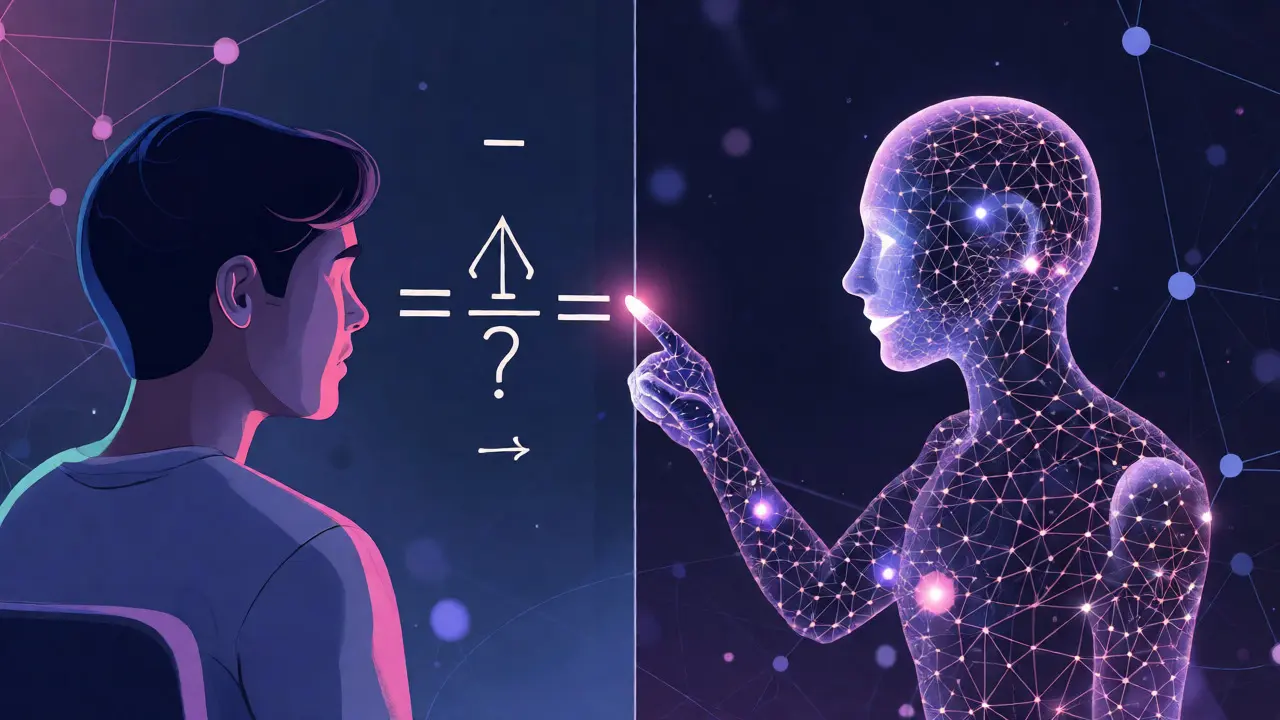
Not every student has access to a private tutor after school hours. Intelligent Tutoring Systems (ITS) bridge this gap by offering 24/7 support. Unlike static chatbots, modern ITS platforms understand context. If a student asks, "Why did I get this wrong?", the system analyzes the specific error pattern-say, confusing velocity with acceleration-and explains the concept again using a different analogy.
These systems rely on Natural Language Processing (NLP) to interpret messy, human questions. While they still make mistakes, the trend is upward. For subjects like coding or mathematics, where logic is binary, these tools are particularly robust. They provide immediate feedback, which is crucial for motivation. Waiting three days for a graded homework assignment kills momentum; instant feedback keeps the fire burning.
Challenges: Bias, Privacy, and the Human Element
It’s not all sunshine and high scores. AI models are trained on historical data, and if that data contains biases, the AI will replicate them. An algorithm might unfairly penalize certain writing styles or assume prior knowledge that some students lack. Educators must remain vigilant gatekeepers, reviewing AI outputs to ensure fairness.
Then there’s privacy. Who owns the data generated by a child’s interaction with an app? In the UK, GDPR regulations offer protection, but transparency is key. Schools need to know exactly where student data goes and who sees it. Furthermore, over-reliance on tech can erode social skills. Learning is social. If students spend all day interacting with screens, they miss out on the nuanced communication skills developed through face-to-face debate and collaboration.

Preparing Educators for the AI Era
So, what does this mean for you? If you’re a teacher or trainer, you don’t need to become a coder. But you do need to become an AI literate. Understanding how these tools work helps you leverage them effectively. Professional development needs to shift from "how to use PowerPoint" to "how to integrate AI ethically."
Look at programs in Scotland, where universities are piloting AI-driven research assistants for PhD students. These tools help synthesize literature reviews, allowing researchers to focus on hypothesis generation. Similarly, corporate L&D teams are using AI to predict which employees are at risk of leaving, allowing for proactive training interventions. The role of the educator shifts from "sage on the stage" to "guide on the side," curating resources and facilitating critical thinking in an age of information overload.
FAQ: Common Questions About AI in Education
Will AI replace teachers?
No, AI will not replace teachers. It will replace teachers who do not use AI. The technology excels at content delivery and assessment, but it lacks empathy, moral judgment, and the ability to inspire. Teachers will transition into roles focused on mentorship, emotional support, and complex problem-solving facilitation.
Is AI learning better than traditional methods?
Studies suggest AI-enhanced learning often leads to higher efficiency and personalization. However, effectiveness depends on implementation. Poorly integrated AI can distract, while well-integrated AI acts as a powerful multiplier for human instruction. A blended approach usually yields the best results.
What are the main risks of using AI in schools?
Key risks include data privacy violations, algorithmic bias affecting marginalized groups, and the potential for academic dishonesty (e.g., using AI to write essays). Schools must establish clear policies on data usage and ethical guidelines for student AI interactions.
How can small businesses use AI for employee training?
Small businesses can use affordable AI tools to create micro-learning modules, automate quiz generation, and track skill gaps. Platforms like LinkedIn Learning or custom LMS integrations allow for scalable, personalized training without needing a large HR team.
Does AI help with special educational needs?
Yes, significantly. AI-powered text-to-speech, speech-to-text, and real-time captioning tools break down barriers for students with dyslexia, visual impairments, or hearing loss. Adaptive interfaces can also adjust complexity levels automatically, providing equitable access to curriculum content.

Comments (8)
Sherri Jones September 29 2026
This is such a solid breakdown of the current landscape! 🤓 I’ve been working in ed-tech for about five years, and seeing terms like "adaptive learning paths" explained so clearly makes me happy. 😊 It’s not just buzzwords; it’s actually how we’re designing new platforms now.
The part about admin burnout really hits home though. My mom was a teacher for 30 years and spent half her evenings grading papers instead of resting. If AI can handle the NLP grading and scheduling, that’s a huge win for mental health. 💖 We need to make sure schools have the budget to implement this properly, though. It’s great tech, but if it’s just another subscription they can’t afford, it becomes useless. 📚✨
Bryce Imbriale September 30 2026
LET'S GOOOO 🔥 This is exactly the energy we need in education right now!! Stop fighting the machines and start using them to free up your soul!! 🚀 Teachers are drowning in paperwork while students are bored stiff with one-size-fits-all crap!!
We gotta adapt or die out!! The hybrid model is the future no matter what the old guard says!! Get those algorithms working for you so you can actually connect with kids again!! Don't let fear hold you back from becoming the mentor you were meant to be!! Embrace the change and watch your classroom transform!! You got this educators!! Keep pushing forward!! The revolution is here and it's beautiful!! Go get 'em tiger!! 💪🔥💯
william mcstay October 2 2026
Foreign software controlling American children's minds. Typical. They talk about personalization but ignore national standards. Data privacy is a joke when these servers are offshore. We should mandate domestic processing only.
Darlene Hopkins October 3 2026
I appreciate the empathy shown toward teachers' stress levels. It feels validating to see their workload acknowledged.
LoriBeth Blair October 5 2026
You people don't know anything about real teaching. These tools are dumb toys. Real learning is hard work. No algorithm knows my students. They are lazy if they need hints. This article is fluff. Everyone thinks they are experts now. It is sad. Kids won't learn grammar. They will rely on spell check forever. I am right. You are wrong. Simple as that. Move on.
Prayagraj Medicose October 7 2026
They want to track every keystroke. Big Brother is watching your child's math homework. The data goes to Silicon Valley elites who profit from our ignorance. Wake up sheeple. It's not about learning it's about surveillance capitalism. The bias they mention is intentional programming. Do not trust the black box. Your private thoughts are being mined for ads. Run away from the screen. Return to books. Before it is too late. They are coming for your data next. Then your freedom. End of story. Believe it or not.
SHANNON GRUBER October 8 2026
LoriBeth is right but also annoyingly loud. Still, the point about social skills erosion is valid. Kids today can't even look each other in the eye without checking a phone first. That's not progress that's regression. Fix that before buying more tablets.
Charles Reah October 9 2026
I think we need to balance the skepticism with opportunity. While privacy concerns are valid, excluding students with disabilities from these tools due to fear creates its own inequality. We must guide implementation carefully rather than reject it entirely. Let's support our educators through this transition.