
You think you can cook. You make a decent pasta carbonara on Friday nights and your Sunday roast isn't terrible. But there is a massive gap between home cooking and professional culinary arts. That gap is filled by structure, repetition, and a curriculum that breaks down the magic of food into manageable, teachable skills. If you are eyeing a career change or aiming to open your own restaurant, understanding what a real professional culinary curriculum entails saves you time, money, and a lot of burnt garlic.
Most people imagine culinary school as just learning recipes. It’s not. It’s about understanding heat, chemistry, and logistics. The best programs don’t just teach you how to make a béchamel; they teach you why it breaks, how to fix it, and how to scale it for 200 covers in under ten minutes. Here is what you actually learn when you sign up for serious chef training.
The Foundation: Knife Skills and Mise en Place
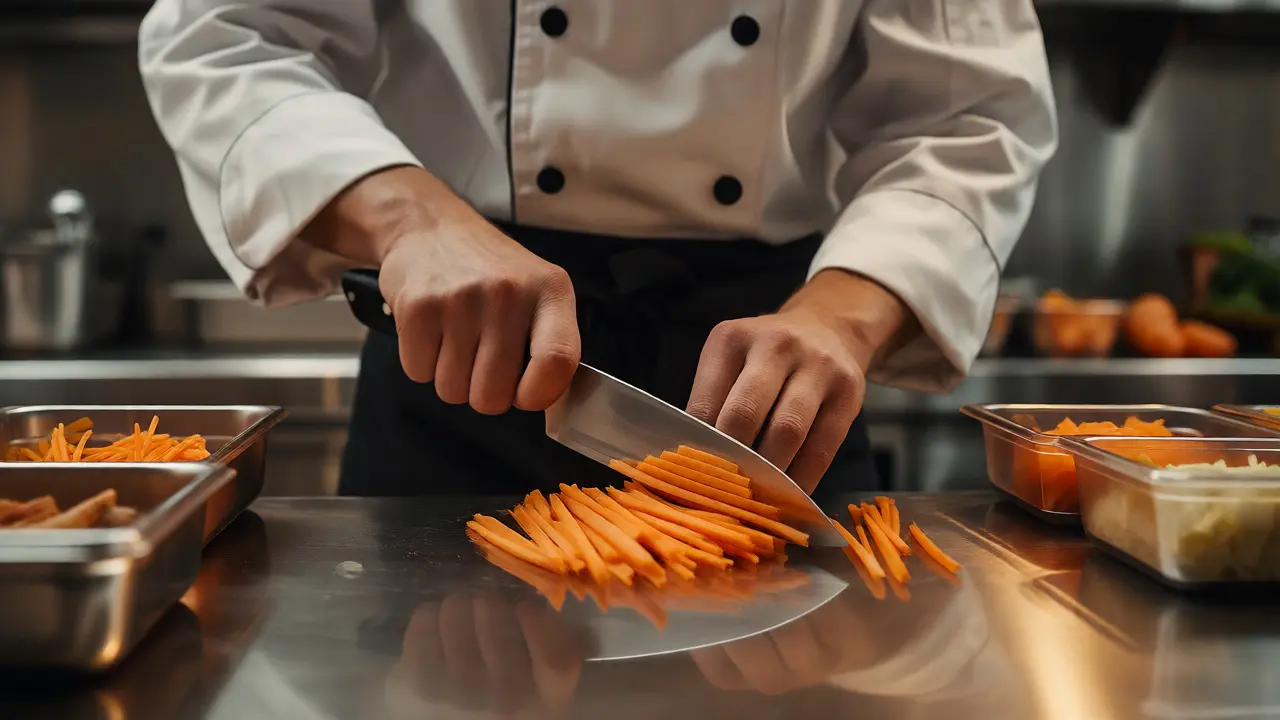
Before you touch a stove, you spend weeks with a knife. This isn’t busywork. In a professional kitchen, speed and consistency equal money. If your julienne carrots vary in thickness, some burn while others stay raw. A proper knife skills module focuses on grip, stance, and motion efficiency. You learn the difference between a brunoise and a small dice until it becomes muscle memory.
Alongside cutting comes mise en place. This French term means "everything in its place," but practically, it’s an organizational system. You learn to prep ingredients so precisely that service feels calm rather than chaotic. Programs often grade students not just on taste, but on station cleanliness and workflow during this phase. If you can’t keep your station clean while chopping onions at high speed, you won’t survive a dinner rush.
Classical Techniques: The Mother Sauces and Stocks
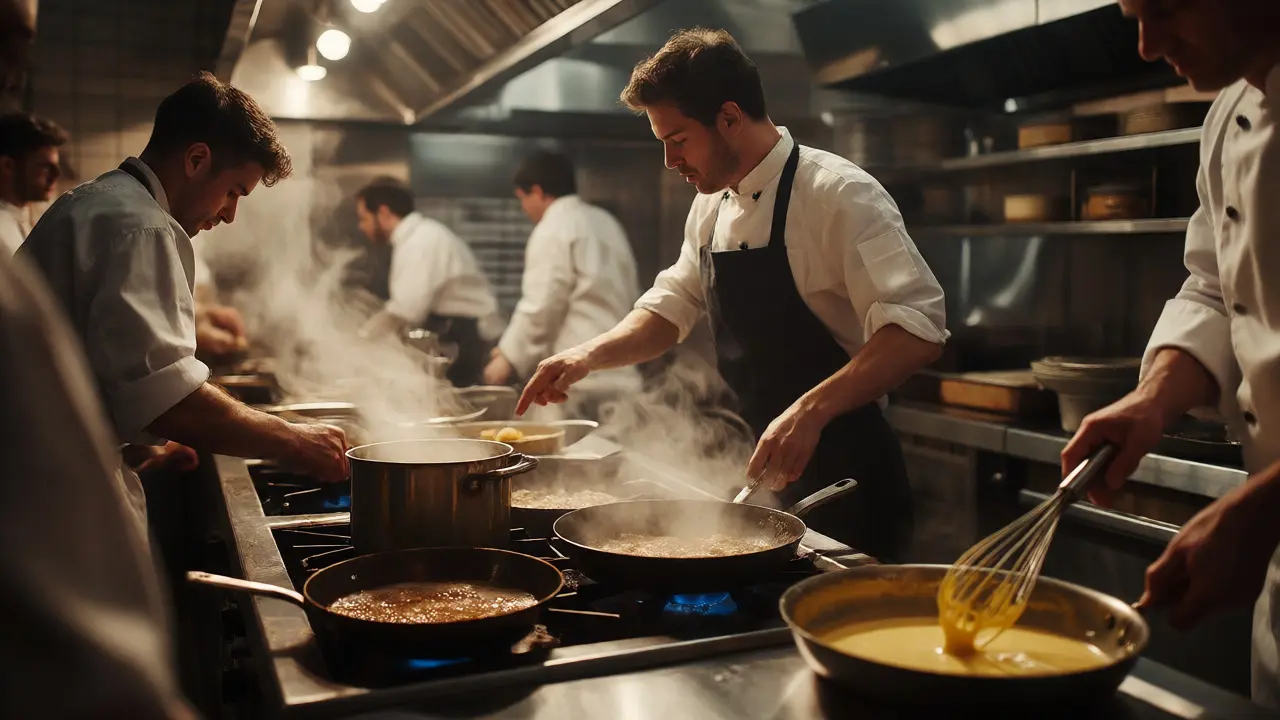
Modern fusion cuisine is fun, but it rests on classical foundations. Every reputable culinary arts course starts with stocks and sauces. Why? Because they form the flavor base for almost everything else. You will spend days making bone broth, clarifying consommé, and mastering the five mother sauces defined by Auguste Escoffier.
This isn’t just about following instructions. It’s about troubleshooting. When your hollandaise splits, do you know why? Was the egg too cold? Did you add butter too fast? Understanding the emulsion process allows you to fix mistakes on the fly. Instructors use these modules to test your patience and attention to detail. One degree of temperature can ruin a batch of custard, and you need to feel that shift instinctively.
Food Science and Nutrition Theory
Cooking is applied chemistry. A strong curriculum includes a dedicated food science component. You learn how proteins denature, how starches gelatinize, and how fermentation works. This knowledge helps you innovate rather than just replicate.
- Maillard Reaction: Understanding how amino acids and sugars react under heat to create browning and complex flavors.
- Emulsification: The physics behind mayonnaise, vinaigrettes, and aioli stability.
- Fermentation: The biology behind bread rising, yogurt culturing, and kimchi development.
Nutrition is also critical, especially if you plan to work in healthcare facilities or schools. You learn macro- and micronutrients, dietary restrictions, and how to modify recipes without sacrificing flavor. For instance, reducing sodium doesn’t mean adding salt substitutes blindly; it means balancing acidity and herbs to trick the palate.
Baking and Pastry Fundamentals
Even savory chefs need baking skills. Bread doughs, laminated pastries like croissants, and basic desserts appear in almost every menu. Baking is less forgiving than savory cooking. You can’t taste-test your way out of a bad cake batter. Precision matters more here.
| Feature | Savory Module | Pastry Module |
|---|---|---|
| Primary Skill | Heat control & seasoning | Measurement precision & timing |
| Error Margin | High (can adjust mid-cook) | Low (chemical reactions are fixed) |
| Tools Used | Pans, knives, thermometers | Scales, mixers, piping bags |
| Key Concept | Flavor layering | Structure & texture |
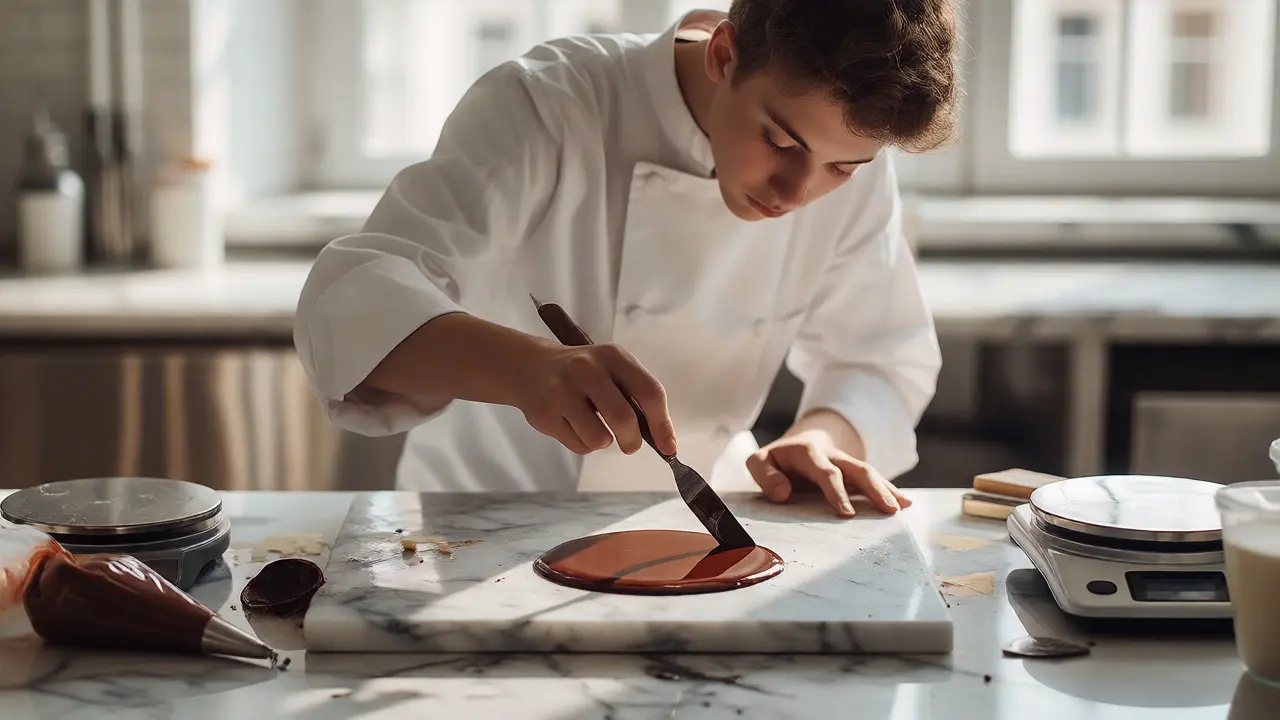
You’ll learn tempering chocolate, which requires exact temperature curves to achieve snap and shine. You’ll practice lamination, folding butter into dough repeatedly to create flaky layers. These techniques require steady hands and an understanding of fat content. If your butter melts before it goes in the oven, you lose the lift. It’s physical, tactile work that demands repetition.
Kitchen Management and Cost Control
Great cooks fail as head chefs because they ignore the business side. Advanced sections of professional cooking courses cover kitchen management. You learn to write menus, calculate food cost percentages, and manage inventory.
Imagine you want to serve a $25 steak dish. You need to account for the meat, sides, garnish, labor, and overhead. If your food cost exceeds 30%, you’re losing money. Students practice creating mock budgets and sourcing ingredients from wholesalers. They learn to read invoices, spot price hikes, and adjust portion sizes to maintain margins. This pragmatic approach separates hobbyists from professionals who can run a profitable kitchen.
Internships and Real-World Application
No classroom simulates the pressure of a live service. Most accredited programs include mandatory externships or internships. You might rotate through different stations-saute, grill, garde manger-to see where you fit best. This exposure reveals your strengths. Maybe you thrive in the fast-paced sauté section but hate the repetitive nature of pastry prep.
During these stints, soft skills matter as much as technical ability. Can you communicate clearly over noise? Do you handle criticism well? Chefs are notorious for their intensity, but modern kitchens value teamwork and respect. Learning to navigate hierarchy and stress is part of the curriculum, even if it’s not written in the syllabus.
Choosing the Right Program
Not all culinary schools are created equal. Look for accreditation from bodies like the American Culinary Federation (ACF) or equivalent local authorities. Check the student-to-instructor ratio. If one teacher oversees twenty students, you won’t get enough feedback. Ask about job placement rates. Do graduates get hired in reputable restaurants? Visit the kitchens. Are they industrial-grade? Do students cook in them daily?
Consider the length and cost. Associate degrees take two years and offer depth. Certificate programs last six months and focus on basics. Short workshops suit hobbyists but rarely prepare you for executive roles. Weigh the tuition against potential earnings. Starting salaries for line cooks are modest, but growth depends on skill acquisition and networking, both of which quality schools facilitate.
Do I need prior experience to join culinary school?
No, most entry-level programs assume no prior experience. They start from scratch with knife skills and hygiene. However, having basic home cooking familiarity helps you grasp concepts faster. Some advanced masterclasses require proven skills, but standard diplomas are beginner-friendly.
How long does a professional culinary curriculum typically last?
Certificate programs usually run 6 to 9 months, focusing on core techniques. Associate degrees take about 18 to 24 months and include general education plus deeper specialization. Bachelor’s degrees in Hospitality Management with culinary concentrations can take four years, blending business theory with practical training.
Is culinary school worth the investment?
It depends on your goals. If you want to be a line cook, you can learn on the job. But for executive chef roles, restaurant ownership, or corporate food development, formal education provides credibility, network access, and structured knowledge that takes years to acquire independently. Calculate the return on investment based on local salary data.
What are the hardest parts of the curriculum?
Students often cite early mornings, late nights, and physical exhaustion. Mentally, the toughest part is accepting constructive criticism quickly and adapting. Technical challenges include mastering tempering chocolate or executing complex plating under time pressure. Emotional resilience is tested constantly.
Can I specialize in specific cuisines during my course?
Yes, many curricula offer electives or specialized tracks. You might choose Asian Cuisine, Mediterranean, or Plant-Based Cooking. However, foundational training always emphasizes French and Italian techniques first, as they underpin global fine dining standards. Specialization usually comes in later semesters.

Comments (14)
Brannen Hall September 25 2026
Overrated. Most of this stuff you learn in six months on the line for free while getting paid instead of paying forty grand.
The 'structure' argument is just a sales pitch for tuition fees. Real skill comes from repetition under pressure, not reading about Maillard reactions in a textbook.
tiffany King September 25 2026
This is such a helpful breakdown! I’ve been thinking about switching careers and was so intimidated by the idea of culinary school. Knowing that it starts with basics like knife skills and mise en place makes it feel way more manageable. It’s amazing how much science goes into what we think is just cooking. Definitely going to look into those accredited programs mentioned here!
Anthony Miller September 26 2026
You are all deluded if you think a piece of paper guarantees competence. The industry is broken because people buy their way in rather than earning it through sweat and blood. You pay thousands to be told what any decent apprentice learns in a week. It is a scam designed to extract wealth from dreamers who lack the grit to start at the bottom.
Real chefs don't need a curriculum guide; they need a hot pan and a boss who screams until they get it right.
Dave Gibbeson September 27 2026
Hard disagree on the 'free learning' part. I spent three years working my ass off in kitchens where bad habits became permanent because no one taught me the *why*. Culinary school fixed my technique and gave me the confidence to step up quickly. If you want to run your own place eventually, knowing food cost and management early saves you from bankruptcy later. Don't let bitterness dictate your career path.
Brenna Gonedrman September 27 2026
Oh my god, finally someone says it!! The part about stocks being the foundation is SO TRUE. People skip this and wonder why their sauces taste flat. It’s literally chemistry but people treat it like magic. Also, the baking section? Yes! Precision is everything there. If you mess up the ratio, boom, disaster. This post is exactly what I needed to hear before signing up next month.
alex kobri September 27 2026
the gap between home and pro is real
but also the gap between school and reality is wider
you learn theory then walk into a kitchen and realize none of it matters when the ticket printer won't stop screaming
still worth it though if you have the money
Courtney Wagstaff September 27 2026
Love the vibe of this article. It’s refreshing to see a guide that doesn’t just romanticize the chaos but actually breaks down the boring-but-important stuff like inventory and cost control. That’s usually the part nobody talks about until you’re crying over an invoice at 2 AM. Good read.
Tamara Miller September 29 2026
I’m sorry, but isn’t this ignoring the mental health crisis in culinary schools?? We talk about 'resilience' like it’s a virtue when it’s often just trauma bonding. The curriculum needs to address burnout prevention, not just assume students will break themselves physically and emotionally to prove their worth. It’s lazy pedagogy to ignore the psychological toll of these intense programs.
Elisabeth Ballet September 30 2026
Listen, resilience is built through doing, not just talking about it in class. But you're right that modern programs are starting to integrate wellness checks. However, if you can't handle the heat now, you won't handle it in a Michelin star kitchen. Use the school environment to build thick skin. It’s tough love, but it prepares you for the real world where customers don't care about your feelings.
Amara Akbar October 1 2026
While I appreciate the passion, perhaps we should consider that different learners thrive in different environments. Some students benefit greatly from structured feedback loops provided in educational settings, which might mitigate some of the harshness experienced in traditional apprenticeships. It is not necessarily about avoiding stress, but managing it effectively through guided practice. Both paths have merit depending on individual learning styles.
Zach Loescher October 2 2026
I wonder how much of the 'food science' component actually translates to daily service. In my experience, once you're in the weeds, you rely on muscle memory more than chemical understanding. Does anyone else feel like the theoretical knowledge gets lost in the rush?
Savara Gunn October 2 2026
yeah totally. you know the theory but when you're plating 40 covers in ten mins you just go with gut feeling. still good to know why things work though for troubleshooting later.
Quintin Franzese October 3 2026
Sure, because nothing says 'professional development' like paying $50k to learn that butter melts. But hey, if you enjoy debt and burnout, knock yourself out. The real education happens when you drop a plate and your head chef looks at you like you murdered his grandmother.
Susan Cole October 4 2026
It seems like a lot of anger directed at people trying to improve their craft. Everyone has a different path. Respect the hustle regardless of the route taken.