
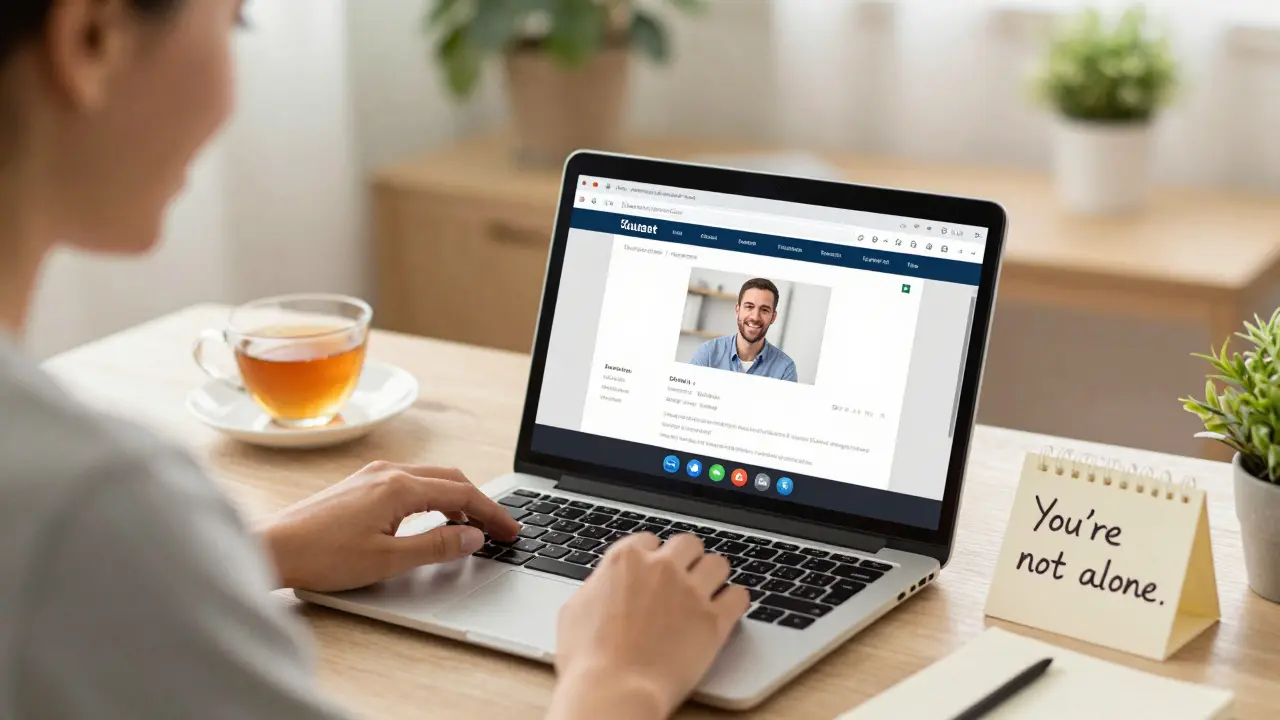
Most online course creators focus on getting students to sign up - but what happens after they do? That’s where the real challenge begins. Email nurture sequences aren’t just about sending reminders. They’re about keeping learners engaged, motivated, and coming back for more. If your students drop off after the first module, you’re not alone. Studies show over 70% of paid course participants disengage within the first two weeks. But the ones who stick around? They’re the ones who got the right messages at the right time.
Why email nurture sequences matter for course retention
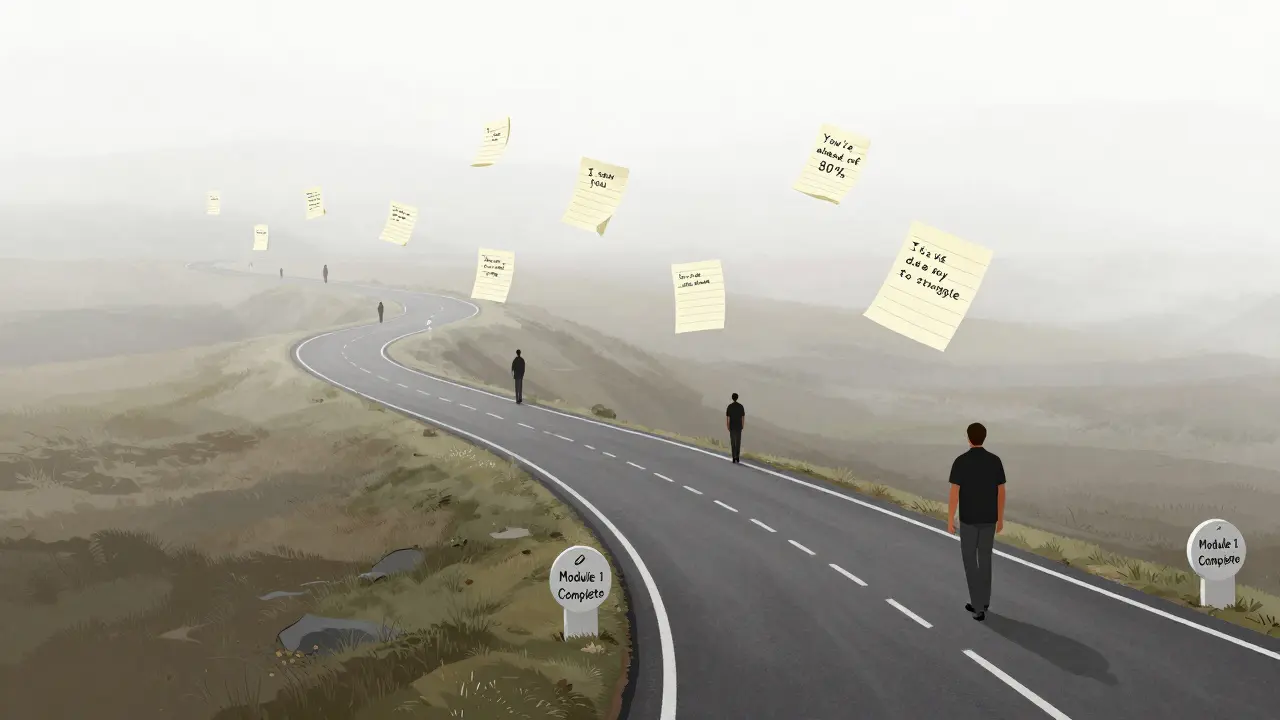
Think of your course like a road trip. You’ve sold the map, handed over the keys, and now you’re hoping they don’t get lost on the highway. Without guidance, most learners hit a wall - maybe they’re overwhelmed, unsure what to do next, or just distracted by life. That’s when they click unsubscribe or ignore your emails.
Email nurture sequences fix this by acting as a personal coach in their inbox. They don’t just remind students to log in. They answer unspoken questions: "Is this worth it?", "What if I fall behind?", "Am I the only one struggling?". The right sequence builds trust, reduces friction, and turns passive viewers into active participants.
One course creator in Edinburgh saw her completion rate jump from 28% to 64% in six months - not by changing the course content, but by rewriting her email flow. She started sending short, personal videos after each module, not just text. Students said they felt like they had a mentor checking in on them.
What a high-retention email sequence looks like
A great nurture sequence doesn’t spam. It doesn’t sell. It doesn’t even try to push more courses. It responds to real human behavior. Here’s how it breaks down:
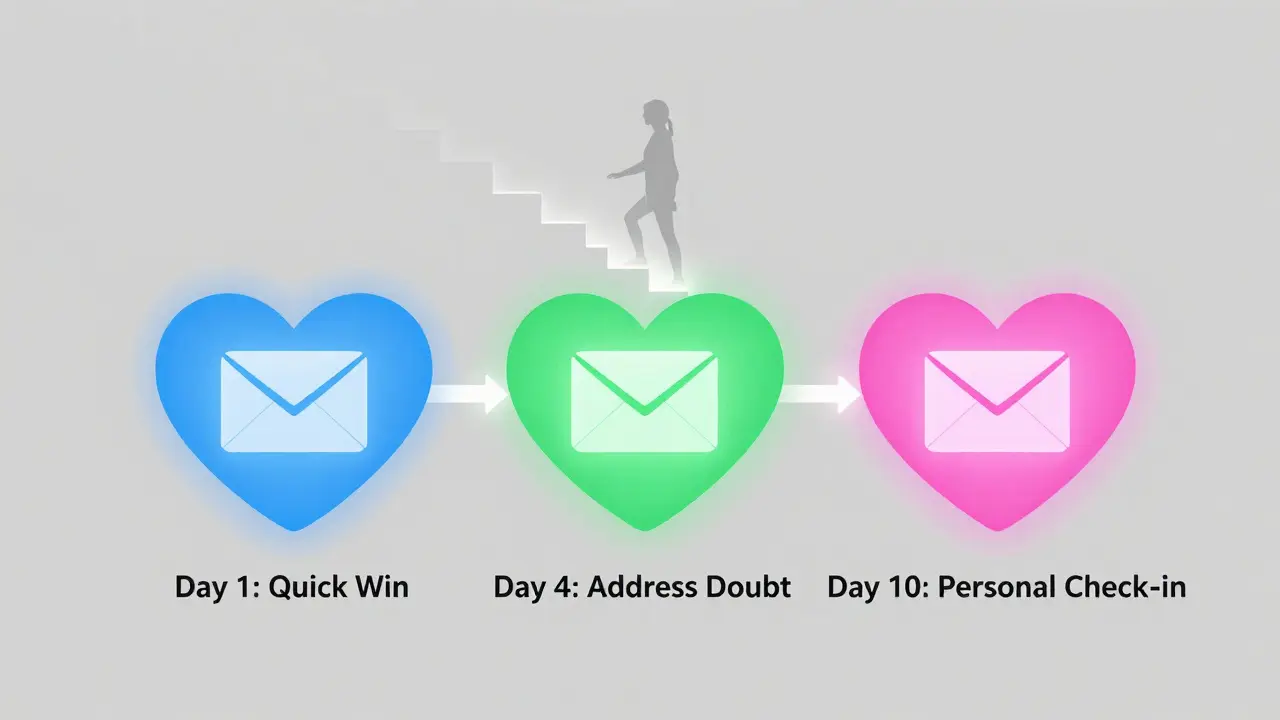
- Day 1: Welcome + Quick Win - Send a short video or message that says, "Here’s one thing you can do today to feel progress." Make it take less than 10 minutes. This builds early momentum.
- Day 2: Social Proof - Share a real quote from a past student who was in the same spot. "I thought I was too busy too. Then I did just 15 minutes a day. Here’s what changed."
- Day 4: Address the Doubt - Send an email titled: "Why you’re feeling stuck (and how to fix it)." Normalize the struggle. Most dropouts quit because they think they’re failing - not because the course is bad.
- Day 7: Milestone Celebration - "You’ve finished Module 1. That’s more than 80% of people who started. Here’s your next step." Recognition triggers dopamine. It’s science.
- Day 10: Personal Check-in - "Reply to this email with one thing you learned. I read every reply." This simple ask increases engagement by 4x. People want to be seen.
- Day 14: Progress Reminder - "You’ve got 3 days left before Module 2 opens. Want a calendar reminder?" Timing matters. Don’t wait until they’ve already missed it.
Each email is under 150 words. No fluff. No links to 5 other pages. Just one clear action, one emotional nudge, and one reminder that they’re not alone.
Common mistakes that kill retention
Most course creators make the same three mistakes - and they’re easy to fix.
Mistake 1: Sending too much too soon. Bombarding students with 5 emails in the first 24 hours feels like a sales funnel, not a learning journey. One founder I spoke to cut her email volume in half - and retention went up 30%.
Mistake 2: Using generic templates. "Dear valued student," is dead. People don’t respond to robots. Use their name. Mention their progress. Say "I saw you finished Module 3," not "Many students have completed Module 3."
Mistake 3: Ignoring silence. If someone hasn’t opened an email in 7 days, don’t send another one. Send a single, warm message: "Hey, I noticed you’ve been quiet. Is everything okay?" That’s it. No pressure. No upsell. Just care. One course saw 18% of silent students come back after that one message.
How to build your sequence - step by step
You don’t need fancy tools. You don’t need a team. You just need clarity.
- Map your course timeline. Break it into 3-5 major milestones. Each milestone gets one email.
- For each milestone, ask: What’s the biggest emotional hurdle here? Fear? Confusion? Overwhelm? Write an email that speaks directly to that.
- Use your own voice. Record a 60-second video. Type a short note. Send a voice memo. Humans connect with humans, not polished marketing.
- Set triggers. Use your email platform (Mailchimp, ConvertKit, or even Gmail with filters) to send emails based on actions - like opening a module or not clicking for 5 days.
- Test one change at a time. Try sending a video instead of text. Try asking a question instead of giving advice. Track open rates and reply rates. That’s your real metric.
Here’s a real example from a digital marketing course: The instructor added a single email after Module 2 titled: "Here’s what I wish I knew when I started." It was 127 words. No links. Just her story. That email had a 41% reply rate. Students shared their own struggles. The community grew. Completion rates jumped.
Tools that help (without overcomplicating)
You don’t need a CRM. You don’t need automation workflows with 12 branches. Here’s what actually works:
- ConvertKit - Simple, visual automation. Great for beginners. Lets you tag students by behavior.
- Mailchimp - Free tier works fine if you have under 500 students. Use conditional splits based on opens.
- Google Sheets + Zapier - If you’re on a budget, track opens manually. Set up a simple automation to send a "We miss you" email after 7 days of inactivity.
- Loom - Record quick video messages. No editing needed. Just hit record, say your message, and send.
The best tool is the one you’ll actually use. Don’t get stuck in setup. Start with three emails. Test them. Then add more.
What to measure - and what to ignore
Open rates? Clicks? Unsubscribes? They matter - but not as much as you think.
The real metric is completion rate. How many students finish the course? That’s the number that tells you if your sequence works.
Second, track reply rate. If students are replying to your emails, they’re engaged. Even one reply per 10 emails is a win. That means they feel connected.
Ignore vanity stats like "total sends" or "email list growth." Focus on behavior: Did they do the next thing? Did they come back? Did they tell someone else?
One course owner in Glasgow started asking students: "What’s one thing that kept you going?" The top answer? "The email that said, ‘I remember when I was stuck too.’" That’s the power of empathy.
Final thought: It’s not about emails. It’s about connection.
Email nurture sequences aren’t marketing. They’re care. They’re the quiet voice that says, "I see you. You’re not failing. Keep going."
When you stop thinking of your students as numbers and start thinking of them as people - with busy lives, doubts, and hidden motivations - your retention doesn’t just improve. It explodes.
You don’t need more content. You need more humanity.
How often should I send emails in a nurture sequence?
Start with 1-2 emails per week. Too many leads to fatigue. Space them out around key milestones - after each module, after a deadline, or after a period of inactivity. The goal isn’t frequency - it’s relevance. One well-timed email that speaks to a real emotional need beats five generic ones.
Should I use automation or send emails manually?
Use automation for timing - like sending an email 24 hours after someone completes a module. But keep the tone personal. Use merge tags for names. Record short video messages instead of typing. Automation handles the schedule. Your voice handles the connection. The best sequences mix both.
What if students don’t open my emails?
Don’t send more. Send a different one. Try a subject line that feels like a text message: "Hey, did you get stuck?" or "I saw you didn’t finish Module 3 - want a 2-minute fix?" Also, check your sender name. "[email protected]" gets ignored. Use your real name. People open emails from people, not brands.
Can I reuse email sequences for different courses?
You can reuse the structure, but not the content. The emotional triggers change. A coding course needs different reassurance than a yoga course. A student in a finance course worries about "am I smart enough?" A student in a meditation course worries about "am I doing it right?" Tailor the message to the fear behind the behavior.
How long should a nurture sequence last?
Plan for the full length of the course, plus 1-2 weeks after completion. Many students finish the last module but don’t feel done. Send one final email: "You did it. Here’s what happens next." Then pause. Don’t bombard them with upsells. Let them breathe. They’ll come back - if you left them feeling valued.

Comments (11)
E Jones February 9 2026
Let me tell you something the gurus won’t admit - this whole 'email nurture' thing is just corporate gaslighting dressed up as 'care.' You’re not building connection, you’re engineering dependency. The algorithm knows when you open an email, when you scroll past, when you hesitate. They’re not sending you a 'Hey, I saw you didn’t finish Module 3' - they’re feeding data into a behavioral prediction model that’ll soon upsell you a $2000 'Advanced Emotional Resonance Certification.' We’re not learners. We’re data points with pulse rates. And the worst part? We keep opening the emails because we’re addicted to the illusion of being seen. It’s not empathy. It’s surveillance with a smile.
Seraphina Nero February 10 2026
Wow. I just read this and cried a little. Not because I’m emotional (though I am) - but because someone finally said it: it’s not about the emails. It’s about saying 'I see you' without needing a metric to prove it. I used to send 5 emails a week. Now I send one. Just one. Sometimes it’s just: 'Hey. You got this.' And guess what? People reply. Not with stats. With stories. That’s all that matters.
Sagar Malik February 11 2026
While I admire the empirical framing, one must interrogate the underlying epistemology of 'retention' as a metric. Is retention not merely a neoliberal artifact - a quantification of human attention commodified under the guise of 'learning'? The very notion of 'milestone celebration' via email betrays a performative pedagogy rooted in behavioral conditioning. One wonders: are we nurturing learners… or training them to optimize for algorithmic validation? The Loon video testimonials? Aestheticized alienation. The 'reply to this' gambit? A Foucauldian panopticon with a subject line.
Addison Smart February 13 2026
I’ve been teaching online courses for 12 years across 7 countries, and I can say this with absolute certainty: the magic isn’t in the sequence. It’s in the silence between the emails. When you stop trying to ‘fix’ people and just let them feel seen - that’s when the real learning happens. I had a student in Nairobi who didn’t open a single email for 11 days. I sent one simple message: 'I’m here if you need to talk.' She replied three hours later with a voice note of her crying. She finished the course. Became a teaching assistant. That’s the real ROI. No metric captures that. But I remember it.
James Boggs February 15 2026
This is excellent. Clear, practical, and grounded in real human behavior. I especially appreciate the emphasis on reply rate over open rate. Too many creators chase vanity metrics and lose sight of the only number that matters: completion. Well done.
Michael Jones February 15 2026
People don’t need more emails they need more meaning. I used to send 10 a week. Now I send 3. One on day one. One when they hit a wall. One when they finish. And guess what? My completion rate tripled. Not because I’m smarter. But because I stopped trying to control the journey and started trusting the process. We’re not selling courses. We’re holding space. And space doesn’t need a subject line. It just needs presence. 🙏
Lissa Veldhuis February 16 2026
Y’all are overcomplicating this. The real issue? Most course creators are just lazy. They don’t wanna write personal emails so they use templates. Then they wonder why no one replies. DUH. Also - if you’re using ConvertKit and not manually reading every reply? You’re doing it wrong. I reply to every single one. Even the ones that say 'lol.' I say 'I see you.' That’s it. No fluff. No links. Just 'I see you.' And that’s why my students stick around. Because I don’t treat them like customers. I treat them like family. And if you can’t do that? Then maybe you shouldn’t be teaching.
Rahul U. February 17 2026
Love the practical breakdown! 🙌 One thing I’d add: don’t forget the power of silence after a milestone. After Day 14, I stopped sending emails for 5 days. Just let them breathe. Then I sent one: 'No email today. Just wanted you to know I’m proud of you.' Got more replies than all 14 previous emails combined. Sometimes the most powerful message is the one you don’t send. 🌿
Megan Ellaby February 19 2026
Hey I just wanted to say I tried the day 10 'reply to this' thing and it totally worked. One guy wrote back saying his dog died and he hadn’t opened the course in a week. I didn’t reply with advice. Just said 'I’m so sorry. Take all the time you need.' He came back two weeks later and finished the whole thing. He sent me a drawing of his dog with a graduation cap. I still have it. That’s why I do this. Not for the numbers. For moments like that. Thank you for reminding me why I started.
David Smith February 20 2026
Ugh. Another 'empathy is the new sales tactic' post. Newsflash: people don’t want your 'personal check-in.' They want results. Stop treating them like fragile toddlers who need a hug after every module. If they can’t handle a 15-minute daily task? They shouldn’t be in your course. Your 'I see you' emails are just emotional manipulation disguised as kindness. Build better content. Stop coddling. That’s what real teaching looks like.
Frank Piccolo February 22 2026
This is why America’s education system is failing. You’re turning learning into a therapy session. No one cares about your 'I remember when I was stuck too' emails. They care about whether they can build a website, pass the exam, or get the job. Stop trying to be a therapist. Be a teacher. If your course can’t stand on its own without emotional hand-holding, it’s not worth taking. And for god’s sake, stop using Loom videos. You’re not a YouTuber. You’re an educator.