

Most companies treat onboarding like a checklist: sign these papers, read this handbook, and here is your laptop. But that's not actually onboarding; that's just paperwork. Real onboarding is about moving a new hire from "outsider" to "contributing team member" as fast as possible without burning them out. If your new hires spend their first week staring at a blank screen because they don't have the right permissions or don't know who to ask for help, you're losing money and talent. A structured employee onboarding course changes the game by turning a chaotic first month into a predictable, scalable journey.
Key Takeaways for Your Onboarding Strategy
- Shift from administrative checklists to a structured learning path.
- Focus on cultural integration and social ties, not just technical skills.
- Use a blended learning approach (videos, quizzes, and human mentorship).
- Measure success by "time-to-productivity," not just course completion.
The Blueprint for a High-Impact Onboarding Course
Before you start recording videos or writing slides, you need to identify the gaps. Most companies fail because they dump every piece of company history into one giant module. Instead, think of your course as a series of levels in a game. You don't give a player the final boss on level one.
Start by mapping the "New Hire Journey." This means identifying every friction point a person hits in their first 90 days. Do they struggle with the internal jargon? Do they not know how to request a day off? Do they feel awkward during the first team lunch? Your course should be the answer to these specific pains. By treating the process as a product, you ensure that the Learning Experience Design (LXD) focuses on the user (the employee) rather than the corporate ego.
Designing the Core Curriculum
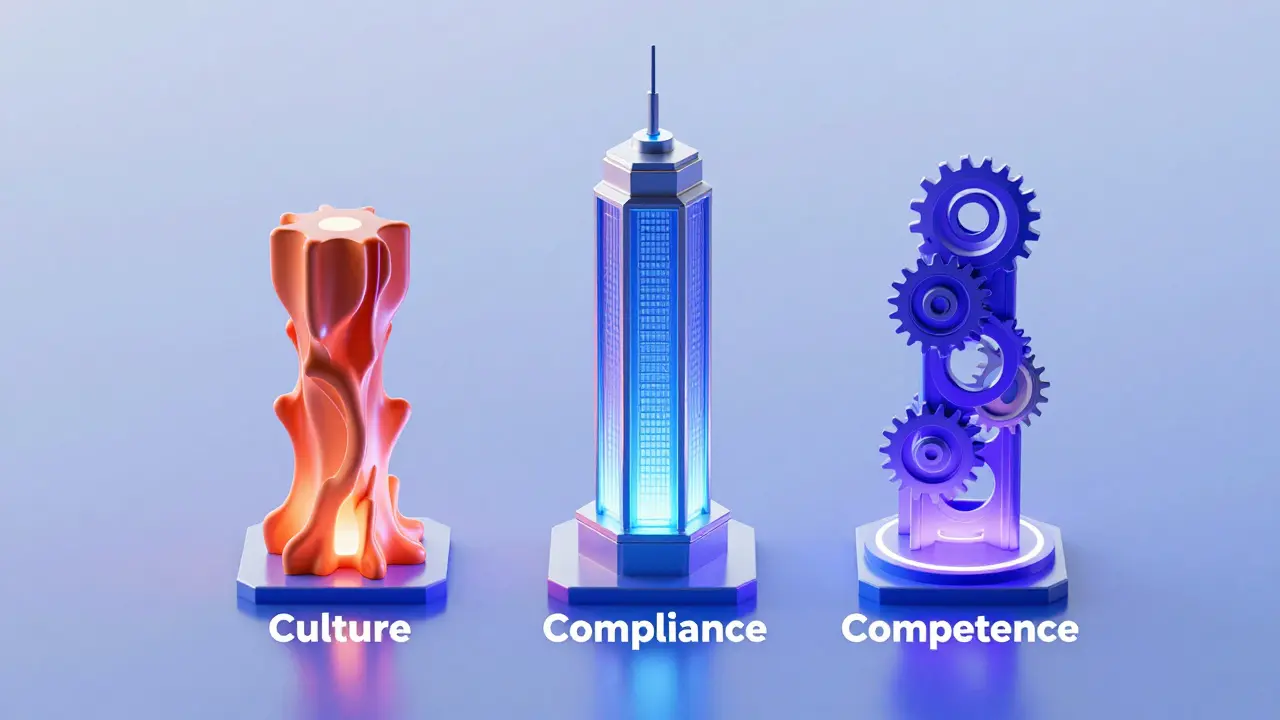
A great course is divided into three distinct pillars: Culture, Compliance, and Competence. If you lean too hard on compliance, people get bored. If you focus only on competence, they feel like a cog in a machine.
First, handle the culture. This is where you explain *why* the company exists. Don't just list the mission statement from the website. Use a video from the founder explaining a time the company failed and how they fixed it. This builds authentic trust. Next, tackle compliance. Use Microlearning-short, 3-to-5 minute bursts of information-to cover security protocols or harassment training. No one remembers a 60-minute PowerPoint presentation on data privacy, but they will remember a 2-minute video showing a real-world example of a phishing attempt.
Finally, address competence. This is the "how-to" of the job. Instead of a manual, create a library of screencasts. If a new account manager needs to know how to use the CRM, show them a 5-minute clip of a senior rep actually closing a lead in the system. This connects the tool to the outcome.
| Pillar | Goal | Example Content | Delivery Method |
|---|---|---|---|
| Culture | Belonging & Alignment | Company values in action, founder story | Video interviews, Storytelling |
| Compliance | Safety & Legal Risk | GDPR rules, security policies, HR handbook | Quizzes, Micro-modules |
| Competence | Job Performance | Software tutorials, workflow diagrams | Screencasts, Interactive demos |
Choosing the Right Delivery System
You can't build a modern course in a folder of PDFs. You need a Learning Management System (LMS). An LMS isn't just a place to host videos; it's a tracking tool. It tells you exactly where people are getting stuck. If 80% of your new hires fail the quiz on the "Expense Reporting" module, you don't have a problem with your employees; you have a problem with how you're teaching expenses.
For small teams, a simple tool like Notion or a basic Google Classroom setup might work. But as you scale, you'll want a dedicated platform. Look for systems that support "drip content." This means the employee doesn't see everything on day one. They get the "Welcome" module on Monday, the "Tools of the Trade" on Wednesday, and the "Advanced Workflow" in week two. This prevents cognitive overload, which is the number one reason new hires quit in the first month.
The Human Element: Blending Digital with Social
The biggest mistake in corporate training is thinking the course replaces the manager. It doesn't. Digital learning provides the *facts*, but humans provide the *context*. To make your course work, you must integrate social checkpoints.
For example, after an employee completes the "Company History" module, the course should prompt them to: "Schedule a 15-minute coffee chat with someone from a different department to ask them about their favorite company project." This turns a passive screen experience into an active social connection. You can also implement a Buddy System, where a peer mentor is assigned to help the new hire apply what they learned in the course to real-world tasks. When a new hire has a "safe" person to ask "stupid" questions, their confidence skyrockets.
Measuring if Your Course Actually Works
Most HR departments measure onboarding by "completion rates." This is a vanity metric. Just because someone clicked "Next" until the end of the slide deck doesn't mean they learned anything. You need to measure behavior change.
Track your "Time to Productivity." This is the number of days it takes for a new hire to complete their first independent project or hit their first KPI. If you implement a structured course and this number drops from 45 days to 30 days, you've just increased your company's ROI significantly. Also, run a "30-day survey." Ask the new hire: "What is one thing you wish you'd known in week one that the course didn't cover?" This feedback loop allows you to iterate on the course in real-time.

Common Pitfalls to Avoid
Avoid the "Information Dump." Resist the urge to include every detail about the company's 1994 merger. If it doesn't help the employee do their job better or feel more connected today, move it to an optional "Resource Library." Keep the main path lean and focused.
Don't ignore the "Pre-boarding" phase. The time between the signed offer letter and the first day is a high-anxiety window. Send a "Welcome'" module a week before they start. Include a video of their future team saying hello and a clear guide on what to expect on day one. This reduces first-day jitters and allows them to hit the ground running with the actual training.
How long should an onboarding course be?
There is no single length, but the key is distribution. Rather than a two-day marathon, spread the content over 30 to 90 days. The first week should focus on the basics and social integration, while weeks two through four should introduce deeper technical competencies. The goal is to avoid cognitive overload by delivering information only when it becomes relevant to the employee's actual tasks.
Do I need a dedicated LMS for a small company?
Not necessarily. If you have fewer than 20 employees, a well-organized Notion workspace, Trello board, or shared Google Drive with a clear checklist can suffice. However, once you reach a point where you're hiring monthly, an LMS becomes essential for consistency. Without one, you'll find that different managers are teaching different versions of the "truth," leading to confusion and inefficiency.
How do I keep new hires engaged with online training?
Gamification and interactivity are key. Instead of long videos, use short clips followed by a challenge or a scenario-based quiz. For example, instead of telling them the company's communication policy, give them a fake scenario and ask, "Which channel should you use to report this bug?" When they see the immediate application of the knowledge, they stay engaged.
Who should create the content for the onboarding course?
Avoid letting only HR write the course. HR knows the policies, but they don't always know the daily grind. The best courses are co-created by Subject Matter Experts (SMEs)-the top performers in each department. Let the best sales rep record the sales module and the lead developer explain the codebase. This ensures the training is practical and respected by the new hire.
What's the best way to handle technical training in a remote setting?
Remote onboarding requires more intentionality. Use asynchronous screencasts (tools like Loom) so the employee can rewatch complex steps. Supplement this with "Shadowing Sessions" via Zoom or Teams, where the new hire watches a veteran work in real-time. Finally, create a digital "Knowledge Base" where they can search for answers without feeling like they are bothering their manager every five minutes.
Next Steps for Your Team
If you're starting from scratch, don't try to build the perfect 90-day journey in one go. Start with the "Day One Experience." Create a simple sequence of three things: a welcome video, a hardware setup guide, and a list of who's who. Once that's working, add a module for the first week. Use your newest hires as your beta testers-they are the only people who can tell you where the course is confusing because they remember exactly what it's like to be new.

Comments (8)
kelvin kind April 24 2026
Solid advice on the pre-boarding phase.
Fred Edwords April 25 2026
The emphasis on behavioral change metrics is absolutely spot on! Too many organizations rely on completion percentages, which, as mentioned, are essentially meaningless indicators of actual competence.
Denise Young April 26 2026
Oh sure, because nothing says "welcome to the team" like a meticulously curated LXD framework that optimizes our synergistic alignment through micro-learning bursts while we pretend the corporate culture isn't just a glorified game of telephone played by people who love buzzwords. I mean, truly, the operationalization of the "New Hire Journey" is just a fancy way of saying we're trying to avoid the catastrophic failure of a new hire realizing they have zero access to the VPN for three days, which is just such a high-value use of our bandwidth, isn't it? Let's all just lean into the agile scalability of our drip-content strategy until we've successfully pivoted the employee experience into a streamlined pipeline of cognitive efficiency that definitely doesn't feel like a robotic indoctrination camp.
Sam Rittenhouse April 27 2026
It is absolutely heartbreaking to think about those poor souls staring at a blank screen on their first day, feeling the crushing weight of isolation and incompetence simply because a checklist was prioritized over human connection! The sheer agony of not knowing who to ask for help in a new environment is a tragedy that no professional should ever have to endure!
Sarah McWhirter April 29 2026
The way they talk about "tracking" where people get stuck in the LMS is just so cozy, right? Like, I'm sure it's just for "efficiency" and not some deep-state psychological profile to see who deviates from the hive-mind consensus before they're even fully onboarded. It's all just a beautiful simulation of a workplace anyway, but hey, as long as we get a welcome video from the team, who cares if the software is basically reading our thoughts through the cursor movements!
Ananya Sharma April 29 2026
While the author attempts to paint a picture of a seamless transition, the fundamental flaw here is the assumption that a "Buddy System" isn't just a mechanism for spreading mediocrity by pairing a confused novice with a veteran who has likely forgotten the basics of the role through sheer attrition. To suggest that "Time to Productivity" is the ultimate ROI metric is not only reductive but borderline offensive to the actual craft of professional development, as it prioritizes speed over the ethical integration of a human being into a complex social ecosystem, regardless of how many "screencasts" you throw at them to mask the underlying lack of genuine mentorship.
Peter Reynolds April 29 2026
agree with the part about not dumping all the history on day one just keep it simple
Ian Cassidy May 1 2026
Loom is a total game changer for async onboarding. Just drop the link in the Notion page and you're good.