
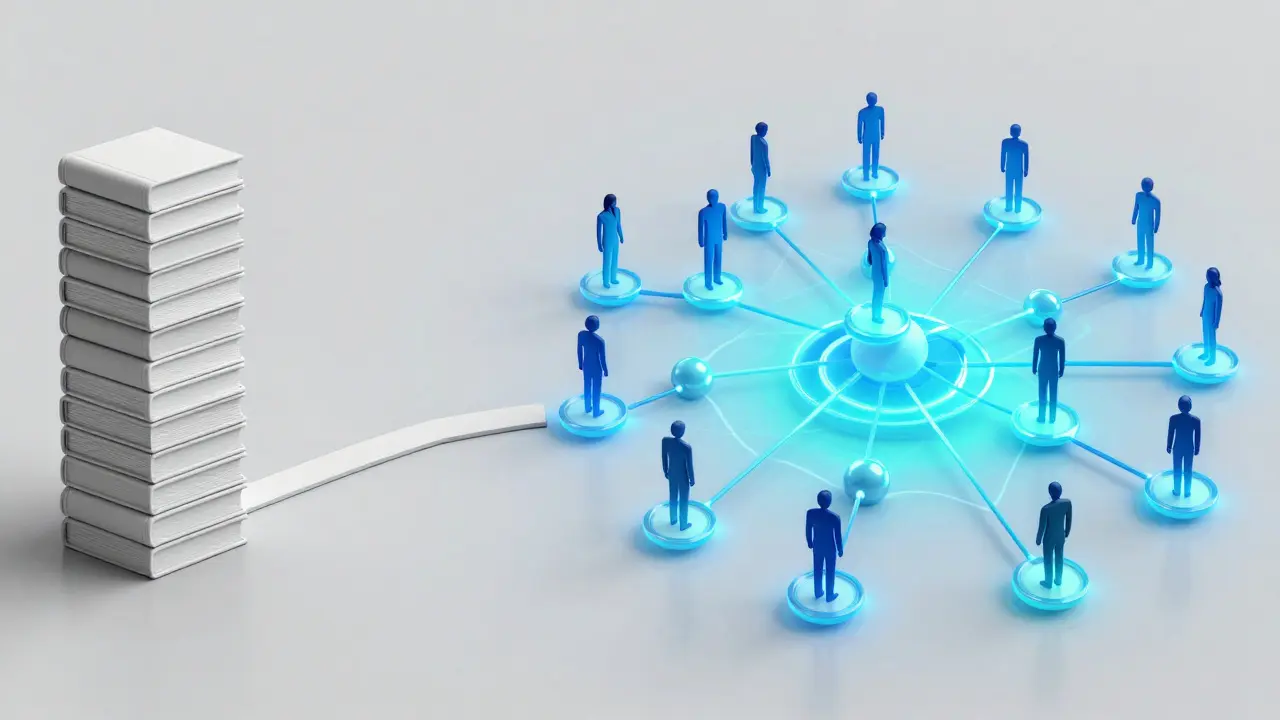
Remember when online courses were just a video lecture and a multiple-choice quiz? That era is dead. By mid-2026, the market for personalized learning has shifted from a nice-to-have feature to the absolute baseline expectation for both corporate training and higher education. If your organization is still using a one-size-fits-all approach to upskilling or curriculum delivery, you are not just falling behind; you are actively wasting budget on disengaged learners.
The adoption of adaptive learning technologies has accelerated faster than most industry analysts predicted. We are no longer talking about simple branching logic based on a wrong answer. We are looking at systems that analyze keystroke dynamics, time-on-task, sentiment analysis from discussion forums, and real-time comprehension checks to adjust the difficulty, format, and pacing of content on the fly. This isn't science fiction anymore. It’s the current standard for scalable, effective education.
The Shift from Static Content to Dynamic Journeys
For years, the promise of digital learning was accessibility. You could watch the same module as someone in another time zone. But accessibility didn’t solve the problem of relevance. The core issue with traditional e-learning was that it treated every learner as if they had the same prior knowledge, learning speed, and preferred modality. This caused two major problems: advanced users got bored and dropped out, while struggling users got overwhelmed and failed.
Adaptive learning is an educational method that uses algorithms to dynamically adjust the learning experience to meet individual needs. Unlike static platforms, it creates a unique pathway for each user. In 2026, this technology has matured significantly. Early iterations relied heavily on pre-assessments to bucket students into "levels." Modern systems use continuous assessment. Every interaction is data. If a learner hesitates before clicking an option, the system notes potential uncertainty. If they breeze through a reading section but fail the quiz, the system infers a gap in deep processing rather than basic recall.
This shift requires a fundamental change in how we view course design. Instead of creating linear modules, instructional designers now build "knowledge graphs"-interconnected nodes of concepts where the path between them varies by user. This means the content library must be granular. You can’t have a single 45-minute video on "Project Management Basics." You need micro-assets: a 3-minute animation on Gantt charts, a text summary of Agile principles, and a case study simulation. The adaptive engine then stitches these together in real-time.
Key Drivers Behind the 2026 Market Surge
Why has adoption spiked so dramatically in the last eighteen months? Several converging factors have pushed organizations to finally invest in serious adaptive infrastructure.
- The ROI Pressure: With economic tightening across many sectors, L&D (Learning and Development) budgets are under scrutiny. Traditional training often has completion rates but low application rates. Adaptive learning shows measurable improvements in retention and skill transfer. Companies can now prove that customized paths reduce time-to-proficiency by 30-40% compared to standard tracks.
- AI Maturity: The underlying machine learning models powering these systems have become more robust and less prone to bias. Natural Language Processing (NLP) allows for open-ended responses to be graded accurately, enabling deeper cognitive assessment beyond multiple choice. Generative AI assists in creating variations of practice questions instantly, ensuring learners don’t just memorize answers but understand concepts.
- Workforce Fragmentation: The modern workforce is incredibly diverse in terms of age, background, and tech-savviness. A Gen Z intern and a Baby Boomer executive may need to learn the same compliance policy, but their entry points and learning styles differ vastly. Adaptive systems bridge this gap without requiring separate courses for each demographic.
We also see a rise in hybrid learning environments. Physical classrooms are increasingly supported by adaptive digital twins. Teachers use dashboards to see exactly which students are stuck on specific concepts during class, allowing for targeted intervention rather than whole-group re-teaching.
Corporate vs. Academic Adoption Patterns
While the technology is similar, the implementation strategies differ sharply between corporate training and academic institutions. Understanding these nuances is critical for anyone planning an adoption strategy.
| Factor | Corporate Sector | Academic Institutions |
|---|---|---|
| Primary Goal | Skill acquisition and performance improvement | Mastery of curriculum and degree progression |
| Content Structure | Modular, job-specific, frequent updates | Structured, semester-long, standardized |
| Data Usage | Linked to KPIs and productivity metrics | Linked to grades and graduation rates |
| Adoption Speed | Fast (agile deployment) | Slow (committee-driven, accreditation hurdles) |
| Key Challenge | Integration with HRIS/LMS ecosystems | Faculty buy-in and pedagogical shift |
In the corporate world, the focus is on efficiency. If an employee already knows 80% of the material, the adaptive system should test them on that and only teach the remaining 20%. This respects the employee’s time and leads to higher satisfaction scores. The integration with Human Resources Information Systems (HRIS) is crucial here. Learning data feeds directly into talent management profiles, identifying high-potential employees who grasp complex concepts quickly.
In academia, the stakes are higher regarding equity and standardization. Professors worry that adaptive paths might lead to unequal exposure to foundational theories. However, the trend in 2026 is toward "guided flexibility." The system ensures all students hit certain milestone competencies, but the route to get there varies. For example, in a mathematics course, one student might master calculus through visual simulations, while another prefers algebraic derivations. Both reach the same endpoint, satisfying accreditation requirements while honoring individual learning preferences.

Technical Infrastructure and Integration Challenges
Adopting adaptive learning is not just about buying software; it’s about building a data pipeline. Many organizations underestimate the technical debt involved. Your Learning Management System (LMS) must support xAPI (Experience API) or Caliper Analytics standards to capture the rich interaction data needed for adaptation. Legacy systems that only track "completed/not completed" are useless for true personalization.
Interoperability remains the biggest headache. An adaptive engine might sit on top of your content authoring tool, but it needs to talk to your assessment platform, your discussion forum, and even your collaboration tools like Slack or Microsoft Teams. In 2026, APIs are more standardized, but security concerns around student and employee data privacy are stricter than ever. GDPR in Europe and various state-level laws in the US require clear consent mechanisms and data minimization practices.
You also need to consider the "cold start" problem. When a new user joins, the system has no data on them. How does it personalize immediately? The best platforms use hybrid approaches: combining initial self-reported surveys with rapid diagnostic assessments in the first few interactions. Within a session or two, the algorithm builds a preliminary profile and begins adjusting. Transparency is key here. Users should know *why* they are seeing certain content. "Because you struggled with X, we’re offering Y" builds trust. Black-box algorithms that feel arbitrary lead to frustration and abandonment.
Ethical Considerations and Algorithmic Bias
As we rely more on algorithms to decide what we learn and how fast we move, ethical questions come to the forefront. There is a genuine risk of "filter bubbles" in education. If a system assumes a student is weak in math because of early struggles, it might keep serving remedial content, preventing them from accessing challenging material. This is known as "tracking" and can have long-term negative effects on confidence and achievement.
Providers in 2026 are increasingly required to demonstrate algorithmic fairness. Audits are being conducted to ensure that adaptive engines do not discriminate based on gender, race, or socioeconomic background encoded in language patterns or access speeds. For instance, if a system penalizes slow response times, it might disadvantage non-native speakers or those with slower internet connections. Good adaptive design accounts for context, not just performance.
Another concern is data ownership. Who owns the learning analytics? The institution, the vendor, or the learner? Emerging frameworks suggest that learners should have portable learning records. Imagine a blockchain-backed transcript that follows you throughout your career, detailing not just what you learned, but how you learned it. This empowers individuals to curate their own professional narratives.
Future Outlook: What Comes After 2026?
The next phase of adaptive learning involves multimodal sensing and emotional intelligence. While controversial, some pilot programs are experimenting with eye-tracking and facial recognition to gauge engagement and confusion levels in real-time. The goal is to intervene before a learner gives up. However, privacy advocates are pushing back hard against biometric surveillance in educational settings. Expect strict regulations to govern this area.
We will also see tighter integration with augmented reality (AR) and virtual reality (VR). Adaptive systems will determine not just *what* you need to learn, but *how* you need to experience it. If you struggle with spatial reasoning in engineering, the system might automatically assign a VR module where you can manipulate 3D objects, rather than showing you a 2D diagram. This level of contextual adaptation promises to revolutionize vocational training and medical education.
Finally, the role of the human instructor will evolve, not disappear. Teachers and trainers will become "learning coaches." Their job shifts from delivering content to interpreting data insights provided by the adaptive system. They will focus on motivation, mentorship, and facilitating peer-to-peer learning among students with complementary skills. The technology handles the cognitive load; humans handle the emotional and social dimensions of learning.
Practical Steps for Implementation
If you are considering adopting adaptive learning in your organization, start small. Don’t try to overhaul your entire curriculum overnight. Identify a high-stakes, high-volume course where engagement is currently low. Pilot the adaptive engine there. Measure not just completion rates, but competency gains and learner satisfaction.
Invest in content granularity. Work with your instructional designers to break down monolithic modules into reusable, tagged assets. Ensure your IT team validates the interoperability standards of any vendor you choose. And most importantly, involve your learners in the process. Get their feedback on the personalization. Do they feel understood, or manipulated? Their voice is the ultimate metric of success.
What is the difference between personalized learning and adaptive learning?
Personalized learning is a broad pedagogical approach that tailors instruction to individual needs, interests, and abilities. It can be facilitated by teachers manually or through technology. Adaptive learning is a specific technological implementation of personalized learning. It uses algorithms and data analytics to automatically adjust the learning path in real-time based on user interactions. All adaptive learning is personalized, but not all personalized learning is adaptive.
How much does it cost to implement adaptive learning software?
Costs vary widely depending on scale and features. SaaS-based adaptive learning platforms typically charge per active user per month, ranging from $5 to $50+ per user. Larger enterprise solutions with custom integrations and dedicated support can cost tens of thousands of dollars annually. Hidden costs include content remediation (breaking down existing materials into granular assets) and staff training. Always request a total cost of ownership (TCO) estimate that includes implementation and maintenance.
Does adaptive learning work for soft skills like leadership?
Yes, but it requires different methods than factual knowledge. Adaptive systems for soft skills often use scenario-based simulations and role-playing exercises. The algorithm assesses decision-making processes, communication style, and empathy in simulated interactions. Feedback is provided on specific behaviors. While harder to quantify than math scores, studies show significant improvements in behavioral change when adaptive simulations are used for leadership development.
What are the biggest risks of using AI in education?
The primary risks include algorithmic bias, data privacy breaches, and over-reliance on automation. Bias can occur if training data lacks diversity, leading to unfair recommendations for certain groups. Privacy concerns arise from collecting detailed behavioral data on students and employees. Over-reliance can diminish the human connection essential for motivation and mentorship. Mitigation requires transparent algorithms, strict data governance, and maintaining a strong human-in-the-loop approach.
How do I choose the right adaptive learning platform?
Look for platforms that offer transparency in their algorithms, robust interoperability (xAPI/Caliper), and strong content authoring tools. Check for evidence of pedagogical effectiveness through case studies or third-party research. Ensure the vendor prioritizes data security and compliance with relevant regulations (GDPR, FERPA). Finally, evaluate the user experience-both for learners and instructors. If the dashboard is confusing, adoption will fail.

Comments (13)
Caitlin Donehue July 14 2026
I've been watching this space for a while and honestly the shift from static videos to dynamic journeys is just so obvious now that we're in it, but it's wild how long it took for the industry to actually catch up with what teachers have been trying to do manually for decades.
Saranya M.L. July 16 2026
The article completely misses the forest for the trees by ignoring the massive infrastructure disparities between Western corporations and developing nations like India where even basic internet stability is a luxury rather than a given, so talking about keystroke dynamics is laughable when half the population cannot afford reliable broadband let alone high-end adaptive hardware which is why these Silicon Valley fantasies fail to translate into meaningful educational equity on the ground despite all the jargon about AI maturity and NLP capabilities that sound impressive in boardrooms but mean absolutely nothing to a student struggling with packet loss in rural areas.
om gman July 17 2026
another day another tech bro telling us that algorithms know us better than we know ourselves its always the same story they sell you a subscription model disguised as personalization while harvesting your every click and hesitation to build a profile they can sell to advertisers or use to manipulate your learning path for their own profit margins instead of your actual growth
Andrea Alonzo July 18 2026
I really feel for the educators who are being asked to pivot overnight to become 'learning coaches' without any real support or training because it places an enormous emotional burden on them to interpret complex data dashboards while still managing the human element of mentorship and motivation which is already a thankless task in many underfunded institutions and I worry that this pressure will lead to burnout among those who care deeply about their students' holistic development rather than just their metric-driven proficiency scores.
Patrick Dorion July 20 2026
The distinction between personalized and adaptive learning is crucial here because most vendors conflate the two to sell software that barely adjusts difficulty levels based on wrong answers whereas true adaptation requires a granular knowledge graph and continuous assessment which is technically demanding but necessary for genuine competency-based progression rather than time-based seat filling.
Joe Walters July 20 2026
lol yeah sure tell that to my company lms that still thinks flash is cool and cant even track if i opened the pdf let alone analyze my sentiment during a discussion forum post its not 2026 yet for most of us poor souls stuck in legacy hell
Bineesh Mathew July 22 2026
We must confront the existential dread of algorithmic tracking which creates a digital panopticon where our intellectual curiosities are commodified and our struggles are quantified into data points that determine our future opportunities thereby reducing the rich tapestry of human cognition to mere binary inputs and outputs in a system that values efficiency over enlightenment and speed over depth of understanding
Jeanne Abrahams July 22 2026
From a South African perspective the focus on VR and AR integration feels like a solution looking for a problem when we are still fighting for basic electricity access in some schools so while the corporate sector plays with biometric surveillance the rest of the world is just trying to get a stable connection to watch a pre-recorded lecture without buffering.
Stephanie Frank July 24 2026
The ROI argument is the only thing that matters to C-suite executives so if you can prove that adaptive learning reduces time-to-proficiency by even 20% you will get budget approval regardless of the ethical concerns about data privacy or algorithmic bias because money talks and engagement metrics walk.
Marissa Haque July 25 2026
Oh my goodness!! The part about micro-assets is so incredibly important!!! You literally cannot just chop up a 45-minute video and expect it to work!!! Instructional designers need to start thinking in terms of interconnected nodes and reusable content pieces from day one!!! It is a complete paradigm shift!!!
Lisa Puster July 26 2026
the whole concept of portable learning records via blockchain is naive at best and dystopian at worst because it assumes learners want to carry their academic baggage forever and it ignores the reality that most people change careers multiple times making past competencies irrelevant so why clutter the ecosystem with immutable data trails that serve no practical purpose other than feeding the surveillance capitalism machine
Oskar Falkenberg July 27 2026
I think the key takeaway for me is that we need to involve the learners in the feedback loop early on because if they feel manipulated by the algorithm rather than supported by it then adoption will fail regardless of how sophisticated the underlying machine learning models are so transparency and trust are just as important as the technical interoperability standards like xAPI or Caliper Analytics which are often overlooked by non-technical stakeholders.
Keith Barker July 27 2026
just another step towards removing the human element from education under the guise of efficiency