

You send a message. You wait ten minutes for it to appear on the blockchain. You pay five dollars in fees for a one-dollar transfer. Sound familiar? This friction is exactly why state channels exist. They are a clever trick that lets you transact instantly and almost for free, while still keeping your money as safe as if it were on the main chain. Think of them like a tab at a pub: you don't pull out cash for every pint; you settle up when you leave. But instead of beer, we're talking about crypto assets and smart contracts.
If you've ever heard of the Lightning Network, you've already used state channels without knowing it. They are the backbone of fast Bitcoin transactions. But they do more than just move coins. In this guide, we'll break down how these channels work, why they matter for scaling blockchains, and where they fit into the broader Layer 2 landscape.
What Exactly Is a State Channel?
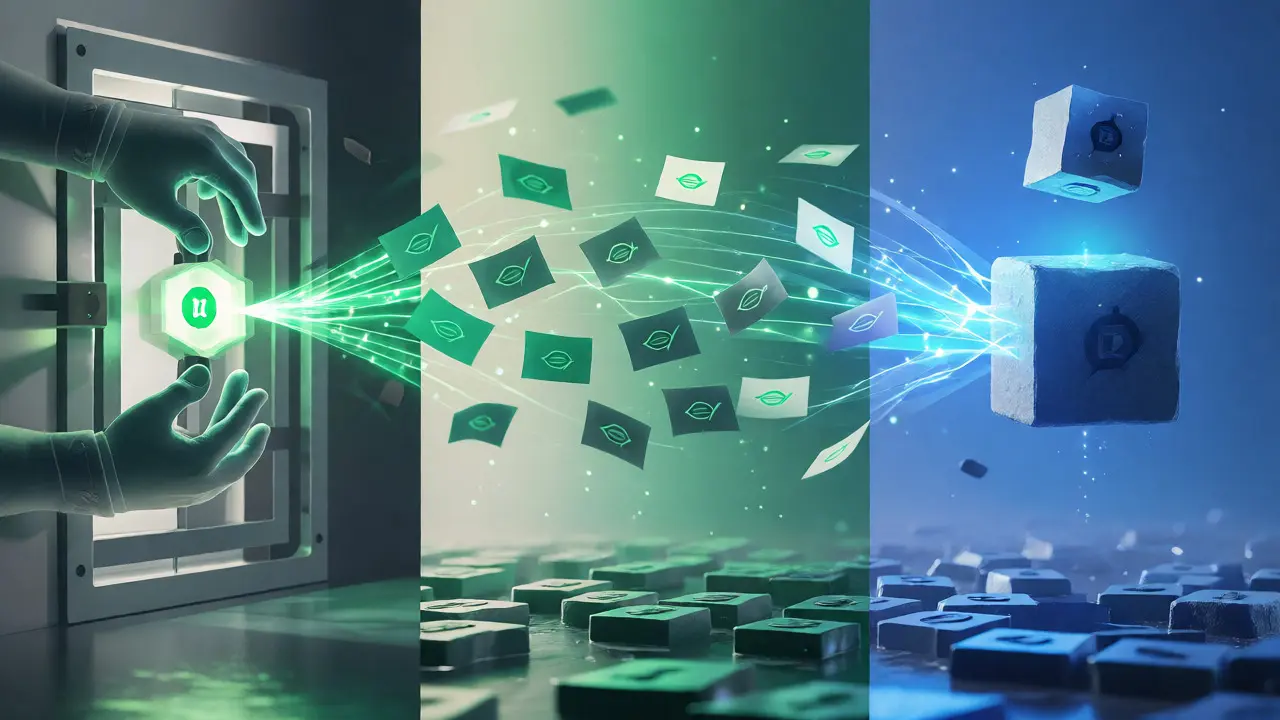
At its core, a state channel is a private communication line between two or more parties that allows them to exchange value or update contract states off the main blockchain. The magic lies in what stays off-chain versus what goes on-chain. Normally, every transaction hits the global ledger, costing time and gas fees. With a state channel, you lock funds into a smart contract on the main chain (Layer 1) once. Then, you trade back and forth thousands of times using signed messages. Only when you're done do you submit the final result to the blockchain.
This approach solves the "trilemma" problem partially by sacrificing some flexibility for speed and cost efficiency. You aren't interacting with the whole world; you're interacting with specific partners. If Alice wants to pay Bob repeatedly, they open a channel. Alice sends Bob signed updates saying "Bob now has 5 BTC." Bob sends back "Alice now has 4.9 BTC." Neither of these needs to be seen by miners until the very end.
The Lifecycle: Open, Update, Close
Understanding the lifecycle is key to grasping how secure these systems are. It happens in three distinct phases:
- Opening: Participants deposit funds into a multi-signature address or smart contract on the main chain. This locks the capital. For example, in Bitcoin's Lightning Network, this creates a 2-of-2 multisig UTXO. Both parties must sign to spend from it initially.
- Updating: This is where the action happens. Parties exchange cryptographically signed messages representing new balances or contract states. Each new state supersedes the previous one. Crucially, no data hits the blockchain here. These updates happen in milliseconds.
- Closing: When participants agree to stop, they take the latest signed state and submit it to the blockchain. The smart contract verifies the signatures and distributes the funds according to the final balance. This requires only one on-chain transaction.
What if someone tries to cheat? Imagine Bob stops responding after receiving payment but before updating his own balance. He might try to close the channel using an old state where he had more money. This is where the dispute window comes in. If Bob broadcasts an outdated state, Alice can broadcast her newer, signed state within a set timeframe (often days). The smart contract sees Alice's signature is valid and overrides Bob's claim. This mechanism ensures that honesty pays, and cheating gets punished.
Payment Channels vs. General State Channels
Not all state channels are created equal. The most common type is the payment channel, which simply tracks who owes whom how much. The Lightning Network uses these exclusively. They are simple, efficient, and great for micropayments.
However, researchers have generalized this concept into general state channels. These allow arbitrary smart contract logic to run off-chain. Instead of just tracking balances, they can track game scores, auction bids, or complex financial derivatives. A paper by Stefan Dziembowski and colleagues formalized this, showing that any deterministic computation could theoretically happen in a channel. While payment channels are live and mature, general state channels are more experimental, often found in gaming applications or specialized DeFi protocols on Ethereum.
| Feature | On-Chain Transaction | State Channel |
|---|---|---|
| Speed | Minutes to hours (block time) | Milliseconds |
| Cost | High (gas/miner fees per tx) | Near zero (only open/close costs) |
| Throughput | Limited by block size/time | Unlimited (off-chain capacity) |
| Privacy | Publicly visible | Private between participants |
| Setup | None required | Requires locking funds upfront |
Why Use Them? The Scalability Argument
Blockchains like Bitcoin and Ethereum process roughly 7 and 30 transactions per second (TPS), respectively. That's tiny compared to Visa's 65,000 TPS. State channels don't change the base layer's TPS directly, but they effectively multiply it. If Alice and Bob make 1,000 transactions in a channel, the network only records 2. This reduces congestion on the main chain, lowering fees for everyone else.
For users, the benefit is immediate. You get near-instant finality. You don't need to wait for six confirmations. You also avoid volatile fee spikes during network congestion. If you're buying coffee with Bitcoin, paying a $5 fee on a $3 latte via the main chain makes no sense. Via a Lightning channel, that fee drops to a fraction of a cent.
Limitations and Risks
State channels aren't a silver bullet. First, they require liquidity. You must lock up capital to open a channel. If you want to receive payments, you need incoming liquidity; if you want to send, you need outgoing. Managing this across a network of channels can be tricky. If you run out of inbound capacity, you can't receive funds even if the channel is open.
Second, availability matters. During the dispute window, you must monitor the blockchain. If your counterparty goes offline or tries to force-close with an old state, you need to react quickly. Most modern wallets use watchtower services-third-party nodes that monitor the chain for you-to mitigate this risk. Without a watchtower, you'd need to keep your node online 24/7.
Finally, there's the setup friction. Opening a channel costs on-chain fees. For one-off transactions, this overhead isn't worth it. State channels shine when you have repeated interactions with the same party. If you're sending one payment to a random merchant, you might be better off on-chain or using a different Layer 2 solution like rollups.
How Do They Compare to Rollups?
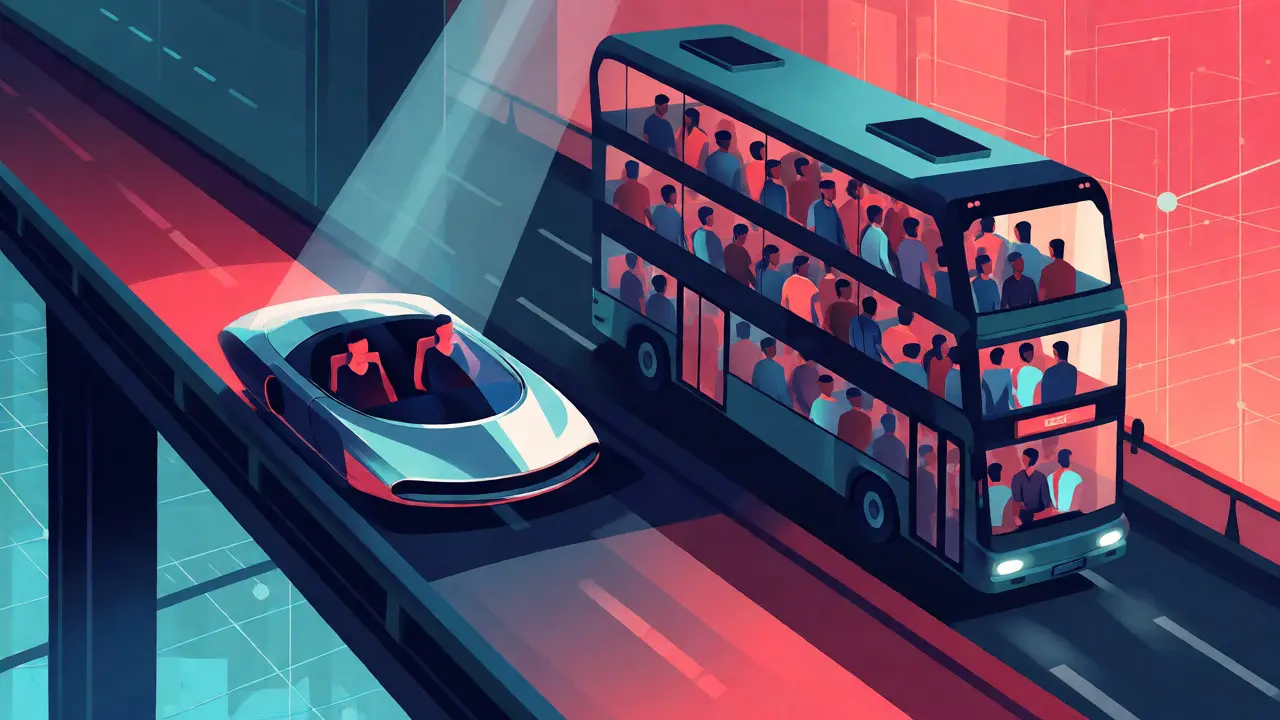
It's easy to confuse state channels with other Layer 2 solutions like rollups. Both aim to scale blockchains, but they do it differently. Rollups bundle hundreds of transactions into a single batch and post compressed data back to the main chain. Anyone can interact with a rollup without opening a dedicated channel. State channels, conversely, are bilateral or multilateral agreements. They offer higher throughput for specific pairs but lack the open accessibility of rollups.
Think of it this way: Rollups are like a bus service-many people share the ride, and the schedule is fixed. State channels are like a private taxi-you control the route and timing, but you pay for the vehicle upfront. Developers often combine both strategies, using channels for high-frequency trading and rollups for general user access.
Getting Started with State Channels
If you're a developer looking to implement state channels, start small. For Bitcoin, look into LND (Lightning Network Daemon) or Core Lightning. These tools handle the complex messaging protocol (BOLT specs) for you. You'll need to manage funding transactions, commitment transactions, and HTLCs (Hashed Timelock Contracts) for routing.
For Ethereum, libraries like Counterfactual or Celer Network provide frameworks for building general state channels. The learning curve is steep because you're dealing with asynchronous state updates and cryptographic proofs. But the payoff is significant: you can build apps with web2-like responsiveness on top of blockchain security.
Are state channels safe?
Yes, provided you follow best practices. Security relies on digital signatures and on-chain dispute resolution. As long as you hold the latest signed state, you can always enforce the correct outcome on the blockchain. Using watchtowers helps protect against malicious counterparties broadcasting old states.
Do I need to keep my computer online?
Ideally, yes, especially during the dispute window. However, many wallets integrate with watchtower services that monitor the blockchain for you. If a bad actor tries to cheat, the watchtower alerts you or automatically submits the correct state, so you don't need constant uptime.
Can anyone join my state channel?
No. State channels are private agreements between specific participants defined at opening. To add a third party, you typically need to close the existing channel and open new ones, or use a hub-and-spoke model where a central node routes payments between multiple channels.
What happens if I lose my private keys?
If you lose the keys to the funding transaction, you lose access to the locked funds. If you lose the keys to the channel state updates, you might struggle to prove the latest balance, potentially losing funds to a cheating counterparty who broadcasts an older state. Always backup your channel state database.
Is the Lightning Network a state channel?
Yes, the Lightning Network is a network of interconnected payment channels, which are a specific type of state channel. It enables instant Bitcoin transfers by routing payments through these channels rather than recording each one on the Bitcoin blockchain.
Final Thoughts
State channels represent a fundamental shift in how we think about blockchain interaction. By moving computation and value transfer off the congested main layer, they unlock real-world usability for cryptocurrencies. While they require careful management of liquidity and availability, their benefits in speed and cost are undeniable. As Layer 2 ecosystems mature, expect to see state channels integrated seamlessly into wallets and apps, making blockchain feel less like a slow ledger and more like the internet.
