

Most companies treat employee training like a checkbox exercise-a boring annual slideshow that everyone ignores. But here is the reality: if your team is using 2020 skills to solve 2026 problems, you are losing money. The gap between what employees know and what the market demands is widening, and the only way to close it is by focusing on high-impact corporate training topics that actually move the needle on productivity.
Quick Summary of Key Learning Areas
- AI Fluency: Moving beyond basic prompts to actual workflow integration.
- Emotional Intelligence: Managing teams in a hybrid, high-stress world.
- Cybersecurity Hygiene: Protecting company data from sophisticated AI-driven phishing.
- Adaptive Leadership: Shifting from "command and control" to coaching.
- Sustainable Business Practices: Meeting ESG goals through practical operational changes.
The AI Transition: From Novelty to Utility
It is no longer enough to tell your staff to "use ChatGPT." We have moved into the era of Generative AI is a type of artificial intelligence capable of generating text, images, or other media based on training data. To stay competitive, businesses need training that focuses on AI orchestration. This means teaching employees how to build custom GPTs for their specific roles or how to use AI agents to automate repetitive data entry.
For example, a marketing team shouldn't just use AI to write a blog post; they should be trained to use it for sentiment analysis on 10,000 customer reviews to find a specific product pain point. This shift from basic prompting to strategic implementation is where the real value lies. If your team doesn't understand the ethics of AI-like data privacy and the risk of hallucinations-they might accidentally leak sensitive client data into a public model.
Emotional Intelligence in a Hybrid World
With more people working from home or in flexible hubs, the "watercooler's effect" is gone. This has created a massive void in Emotional Intelligence is the capacity to be aware of, control, and express one's emotions, and to handle interpersonal relationships judiciously and empathetically (EQ). When you can't see a teammate's body language over a Slack message, misunderstandings skyrocket.
Training should focus on active listening and conflict resolution in digital environments. Instead of generic "communication tips," give your managers a framework for delivering tough feedback via video call without sounding robotic or overly harsh. A team with high EQ handles stress better and has lower turnover rates because people feel seen and heard, even if they are 500 miles away from the head office.
Cybersecurity and the Human Firewall
Technology can only block so many attacks. Eventually, a hacker will find a human who is tired or distracted. That is why Cybersecurity is the practice of protecting systems, networks, and programs from digital attacks training is a non-negotiable. In 2026, we are seeing a rise in "deepfake" audio and video scams where a "CEO" calls an employee asking for an urgent wire transfer.
Your training needs to be concrete. Don't just tell them to change passwords; run simulated phishing tests that mimic real-world AI attacks. Teach them about Multi-Factor Authentication and how to verify identity through "out-of-band" communication. When employees understand that they are the final line of defense, they stop clicking on suspicious links and start reporting them.
Adaptive Leadership and Coaching
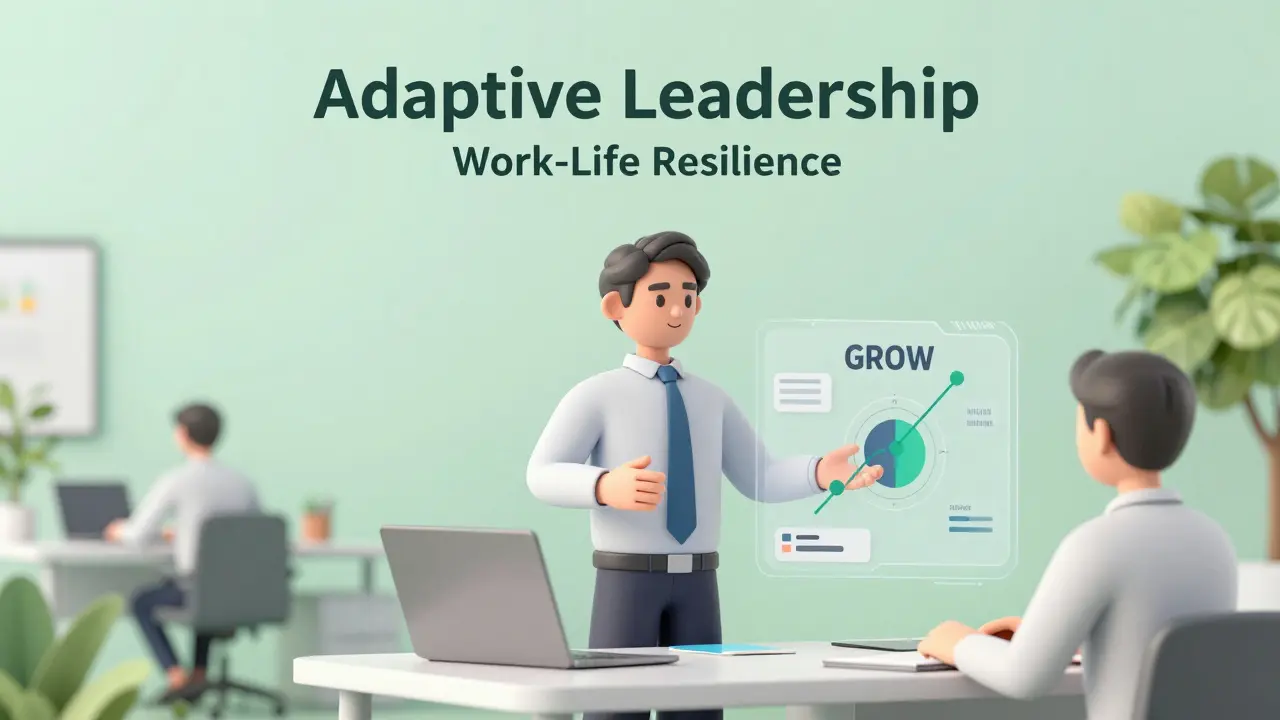
The old style of management-the boss who gives orders and expects them to be followed-is dead. Today's talent expects a coach, not a commander. Leadership Development is the process of improving the skills of people in leadership roles to increase organizational effectiveness now requires a focus on adaptability. Managers need to learn how to pivot their strategy mid-quarter without demoralizing the team.
One effective method is the GROW model (Goal, Reality, Options, Way forward). Instead of giving an answer, a manager asks, "What do you think the biggest obstacle is here?" This empowers the employee to solve the problem, reducing the manager's workload and increasing the employee's confidence. It transforms the manager from a bottleneck into a catalyst.

Data Literacy for Every Department
You don't need to be a data scientist to be data-driven. However, having a team that can't interpret a basic dashboard is a liability. Data Literacy is the ability to read, work with, analyze, and argue with data should be a core competency for everyone from HR to Sales.
Training should move away from complex spreadsheets and toward visual storytelling. If a sales rep can see a trend in a Business Intelligence tool like Tableau or Power BI and explain *why* a certain region is underperforming, they can make proactive decisions rather than waiting for a monthly report. The goal is to move from "I think this is happening" to "The data shows this is happening."
Sustainable Business and ESG Compliance
Sustainability is no longer just about recycling bins in the breakroom. ESG is a set of standards for a company's operations that socially conscious investors use to screen potential investments (Environmental, Social, and Governance) now affects your ability to get loans and attract top talent. Employees, especially Gen Z and Millennials, will leave a company that doesn't take its social impact seriously.
Corporate training should cover how to reduce the carbon footprint of daily operations. For a logistics company, this might mean optimizing routes to save fuel. For a software firm, it might be about choosing cloud providers with carbon-neutral data centers. When employees understand the "why" behind sustainability, they find creative ways to reduce waste that management would never think of.
Mental Health and Resilience Training
Burnout is a productivity killer. If your employees are exhausted, they make mistakes, and those mistakes cost money. Training in Mental Health Awareness is the understanding of how mental health issues affect people and the ability to provide support or seek help is essential for long-term retention.
This isn't about telling people to "do yoga." It's about teaching boundaries. Train your staff on how to disconnect after hours and how to manage "cognitive load" in a world of constant notifications. When a company provides tools for resilience, employees are more likely to bounce back from a failed project instead of quitting out of frustration.
Cross-Functional Collaboration
Silos are the enemy of growth. When the product team doesn't talk to the sales team, you end up building features that nobody wants to buy. Training in Cross-Functional Collaboration is the process where people from different functional areas work together toward a common goal breaks these barriers.
Try implementing "Job Shadowing" programs where a developer spends a day with a customer support agent. Seeing the frustration of a user firsthand is more powerful than any PowerPoint presentation. This builds empathy and ensures that everyone is aligned with the customer's actual experience, not just the internal roadmap.
Time Management in the Distraction Economy
The average worker is interrupted every few minutes by an email, a chat message, or a meeting. We have lost the ability to perform "deep work." Training in Time Management should focus on energy management rather than just calendars.
Teach your team about "Time Blocking" and the "Pomodoro Technique." Encourage a culture where it is acceptable to turn off notifications for two hours a day to focus on a complex task. When people regain control over their time, the quality of their output improves, and the stress of a growing to-do list vanishes.
Conflict Resolution and Negotiation
Disagreements are inevitable, but toxic conflict is optional. Conflict Resolution is the process of finding a peaceful solution to a disagreement is a skill that can be taught. Most people default to either aggression or avoidance; neither works in a professional setting.
Training should provide a script for "crucial conversations." Instead of saying "Your work is sloppy," teach them to say, "I noticed a few errors in the report, and I'm worried it will affect the client's trust. How can we fix this together?" This shifts the focus from the person to the problem, preserving the relationship while solving the issue.
| Topic | Traditional Approach (Outdated) | Modern Approach (2026) | Expected Outcome |
|---|---|---|---|
| AI Training | Basic Tool Overview | Workflow Integration & Orchestration | Higher Efficiency/Reduced Labor Cost |
| Leadership | Directing & Managing | Coaching & Adaptive Support | Higher Employee Retention |
| Cybersecurity | Annual Video Quiz | Live Simulations & AI-Phishing Tests | Reduced Risk of Data Breaches |
| Wellness | Health Insurance Perks | Resilience & Cognitive Load Management | Lower Burnout Rates |
How to Implement These Topics Successfully
You can't just throw a 10-hour course at your employees and expect them to change. The best training is integrated into the flow of work. Use a "Micro-learning" approach-short, 5-to-10 minute modules that can be consumed during a break. This prevents cognitive overload and keeps the information fresh.
Also, tie training to actual incentives. If an employee completes a certification in AI orchestration, give them a project that lets them use that skill and a bonus for the efficiency they create. When people see that learning leads to better opportunities and more money, they stop resisting training and start seeking it out.
How often should corporate training be updated?
In fast-moving fields like AI or Cybersecurity, content should be reviewed quarterly. For softer skills like Leadership or EQ, an annual review is usually sufficient, provided there is a continuous feedback loop from employees.
What is the most effective way to measure the ROI of training?
Don't rely on "smile sheets" (surveys where people say they liked the trainer). Instead, measure KPIs. If you train on AI fluency, look for a reduction in time-to-complete tasks. If you train on leadership, look for lower turnover rates in those specific departments.
Should training be mandatory or voluntary?
Compliance-based training (Cybersecurity, Legal) must be mandatory. Skill-based training (AI, Leadership) should be encouraged through a "pull" system-give employees a budget or time allowance to choose the skills they want to develop, which increases engagement.
Can small businesses afford high-end corporate training?
Yes, by leveraging Open Educational Resources (OER) and specialized online platforms. You don't need an expensive consultant; you can use a mix of curated online courses and internal knowledge-sharing sessions (Lunch and Learns).
How do you handle employees who resist new technology training?
Resistance usually comes from fear of obsolescence. Address this by framing the training not as "replacing" the human, but as "upgrading" their toolkit. Show them a specific, easy win-like a task that used to take four hours and now takes ten minutes-to prove the value.
Next Steps for HR and Managers
If you are feeling overwhelmed, don't try to launch all ten topics at once. Start with a "Skill Gap Analysis." Survey your team to find where they feel most inadequate. If the sales team is struggling with lead conversion, start with Negotiation and Data Literacy. If the engineering team is burning out, start with Resilience and Time Management.
Create a roadmap for the next twelve months. Assign one "Focus Topic" per quarter. This keeps the momentum going without disrupting the daily workflow. Remember, the goal isn't to finish the training; the goal is to change the behavior of the organization.
