

Think about the last time you learned something new-not from a textbook or a webinar, but from someone who walked the same path as you. That’s the quiet power of alumni communities. They’re not just reunion events and LinkedIn groups. When done right, they become living classrooms where people keep growing long after graduation.
Why Alumni Communities Work Better Than Online Courses
Online courses give you structure. But they rarely give you context. Alumni communities do. When a 2012 engineering grad shares how they scaled a startup using the same design principles taught in class, it sticks. When a former journalism student tells you how they rebuilt their career after layoffs using network contacts from school, it feels real. That’s the difference.
Harvard’s alumni network, for example, reports that 68% of participants in their lifelong learning programs say they learned something they immediately applied to their job. That’s not because the content was harder-it’s because it came from someone who’s been there.
These communities thrive on shared history. You don’t need to prove your credentials. You’re already in. That lowers the barrier to asking dumb questions, trying new things, or even switching careers. It’s peer-driven learning at its most practical.
How These Communities Stay Active (And Why Most Fail)
Not all alumni groups are created equal. Many fade into quiet LinkedIn threads or outdated newsletters. The ones that last? They’re built around three things: regular value, personal connection, and low friction.
Take the University of Michigan’s alumni mentorship program. It doesn’t require a 30-minute Zoom call. Instead, it uses a simple matching system: you pick one skill you want to learn (like data visualization or public speaking), and the system connects you with someone who’s done it. You get one 20-minute coffee chat-virtual or in person. No pressure. No homework. Just a real conversation.
Meanwhile, MIT’s alumni learning hub offers monthly micro-courses led by alumni. One recent module? “How I Used AI to Cut My Team’s Meeting Time by 40%.” No corporate fluff. Just the raw steps, tools, and mistakes. Over 12,000 people signed up last year.
The failure point? When institutions treat these as marketing tools instead of learning ecosystems. If your alumni portal only pushes donation requests or event promotions, people tune out. But if it’s a place where you can learn, teach, and grow-without being sold to-you’ll keep coming back.
What People Actually Learn in These Groups
It’s not always what you expect.
A 2025 survey of 8,000 alumni across 37 universities found the top three things people learned outside their degree:
- How to lead without authority (72% of respondents)
- How to navigate career pivots (68%)
- How to learn new tech tools fast (61%)
These aren’t skills you get in a lecture hall. They come from watching someone else stumble, adapt, and recover. A former chemistry major now runs a nonprofit? She taught herself grant writing by shadowing another alum on a Zoom call. A software engineer who switched to teaching? He learned curriculum design from a retired professor who still mentors alumni.
The real value? Exposure to diverse paths. You start seeing that your degree isn’t a cage-it’s a launchpad. And the people who’ve gone farther down those paths? They’re happy to help.
How to Find or Build a Strong Alumni Learning Network
If your school’s alumni group feels lifeless, you don’t have to wait for them to fix it. Start small.
Here’s how:
- Find the quiet connectors. Look for alumni who post helpful threads, answer questions, or organize informal meetups. They’re often the ones who don’t hold official titles.
- Propose a micro-activity. Instead of launching a full program, try: “Let’s meet once a month to share one thing we learned this month.” No agenda. No slides. Just stories.
- Use free tools. A Discord server, a Notion page, or even a simple Google Form for topic suggestions can keep things moving. No need for fancy platforms.
- Focus on giving, not getting. The first thing you do? Offer something. A resource. A connection. A 10-minute review of someone’s portfolio. That builds trust faster than any email blast.
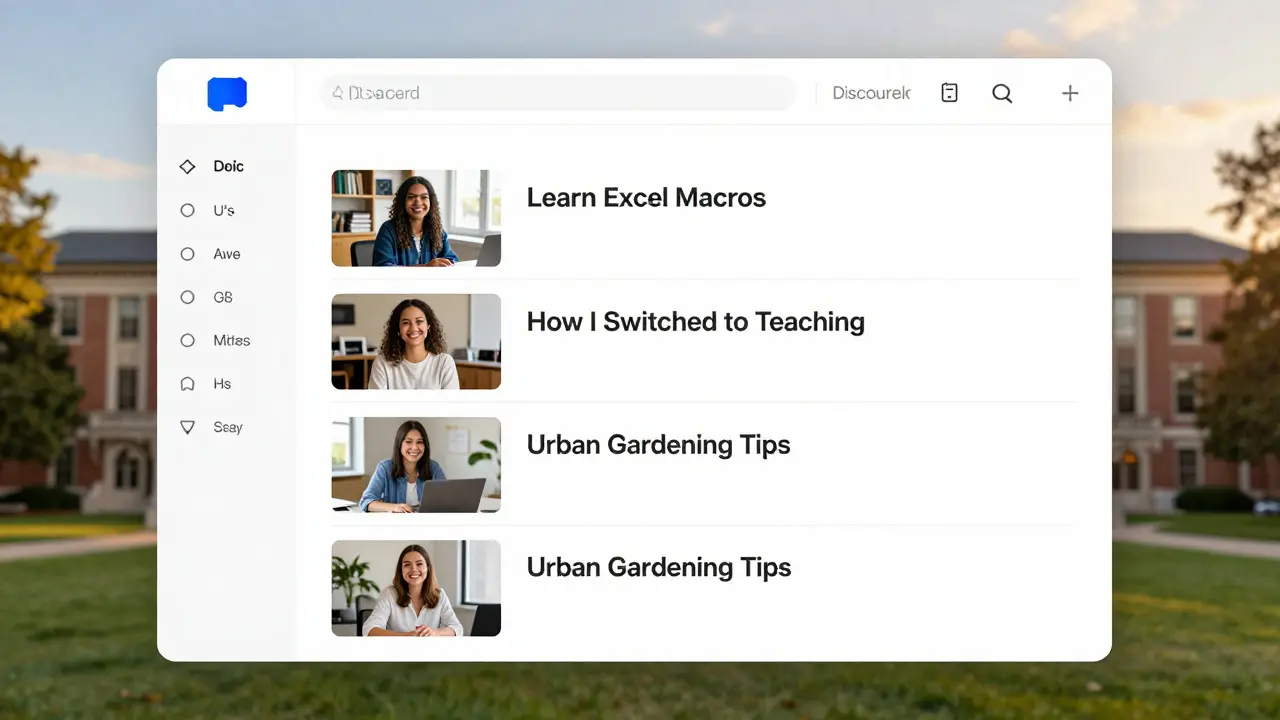
At Stanford, a group of alumni started a “Skill Swap” Slack channel. One person teaches Excel macros. Another teaches how to read legal contracts. A third teaches basic woodworking. No fees. No certificates. Just people helping people learn.
The Hidden Benefit: Rebuilding Your Identity
Most people don’t talk about this-but it’s real.
After college, many of us lose the rhythm of learning. We stop asking questions. We stop trying new things. We get stuck in roles that feel safe but stale.
Alumni communities bring back the learner mindset. They remind you that you’re not defined by your job title or your graduation year. You’re someone who can still grow.
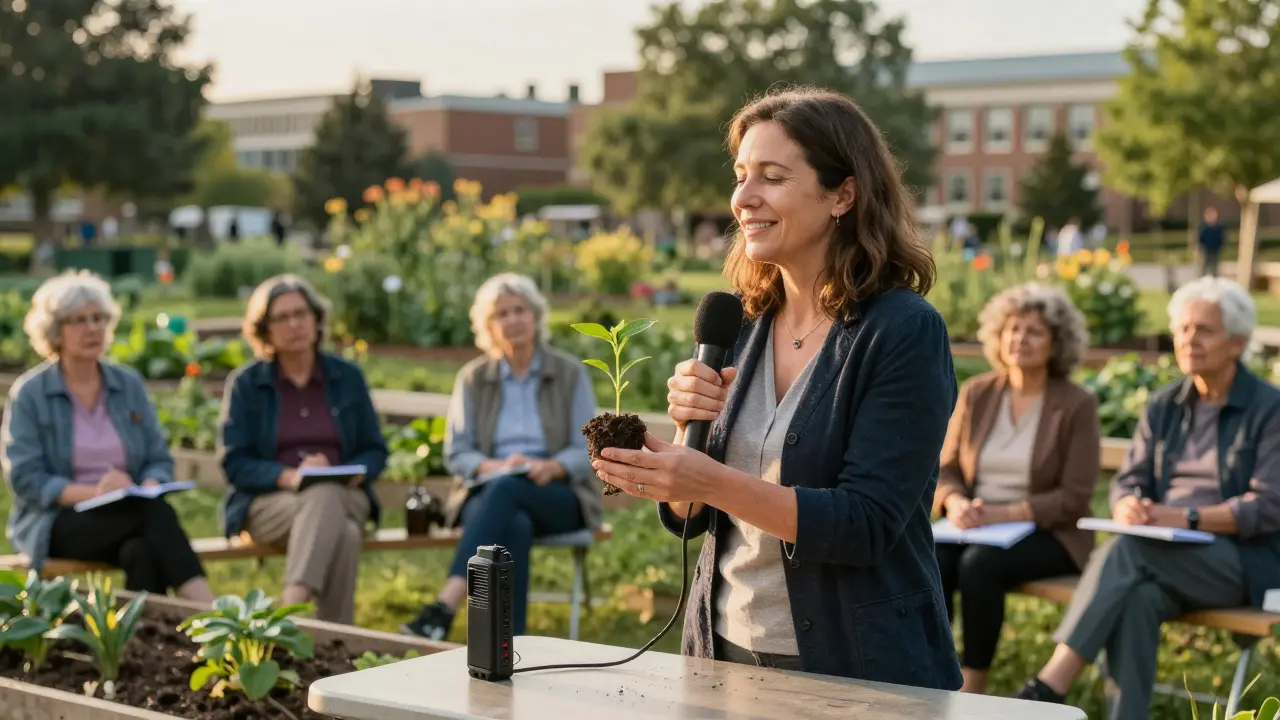
One alum from Ohio State, now in her late 40s, told me she joined her alumni learning circle after a divorce. She didn’t know what she wanted to do next. The community didn’t push her to “find herself.” It just gave her space to explore. She took a free course on urban gardening. Then she started a podcast about community food systems. Now she’s advising city councils.
That’s the quiet revolution happening in these networks: they’re not about credentials. They’re about rediscovery.
What’s Next? The Future of Alumni Learning
More schools are starting to see alumni networks as learning ecosystems-not just fundraising channels.
Yale now offers free, on-demand micro-lectures from alumni faculty. Columbia partners with local co-working spaces so alumni can attend events without paying membership fees. The University of Toronto built a digital “learning passport” that tracks your alumni learning activities-like badges, but without the gamification.
The trend? Personalization. Flexibility. Low barriers. No more one-size-fits-all reunions. Instead, you get to choose how you stay connected: through mentorship, peer teaching, project collaboration, or just showing up to listen.
And the best part? You don’t need permission to join. You just need to show up-and ask a question.
Are alumni communities only for recent graduates?
No. Alumni communities thrive when they include people at every stage-recent grads, mid-career professionals, retirees. The most valuable insights often come from those who’ve been in the field for 20+ years. Many programs actively recruit older alumni as mentors because their real-world experience is what newcomers need most.
Do I need to pay to join an alumni learning group?
Most don’t charge. Many are run by volunteers or funded through university budgets. Some premium programs exist-like exclusive workshops or certification tracks-but they’re optional. The core value-connecting, sharing, learning-is almost always free. If a group asks for money upfront, ask what you’re actually getting in return.
Can I start my own alumni learning group if my school doesn’t have one?
Absolutely. Start with a simple idea: a monthly Zoom call where five people share one thing they learned. Use free tools like Google Forms to collect topics, Discord for ongoing chat, and email lists to invite others. You don’t need approval. You just need to begin. Many successful alumni networks started with one person who said, “Why not?”
How do I find alumni in my field?
Use your school’s alumni directory (most are free to search). Filter by industry, location, or job title. Then reach out with a short, specific message: “I saw you work in renewable energy-I’m exploring that field too. Would you be open to a 10-minute chat?” Most people say yes. If they don’t reply, move on. Don’t take it personally.
What’s the difference between alumni networks and LinkedIn groups?
LinkedIn groups are often noisy, full of job posts and ads. Alumni communities are usually smaller, trust-based, and focused on learning-not promotion. They’re built on shared history, not algorithms. You’re more likely to get honest advice, real feedback, or an introduction to someone who actually works at the company you’re targeting.

Comments (9)
mani kandan March 13 2026
There's something almost poetic about alumni networks becoming the silent libraries of real-world wisdom.
Not the kind with dust on the shelves, but the kind where someone quietly leaves a flashlight on the nightstand for the next person lost in the hallway of career transitions.
I’ve seen a civil engineer from my batch turn into a urban farmer-all because a 60-year-old alum sent her a link to a community garden project in Kerala.
No certificate. No fee. Just a message: ‘You’ve got this.’
That’s the magic no algorithm can replicate.
It’s not about networking-it’s about being seen as someone who still has room to grow.
And that, my friends, is the most radical act of belonging in a world obsessed with output.
Rahul Borole March 14 2026
The structural integrity of alumni learning ecosystems lies in their non-hierarchical nature.
Unlike formal education, which is predicated on credential validation, these networks operate on experiential reciprocity.
The value proposition is not transactional but relational.
When a former student shares a failure narrative-unfiltered and unedited-it triggers neurocognitive anchoring that no MOOC can replicate.
Harvard’s 68% application rate is not an anomaly-it is an empirical validation of embodied knowledge transfer.
Institutional design must prioritize micro-interactions over macro-marketing.
One 20-minute conversation can recalibrate an entire career trajectory.
Therefore, scalability should not be the metric-depth should.
Sheetal Srivastava March 15 2026
Frankly, I find this whole ‘alumni learning’ narrative a bit performative.
Most of these initiatives are just thinly veiled fundraising pipelines with a veneer of altruism.
And don’t get me started on ‘micro-courses’-who even has time for another 20-minute Zoom call when your inbox is already a graveyard?
Let’s be honest: unless you’re from a top-tier institution, these networks are ghost towns.
I’ve been invited to three ‘exclusive’ alumni webinars-each one ended with a donation link.
Real learning doesn’t come from Slack channels or Notion pages.
It comes from Ivy League connections and private dinners.
And if you’re not in that circle? Well, good luck with your ‘peer-driven’ journey.
It’s all just virtue signaling with a side of LinkedIn spam.
Bhavishya Kumar March 17 2026
The article contains several grammatical inconsistencies and lacks proper parallel structure in its bullet points
For instance the phrase ‘how they rebuilt their career after layoffs’ should be ‘how they rebuilt their careers after layoffs’
Additionally the use of ‘you’re already in’ is colloquial and inappropriate for a formal educational context
Furthermore the Oxford comma is omitted in multiple lists which compromises clarity
While the sentiment is commendable the execution undermines credibility
Professional discourse demands precision not sentimentality
And please stop using ‘dumb questions’ as a rhetorical device-it’s patronizing
There is no such thing as a dumb question only poorly framed ones
ujjwal fouzdar March 18 2026
You know what’s really revolutionary?
Not the Slack channels or the Notion pages.
Not even the coffee chats.
It’s the quiet rebellion of showing up when no one’s watching.
When you’re 47 and divorced and you sit alone in your kitchen at 2 a.m. and type into a Google Form: ‘I want to learn how to grow tomatoes’
And then someone from 1989 replies: ‘I did that too. Here’s my compost recipe.’
That’s not learning.
That’s resurrection.
We’ve been sold this myth that growth stops at 22.
That your degree is your coffin.
But alumni communities? They’re the tombstones that turn into seedlings.
You don’t need permission to become someone new.
You just need one person who remembers your name from sophomore year.
And says: ‘I’m still here. So are you.’
Anand Pandit March 19 2026
Just wanted to say thank you for writing this.
I started a tiny alumni coffee chat group last year with three people from my university.
One was a retired nurse. One was a single dad building apps. One was a woman who left corporate law to open a pottery studio.
We meet once a month. No agenda. Just coffee and stories.
Two months in, the nurse taught me how to read my own blood pressure.
The dad showed me how to use AI to schedule his kid’s school pickups.
The potter? She taught me how to make glaze from recycled glass.
I didn’t know I was lonely until I found out I wasn’t.
You don’t need a big system.
You just need to say: ‘Hey, I’m here.’
And someone else will say: ‘Me too.’
Reshma Jose March 21 2026
I started a Discord server for my alumni group with one rule: no job posts.
Just ‘what I learned this week’ threads.
Within two weeks we had 87 members.
One guy taught us how to fix a leaky faucet using duct tape and a rubber band.
Another taught us how to negotiate a raise using only emojis.
It’s chaotic. It’s messy. It’s beautiful.
People are starving for real connection.
Not networking.
Not branding.
Just ‘hey, I did this thing and it kinda worked.’
And guess what? We’re planning our first in-person meet-up next month.
No sponsors.
No slides.
Just pizza and stories.
rahul shrimali March 22 2026
Alumni networks work because they’re real not because they’re organizedBharat Patel March 22 2026
There’s a deeper rhythm here that we rarely name.
College gives us structure.
Work gives us obligation.
But alumni communities? They give us rhythm.
The kind that returns like seasons.
Not because you’re told to show up.
But because somewhere inside you, you remember who you were before the world told you who you should be.
That former chemistry major who became a nonprofit founder?
She didn’t find a new career.
She remembered the girl who used to spend weekends in the lab not because she had to-but because she loved the smell of solutions.
These networks don’t teach skills.
They remind us of the parts of ourselves we buried under titles and deadlines.
And that? That’s the only credential that lasts.