
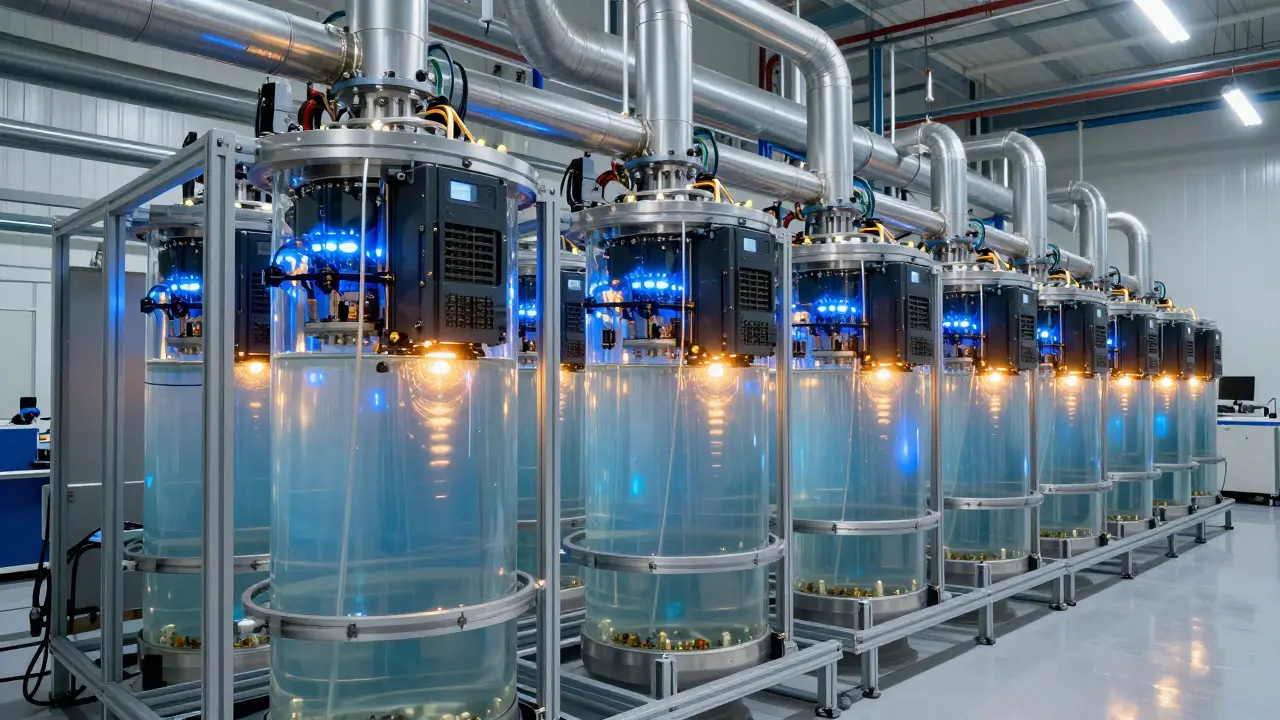
Bitcoin mining has a reputation for being an energy hog, but there is a massive, untapped resource hiding in plain sight: heat. Every single watt of electricity an ASIC miner consumes is eventually converted into thermal energy. Right now, most mining farms just blow this heat into the atmosphere using giant fans. It is a waste of energy that, if captured, could heat entire cities. In fact, analysts at K33 estimate that Bitcoin mining generates around 100 terawatt-hours (TWh) of waste heat every year. To put that in perspective, that is enough to keep every home in Finland warm during the winter.
What Exactly is Hashrate Heating?
When we talk about Bitcoin mining heat reuse is the process of capturing thermal energy produced by cryptocurrency mining hardware and redirecting it for residential, commercial, or industrial heating, we are talking about a concept known as hashrate heating. Instead of treating the heat as a byproduct to be discarded, operators treat the mining rig as a high-tech boiler that happens to pay you in Bitcoin while it runs.
Most mining equipment produces what engineers call "low-grade heat," typically ranging between 40°C and 50°C. While that isn't hot enough to melt steel, it is perfect for space heating and water warming. By using Immersion Cooling-where miners are submerged in a specialized dielectric fluid-operators can capture up to 96% of the heat generated. This fluid carries the heat much more efficiently than air, making it easy to pump that warmth into a building's radiator system or a municipal water loop.
Turning Waste into Profit: The Economics
The real magic of this setup is that it turns a cost center (heating) into a revenue stream. Normally, if you run a warehouse in a cold climate, you pay a monthly bill for natural gas or electricity just to keep the pipes from freezing. With a mining-integrated system, you still pay for electricity, but you earn Bitcoin in return.
Consider a real-world scenario in Canada. A research facility spending $50,000 a year on natural gas heating can potentially cut that cost by $35,000 by swapping 70% of its heating load for mining heat. While the electricity for the miners might cost $80,000, the Bitcoin they produce can offset a huge chunk of that. In places like Quebec, where hydroelectric power is cheap and winters are brutal, facilities have seen net heating cost reductions of 40% to 70%.
| Feature | Conventional Gas/Electric | Bitcoin Mining Heat |
|---|---|---|
| Energy Flow | One-way consumption | Dual-purpose (Compute + Heat) |
| Financial Impact | Pure expense | Expense offset by BTC revenue |
| Carbon Profile | High (if using fossil fuels) | Lower (displaces gas boilers) |
| Heat Grade | High/Variable | Consistent Low-Grade (40-80°C) |
Industrial and Municipal Applications
This isn't just a theory for hobbyists in their basements. Large-scale commercial deployments are already happening across North America and Europe. MintGreen, a Vancouver-based company, has pioneered this by plugging mining heat into district heating networks in Switzerland and Finland. Instead of a central gas plant, the city uses a mix of sources, including the steady thermal output from miners, to warm homes and offices.
Beyond city grids, industrial uses are getting creative. Have you ever wondered how to keep a massive water tank warm without spending a fortune? An industrial concrete company used mining waste heat to warm a 2,500-gallon water tank, saving thousands of dollars per month. Other high-value applications include:
- Greenhouses: Plants need consistent warmth to grow in winter; mining rigs provide a steady baseload of heat.
- Aquaculture: Fish farms and labs require precise temperature control that mining heat can sustain.
- Food Production: Fermentation and drying processes in beverage production-including whiskey distillation-benefit from steady, low-grade warmth.
- Commercial Services: In Idaho, a car and truck wash used Softwarm rigs to melt snow and heat water, reporting that the Bitcoin earned actually exceeded the cost of the heating service.

The Environmental Argument
One of the biggest criticisms of Bitcoin is its carbon footprint. However, heat reuse changes the equation. When a mining facility replaces a natural gas boiler in a district heating system, it directly reduces CO2 emissions. For example, MintGreen's systems can reduce CO2 by about 3,100 tons per megawatt of capacity. This comes from two places: 1,800 tons saved by ditching natural gas and 1,300 tons by making the mining process itself more efficient.
By using the same energy twice-once for computing and once for heating-the industry moves toward a circular energy economy. This makes mining more competitive; a miner who sells their heat can afford to operate with lower electricity prices than a miner who just vents their heat into the air.
Finding the Perfect Fit: Who Should Use This?
Not every building is a great candidate for a mining heater. The key is thermal load. You need a facility that needs heat consistently, rather than one with huge, sudden spikes in demand. If you have a steady need for warmth 24/7, you are a perfect candidate.
Ideal locations include materials science labs that need to keep components curing or drying, or bioprocessing facilities that maintain specific temperatures for chemical reactions. If you are in a cold climate and your heating bill is a constant drain on your margins, shifting to hashrate heating could be a game-changer.
The Future of Mining Geography
For years, miners have chased the lowest possible electricity price, regardless of where that was-even if it meant building a data center in a desert where the heat was a liability. We are seeing a shift. The economic incentive is moving toward regions with high heating demand and moderate electricity costs.
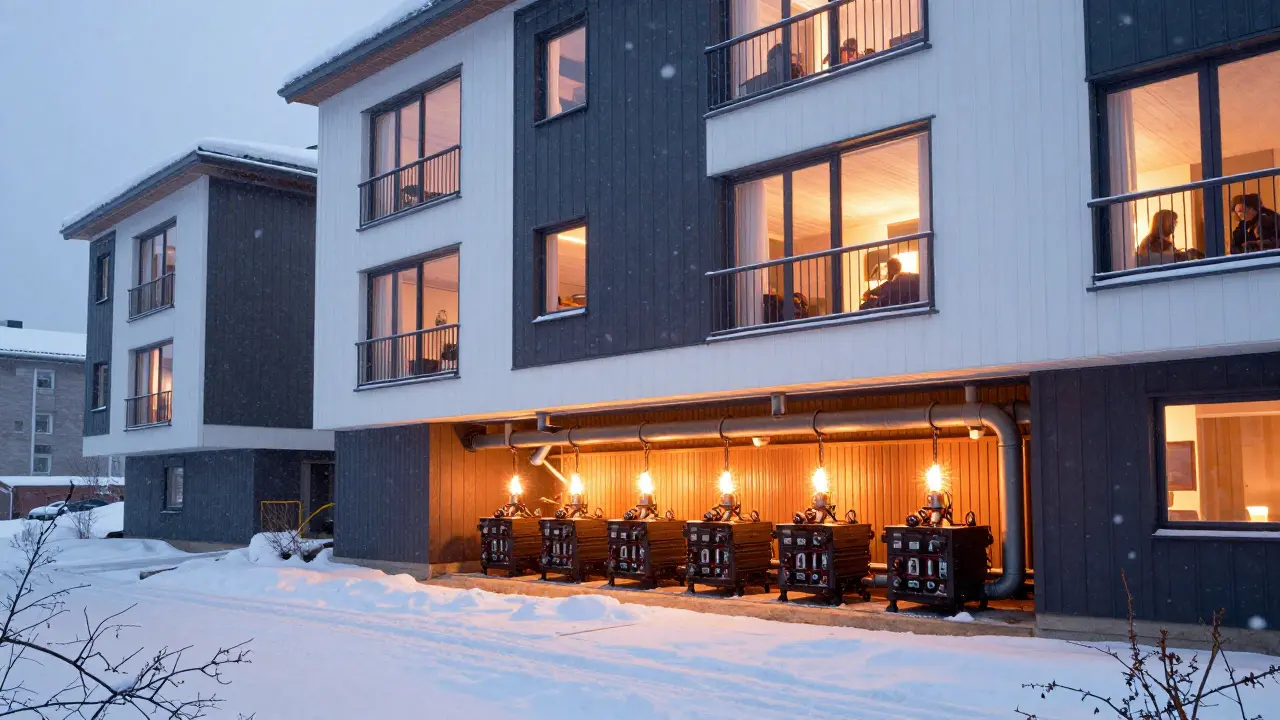
Imagine a future where every new apartment complex or industrial park in Scandinavia or Canada has a "mining basement." These units would provide the building's hot water and heating while generating a digital asset that helps pay for the building's maintenance. This decentralizes the grid and turns waste into a community asset.
Is Bitcoin mining heat actually hot enough to heat a house?
Yes. Most rigs produce heat between 40°C and 50°C, which is perfect for underfloor heating or radiators. With immersion cooling or heat pumps, this can be boosted or distributed effectively to maintain a comfortable indoor temperature in almost any cold-climate home.
Does this make Bitcoin mining more sustainable?
It does. By displacing the need for fossil-fuel-based heating (like natural gas or heating oil), it reduces the overall carbon footprint of both the heating system and the mining operation. It essentially allows the same kilowatt-hour of electricity to perform two useful jobs.
What is the difference between air cooling and immersion cooling for heat reuse?
Air cooling uses fans to push heat into the air, which is hard to capture and transport. Immersion cooling submerges the hardware in a liquid that absorbs heat far more efficiently. This liquid can then be pumped through a heat exchanger, allowing for much higher heat recovery rates-up to 96%.
Can any business use this to save money?
Any business with a consistent thermal load (meaning they need heat all the time) can benefit. This includes greenhouses, breweries, laundromats, and warehouses. The biggest savings occur in regions where electricity is relatively cheap compared to the cost of natural gas or propane.
Who are the main companies leading this technology?
MintGreen is a leader in municipal district heating, while Softwarm focuses on commercial and small-business heating solutions. Other companies like Power Mining create specialized containers designed specifically to integrate with municipal heating systems.
Next Steps for Implementation
If you are a facility manager or business owner looking to explore this, start by analyzing your thermal load. Do you have a consistent need for heat, or is it sporadic? If you have a steady load, calculate your current annual spend on heating fuel. Compare that to the local industrial electricity rates and the current profitability of the latest ASIC miners.
For those in municipal government, the next step is identifying "heat sinks"-areas of the city where heat demand is highest-and exploring partnerships with mining operators who can provide baseload thermal energy. Transitioning from a gas-reliant grid to a diversified one that includes hashrate heating can lower costs and hit carbon reduction targets simultaneously.

Comments (12)
Jeremy Chick April 29 2026
Finally someone admits this stuff is just a giant space heater that pays you. Absolute game changer for anyone living in a frozen wasteland. 🤘
Stephanie Serblowski April 29 2026
Oh sure, because nothing says "environmental savior" like running high-wattage ASICs just to keep your toes warm. 🙄 Total win-win for the Proof-of-Work ecosystem and the local HVAC lobby! ✨
Renea Maxima May 1 2026
The irony is that we are trying to optimize the waste of a digital currency to save a physical resource. It's almost like we're just rearranging the deck chairs on the Titanic of energy consumption. 🙃
E Jones May 2 2026
Wake up people! This isn't about heating greenhouses or keeping fish warm in some fancy aquaculture tank, this is clearly a Trojan horse for the globalists to integrate their surveillance grid directly into our municipal heating pipes so they can shut off your warmth the second you stop eating the bugs they want us to eat. It is a sinister, convoluted web of thermal control designed to make us dependent on a decentralized ledger that is actually controlled by a secret cabal of central bankers pretending to be libertarians while they sip champagne in their underground bunkers!
Sagar Malik May 3 2026
The sheer ignornance of the masses is astounding. You speak of "heat reuse" as if the thermodyanmic laws are mere sugestions. The entropy of the system is still increasing, and the l_atency of the grid infrastructure will likely collapse under such unprecidented loads of l_ow-grade thermal energy. Absolute amatuers. 🙄
Rahul U. May 4 2026
This is a very innovative approach to sustainability. It is wonderful to see the intersection of financial technology and green energy solutions. 🌿🔋
Frank Piccolo May 4 2026
Typical. We're importing these "solutions" from Finland and Switzerland. Why aren't we dominating this tech in the US already? We have the biggest farms. Pathetic that we're just reading about it instead of owning the whole market. 🇺🇸
Seraphina Nero May 5 2026
It sounds like a really nice way to help people stay warm without spending so much money.
Megan Ellaby May 7 2026
I wonder how the imersion fluid holds up over time. Does it get gunky or need to be replaced often? 🧐
selma souza May 8 2026
The terminology used in the discussion of "hashrate heating" is imprecise. Furthermore, the claim that this reduces CO2 emissions ignores the primary source of the electricity used to power the miners themselves. It is a flawed logic.
Barbara & Greg May 9 2026
One must question the morality of prioritizing the accumulation of a digital asset over the prudent stewardship of our planetary resources. Using a speculative currency as a heating utility is a symptom of a society that has lost its ethical compass.
James Boggs May 11 2026
I agree with your assessment of the utility here. Most impressive.