
How many online courses have you started building only to find out no one wants to buy them? You spent weeks recording videos, designing slides, and writing scripts-only to launch and get three sales, all from your mom and a friend who felt bad for you. That’s not failure. That’s avoidable waste.
Building a course before you know if people will pay for it is like opening a restaurant without checking if there’s even a hunger for that type of food. You don’t need a full course to test demand. You need a simple pre-sale.
Pre-sale pricing isn’t about tricking people into buying something that doesn’t exist. It’s about asking: Would you pay for this? And if they say yes, you get real money before you lift a finger to build the final product. This isn’t theory. It’s how successful course creators like Laura Belgray, Amy Porterfield, and even small indie educators make six figures without burning out.
Why Most Course Creators Fail Before They Start
Most people think the hardest part of selling courses is marketing. It’s not. The hardest part is building something nobody asked for.
A 2024 survey of 1,200 course creators found that 73% of those who launched without validating demand earned less than $500 in their first year. Meanwhile, those who ran a pre-sale campaign before building saw 82% conversion rates from interested leads to paying customers.
Why? Because when you build first, you’re guessing. When you pre-sell, you’re listening.
You might think: “But I know my audience. I’ve been teaching this for years.” That’s not enough. People don’t buy because you’re an expert. They buy because they believe the course will solve a specific problem faster, easier, or cheaper than their current options.
Pre-sale pricing forces you to answer three questions:
- What exact problem are people willing to pay to solve?
- How much are they already spending to fix it?
- Why would they choose your solution over others?
How to Run a Pre-Sale Without a Full Course
You don’t need a polished curriculum. You don’t need a website. You don’t even need a name for your course yet.
Here’s how to do it in under a week:
- Define your core outcome. Not the topic-what will they achieve? For example: “Go from overwhelmed beginner to confidently launching a Shopify store in 14 days” instead of “Shopify for beginners.”
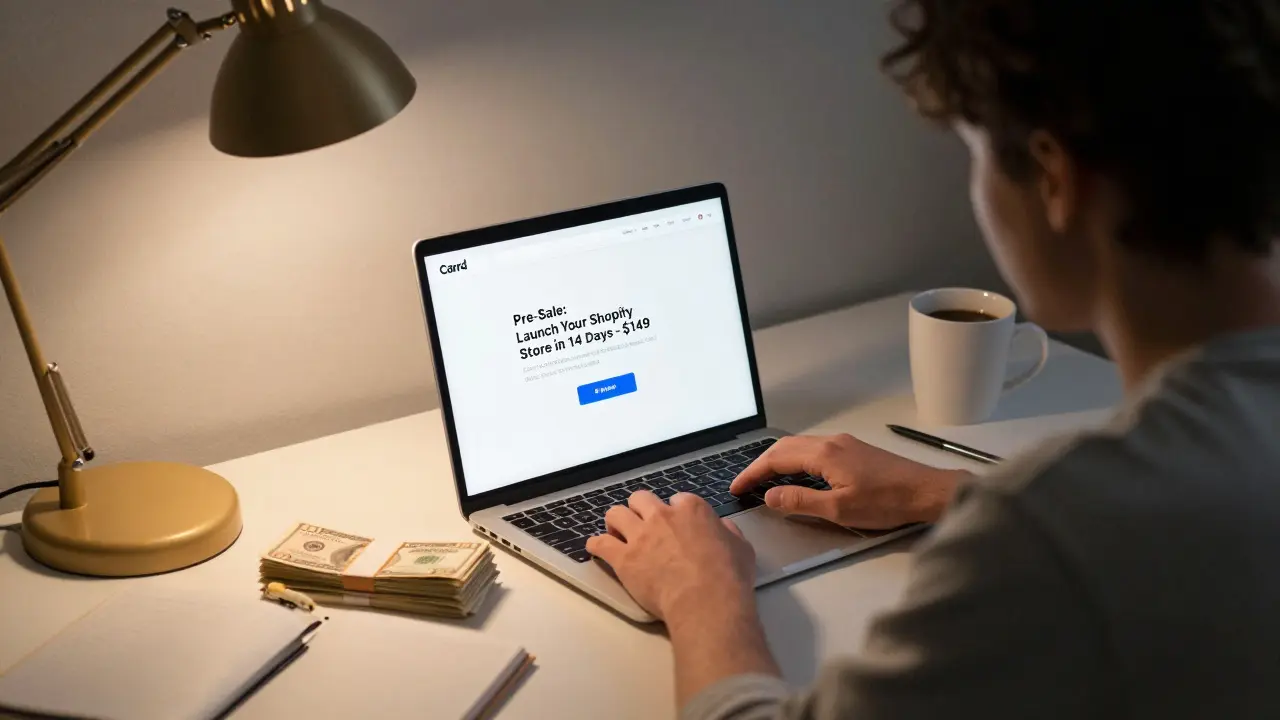
- Write a one-page sales page. Use a free tool like Carrd or Canva. Include: the problem, the outcome, what’s included (even if it’s just a rough outline), and a price. Add a simple “Buy Now” button linked to Stripe or PayPal.
- Price it at 30-50% off your planned final price. This creates urgency and rewards early buyers. If you plan to charge $299, offer it for $149 during the pre-sale.
- Test it on your audience. Post it in Facebook groups, Reddit threads, LinkedIn comments, or DMs to your email list. Don’t just say “Check out my course!” Say: “I’m testing a course that helps people do X. Would you pay $149 for it? If yes, reply ‘YES’ and I’ll send you the link.”
- Track responses. If you get 10 “YES” replies and 2 people actually buy, you have validation. If you get 50 replies and 15 purchases, you’re onto something. If no one buys, go back to the drawing board.
One educator, Maria Chen, tested a pre-sale for a course on “Fixing Instagram Reels That Don’t Get Views.” She spent two hours making a Carrd page, posted it in three Facebook groups, and got 18 sales in 48 hours. She didn’t record a single video yet. With $1,710 in hand, she built the course knowing exactly what people wanted.
What to Include in Your Pre-Sale Offer
Your pre-sale isn’t a discount. It’s a commitment. People are paying for certainty-not a promise.
Here’s what to include to make it feel real:
- A clear timeline. “Course launches March 15. You’ll get access immediately.”
- A detailed outline. Even if it’s rough: “Module 1: Diagnose Your Reels Problem | Module 2: The 3-Second Hook Formula | Module 3: Posting Schedule That Works.”
- What they’ll get. Video lessons? Worksheets? Templates? Community access? List it.
- A guarantee. “If you’re not satisfied after the first lesson, get your money back-no questions asked.”
- Early-bird bonuses. “First 20 buyers get a free 1:1 strategy call.”
Don’t overpromise. If you’re not planning to include live Q&As, don’t say you will. People will feel cheated later. Honesty builds trust-and repeat buyers.

What to Do When Nobody Buys
If your pre-sale flops, it’s not the end. It’s data.
Ask yourself:
- Was the problem too vague? “Improve your Instagram” is too broad. “Get 5x more views on Reels without buying ads” is specific.
- Was the price too high? Check what competitors charge. If everyone else sells similar content for $49, $149 feels like a stretch.
- Did you target the wrong audience? Maybe your Facebook group was full of hobbyists, not small business owners.
- Did you ask for feedback? Sometimes people say “no” because they don’t understand the value. Ask them: “What would make this worth buying?”
One creator, Jamal Wright, tried selling a course on “Advanced Excel for Marketers” for $199. Zero sales. He asked his audience: “What’s your biggest Excel headache?” The top answer: “I spend hours copying data from Google Sheets to Excel.” He rebuilt the course around “Automate Google Sheets to Excel in 10 Minutes” and priced it at $69. Sold 47 copies in a week.
How Pre-Sale Pricing Changes Everything
When you pre-sell, you’re not just validating demand. You’re funding your project.
You can use the money to:
- Hire an editor to clean up your scripts
- Buy better lighting for your videos
- Pay for a simple website or LMS
- Run a small ad campaign to scale after launch
And here’s the biggest shift: you stop creating for yourself. You start creating for the people who already said yes.
Instead of asking, “What should I teach?” you ask, “What did they pay for?”
That changes your tone, your examples, your pacing. You stop guessing what’s important. You know.

Common Mistakes (And How to Avoid Them)
Even smart people mess up pre-sales. Here are the top three mistakes-and how to fix them:
- Waiting too long to launch. You think you need a perfect product. You don’t. Launch with 80% of the content. Add the rest as you go. People don’t expect perfection-they expect progress.
- Not following up. If someone says “yes” but doesn’t buy, DM them. “Hey, saw you were interested. Still thinking about it? I’ve got 3 spots left at this price.” Most people need a nudge.
- Ignoring the feedback. If 10 people say, “I wish this included a checklist,” add it. If no one mentions a certain module, cut it. Your pre-sale is feedback, not a sales pitch.
One course creator, Elena Ruiz, got 37 pre-sales for her “Email Marketing for Coaches” course. She noticed 15 people asked for a “script template.” She added it. After launch, those 15 people became her biggest advocates-and referred 23 new buyers.
When Pre-Sale Pricing Doesn’t Work
Pre-sale pricing works for most digital products. But it’s not magic.
It won’t work if:
- You’re targeting a market with no spending power (e.g., high school students needing free tools).
- Your audience is too small or scattered (e.g., “courses for left-handed blacksmiths in rural Iowa”).
- You’re trying to sell something too complex without trust (e.g., “Become a Certified Therapist in 30 Days”).
In those cases, try a different approach: offer a free mini-course or a low-cost $7 workshop first. Build trust before asking for a big purchase.
But for 90% of course creators-coaches, consultants, freelancers, hobbyists turned teachers-pre-sale pricing is the fastest, cheapest, and most reliable way to build something people actually want.
Next Steps: Your 7-Day Pre-Sale Plan
Here’s exactly what to do this week:
- Day 1: Write your core outcome in one sentence.
- Day 2: Design a simple sales page (Carrd, Canva, or even a Google Doc).
- Day 3: Set your pre-sale price (30-50% off your planned price).
- Day 4: Reach out to 20 people in your audience (email, DM, group post).
- Day 5: Open the link. Track sales.
- Day 6: If you got 5+ sales, start building. If not, tweak your offer and try again.
- Day 7: Send a thank-you email to buyers-even if it’s just “I’m building this for you.”
You don’t need permission to start. You don’t need a degree. You don’t need a team. You just need one person willing to pay before you build.
That’s all it takes to turn an idea into a real business.
Do I need a website to run a pre-sale?
No. You can use free tools like Carrd, Gumroad, or even a simple PayPal link. Your pre-sale page doesn’t need to be fancy-it just needs to clearly explain what you’re selling, why it matters, and how to buy. Most buyers care about the outcome, not the design.
What if I get pre-sales but can’t deliver on time?
Be upfront. If you need more time, tell buyers: “We’re adding two more lessons based on your feedback, so access will be delayed by one week.” Most people will understand-especially if you give them a bonus, like a free template or extra Q&A session. Transparency builds loyalty.
Can I pre-sell a course if I’m not an expert yet?
Yes-if you can clearly explain how your solution helps. You don’t need to be the world’s top expert. You just need to know more than your buyer does right now. Many successful course creators started by teaching what they were learning. Your journey is your credibility.
How do I know if my price is too high or too low?
Check what similar courses charge. If your competitors charge $99-$149, pricing at $49 might signal low quality. Pricing at $299 might scare people off. Aim for the middle. Then test. If you get 10+ sales at $129, you’re in the right range. If you get zero, lower it by $20-$30 and try again.
Should I offer a refund policy?
Always. A 7-14 day money-back guarantee reduces risk for buyers and builds trust. It also protects you from chargebacks. Make it clear and easy to claim. People are more likely to buy when they know they can walk away.

Comments (12)
Indi s January 29 2026
This made me realize I wasted months building a course no one asked for. I thought my passion was enough. Turns out, people don't care about your journey unless it solves their problem.
Rohit Sen January 30 2026
Pre-sales? That's just crowdfunding with a fancy name. Real entrepreneurs build first, then monetize. This advice is for people scared of risk.
Vimal Kumar January 31 2026
Love this. I tried pre-selling my yoga for busy moms course last month. Got 12 sales in 3 days. Built the whole thing with that cash. Best decision ever. Also, shoutout to Maria Chen - her Reels course is legit.
Amit Umarani January 31 2026
You say 'pre-sale' but you mean 'pre-order.' And you misspelled 'sequence' in the outline. Also, 'Carrd' isn't a word - it's Carrd.co. Details matter.
Kayla Ellsworth January 31 2026
So let me get this straight - you're telling people to charge $149 for a course that doesn't exist, based on 10 people saying 'yes' in a Facebook group? Brilliant. Next you'll tell us to sell moon land deeds.
Soham Dhruv February 1 2026
man i tried this last year with my photoshop for beginners thing and got 3 sales but one was my dog (j/k i dont have a dog) but seriously it worked. i built the course with the money and now i make 2k a month. no cap
Dave Sumner Smith February 1 2026
Why are you letting strangers fund your course? This is how cults start. Someone's harvesting your email list. Or worse - the government's tracking your pre-sale data to predict your political views. I've seen the leaks.
Cait Sporleder February 2 2026
The epistemological underpinnings of pre-sale validation are fascinating - it reorients the creative process from speculative production to market-informed co-creation, thereby transforming the educator from a solitary artisan into a responsive facilitator of collective desire. One must consider the ontological weight of the buyer’s commitment as not merely transactional but existential.
Paul Timms February 4 2026
This is solid. I used this method for my budgeting course. Got 18 buyers. Built it. Launched. Made $5k in the first week. No fluff. Just do it.
Jeroen Post February 5 2026
Everyone’s obsessed with money but nobody asks - what if the real value is in the doing? The act of creation is the reward. Pre-sales turn art into commerce. And commerce is just another form of control.
Nathaniel Petrovick February 6 2026
Just did this last week for my AI prompt course. Got 22 sales before writing a single word. Used the cash to hire a video editor. My students are raving. Seriously, if you’re building a course and not doing this - you’re doing it wrong.
Honey Jonson February 7 2026
omg this is so true i just started my calligraphy course and i was about to spend 3 weeks recording stuff but then i made a carrd page and asked my ig followers and got 8 people to buy before i even opened canva. now i’m building it with their money and its so much less stress. thanks for the nudge 🙏