

Most coding bootcamps promise you’ll be job-ready in 12 weeks. But if you’ve ever sat through a bootcamp where you built the same fake to-do app for the third time, you know that’s not enough. Real-world work doesn’t come with pre-written specs or a perfect tutorial. It’s messy. It’s unpredictable. And if your bootcamp doesn’t prepare you for that, you’re not ready for the job market.
Why Real-World Projects Matter More Than Tutorials
Learning to code by following a YouTube tutorial is like learning to drive by watching a race car driver. You see the movements, but you never feel the road, the weather, or the panic when something goes wrong. Real-world projects force you to deal with broken APIs, unclear client feedback, and deadlines that slip because someone else on your team got sick.
Bootcamps that rely on textbook exercises train students to solve problems that already have answers. But employers don’t hire people who can solve known problems-they hire people who can figure out what the problem even is. A 2024 survey by TechHire UK found that 73% of hiring managers said the biggest gap in bootcamp grads was their ability to work on open-ended, ambiguous projects without step-by-step instructions.
That’s why project-based learning isn’t just a teaching method-it’s a survival skill. When you build something that matters to a real user, you stop caring about getting the syntax right and start caring about whether the user can actually use it.
How to Structure a Real-World Bootcamp Project
Not every project labeled "real-world" is actually real. A fake client, a made-up business, and a pretend deadline don’t count. Here’s what a real project structure looks like in a bootcamp that works:
- Start with a real problem-not a textbook one. Partner with a local nonprofit, a small business, or a startup. Maybe it’s a café that needs a simple online ordering system. Or a community center that wants to track volunteer hours. These aren’t glamorous, but they’re real.
- Give students the full scope-not just the code. That means writing user stories, talking to the client, managing feedback, and handling scope creep. No one ever says, "I need a login page," they say, "I need people to sign up without calling me every time." Your job is to translate that.
- Use real tools-GitHub, Slack, Trello, Jira. No fake environments. No custom dashboards. If you can’t deploy it to a live server, it’s not real.
- Include peer review and iteration-not just grading. Students present their work to the client. They get feedback. They go back and fix it. No second chances in the real world. Neither should there be in bootcamp.
- End with a live demo-in front of the client. No slides. No recordings. Just you, your code, and someone who actually needs it.
This isn’t harder than traditional bootcamp work-it’s just different. Instead of 10 small exercises, you do one big one. But that one big one teaches you everything you need to know.
What Real-World Projects Teach That Lectures Can’t
When you build a website for a local bakery, you don’t just learn React. You learn how to:
- Ask the right questions when the client says, "I want it to be modern but also cozy,"
- Deal with someone who changes their mind after you’ve spent three days on it,
- Explain why their idea won’t work without sounding like you’re criticizing them,
- Manage your time when the client doesn’t reply for a week,
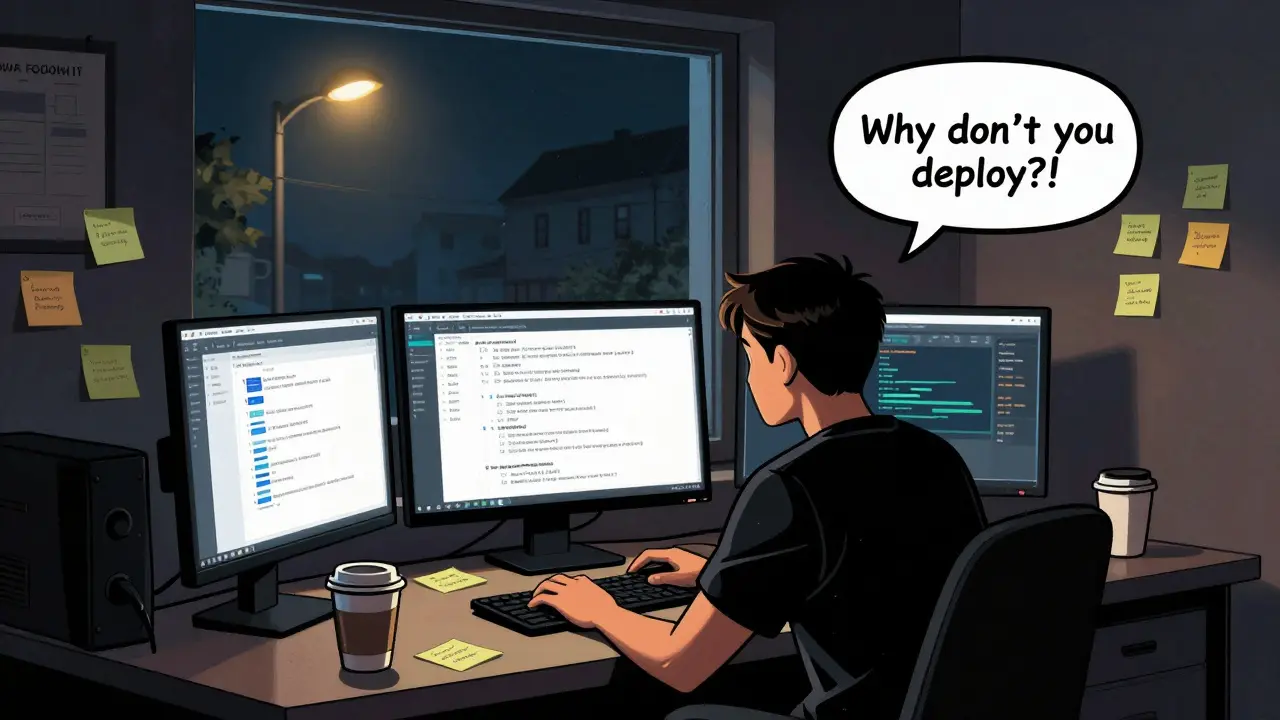
- And yes-debug a deployment error at 2 a.m. because the server went down right before their weekend sale.
These aren’t "soft skills." They’re technical skills. The code doesn’t run unless you can communicate. The app doesn’t get used unless you understand the user. The project doesn’t ship unless you can manage expectations.
One bootcamp in Edinburgh partnered with 12 small businesses last year. Students built everything from inventory trackers for a bike repair shop to a booking system for a yoga studio. Half the students got hired by the businesses they worked with. The other half had stories to tell in interviews that no one else could match.
Common Mistakes Bootcamps Make (And How to Fix Them)
Not all project-based learning is created equal. Here are the mistakes most bootcamps make-and how to avoid them:
- Mistake: Using "fake clients" from a database of made-up personas. Fix: Find real organizations. Even if they’re tiny. A local library, a church group, a family-owned shop-they all have problems that need solving.
- Mistake: Giving students a perfect spec sheet. Fix: Give them a vague idea and make them define the scope. That’s what real clients do.
- Mistake: Letting students work alone. Fix: Require teams of 3-4. Real jobs aren’t solo gigs. Learn to argue over Git branches, delegate tasks, and handle conflict.
- Mistake: Only grading the final product. Fix: Grade the process. How did they communicate? How did they handle setbacks? Did they ask for help when stuck?
The best bootcamps don’t just teach code. They teach how to think like a developer in the wild.
What Employers Actually Look For
Here’s what a hiring manager from a Glasgow tech startup said last month: "I don’t care if you know React or Python. I care if you can look at a broken website and figure out why it’s slow. I care if you can explain to a non-tech person why their idea won’t work without making them feel dumb. I care if you’ve ever shipped something that someone actually used. That’s what matters."
That’s not a quote from some random guy. That’s standard. A 2025 report from the UK Tech Skills Council showed that 89% of tech employers now prioritize project experience over certifications. Even big companies like Skyscanner and Monzo now skip traditional coding tests and ask applicants: "Show me something you built that solved a real problem."
So if your bootcamp’s portfolio is full of clone apps-Twitter, Spotify, Netflix-you’re not standing out. You’re blending in. But if you’ve got a live link to a booking system for a local dog groomer? That’s different. That’s memorable. That’s hireable.
How to Find Real Projects for Your Bootcamp
You don’t need a corporate sponsor to get real projects. Start small:
- Reach out to local business associations. Most have directories of small businesses looking for help.
- Visit community centers, libraries, or charities. They often have outdated websites or manual processes that could be automated.
- Use platforms like Code for Britain or Volunteer Scotland-they connect tech volunteers with nonprofits.
- Ask your instructors if they know any alumni who run small businesses. Many are happy to help.
Don’t wait for a perfect project. Start with something simple. A contact form that actually works. A spreadsheet turned into a web app. A calendar that doesn’t require email back-and-forth. Those are real problems. And they’re worth solving.
Final Thought: Your Bootcamp Project Is Your Resume
When you graduate, your resume will be one page. Your GitHub will be a link. But your real-world project? That’s your story. It’s the thing you’ll talk about in interviews. It’s the thing that makes someone say, "Wait, you built that for a local bakery? Tell me more."
That’s not just a project. That’s your edge.
Can project-based learning work for beginners with no coding experience?
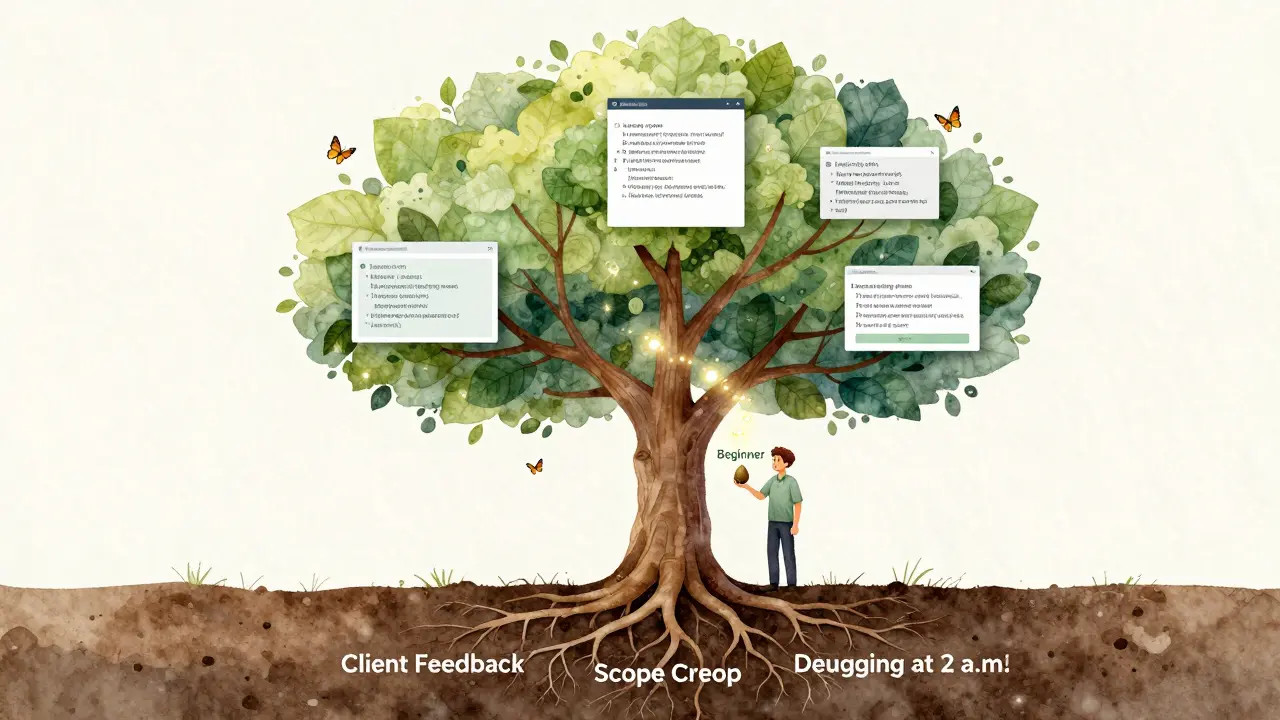
Yes, but only if the project is broken down properly. Beginners need scaffolding-not hand-holding. Start with a simple, well-defined problem like turning a paper sign-up sheet into a web form. Give them a starter template, walk them through the first step, then let them figure out the rest. The goal isn’t to make them experts in three weeks-it’s to teach them how to learn by doing. Most beginners who complete one real project gain more confidence than those who finish ten tutorials.
How long should a real-world bootcamp project take?
Between 3 and 6 weeks is ideal. Too short, and you don’t get the messy parts-feedback loops, revisions, unexpected bugs. Too long, and students burn out or lose focus. A 4-week project with weekly check-ins, client feedback sessions, and a live demo hits the sweet spot. It’s long enough to feel real, short enough to finish without quitting.
What if the client doesn’t know what they want?
That’s the point. Real clients rarely know what they want. Your job is to ask the right questions: "What’s the biggest pain point?" "What do you do right now?" "What happens if this doesn’t get fixed?" Guide them with examples. Show them screenshots of similar tools. Help them visualize the outcome. This is a core skill in tech-you’re not just coding, you’re translating needs into solutions.
Do I need to use specific technologies for real-world projects?
No. The technology matters less than the process. A student can build a real project with HTML/CSS/JavaScript, Python/Django, or even no-code tools like Bubble or Webflow. What matters is that they solve a real problem using a real workflow-version control, deployment, user feedback, iteration. Employers care about your ability to deliver, not the framework you used.
What if my bootcamp doesn’t offer real projects?
Build your own. Find a local nonprofit or small business. Offer to help for free. Document your process. Build it in public on GitHub. Share it on LinkedIn. You’ll end up with a stronger portfolio than most bootcamp grads-and you’ll have learned more in 4 weeks than they did in 12. Real-world experience isn’t something you wait to be given. It’s something you create.
Next Steps: What to Do After Your Project
Once your project is live, don’t stop there. Do these three things:
- Write a case study-even if it’s just a 300-word post on Medium. Explain the problem, your solution, what you learned, and what you’d do differently.
- Deploy it publicly-use Vercel, Netlify, or GitHub Pages. Make sure the link works. Test it on your phone. Share it with your network.
- Record a 2-minute walkthrough-not a fancy video. Just you talking to the camera, showing the site, explaining your choices. This becomes your interview starter.
These aren’t extras. They’re your next job application.

Comments (9)
Aafreen Khan January 16 2026
lol i built a to-do app in bootcamp too 😅 but then i coded a booking system for my aunt’s taco truck and got hired by her. real shit = real jobs. no cap. 🌮💻Pamela Watson January 16 2026
you guys are overcomplicating this. just teach them html and css. if they can make a website that doesn’t look like trash, they’re ahead of 90% of bootcamp grads. no need for all this client drama.Christina Kooiman January 18 2026
I can't believe people still think "real-world" means just slapping together a React app for a local bakery. That's not real-world-that's a glorified internship. Real-world is when your code breaks production because you didn't test edge cases, you're on call at 3 a.m., and your manager yells at you because the API key expired. Bootcamps need to simulate chaos, not cozy little projects. And if you're using GitHub without proper commit messages? You're already fired.Stephanie Serblowski January 18 2026
okay but let’s be real-most of these "real projects" are just warm fuzzies for students. 🤡 I’ve seen bootcamps partner with nonprofits that have zero tech needs. The client says "make it pretty" and the student spends 2 weeks on font choices. Meanwhile, the actual problem? They can’t track donations. That’s the gap. You can’t fake empathy. And if you’re grading on "user feedback" but the client didn’t even read the thing? That’s not learning-that’s performance art. 🙃Renea Maxima January 19 2026
what if the real project is just a mirror? what if the real problem isn’t the bakery’s website… but the fact that we’ve convinced ourselves that code is the solution to everything? maybe the real-world project is learning to sit with ambiguity… and not fix it. 🌫️Jeremy Chick January 20 2026
this whole post is just a fancy way of saying "do more work." cool. i built a dashboard for a vet clinic last year. client changed the scope 7 times. server crashed twice. i cried once. got hired. end of story. stop romanticizing bootcamps. just ship something and shut up.Sagar Malik January 21 2026
you think this is new? this is just neoliberal pedagogy repackaged as "innovation." the real issue is that bootcamps are corporate training pipelines disguised as education. you’re not learning to code-you’re learning to be a disposable cog in a capitalist machine. and yes, i’ve read the UK reports. they’re funded by tech giants who want cheap labor. the "real project"? it’s a Trojan horse. 🐴🔒Seraphina Nero January 22 2026
i love this so much. i was a bootcamp grad who felt so lost until i helped a local library digitize their event sign-up sheet. it was just a form. but the lady who ran it cried because she hadn’t had a free tool for 15 years. that’s why i code now. not for jobs. for people. ❤️Megan Ellaby January 23 2026
i think everyone’s missing the point-beginners need to feel like they can do something real, not get crushed by complexity. my sister did a 4-week project turning a paper waitlist into a web app for her yoga studio. she didn’t know what a REST API was. but she learned how to ask questions, fix a broken button, and explain it to someone who didn’t know what "deploy" meant. that’s the win. not the tech. the courage. 🙌