
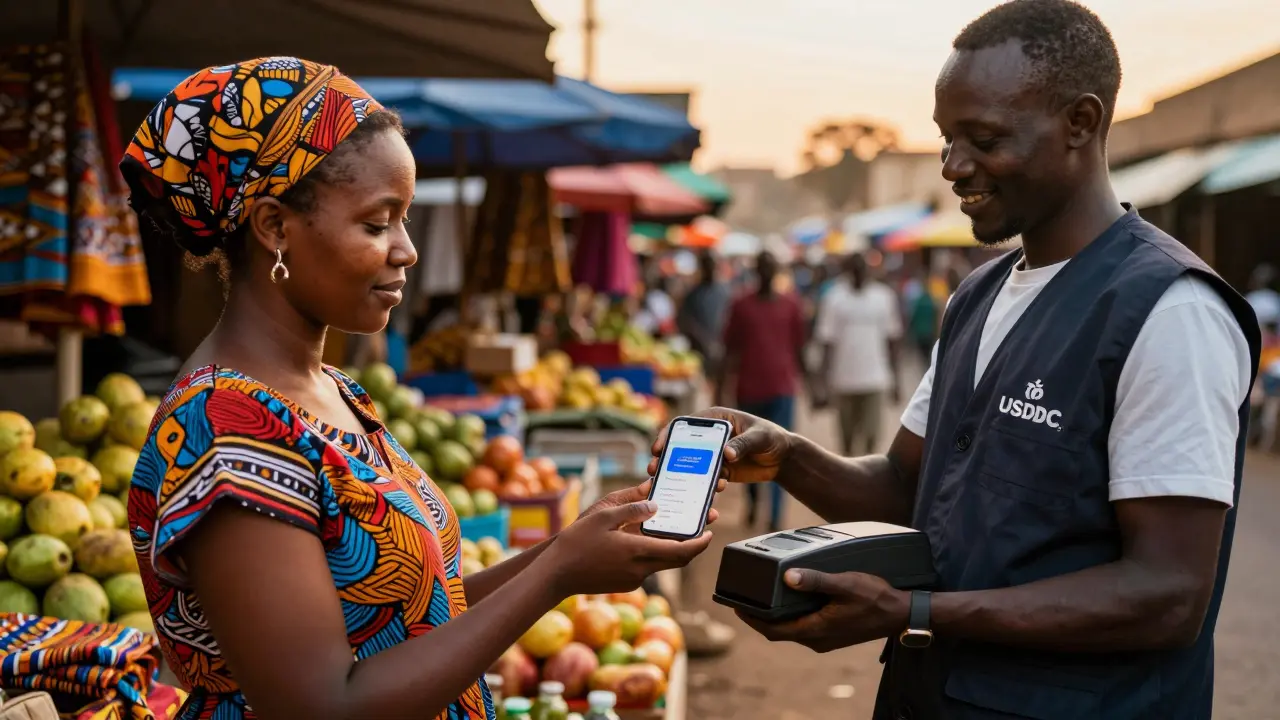
For millions of people in emerging markets, traditional banks have never been an option. No branch nearby. No ID to open an account. No credit history. Yet, in places like Kenya, Nigeria, Bangladesh, and the Philippines, a new kind of financial system is taking root-not built on brick-and-mortar branches, but on smartphones, stablecoins, and local agents. This isn’t science fiction. It’s happening right now.
Mobile Wallets: The New Bank Branch
In 2026, over 5.2 billion people globally use digital wallets. In Africa and parts of Asia, that number isn’t just growing-it’s replacing cash entirely. M-Pesa, launched in Kenya back in 2007, started as a way to send money via text message. Today, it’s a full financial ecosystem: pay bills, get paid, borrow money, even buy groceries. A 2016 study found that M-Pesa usage directly lowered Kenya’s poverty rate by 2%. That’s not a minor side effect. That’s transformation. Now, that same model is being replicated with crypto. Wallets like Trust Wallet, MetaMask Mobile, and Binance Web3 Wallet aren’t just for traders. They’re being built to work like M-Pesa-no seed phrases needed, no technical skills required. Users log in with a fingerprint. They send money with a tap. And instead of waiting days for a bank transfer, they get paid in USDC in seconds.USDC On-Ramps: Bridging the Dollar Gap
Why USDC? Because in many emerging markets, the local currency is unstable. Inflation in Nigeria, Argentina, or Turkey can wipe out savings overnight. People don’t trust their own money. But they do trust the U.S. dollar. And USDC-backed 1:1 by real dollars-is the easiest way to bring that stability to a smartphone. On-ramps are the bridges that turn cash into USDC. A vendor in Lagos can take a payment in naira, then instantly convert it to USDC through a local agent. A freelancer in Manila gets paid in crypto, not a slow, expensive wire. A farmer in Indonesia sells crops online and receives payment in a wallet that holds value, not risk. These aren’t theoretical use cases. They’re live today. Platforms like Payit in Africa and KongPay in Southeast Asia have built these on-ramps into existing mobile money networks. No bank account? No problem. Just walk into a kiosk, hand over cash, and get USDC loaded onto your phone. It’s faster, cheaper, and more reliable than any traditional remittance service.Agent Networks: The Human Layer in a Digital World
You can’t just hand someone a crypto wallet and expect them to use it. Especially if they’ve never used a smartphone before. That’s where agent networks come in. Think of them as your local tech helper, banker, and customer service rep-all in one. An agent might run a small shop, a motorcycle taxi stand, or a market stall. They don’t need to understand blockchain. They just need to know: “Give me cash, I’ll send USDC.” These agents are powered by account abstraction and paymasters. That’s a fancy way of saying the wallet covers the transaction fee for the user. No need to buy gas. No need to understand Ethereum. The agent pays the cost upfront and gets reimbursed through small fees or volume incentives. It’s a win-win: the user gets access. The agent earns income. The system scales. In places like Ghana and Vietnam, agent networks are already handling tens of thousands of daily transactions. They’re not just moving money-they’re teaching people how to use digital finance. One agent in Accra told a reporter, “I used to be a phone repair guy. Now I’m a banker. My customers trust me more than the bank.”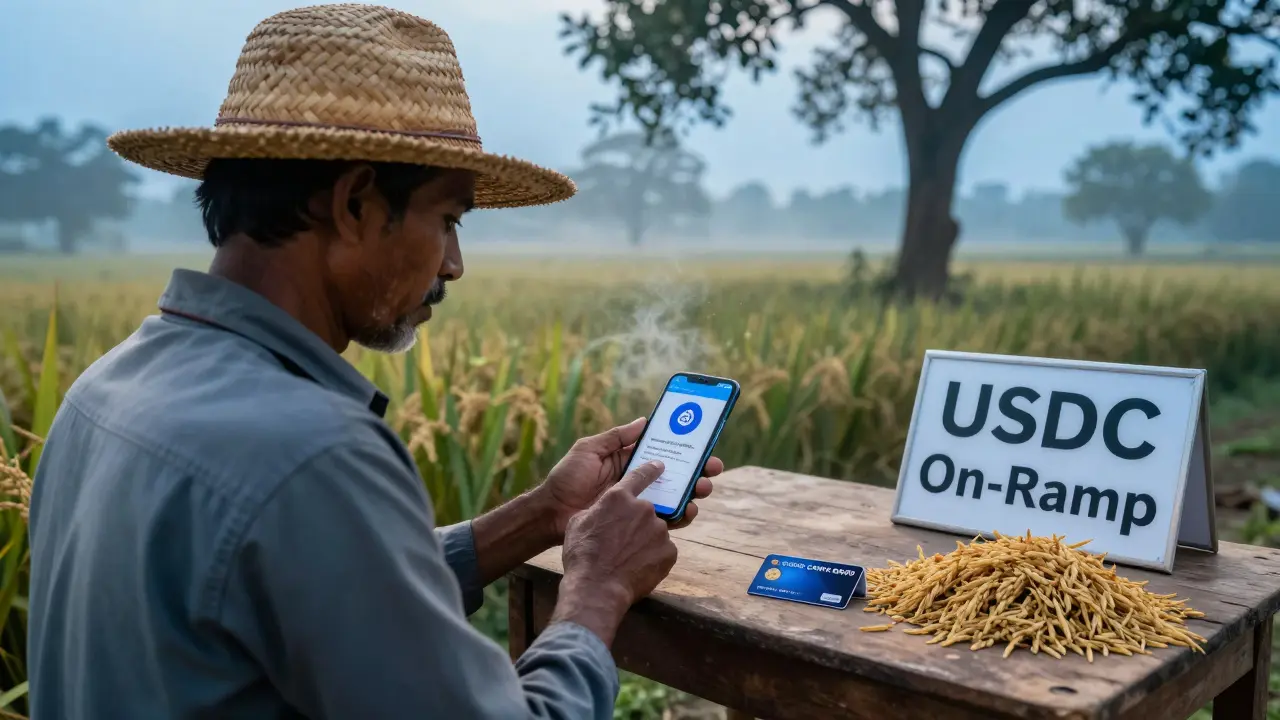
Security Without the Complexity
One of the biggest fears around crypto? Losing your keys. Seed phrases. Private keys. If you forget them, your money is gone forever. That’s a nightmare for someone who can’t afford to lose $50. That’s why multi-party computation (MPC) is changing everything. Instead of one secret code, your wallet uses distributed security. Your phone, a trusted contact, and a backup server all hold pieces of the key. If you lose your phone, you can recover access with a fingerprint and a text message. No memorizing 12 words. No panic. Biometric login-fingerprint, face ID-is now standard on leading wallets. No passwords. No PINs. Just unlock your phone and spend. This isn’t just convenient. It’s essential for adoption among older users, rural populations, and those with low digital literacy.Crypto Cards: Spending Your Digital Money Like Cash
Having USDC in your wallet is great. But what if you want to buy food, pay a taxi, or refill your phone? That’s where crypto cards come in. Companies like Crypto.com, Binance Card, and local providers in Brazil and India now offer debit cards that instantly convert your stablecoin balance into local currency at the point of sale. No manual conversion. No app open. Just tap and go. These cards are linked to your wallet. When you spend, the system pulls USDC from your balance, converts it to naira, pesos, or shillings, and sends it to the merchant. The merchant gets paid in their local currency. You keep your savings in a stable asset. It’s seamless. And because these cards work on Visa or Mastercard networks, they’re accepted everywhere-supermarkets, gas stations, online shops. This is the missing link: crypto that works in the real world.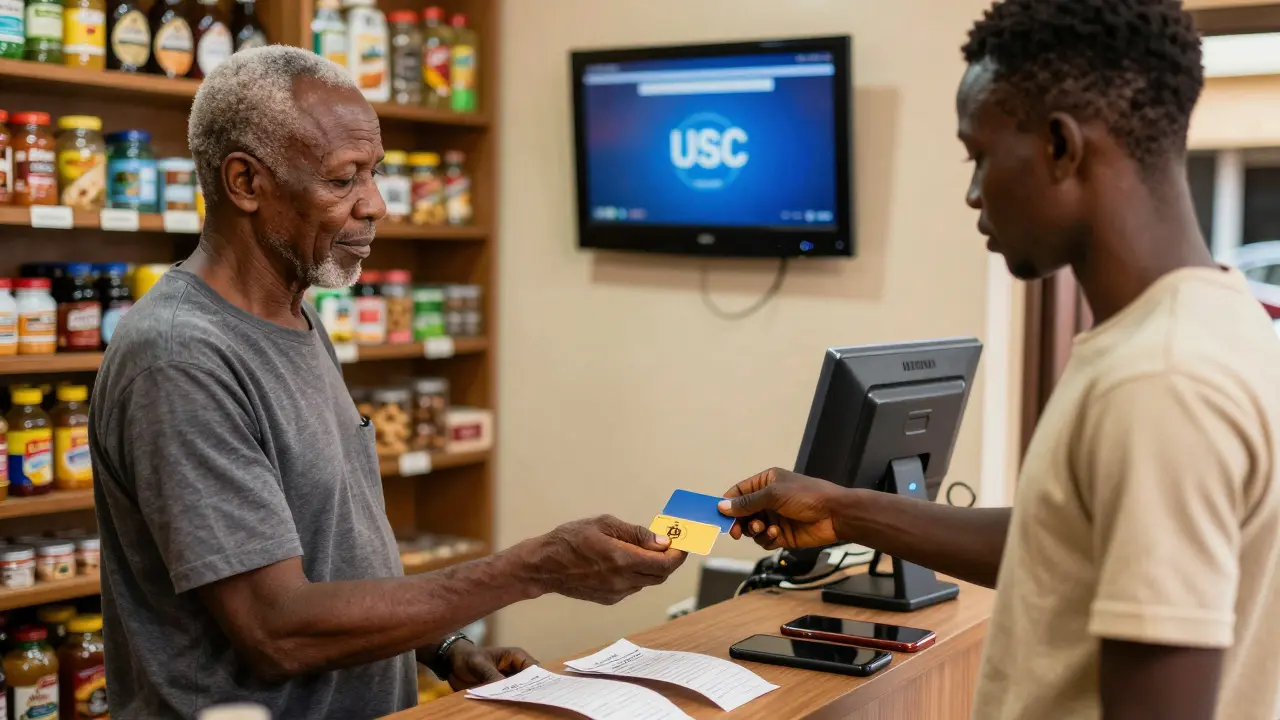
Identity and Regulation: Trust Without Centralization
Governments aren’t ignoring this. They’re watching. And some are adapting. In the EU, MiCA is setting rules for stablecoins: proof of reserves, regular audits, clear redemption rights. Singapore and Hong Kong are doing the same. Meanwhile, countries like the Bahamas have launched their own CBDC, the Sand Dollar, to compete with private stablecoins. But here’s the twist: crypto isn’t trying to replace governments. It’s filling gaps they can’t. In places where ID cards are rare or unreliable, zero-knowledge identity systems let users prove they’re who they say they are-without handing over personal data. A farmer in Nepal can prove they’re over 18 to get a loan, without a birth certificate. This isn’t lawlessness. It’s smarter regulation. Systems built with verifiable credentials and decentralized KYC are more secure than centralized databases that get hacked.The Bigger Picture: More Than Just Money
This isn’t just about payments. It’s about power. A woman in rural India can now receive payments from a U.S.-based client without a bank. A student in Egypt can earn crypto from a global gaming platform and spend it on food. A small business in Colombia can accept payments from customers worldwide without paying 5% in fees. Digital wallets are becoming super-apps. You can pay your electricity bill. Buy insurance. Get a microloan. Even vote on community proposals-all from one app. The old financial system excluded billions. This new system is letting them in-not as customers, but as participants.What’s Next?
By 2030, the crypto wallet market is projected to hit $69 billion. That’s not just growth. It’s a new financial infrastructure being built from the ground up-in places where banks never reached. The pieces are here: mobile wallets that work without tech skills, USDC on-ramps that turn cash into stable value, agent networks that bridge the digital divide, and cards that let you spend like everyone else. This isn’t about Bitcoin. It’s not about speculation. It’s about access. About dignity. About giving people control over their own money-for the first time. The future of finance isn’t in Wall Street. It’s in the hands of a street vendor in Nairobi, a farmer in Bangladesh, and a freelancer in Manila. And it’s already here.Can someone without a bank account use a crypto wallet?
Yes. Crypto wallets don’t require a bank account. People in emerging markets use them to receive payments, send money, and pay bills without ever touching a traditional bank. Mobile wallets like Trust Wallet or Binance Web3 Wallet work with just a phone number and biometric login.
Is USDC safe to use in countries with unstable currencies?
USDC is one of the safest ways to hold value in unstable economies. It’s fully backed by U.S. dollars held in reserve, audited monthly, and redeemable 1:1. In places like Nigeria or Argentina, people use USDC to protect savings from inflation, pay for imports, or receive international income without currency risk.
How do agent networks make crypto easier for non-tech users?
Agent networks remove the technical barriers. Instead of needing to understand gas fees or seed phrases, users hand cash to a local agent-like a shopkeeper or motorcycle driver-who converts it to USDC on their phone. The agent handles the complexity, and the user just gets their money. This model has already scaled to millions in Africa and Southeast Asia.
Do crypto cards work in places without good banking infrastructure?
Yes. Crypto cards work anywhere Visa or Mastercard is accepted. They convert your USDC balance into local currency instantly at checkout. In countries where ATMs are rare or banks are closed on weekends, these cards let people spend digital money like cash-at supermarkets, gas stations, or online.
Is crypto adoption in emerging markets legal?
In most emerging markets, using crypto for personal payments is legal-even if regulations are still evolving. Countries like Nigeria, Kenya, and India allow citizens to buy, hold, and send crypto. Some governments, like the Bahamas, have even launched their own digital currencies to complement these systems.

Comments (8)
Rajashree Iyer February 16 2026
They say money is power. But what if I told you the real power isn't in the vaults of Wall Street-it's in the calloused hands of a woman in rural Bihar who just received her first payment in USDC? No bank. No middleman. Just her phone, a fingerprint, and the quiet dignity of being paid on her own terms.
This isn't fintech. This is resurrection.
I’ve seen it. My aunt in Odisha used to wait three days for a money order. Now? She gets paid by a client in Germany, converts to USDC, buys rice for her family, and sends money to her grandson in Delhi-all before chai cools. The system didn’t just reach her. It remembered her.
We call it crypto. But in villages, they call it *jeevan*-life.
And for the first time in centuries, the poor aren’t begging for inclusion. They’re building it.
Let the suits in Zurich debate regulations. The real revolution is happening where the internet is patchy, the power flickers, and yet-the wallet still opens.
That’s not innovation. That’s grace.
Parth Haz February 17 2026
The narrative around crypto in emerging markets is often overly romanticized. While mobile wallets and USDC on-ramps do offer tangible benefits, we must acknowledge the structural risks. Regulatory uncertainty, lack of consumer protection, and the volatility of agent networks remain serious concerns.
Yes, USDC is backed by reserves-but what happens when the issuer faces legal pressure? What if a government bans crypto transactions overnight? These are not hypotheticals. We’ve seen it in Nigeria, India, and Indonesia.
Financial inclusion shouldn’t mean replacing one fragile system with another. We need layered solutions: crypto as a tool, not a replacement. Regulatory clarity, education, and integration with existing financial infrastructure are non-negotiable.
Optimism is useful. Blind faith is dangerous.
Vishal Bharadwaj February 18 2026
lol so crypto is saving the poor now? cute.
first off, 5.2B digital wallet users? where’d u get that? that’s like 65% of the planet and half those are in china using wechat pay. u think a farmer in bangladesh is using trust wallet? nah. he’s using bhim or gpay.
and usdc? u think nigeria’s inflation is fixed by a stablecoin? nah. it’s fixed by a guy with a suitcase of dollars and a border crossing.
agent networks? sure. but who pays the agent? the user? or is it just a 5% tax with a blockchain sticker?
and MPC? lol. most people can’t even remember their whatsapp password. u think they’ll understand distributed key shards?
this whole thing is VC fantasy dressed up as development. the real story? mobile money is winning. crypto is just the hype layer. again.
ps: i read the whole article. still think it’s bs.
anoushka singh February 20 2026
Wait, so you’re telling me that people who’ve never used a smartphone are now managing crypto wallets with biometrics? And they’re not getting scammed? And the agents aren’t just pocketing the cash?
I’m sorry, but I’ve seen too many aunties in my village get tricked into ‘investing’ in fake gold schemes. Now you want me to believe they’re all suddenly crypto experts because they tap their phone?
Also-why is no one talking about the fact that if your phone dies, your life savings vanish? No bank will help you. No government will reimburse you. It’s just… gone.
I’m all for innovation, but let’s not pretend this isn’t a gamble with people’s last 500 rupees.
Jitendra Singh February 21 2026
I’ve lived in both urban and rural India. I’ve seen the transformation firsthand.
My neighbor in Madhya Pradesh used to walk 8km to the nearest bank to send money to his son in Pune. Now? He gives cash to the local shopkeeper, who sends USDC to his phone. His son receives it in seconds, converts it to rupees, and buys medicine.
It’s not perfect. There are hiccups. But it’s working.
We don’t need to romanticize it. We don’t need to demonize it. We just need to support the infrastructure-better connectivity, training for agents, clearer regulations.
This isn’t about crypto replacing banks. It’s about giving people tools they didn’t have before. And that’s worth celebrating.
Madhuri Pujari February 21 2026
Oh, so USDC is ‘safe’ because it’s ‘backed by reserves’? LOL. Who audits those reserves? Circle? And who audits Circle? And what happens when the SEC comes knocking? Or when the Fed freezes accounts? Or when a ‘stablecoin’ gets depegged because someone’s ‘reserve’ is actually just a loan from a crypto exchange?
And let’s not forget: every single ‘agent’ you’re praising? They’re unregulated, unlicensed, and legally exposed. One crackdown, one arrest, one bank shutdown-and suddenly 100,000 people lose everything because ‘the system’ didn’t have a backup.
You call this innovation? I call it a Ponzi with better PR.
And don’t even get me started on MPC. If you need three devices to recover your wallet… you’ve already lost.
This isn’t financial inclusion. It’s financial exploitation with a blockchain tattoo.
Sandeepan Gupta February 22 2026
Let’s be clear: this isn’t magic. It’s engineering. And it’s working because it’s designed for real people, not tech bros.
The key insight? Don’t make users understand the system. Make the system understand them.
Biometric login? Perfect. No passwords. No memorization. Just unlock and go.
Agent networks? Brilliant. They’re not just transaction points-they’re community hubs. They teach, they listen, they adapt.
And crypto cards? They’re not about crypto. They’re about liquidity. About dignity. About being able to buy milk without converting coins in an app.
This is what good design looks like: invisible, reliable, and human.
If you’re skeptical, visit a kiosk in Accra or a market in Manila. Talk to the agent. Watch the grandmother send money to her grandchild. You’ll see it’s not theory. It’s truth.
Tarun nahata February 23 2026
Imagine a world where your savings don’t vanish overnight because your currency collapsed.
Where your daughter’s tuition isn’t held hostage by a bank that’s closed on weekends.
Where your hard work as a freelance designer gets paid in seconds-not weeks-and stays intact.
This isn’t the future. This is today.
And yes, it’s messy. Yes, there are risks. But the alternative? Staying poor because a system designed for someone else refused to see you.
Crypto isn’t the hero. The people are.
The vendor in Lagos. The farmer in Bangladesh. The mother in Manila who taps her phone to feed her kids.
They didn’t wait for permission.
They built it.
And now? The world is catching up.
This isn’t just money.
This is freedom.