
When someone buys one of your online courses, they’re already interested. But most course creators leave money on the table by stopping there. What if you could turn a $49 sale into a $199 sale without spending a dime on ads? That’s the power of smart upsells and course bundles.
Why Average Order Value Matters More Than You Think
You don’t need more traffic to grow your course business-you need better sales. Let’s say you get 100 buyers a month at $50 each. That’s $5,000. Now, if you increase your average order value by just $30, you’re making $8,000. Same traffic. Same effort. More profit.
This isn’t theory. A 2025 survey of 200 online course creators showed those using upsells and bundles increased their average order value by 68% within six months. The top performers didn’t just add a $10 bonus-they built layered offers that felt like natural next steps.
Upsells Are About Timing, Not Pushiness
An upsell isn’t a pop-up asking, ‘Want to spend more?’ It’s a well-timed suggestion that solves the next problem your buyer didn’t even know they had.
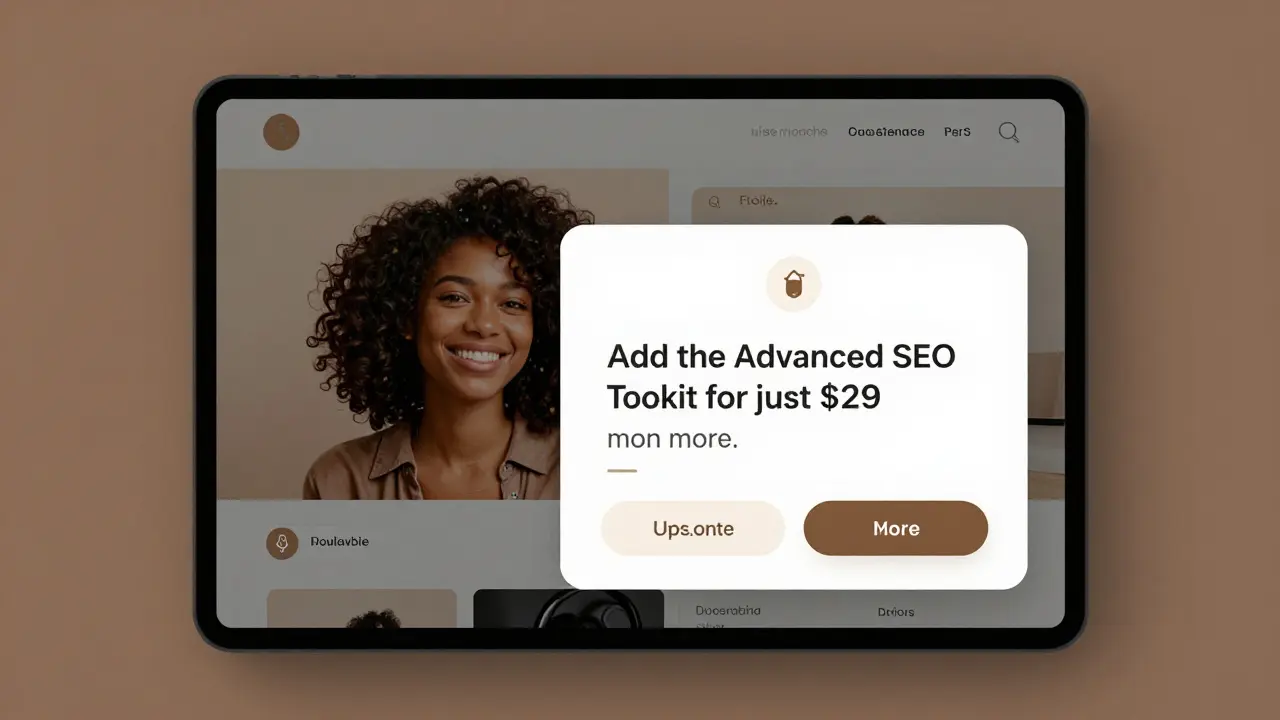
Imagine someone buys your ‘Beginner’s Guide to SEO’ course. Right after checkout, they see:
- ‘You’re off to a great start. Most people who finish this course go on to master keyword research next. Get our Advanced SEO Toolkit-just $29 more.’
This works because:
- It’s relevant: They just bought the first step.
- It’s affordable: $29 feels like a small upgrade, not a big leap.
- It’s framed as a benefit: ‘Most people who finish this…’ implies social proof and progression.
Don’t offer upsells on the thank-you page unless they’re hyper-relevant. A $200 ‘Masterclass Bundle’ right after a $25 course feels like a scam. But a $35 companion workbook? That’s a no-brainer.
Course Bundles Turn One-Time Buyers Into Loyal Customers
Bundles are your secret weapon for turning casual buyers into long-term students. Instead of selling courses one by one, group them into a logical learning path.
For example:
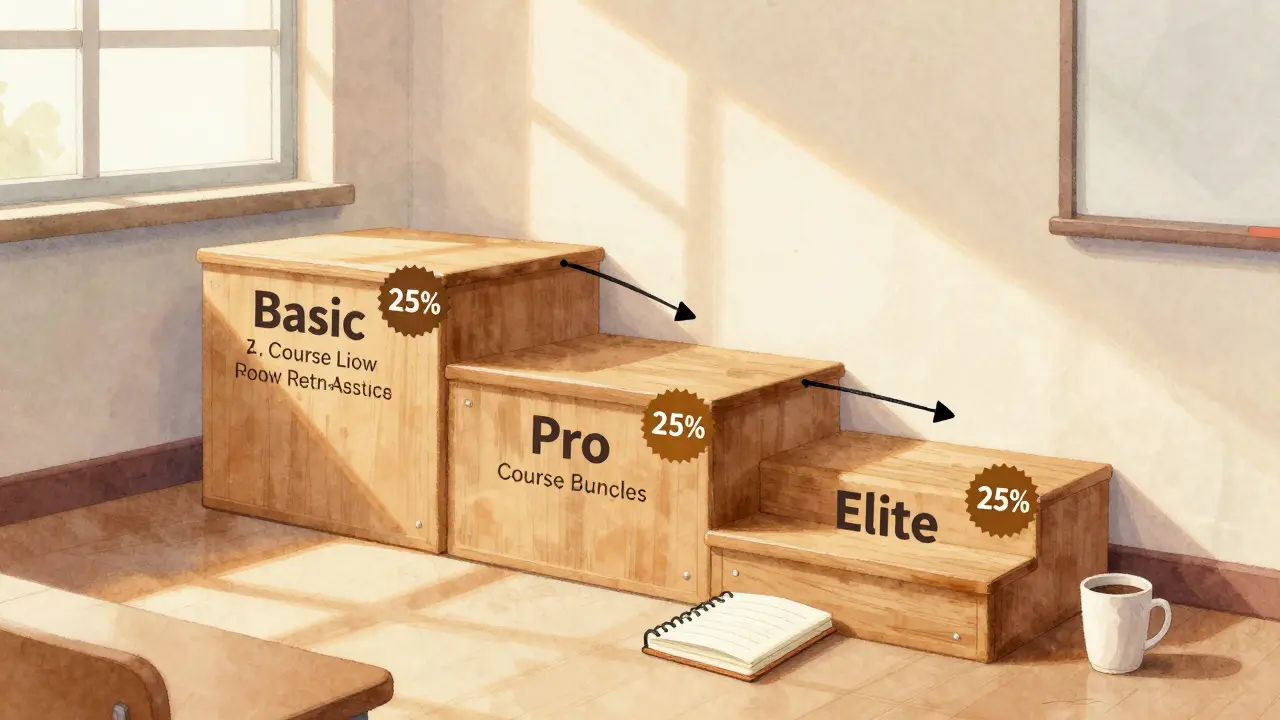
- Basic Bundle: ‘Start Your Blog’ ($49)
- Pro Bundle: ‘Start Your Blog’ + ‘Grow Your Audience’ + ‘Monetize Your Content’ ($129)
- Elite Bundle: All three + ‘Email List Mastery’ + ‘1:1 Strategy Call’ ($199)
Notice how the price per course drops as the bundle grows. That’s the psychological trick. At $49 each, buying three feels expensive. At $129 for all three, it feels like a deal-even if the total is the same as buying separately.
And here’s the kicker: bundling reduces decision fatigue. People don’t want to pick between five courses. They want a clear path. Bundles give them that.
How to Build Bundles That Actually Sell
Not all bundles work. Here’s how to make yours irresistible:
- Start with a clear learning journey. What’s the first step? The second? The final outcome? Map it out.
- Use your most popular course as the anchor. Put it first in every bundle.
- Add one high-value bonus. A checklist, template, or live Q&A increases perceived value.
- Price bundles at 20-30% off the total of individual courses. Too big a discount feels fake. Too small feels pointless.
- Offer only 2-3 bundles max. More choices = fewer sales.
One course creator in Edinburgh, selling productivity courses, added a ‘Complete Productivity System’ bundle. It included their top three courses plus a Notion template. Sales jumped 140% in three weeks. Why? Because buyers didn’t just get content-they got a system.
Where to Place Upsells and Bundles
Placement is everything. Here’s where to put them:
- Post-purchase upsell: Right after checkout. Use a simple one-click button. This is your highest-converting spot.
- Product page: Add a ‘Most Popular Bundle’ section below your main course. Show the savings.
- Checkout page: Offer a bundle upgrade before payment. ‘Add the Advanced Toolkit for $29 more?’
- Email sequence: Send a follow-up email 48 hours after purchase: ‘You’re halfway there. Here’s what most students do next.’
Avoid putting upsells on your homepage or in ads. That’s for attracting new people. Upsells are for people who already trust you.
What Not to Do
Bad upsells ruin trust. Here’s what to avoid:
- Don’t upsell unrelated products. If someone buys a yoga course, don’t push them to buy a protein powder.
- Don’t hide the price. Be upfront: ‘Add this for $35.’
- Don’t use countdown timers or fake scarcity. It feels manipulative.
- Don’t offer 10 different bundles. Pick the top 2-3 that make sense.
One course creator tried stacking three upsells after checkout. Sales dropped 32%. Buyers felt ganged up on. Simplicity wins.
Track What Works
You can’t improve what you don’t measure. Track these three metrics:
- Upsell conversion rate: % of buyers who accept your upsell offer.
- Bundled sales as % of total: Are more people buying bundles than single courses?
- Customer lifetime value: Are bundle buyers coming back for more?
Use your platform’s built-in analytics (Teachable, Thinkific, Kajabi) or Google Analytics with event tracking. If your upsell conversion is below 15%, tweak the offer. If bundle sales are under 30% of revenue, simplify your bundle structure.
Real Example: From to 7 Average Order Value
A fitness coach in Glasgow sold a $45 ‘7-Day Home Workout’ course. She had 80 sales a month-$3,600. She added two things:
- An upsell: ‘Add the Meal Planner ($29)’ after checkout.
- A bundle: ‘Home Workout + Meal Planner + 30-Minute Coaching Call’ ($167).
Within two months:
- Upsell acceptance: 42%
- Bundles made up 58% of all sales
- Average order value jumped to $167
- Monthly revenue: $13,360
She didn’t get more customers. She just sold better.
Start Small, Then Scale
You don’t need to overhaul your entire store tomorrow. Pick one course. Add one upsell. One bundle. Test it for two weeks. See what sticks.
Here’s your 7-day plan:
- Day 1: Pick your best-selling course.
- Day 2: Ask yourself-what’s the next logical step for someone who bought this?
- Day 3: Create a simple upsell offer (checklist, template, mini-course).
- Day 4: Build a two-course bundle with a 25% discount.
- Day 5: Set up the upsell on your thank-you page.
- Day 6: Send one email to recent buyers with the bundle offer.
- Day 7: Check your sales numbers. Adjust.
That’s it. No fancy tools. No complex funnels. Just smarter offers.
Final Thought: It’s Not About Selling More-It’s About Serving Better
The best upsells and bundles don’t feel like sales. They feel like guidance. Like a teacher saying, ‘I see you’re ready for the next level.’
When you structure your offers around real learning paths, you’re not just increasing revenue-you’re building trust. And trust turns buyers into loyal students who come back again and again.
What’s the difference between an upsell and a cross-sell?
An upsell is when you offer a better or upgraded version of what the customer is already buying-like adding a premium version of the same course. A cross-sell is when you offer something complementary, like a workbook to go with a video course. Both work, but upsells usually have higher conversion because they feel like a natural upgrade.
How much should I discount my course bundle?
A 20-30% discount off the total price of individual courses is the sweet spot. Less than 15% feels like a trick. More than 40% starts eating into your profit and makes the bundle seem low-quality. The goal is to make it feel like a smart deal-not a clearance sale.
Can I use upsells if I sell on Etsy or Gumroad?
Yes, but with limits. Platforms like Gumroad let you add post-purchase upsells through their built-in tools. Etsy doesn’t support them natively, so you’ll need to use email follow-ups. Send a thank-you email with a link to your upsell or bundle. It’s less automated, but still effective if your messaging is clear and personal.
Should I offer bundles to new customers or only returning ones?
Start with new customers. Your first-time buyers are your biggest opportunity. They’re already showing interest. A well-designed bundle gives them a clear path forward. Once they complete one bundle, then you can target them with advanced bundles or membership options.
What if my courses are very different topics? Can I still bundle them?
Only if they serve the same goal. For example, ‘Start a Side Hustle’ could bundle ‘Writing a Business Plan,’ ‘Setting Up Payments,’ and ‘Marketing on Instagram’-all parts of launching a business. Don’t bundle unrelated topics like ‘Yoga for Beginners’ and ‘Python Coding’ just because they’re both courses. Customers won’t see the connection, and it will feel forced.

Comments (14)
pk Pk January 31 2026
Just implemented a simple upsell on my SEO course and saw a 38% conversion in two weeks. No fancy tools, just a $25 checklist that naturally followed the course. People loved it because it felt like a gift, not a sales pitch.
sumraa hussain February 2 2026
OMG YES THIS
I literally cried when I saw my AOV jump from $42 to $157 after adding one bundle. I didn't even change my ads. Just bundled three courses with a 25% discount and added a Notion template. People started DMing me saying 'this is the best money I've ever spent on learning.'
Stop selling courses. Start selling transformation paths.
Raji viji February 4 2026
Lmao. Everyone's acting like this is groundbreaking. I've been doing this since 2019. The real secret? You don't need bundles. You need a funnel. Upsells are just the third step. First, a $7 lead magnet. Second, a $49 course. Third, the $199 bundle. Fourth, a $997 mastermind. The 'magic' is in sequencing, not the bundle itself. Stop glorifying the symptom.
Rajashree Iyer February 4 2026
What if... the real upsell isn't the product? What if it's the *feeling*? The feeling that you're not alone on this journey? That someone sees your potential before you do? That's what the bundle really sells. Not the courses. Not the templates. But the quiet whisper: 'You're ready for more.' And that? That's priceless.
Parth Haz February 6 2026
This is a well-structured article with actionable insights. The emphasis on psychological pricing and reduced decision fatigue is particularly valuable. I would recommend supplementing this with data on churn rates among bundle buyers versus single-course purchasers to fully assess long-term impact.
Vishal Bharadwaj February 8 2026
68% increase? Where's the study? Link. Or it didn't happen. Also 'top performers' - who? What platform? What niche? This article is full of vague claims. And why is everyone so obsessed with AOV? Profit margin matters more. I sold 1000 $20 courses with 85% margin vs 100 $200 bundles with 35%. Who won? Not you.
anoushka singh February 9 2026
Okay but what if your audience is broke? Like, really broke? My students are single moms working two jobs. They can't afford $199 bundles. Maybe instead of upselling, you should make your $49 course better? Or offer payment plans? Just saying.
Jitendra Singh February 11 2026
Good stuff. I tried the post-purchase upsell and was nervous it'd feel pushy. Turned out, people were actually grateful. One email said 'I was waiting for this.' Turns out, they just needed someone to point to the next step. Sometimes people don't know what they want until you show them.
Madhuri Pujari February 12 2026
Ohhh so now we're pretending upsells are 'guidance' and not psychological manipulation? 'Most people who finish this...' - that's classic social pressure. '20-30% discount' - fake scarcity in a tuxedo. And you're proud of this? You're not helping people. You're optimizing their cognitive biases. Pathetic.
Sandeepan Gupta February 14 2026
One thing I always tell my students: if your upsell feels like a chore to write, it's not a good upsell. It should feel obvious. Like, 'Of course they'd want this next.' I built a simple 'Workbook Companion' for my time management course. Took me 2 hours. Sold to 41% of buyers. No analytics needed. Just ask yourself: what would make this easier for them to use tomorrow?
ANAND BHUSHAN February 15 2026
Works. Tried it. Got results.
Indi s February 16 2026
I was skeptical at first. But after I added a $15 PDF with templates to my course, sales jumped. People just needed a little more structure. Not a big thing. Just a little help.
Rohit Sen February 16 2026
Bundle? More like bait. Real creators don't need tricks. Just make a great course.
pk Pk February 17 2026
That's exactly why the 'one course, one upsell' rule works. You don't need to overwhelm. I had a student ask me last week: 'Why didn't you just make the workbook part of the course?' And I said: 'Because then you'd think it's just a course. But as a separate upsell? You feel like you're getting a bonus. Like a secret weapon.' Sometimes perception is the product.