
Every year, companies and individuals buy carbon credits to pretend they’re making up for pollution. But too often, those credits are worthless. A factory in Indonesia might claim it saved 10,000 tons of CO2-but no one can prove it. The same credit gets sold twice. Or worse, the project never existed at all. This isn’t just sloppy accounting-it’s greenwashing on a global scale.
That’s where blockchain carbon credits come in. They’re not magic. But they do something simple and powerful: they turn carbon offsets into digital assets you can track, verify, and own-like a stock certificate for the planet. Instead of relying on paper files and slow audits, every credit is recorded on a public, unchangeable ledger. If a tree is planted, a sensor confirms it. If the forest burns down, the system knows. And if someone tries to sell the same credit twice? The blockchain says no.
How Blockchain Carbon Credits Actually Work
At its core, a blockchain carbon credit is a digital token. Each token represents one metric ton of carbon dioxide either removed from the atmosphere or prevented from being released. These tokens are created when a real-world project-like reforestation, methane capture, or renewable energy installation-passes strict verification checks.
Here’s how it happens step by step:
- A project developer, say a group restoring mangroves in Vietnam, applies to have their work counted as carbon credits.
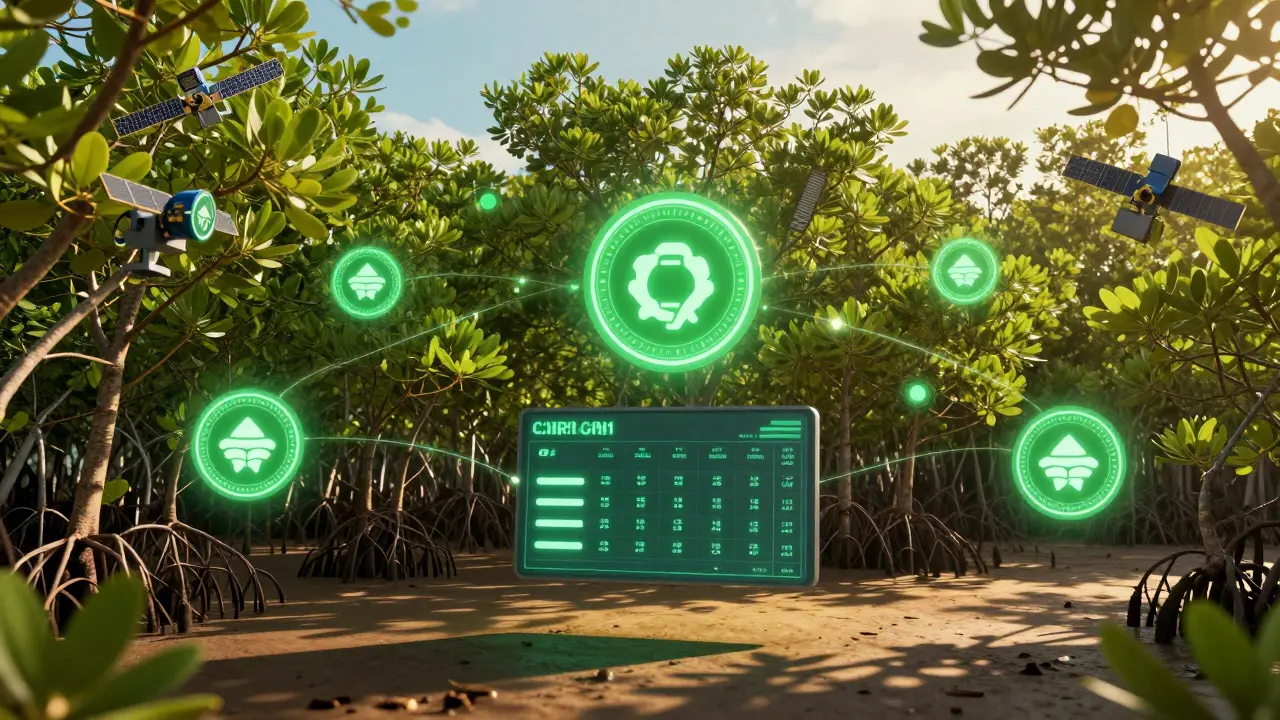
- Third-party auditors, using satellite imagery, IoT sensors, and AI, verify that the trees are growing, the methane is being captured, and the emissions reductions are real and permanent.
- Once approved, the project’s carbon reduction is converted into a digital token on a blockchain-usually Ethereum or Algorand.
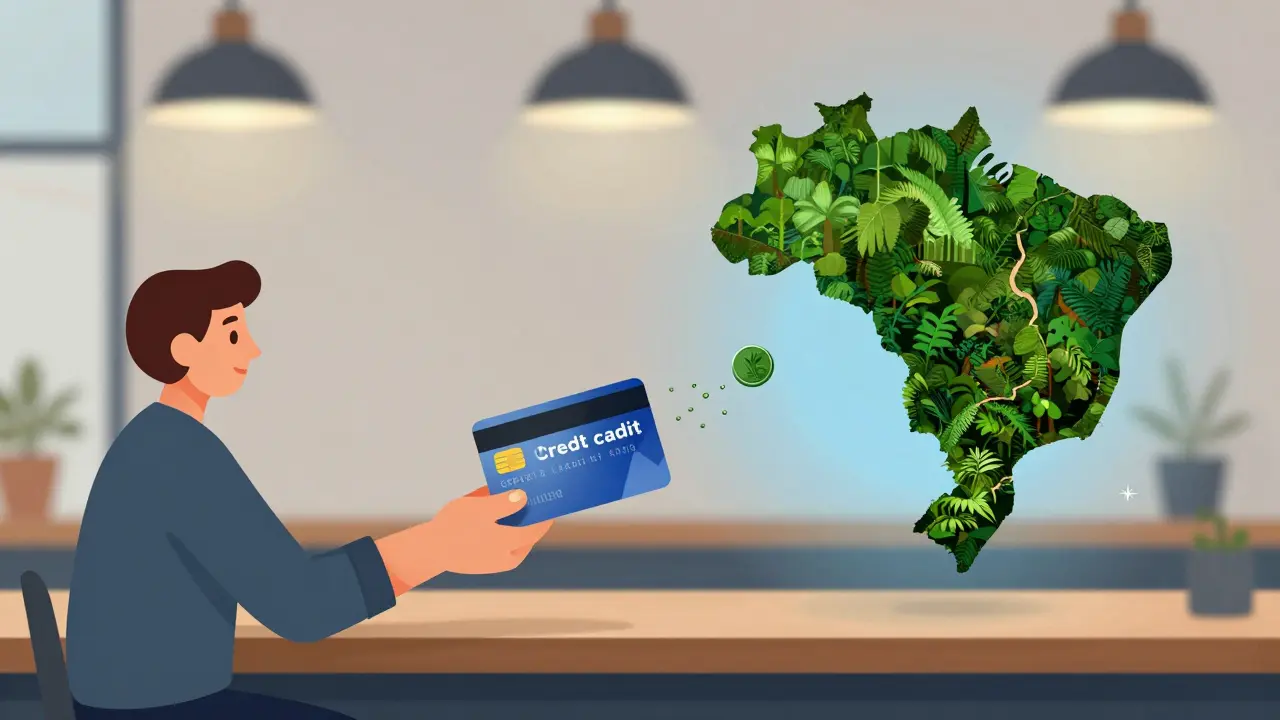
- That token is then listed on a marketplace like Toucan Protocol or Nori, where buyers can purchase it using cryptocurrency or even credit cards.
- When you buy the token, it’s sent to your digital wallet. You own it. And when you retire it-meaning you’re using it to offset your emissions-it’s permanently marked as used. No one else can claim it.
This is different from traditional carbon markets, where credits are stored in centralized registries that can be hacked, mismanaged, or manipulated. With blockchain, the record is public, transparent, and tamper-proof. You can see exactly where the credit came from, who owned it, and when it was retired.
The Real Advantage: Avoidance vs. Removal
One of the biggest problems with old-school carbon credits is that they lump everything together. A credit from planting trees gets mixed with a credit from switching to LED bulbs. But they’re not the same.
Carbon avoidance credits stop emissions from happening-like replacing coal with solar. Carbon removal credits pull carbon out of the air-like direct air capture or soil sequestration. Removal credits are rarer, more expensive, and more valuable because they actually undo damage.
Blockchain makes this distinction clear. Platforms like Toucan and Nori issue NFTs (non-fungible tokens) to label each credit as either avoidance or removal. Investors and companies can now choose exactly what kind of impact they want to support. No more guessing. No more hidden agendas.
This matters because climate scientists say we need more removal credits-not just avoidance-if we’re going to meet global targets. Blockchain helps channel money to the projects that actually matter.
Fractionalization: You Don’t Need to Buy a Whole Credit
Traditionally, carbon credits were sold in blocks of one metric ton. That’s expensive. For a small business or an individual, buying a full credit was out of reach.
Blockchain changed that. Thanks to fractionalization, you can now buy a fraction of a credit. Maybe 0.01 tons. That’s the carbon footprint of one round-trip flight from Edinburgh to London. Or the emissions from charging your phone for a year.
This is huge. It turns carbon offsetting from a corporate tactic into something anyone can do. A teacher in Glasgow can offset her commute. A café owner in Dundee can offset his coffee beans’ transport. A family can buy a tiny piece of a rainforest project in Brazil and feel like they’re part of the solution.
Platforms like KlimaDAO and Nori make this easy. You don’t need to be a crypto expert. You just need a wallet-and most platforms now let you pay with PayPal or a debit card.
Who’s Using This-and Who’s Not?
Blockchain carbon credits aren’t mainstream yet. But they’re growing fast. Tech companies are leading the charge. Startups like Stripe, Shopify, and Microsoft have bought millions of dollars’ worth of blockchain-backed credits to offset their operations.
Big banks are getting in too. JPMorgan and HSBC are building internal platforms to let their corporate clients buy verified credits without the hassle of legacy systems. Even Verra, the biggest name in traditional carbon accounting, has started integrating blockchain into its registry.
But adoption is uneven. Many traditional carbon project developers-especially in the Global South-still don’t use blockchain. Why? Because it’s complex. Setting up IoT sensors, connecting to smart contracts, and navigating crypto wallets isn’t easy if you’re running a small reforestation project in Nigeria with no IT team.
That’s the catch. Blockchain solves transparency problems-but it creates new barriers for the people who need the most help. The technology is powerful, but it’s not yet inclusive.
The Dark Side: Hype vs. Reality
Not every blockchain carbon credit is legit. Some platforms just mint tokens without real projects behind them. They use flashy websites and influencer marketing to sell “climate NFTs” that have zero environmental impact. Gold Standard, a respected certification body, warns that many of these tokens “fail to meet common standards for additionality, monitoring, or permanence.”
What does that mean? Additionality means the project wouldn’t have happened without the carbon credit funding. If a forest was already going to be protected by law, selling credits for it is fraud.
Permanence means the carbon stays out of the air. If you plant trees and a wildfire burns them down six months later, the credit should be canceled. But many blockchain platforms don’t have systems to track that.
And then there’s energy use. Early blockchains like Bitcoin used massive amounts of electricity. But most carbon credit platforms now use proof-of-stake networks-Ethereum, Algorand, Polygon-that consume 99% less energy than Bitcoin. Still, skeptics ask: Is the environmental benefit real, or just a digital illusion?
The answer? It depends on the platform. Stick to ones that are linked to verified registries like Verra or Gold Standard. Avoid anything that sounds like a “buy this NFT and erase your footprint” gimmick.
How to Get Started (Without Getting Scammed)
If you’re curious about buying blockchain carbon credits, here’s how to do it right:
- Start with trusted platforms: Nori, Toucan Protocol, and KlimaDAO are the most established. They’re transparent about their projects and partners.
- Check the source: Every credit should link to a real project with public documentation. Look for references to Verra, Gold Standard, or Climate Action Reserve.
- Understand the type: Is it avoidance or removal? Removal credits are harder to find but more valuable.
- Use fiat, not crypto: Most platforms now accept credit cards. You don’t need to buy Bitcoin or Ethereum unless you want to.
- Retire your credits: Don’t just hold them. Retire them to claim your offset. That’s the whole point.
And never trust a platform that doesn’t let you see the project’s location, verification reports, or timeline. If they’re hiding details, walk away.
What’s Next?
The future of blockchain carbon credits isn’t about crypto hype. It’s about infrastructure. As governments tighten emissions rules, they’ll need reliable, auditable systems. Blockchain offers that. The European Union, for example, is exploring blockchain for its new Carbon Border Adjustment Mechanism.
More registries will integrate with blockchain. More banks will offer carbon credit accounts. More consumers will buy fractional credits. And if platforms keep improving verification-using AI, satellites, and real-time sensors-then blockchain could finally make carbon offsetting trustworthy.
But it won’t happen by itself. It needs demand from real people, real businesses, and real accountability. Right now, blockchain carbon credits are a tool. Not a fix. But if used right, they’re one of the most promising tools we have.
Are blockchain carbon credits the same as traditional carbon credits?
No. Traditional carbon credits are managed through centralized registries like Verra or Gold Standard, where records can be altered, delayed, or duplicated. Blockchain carbon credits are digital tokens on a public ledger that can’t be changed or double-spent. Each token is traceable from creation to retirement, making fraud nearly impossible.
Can I buy blockchain carbon credits with a credit card?
Yes. Platforms like Nori and Toucan now accept credit cards, PayPal, and bank transfers. You don’t need cryptocurrency to participate. Some platforms still require crypto, but the trend is moving toward fiat on-ramps to make it easier for everyday users.
Do blockchain carbon credits actually reduce emissions?
The credits themselves don’t reduce emissions-they represent reductions that already happened. What blockchain does is ensure those reductions are real, measurable, and not claimed twice. If the underlying project (like planting trees or capturing methane) is legitimate, then yes, the credit supports real climate action. But if the project is fake, the blockchain just makes the fraud look more official.
What’s the difference between avoidance and removal credits?
Avoidance credits prevent emissions from happening-like switching from diesel to solar power. Removal credits pull carbon dioxide out of the atmosphere-like direct air capture or enhanced rock weathering. Removal credits are rarer and more valuable because they undo existing pollution. Blockchain platforms now label them separately so buyers can choose.
Are blockchain carbon credits regulated?
Not yet. Most blockchain carbon credits operate in the voluntary market, meaning they’re bought by companies and individuals who want to offset emissions-not because they’re legally required to. Compliance markets (like those in the EU or California) still rely on traditional systems. But regulators are watching. The EU and UK are exploring blockchain integration for future compliance rules.
How do I know if a blockchain carbon credit project is trustworthy?
Look for three things: 1) Is the project certified by a recognized standard like Verra, Gold Standard, or Climate Action Reserve? 2) Can you see the exact location, timeline, and verification data? 3) Does the platform use real-time monitoring (satellites, sensors, AI) to track the project’s performance? If the answer to any of these is no, be skeptical.

Comments (8)
Tyler Durden December 17 2025
So let me get this right-you’re telling me I can buy a fraction of a tree’s carbon capture like it’s a stock tip? I’m in. I just offset my last Uber ride. 0.01 tons. Feels like I’m part of something. Not just another guilty consumer.
LeVar Trotter December 18 2025
Let’s be real-blockchain doesn’t solve the core issue: if you’re not reducing emissions at the source, you’re just outsourcing guilt. The tech is elegant, sure. But we’re treating symptoms, not the disease. Corporate greenwashing is now *blockchain-enabled* greenwashing. The ledger’s immutable, but the project’s legitimacy? Still a gamble. And let’s not pretend every IoT sensor in a Nigerian forest isn’t getting stolen or hacked. This isn’t transparency-it’s theater with a crypto veneer.
Also, who’s auditing the auditors? The same firms that certified those phantom wind farms in 2012? Yeah. I’ll believe it when I see independent, real-time satellite verification linked to a public, open-source algorithm-not some VC-funded startup’s whitepaper.
Aafreen Khan December 18 2025
broooo i just bought a carbon NFT for my cat 😎🌿💸 she’s now carbon neutral!! also i used paypal so no crypto drama lol. if u dont trust it then u just dont get it. its the future!!! 🌍✨ #blockchainforall
Christina Kooiman December 20 2025
There is a fundamental flaw in this entire narrative, and I feel compelled to point it out-because someone has to. The assumption that digital tokens equate to environmental accountability is not just misleading-it’s dangerously naive. A token, no matter how blockchain-secured, cannot replicate the ecological complexity of a mangrove ecosystem, the soil microbiology of a regenerative farm, or the seasonal variability of methane capture. You cannot quantify nature in a smart contract. You can only represent it. And representation is not reality. This is digital symbolism masquerading as science. And if we continue to confuse the map for the territory, we’re not saving the planet-we’re just building a very expensive simulation of it.
michael T December 20 2025
Y’all are so naive. Blockchain carbon credits? More like blockchain *confidence tricks*. I’ve seen the backend code on some of these platforms-half of them are just minting tokens from a CSV file. The sensors? Mostly fake. The satellite data? Upscaled from 2019. And the ‘retired’ credits? They’re sitting in wallets owned by the same people who created them. It’s a Ponzi scheme with a green logo. And don’t even get me started on the energy use of ‘low-energy’ chains-they’re still sucking power from coal plants in China. This isn’t climate action. It’s crypto bros trying to feel like saints while they fly private jets to Burning Man.
Stephanie Serblowski December 22 2025
Okay but… isn’t it kind of beautiful that a teacher in Glasgow can now offset her bus ride with a few clicks? 🤔 Even if it’s imperfect? I mean, we’ve spent decades paralyzed by the scale of the problem-waiting for governments to fix it. Now? A single mom in Ohio can buy 0.003 tons of removal credit because her kid asked why the sky is smoky. That’s power. That’s participation. The system’s flawed? Of course. But it’s *accessible*. And accessibility? That’s the first step to systemic change. Let’s not throw the baby out with the blockchain bathwater. 🌱✨
Renea Maxima December 23 2025
If a tree falls in the forest and no one verifies it on-chain… does it still count? 🤔 Maybe the real question isn’t whether blockchain fixes carbon credits… but whether we’re using technology to avoid the harder question: why do we keep polluting in the first place? We’ve outsourced responsibility to a ledger. We’re not changing behavior-we’re just buying a digital receipt for it. And that’s… kind of tragic.
Pamela Watson December 24 2025
Wait so you mean I can just pay money and it makes my pollution disappear? Like magic? That’s it. I’m buying a million of these. I drive a Hummer. I fly everywhere. I eat steak every day. But now I’m green. 💚💸