
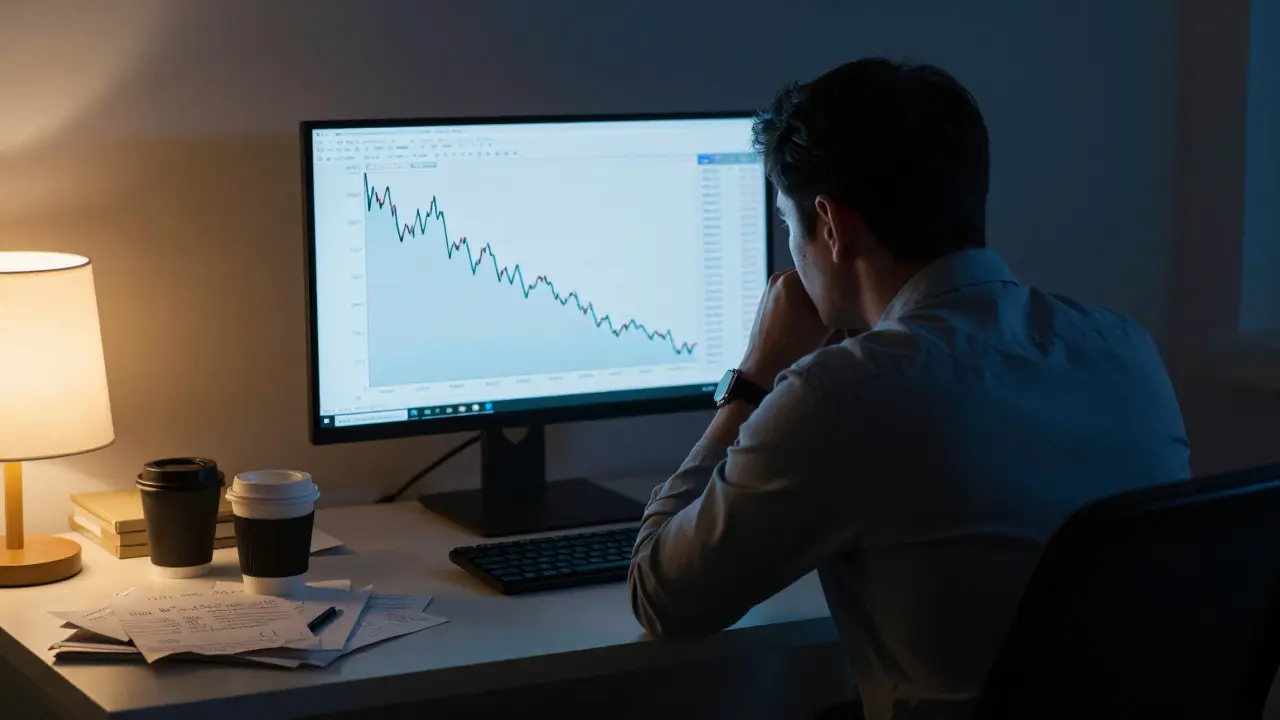
Imagine you’ve been trading for months. Your strategy worked. Your account grew steadily. Then, out of nowhere, the market turned. Your positions went south. One loss turned into five. Then ten. And now, your account is down 40%. You stare at the screen. Your heart pounds. You think: "Can I ever get back to even?"
This isn’t just a numbers problem. It’s a psychological one. And it’s the quiet killer of most traders who should’ve made it.
Drawdowns aren’t just about losing money. They’re about losing your edge. Your discipline. Your confidence. And if you don’t know how to handle them, you’ll end up doing the one thing that guarantees failure: selling low, then sitting on the sidelines while the market recovers without you.
What Exactly Is a Drawdown?
A drawdown is the drop from your highest account value to your lowest point before you recover. It’s not a single trade loss. It’s the full slide - from peak to trough. Think of it like climbing a hill, then slipping down into a valley. The question isn’t how far you fell. It’s how long it takes to climb back out.
Here’s the brutal math no one tells you:
- A 10% drawdown? You need an 11.1% gain to break even.
- A 30% drop? You need a 42.9% rally just to get back to where you started.
- A 50% loss? You need to double your remaining capital. No shortcuts.
That’s why a 50% drawdown isn’t just "bad luck." It’s a near-death experience for your compounding engine. Every dollar lost means you have to earn two back just to get even. And the longer it takes, the more you miss out on the market’s next move.
Why Drawdowns Hurt More Than You Think
Most traders focus on wins. They track their win rate. Their average profit per trade. But they ignore the silent killer: time.
After a big drawdown, you don’t just lose money. You lose:
- Time - Recovery can take months, even years. If you’re nearing retirement or need cash soon, you might not have the luxury to wait.
- Liquidity - You might be forced to sell other assets to cover living expenses, locking in losses you didn’t plan for.
- Compounding - Your gains from previous trades vanish when your capital base shrinks. A $100,000 account that drops to $60,000 can’t grow as fast, even if it makes 10% next month.
- Mindset - This is the worst part. Fear takes over. You second-guess every signal. You avoid trades. Or worse - you revenge-trade, doubling down on bad setups to "get even." That’s how losses become permanent.
Studies on retail traders show that 70% of those who experience a 30%+ drawdown never return to their previous peak. Not because their strategy failed. Because they quit.

How Professional Traders Handle Drawdowns
Professionals don’t avoid drawdowns. They plan for them. Here’s what they do differently:
1. Diversify Across Uncorrelated Assets
Trading only one asset class - say, tech stocks or Bitcoin - is like betting everything on one horse. When it falls, you fall hard.
Instead, spread risk. Combine:
- Equities (stocks)
- Bonds (especially government or investment-grade)
- Commodities (gold, oil)
- Currencies (USD, EUR, JPY)
Why? Because when stocks crash, bonds often rise. When the dollar falls, gold spikes. These movements don’t happen in sync. That’s diversification. It doesn’t stop losses. But it stops them from being catastrophic.
2. Use Position Sizing - Not Guesswork
Never risk more than 1-2% of your total capital on a single trade. That’s the rule.
Why? If you risk 10% per trade and lose five in a row, you’re down 41%. But if you risk 1% per trade, five losses only cost you 5%. The difference? One keeps you alive. The other wipes you out.
Also, avoid over-leveraging. A 5x leverage trade that goes against you isn’t a 5% loss - it’s a 25% drawdown. That’s not smart trading. That’s gambling with your account.
3. Rebalance Like a Machine
Most traders let their portfolio drift. They buy more of what’s rising. They sell what’s falling. That’s the opposite of what you should do.
Rebalancing means:
- Selling assets that have grown too big
- Buying assets that have fallen
It feels wrong. You’re buying something that’s still dropping. But that’s the point. You’re not chasing winners. You’re buying bargains. And when the market turns, those assets will recover - often faster than the ones that surged.
Do this quarterly. Or when any asset moves more than 10% from your target allocation. Don’t let emotions drive the process. Stick to the plan.
4. Know Your Time Horizon
Are you trading for retirement in 20 years? Or for a house down payment in 6 months?
If it’s the latter, you’re playing with fire. A 30% drawdown in six months is devastating. You don’t have time to wait.
Long-term traders (5+ years) can ride out storms. Short-term traders need to protect capital like a vault. If your timeline is short, reduce risk. Increase cash. Use stop-losses religiously. Don’t pretend you’re a hedge fund manager.
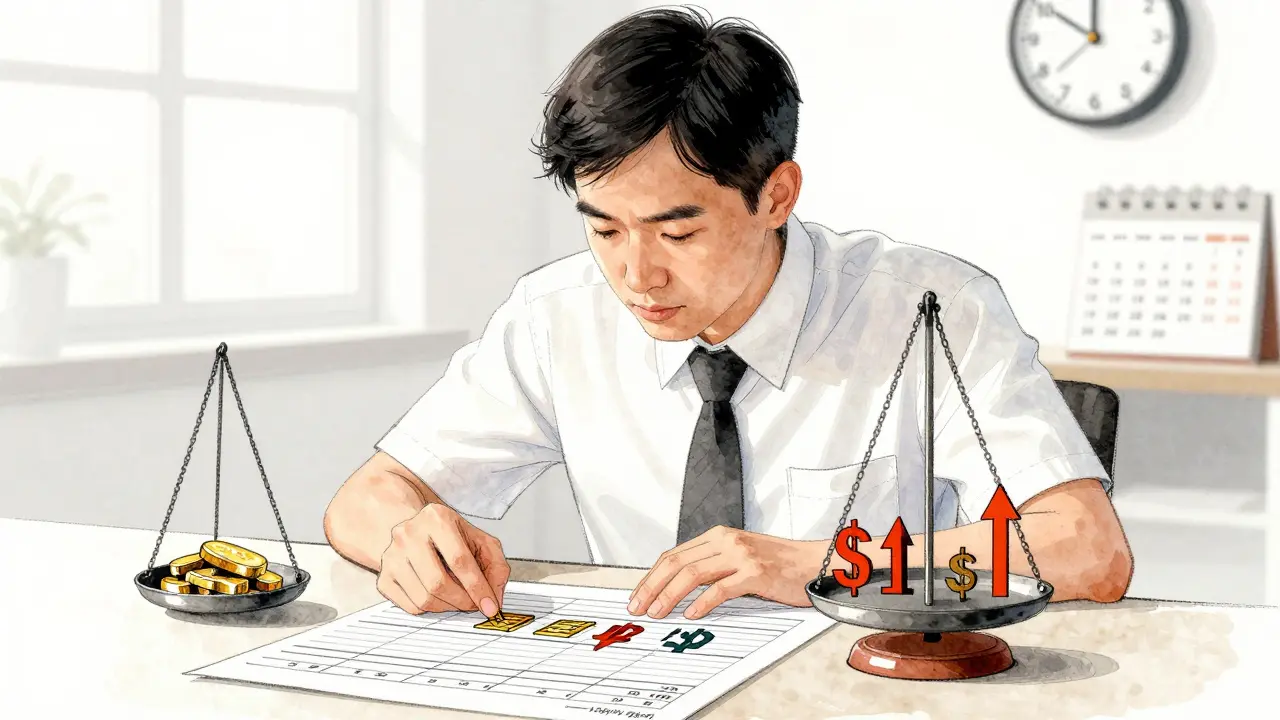
The Psychology of Drawdowns
Here’s the truth: Your strategy can be perfect. But if your mind cracks, you’re done.
After a big loss, your brain does two things:
- It tells you to stop trading - "This isn’t working."
- Or it tells you to double down - "I just need one win to get back."
Both are wrong.
What you need instead is:
- Acceptance - Drawdowns are part of the game. Every trader goes through them. Even Warren Buffett had drawdowns over 50%.
- Patience - Recovery doesn’t happen overnight. Markets don’t care about your timeline.
- Process Focus - Stop watching your balance. Watch your checklist. Your entries. Your exits. Your risk per trade. If you stick to your process, the results will follow.
Keep a trading journal. Write down how you felt before, during, and after each drawdown. Over time, you’ll spot your emotional triggers. And you’ll learn how to pause before you act.
What to Do Right Now
If you’re in a drawdown today, here’s your action plan:
- Stop trading. Not forever. Just for 48 hours. Let your emotions cool.
- Review your last 10 trades. Were they based on your plan? Or impulse? If it’s the latter, fix your rules - not your strategy.
- Reduce position sizes. Cut your risk in half. Trade smaller until you regain confidence.
- Rebalance your portfolio. Sell what’s too big. Buy what’s too cheap.
- Set a recovery goal. Don’t say "I want to get back to even." Say: "I want to make 5% next month by sticking to my system."
Drawdowns aren’t failures. They’re feedback. They tell you where your edge is weak. Where your discipline is thin. Where your plan needs tuning.
The best traders aren’t the ones who never lose. They’re the ones who lose - and still come back.

Comments (10)
King Medoo March 5 2026
I've seen this so many times. People think trading is about winning trades. Nah. It's about surviving the inevitable crash. I lost 47% in 2022. Didn't quit. Didn't revenge-trade. Just stuck to my process. Rebalanced. Cut position sizes. Let time do its thing. Now I'm up 89% from that low. It's not magic. It's mechanics. And patience. You don't need a PhD. You need a spreadsheet and a breathing exercise. 🤏🧠Rae Blackburn March 6 2026
They never tell you the truth. The system is rigged. Central banks manipulate markets. Your drawdown isn't bad luck. It's a targeted attack on retail traders. They want you broke so you stop trading and go back to your 9-5. I know because I work at the Fed. No I don't. But I read a forum post once. And now I see the pattern. The charts are fake. The algorithms are hunting stop losses. You're not losing because you're bad. You're losing because THEY want you to.LeVar Trotter March 8 2026
Let me offer a structural perspective. The core issue isn't emotional resilience alone-it's systemic risk architecture. When you fail to implement correlation-aware asset allocation, you're essentially creating a single point of failure in your portfolio. The 1-2% risk rule isn't dogma-it's actuarial math. And rebalancing isn't about market timing-it's about mean reversion exploitation. The psychological component? It's real. But it's secondary to the engineering. If your risk model is sound, your mind has less to fight. Your edge isn't in prediction. It's in constraint. Build the cage first. The tiger will stay inside.Tyler Durden March 8 2026
I was down 52% last year. Thought I was done. Sat on the couch for three weeks. Watched Netflix. Ate cereal. Didn't touch a chart. Then one morning I opened my journal. Wrote down why I started. Not to get rich. To be free. So I came back. Smaller trades. Tighter stops. No ego. Just execution. And yeah-I’m back above my peak. Not because I’m smart. But because I didn’t quit. You don’t need a new strategy. You need a new mindset. And maybe a nap. Seriously. Sleep fixes more drawdowns than indicators.Aafreen Khan March 9 2026
bro u just need to trade crypto and stop overthinking. i lost 80% on btc but then it went 10x. u think u need all these rules? nah. just go all in on the next moon. i did. now i drive a tesla. u can too. just trust the vibe. 🚀💸Pamela Watson March 11 2026
I tried this. It didn't work. I did everything they said. Rebalanced. Cut size. Journal. Still lost. So I switched to day trading. Made 300% in two weeks. Then lost it all. Then I went back. Now I'm up 20%. But I still cry sometimes. I just want to be rich. Why is this so hard? 😭michael T March 11 2026
You know what really kills traders? Not drawdowns. It’s the silence. The loneliness. The way your partner stops asking how trading is going. The way your friends start saying "Oh, you still do that?" Like it’s a hobby. Like you’re a kid with a lemonade stand. And then you wake up at 3 a.m. staring at a green candle, praying for a sign. I’ve been there. I still am. And I’m not okay. But I’m still here. And that’s something. 🖤Christina Kooiman March 13 2026
There is a critical error in the article's logic. It states: "A 50% loss requires a 100% gain to break even." This is mathematically correct. However, it fails to specify whether this refers to percentage points or compounding returns. The phrasing "double your remaining capital" is ambiguous. One might interpret this as needing to earn 100% of the original capital, rather than 100% of the reduced capital. This is a dangerous oversight. Precision in language is not pedantry-it is survival. And yet, the article uses "you" repeatedly without defining the subject’s capital base. This lack of clarity could mislead novice traders into miscalculating their recovery targets. I am deeply concerned.Stephanie Serblowski March 13 2026
I love how this post doesn’t sugarcoat it. It’s brutal. Real. And honestly? That’s what we need. I’m from India, moved to the U.S. two years ago. Lost everything in crypto. Thought I was a genius. Then I was a fool. Took me 18 months to crawl back. I didn’t have a mentor. Just a Reddit thread and a stubborn refusal to quit. Now I trade small. I journal. I breathe. And I smile when I see a red candle. Because I know: it’s not the end. It’s just a pause. You’re not broken. You’re being reshaped. And that? That’s beautiful. 💫Renea Maxima March 14 2026
The entire premise assumes that recovery is desirable. What if the market isn’t meant to be tamed? What if drawdowns are nature’s way of pruning the overconfident? Maybe the goal isn’t to climb back up. Maybe it’s to step away. To live. To stop measuring worth in P&L. I used to trade. Now I garden. My portfolio’s down 100%. My soul’s up 300%. Who’s really winning?