
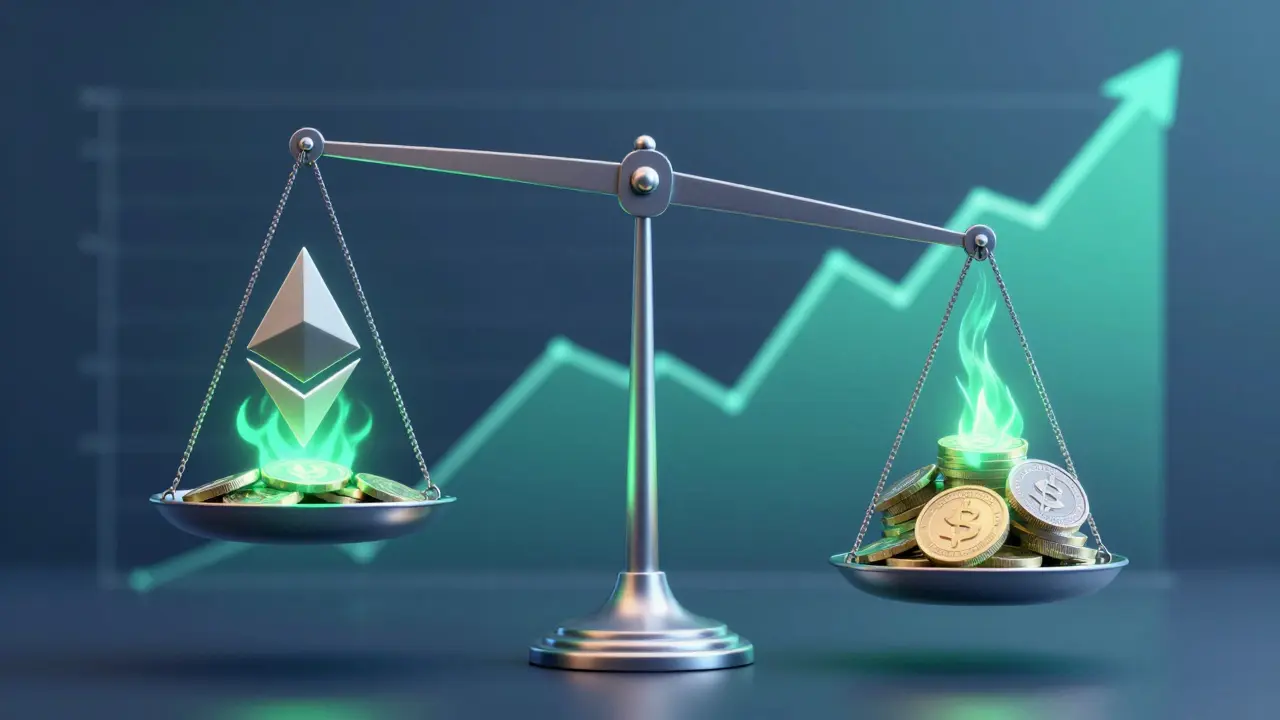
When you stake your crypto, you’re not just earning interest-you’re helping keep the whole network alive. But here’s the catch: every reward you get comes at a cost. New tokens are created to pay you, and that increases the total supply. That’s inflation. And if inflation outpaces your rewards, your holdings lose value-even if your staking balance goes up.
Why Inflation Isn’t Always Bad
Inflation sounds like a dirty word in traditional finance. But in blockchain, it’s a tool. Without it, there’s no reason for people to stake. No staking means no security. No security means the network gets hacked, frozen, or abandoned. Proof-of-Stake networks like Ethereum, Solana, and Cardano use inflation to pay validators-people who run nodes and verify transactions. Think of it like a salary for keeping the lights on. The more people stake, the safer the network becomes. But if too many new tokens flood the market, the price drops. That’s where the balancing act begins. Ethereum’s approach is the most refined. After its Merge in 2022, it slashed its inflation rate to just 0.35% per year. That’s barely noticeable compared to Bitcoin’s fixed 1.7% supply growth. But here’s the twist: Ethereum also burns transaction fees. During busy periods, it destroys more ETH than it creates. In Q4 2025, it burned an average of 1,200 ETH per day. That made Ethereum deflationary for over 180 days straight. So even though stakers earned rewards, the total supply shrank. That’s rare-and powerful.How Different Networks Handle Inflation
Not all blockchains are built the same. Each has a different recipe for inflation and rewards.- Ethereum: 0.35% inflation, variable burns. Net yield: ~3.2% in Q4 2025. Low inflation + fee burning = strong value retention.
- Solana: 4.7% inflation (down from 8% in 2021). It disinflates by 15% each year toward a 1.5% target. Gross yield: 5.8%. But because inflation is higher, net gains are weaker. Some users saw negative returns after price drops.
- Cardano: Fixed 5% max inflation. Rewards vary based on stake pool saturation. Current yield: 3.7%. But price depreciation wiped out gains for many in 2025.
- Cosmos: 13.5% inflation, 9.2% rewards. High inflation means high risk. Token value fell 18% in 2025 despite decent staking returns.
The Hidden Cost: Lost Tokens and Artificial Scarcity
Most inflation calculations ignore something important: lost tokens. About 3.7 million ETH-worth roughly $12 billion-is permanently stuck in wallets where no one has the private keys. No one can access it. No one can spend it. But it’s still counted in the total supply. That means inflation numbers are inflated (pun intended). Lyn Alden pointed this out in her January 2026 report: if you remove lost tokens, real inflation is lower than reported. That changes the math. If you’re comparing Ethereum’s 0.35% to Solana’s 4.7%, but 3% of Ethereum’s supply is effectively gone, the real pressure on value isn’t as bad as it looks. This matters because investors use these numbers to decide where to stake. If you’re only looking at headline inflation, you might avoid Ethereum thinking it’s too low. But if you factor in lost supply, you see it’s actually more scarce than most.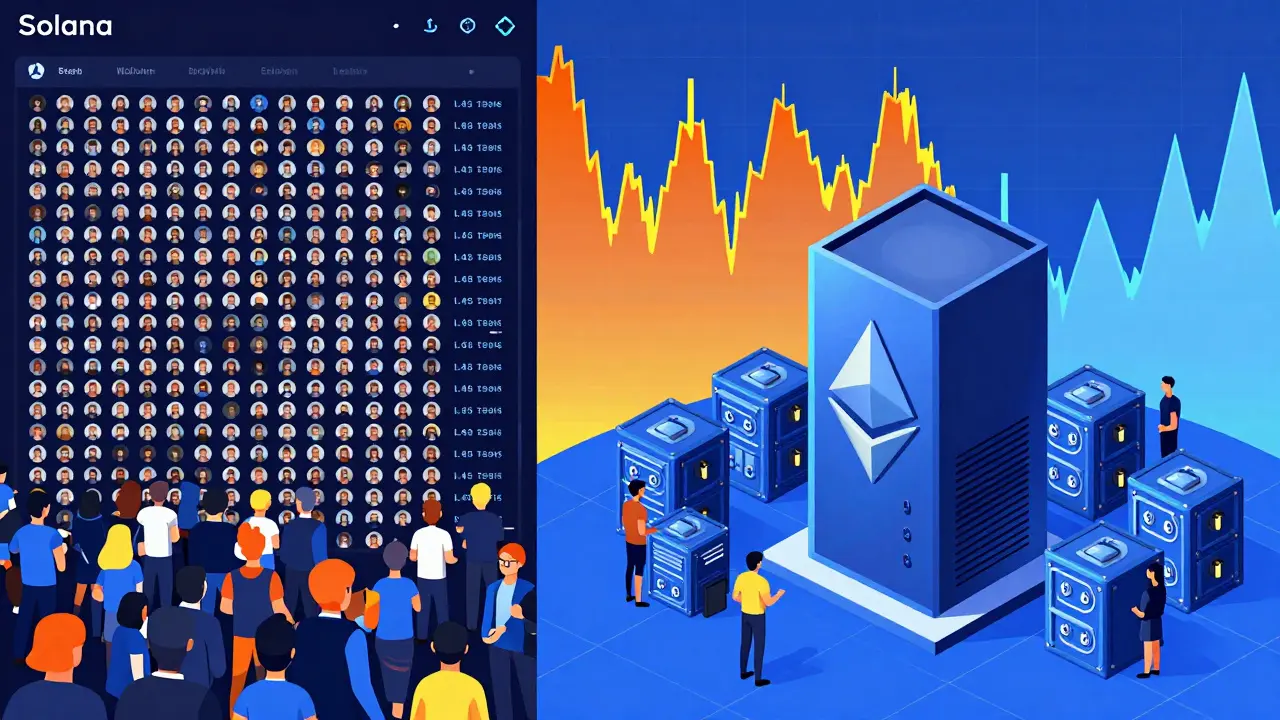
Staking Rewards Aren’t Always What They Seem
You see a 7% APY on Lido or Coinbase and think, “That’s great!” But APY doesn’t tell the full story. Take Solana. It pays 5.8% in rewards. Sounds great. But if the token price drops 8% over the same period, you’ve lost money-even though your staking balance went up. Reddit users reported an average net return of -2.1% for Solana stakers in 2025. Ethereum stakers, by contrast, saw +1.8% net returns. Why? Because Ethereum’s fee burning offsets inflation. Solana burns only 50% of fees-less than Ethereum’s average 70%. And Solana’s higher inflation means more tokens are being added to the market. More supply. Less scarcity. Lower price pressure. Also, slashing penalties hit hard. About 18.7% of stakers on Cosmos, Polkadot, and other networks lost part of their stake due to validator downtime. That’s not rare. It’s expected. One missed signature, one server crash, and you lose 0.5-1.2% of your stake. That eats into your returns.Who Can Stake?门槛 vs. Accessibility
Ethereum requires 32 ETH to run your own validator. At $3,200 per ETH, that’s over $100,000. Most people can’t afford that. So they use liquid staking platforms like Lido or Coinbase. These let you stake any amount, even $10. But you’re trusting someone else to run the node. That’s convenient-but it centralizes control. Solana is the opposite. You can stake with as little as 0.000005 SOL (one Lamport). It’s designed for mass participation. Setup takes days, not weeks. The interface is simple. And rewards hit every 48 hours. That’s why Solana has over 92 million active stakers. But here’s the irony: Ethereum still dominates in total value staked-$328.5 billion as of January 2026. Solana has $92.7 billion. Why? Because institutions and whales still prefer Ethereum. They trust its security, its burn mechanism, and its long-term design. Even if the barrier is high, the reward is more reliable.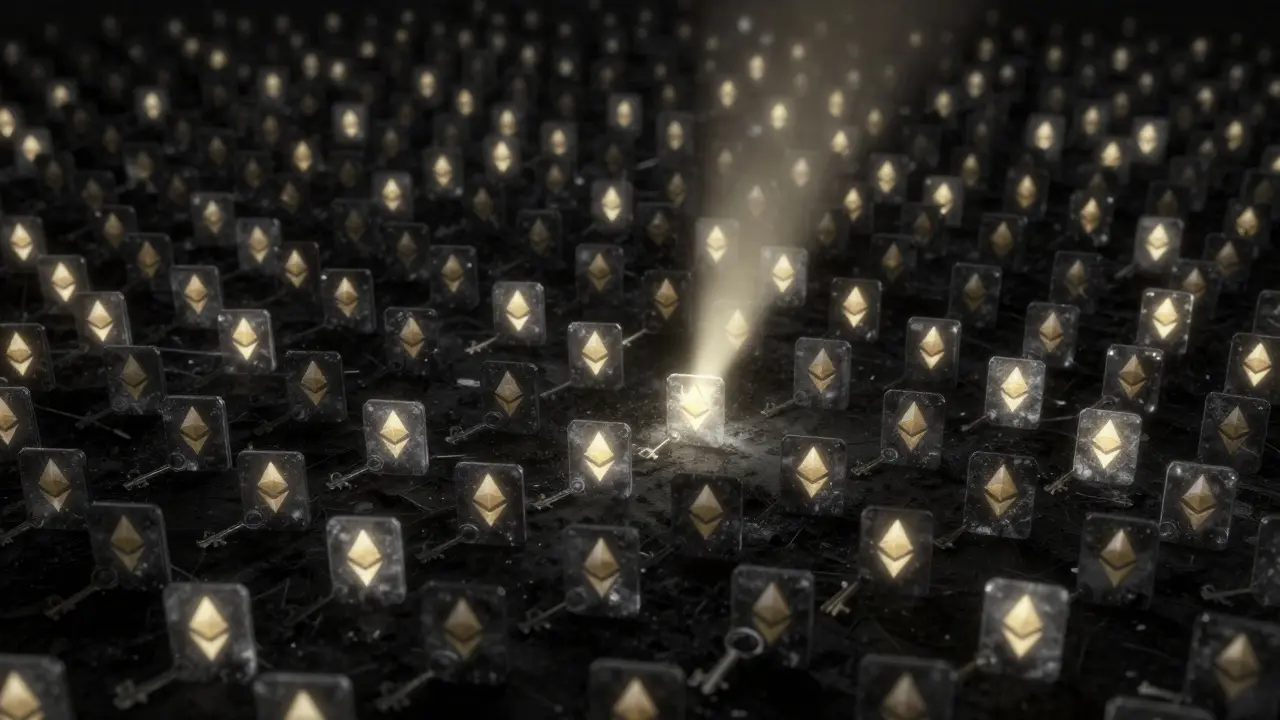
What’s Next? The Future of Staking Economics
The next big shift is coming in Q3 2026 with Ethereum’s Prague upgrade. It will reduce the minimum stake from 32 ETH to just 1 ETH. That’s huge. It could push staking participation from 28.5% of total supply to 45%. More participants. More security. Same low inflation. That’s the ideal. Solana is testing dynamic inflation. Instead of a fixed 15% annual disinflation, it will adjust based on how many people are staking. If participation drops, inflation rises slightly to attract more. If it surges, inflation drops to avoid dilution. Early testnet results show volatility could fall from ±2.3% to ±0.8%. That’s stability. Polygon, which once launched with 70% inflation to grow fast, is now upgrading to an “EIP-1559++” model-copying Ethereum’s fee burn but adding its own twist. Even newer chains are learning: high inflation is a sprint, not a marathon.What Should You Do?
If you’re staking for long-term value:- Avoid networks with inflation above 10%. They’re gambling with your money.
- Prefer chains with fee burning. Ethereum leads here.
- Check net returns, not gross APY. Price movement matters more than reward numbers.
- Use liquid staking if you can’t meet minimums-but don’t ignore decentralization risks.
- Compound your rewards. Even a 1% boost from auto-compounding adds up over time.
Frequently Asked Questions
Are staking rewards taxable?
Yes. In the U.S., the SEC treats staking rewards as taxable income the moment you receive them-not when you sell. In the EU, MiCA rules require staking providers to report rewards to tax authorities. Keep records of every reward claim, including date, amount, and USD value at receipt.
Can staking make me rich?
Not by itself. Staking rewards are modest-usually 2-6% annually. You won’t get rich off interest alone. What matters is whether the token’s price holds or grows. Ethereum stakers who held through 2025 saw their total value increase because the price rose faster than inflation. Solana stakers often lost money because price dropped faster than rewards could compensate.
What’s the safest network to stake on?
Ethereum is currently the safest. It has the lowest inflation, the strongest fee-burning mechanism, the largest staked value, and the most decentralized validator base. Liquid staking providers like Lido and Coinbase are well-audited and have over 95% uptime. Avoid newer chains with untested models or inflation above 10%.
Why does Solana have higher rewards than Ethereum?
Solana pays higher gross rewards because it needs to attract more validators to secure its fast, low-cost network. It’s trading higher inflation for faster adoption. Ethereum, already secure and widely adopted, doesn’t need to offer as much. It prioritizes value preservation over growth incentives.
What happens if a validator goes offline?
You get slashed. That means a portion of your staked tokens is penalized-usually 0.5-1.2%. This happens on networks like Cosmos, Polkadot, and Ethereum if your validator misses too many attestations or signs conflicting blocks. To avoid this, use reputable staking providers with high uptime and automated monitoring.

Comments (15)
sonny dirgantara February 3 2026
stake 10 bucks on solana and wake up to 8% less in your wallet lol
Adithya M February 4 2026
Actually, the article misses a critical point: inflation isn't just about token supply-it's about velocity. If rewards are locked in liquid staking derivatives, the real inflationary pressure is muted. Most retail stakers don't spend their rewards-they compound. That changes the entire calculus.
Also, lost ETH isn't just ‘inflation noise’-it's a deflationary force equivalent to a permanent buyback program. The market doesn't price in lost coins, but it should. That’s why ETH’s real effective inflation is closer to -0.1%.
Kevin Hagerty February 4 2026
lol another crypto bro pretending inflation is ‘engineering’ and not just printing money with a blockchain logo
you think burning fees makes it ‘smart’? nah, it just makes the rich richer while you get paid in vapor
Mark Tipton February 5 2026
Let’s be precise here. The 3.7 million ETH lost is not merely ‘unspendable’-it’s a structural deflationary anchor. When you factor in the 1.2 million ETH burned daily during peak congestion, Ethereum’s net supply contraction is not an anomaly-it’s the baseline. Solana’s 4.7% inflation is a monetary policy failure, not a feature. The fact that anyone still defends it reveals a fundamental misunderstanding of scarcity economics.
And yes, I’m aware that you’re probably staking on a centralized exchange and calling it ‘decentralized.’ You’re not a validator. You’re a spectator. And spectators don’t get to dictate the rules of the game.
The Prague upgrade isn’t ‘nice.’ It’s a necessary correction to a flawed entry barrier. 32 ETH was never about security-it was about gatekeeping. Now, with 1 ETH, we’ll finally see true mass adoption without sacrificing decentralization. The institutions will still dominate, but the network will be more resilient.
Cardano’s 5% inflation? A death sentence wrapped in whitepaper glitter. Cosmos at 13.5%? That’s not a blockchain-it’s a Ponzi with a consensus algorithm. And don’t get me started on the ‘APY trap’-you’re not earning yield, you’re gambling on a price that’s already priced in.
People still don’t get it: staking isn’t about the percentage. It’s about the *net value retention*. If your token drops 10% and you earn 6%, you didn’t win-you lost 4%. And yet, 90% of Reddit posters still chase APY like it’s a lottery ticket.
The only network that combines low inflation, active burning, and institutional trust is Ethereum. Everything else is noise. And if you’re staking on a chain that hasn’t been audited for 18 months, you’re not investing-you’re donating.
Meredith Howard February 6 2026
Interesting how the article frames lost tokens as a footnote when they're arguably the most significant deflationary force in crypto
Why do we still measure inflation based on total supply when so much of it is permanently inactive
It's like counting all the cash ever printed in the world as part of the money supply-even the bills in the bottom of the ocean
Maybe we need a new metric: circulating adjusted supply
Or is that too complicated for the average investor
Eric Etienne February 8 2026
why do people still care about this
crypto is just a game
you think your 3.2% APY matters when the whole thing could vanish tomorrow
just buy btc and shut up
Amanda Ablan February 8 2026
For anyone new to staking: don’t just chase the highest APY. Look at the token’s historical price movement alongside rewards. I staked Cardano in 2024 thinking 5% was great-until the price dropped 30%. My ‘earnings’ turned into a loss. Lesson learned.
Also, use a reputable liquid staking provider. I switched from a random pool to Lido after a validator went down and I got slashed 0.8%. Not fun.
And yes, ETH’s fee burning is wild. Seeing the total supply drop for months while everyone’s still earning rewards? That’s the kind of magic you don’t see in traditional finance.
TL;DR: APY is the bait. Net value retention is the hook.
Nathan Jimerson February 8 2026
It's encouraging to see more people understand that staking isn't just about passive income-it's about securing the future of decentralized networks. Ethereum's model proves that sustainability beats hype. More chains should follow.
Even if you're not a validator, you're still part of the ecosystem. Your decision to stake matters.
Sandy Pan February 9 2026
What if inflation isn't the enemy-but the mechanism that reveals who’s truly committed?
High inflation attracts speculators. Low inflation with burning attracts believers.
Maybe the real question isn't ‘which chain has the best APY?’ but ‘which chain attracts the most patient participants?’
Because in the end, networks don’t die from low rewards.
They die from too many people treating them like ATMs.
Tina van Schelt February 11 2026
Imagine if your savings account paid you in cash… but also printed new cash every week, flooding your neighborhood with it. You’d get a little more money each month-but everything else costs more. That’s staking on Solana. Ethereum? It’s like your bank pays you interest… and also burns a few hundred dollars from circulation every day. You’re not just earning-you’re getting richer.
And lost ETH? That’s like finding $12 billion in a vault, sealing it forever, and pretending it never existed. The math doesn’t lie.
It’s not magic. It’s mechanics.
Gina Grub February 11 2026
ETH stakers are smug because they got lucky
the market is rigged
institutions own the burn
you’re just the sugar on top
Jessica McGirt February 12 2026
There's a grammatical error in the third paragraph: 'No staking means no security. No security means the network gets hacked, frozen, or abandoned.' The second sentence is a fragment. It should be: 'Without staking, the network becomes vulnerable to hacking, freezing, or abandonment.' Clarity matters in technical writing.
Also, 'Lyn Alden pointed this out in her January 2026 report'-this is a future date. Is this a typo or speculative fiction? Either way, citing a non-existent report undermines credibility.
Minor issues, but they matter when discussing precision economics.
Yashwanth Gouravajjula February 14 2026
India has 12 million stakers. We don’t care about APY. We care about access. Solana’s 0.000005 SOL minimum lets my cousin in rural Bihar stake $2 and sleep easy. That’s real inclusion.
Don’t dismiss it because it’s not Ethereum.
Donald Sullivan February 15 2026
you guys are overthinking this
if your wallet goes up 3% but the coin drops 8% you’re still losing money
stop pretending staking is investing
it’s just a tax on gullibility
Dylan Rodriquez February 16 2026
Staking isn’t about getting rich. It’s about choosing which future you want to support.
High-inflation chains are betting on growth through quantity. Ethereum is betting on value through scarcity.
One attracts traders. The other attracts builders.
I’d rather build on a network that preserves value than one that burns it trying to grow too fast.
And if you’re staking because you think you’ll get rich… you’re already behind.