
When you're trading cryptocurrency outside of an exchange-buying Bitcoin from a stranger in another country or selling Ethereum for cash-there's no middleman watching your back. That’s the whole point of over-the-counter (OTC) trading. But without a platform like Binance or Coinbase holding your funds, you’re on your own. And that’s where scams thrive. One wrong move, and your money vanishes. The good news? You don’t have to guess. Safe OTC crypto trades come down to three things: escrow, reputation, and settlement. Get those right, and you reduce your risk to almost nothing.
Why Escrow Isn’t Optional
Imagine sending $5,000 in Bitcoin to someone who promises to send you cash in return. You hit send. They disappear. No recourse. That’s what happens without escrow. Escrow isn’t a luxury-it’s your insurance policy. It works like this: a third party holds the crypto until both sides do what they promised. Only then does the money move. Some platforms handle this automatically. Binance P2P, for example, locks your crypto in its system the moment you start a trade. The buyer sends fiat via bank transfer. Once Binance confirms receipt, it releases the Bitcoin. No manual steps. No trust needed. And it’s free. That’s rare. Most other services charge. BTC Asia takes 1%, Escrow.com starts at 0.89%, and forum agents often charge the same. But the real value isn’t the fee-it’s the safety. Escrow removes the risk of one-sided deals. You don’t pay until you’re sure you’re getting what you’re owed.Reputation: The Invisible Shield
Not all escrow services are created equal. Some rely on algorithms. Others rely on people. On Binance P2P, you can see a trader’s history: how many trades they’ve done, their success rate, how long they’ve been active. A user with 200 completed trades and a 98% rating? That’s a safe bet. A new user with three trades and no reviews? Walk away. Then there’s Bitcoin Talk. It’s old-school. You find an escrow agent listed in the forums, check their thread history, and read every comment. Some agents have been doing this since 2013. They’ve built trust slowly, one trade at a time. But here’s the catch: no one verifies them. No KYC. No oversight. One bad actor can disappear with your money and reappear under a new username. That’s why reputation alone isn’t enough. You need it and structure. Use reputation as a filter-not a guarantee. Paxful uses a similar system. You can see ratings, trade volume, and payment method history. But Paxful admits: scams still happen. Why? Because they allow gift cards and PayPal payments-methods that are reversible. A scammer pays with a stolen PayPal account, gets the crypto, then reverses the payment. Paxful’s escrow holds the crypto, but if the fiat side is fake, the system can’t always catch it. Reputation helps, but it doesn’t fix bad payment methods.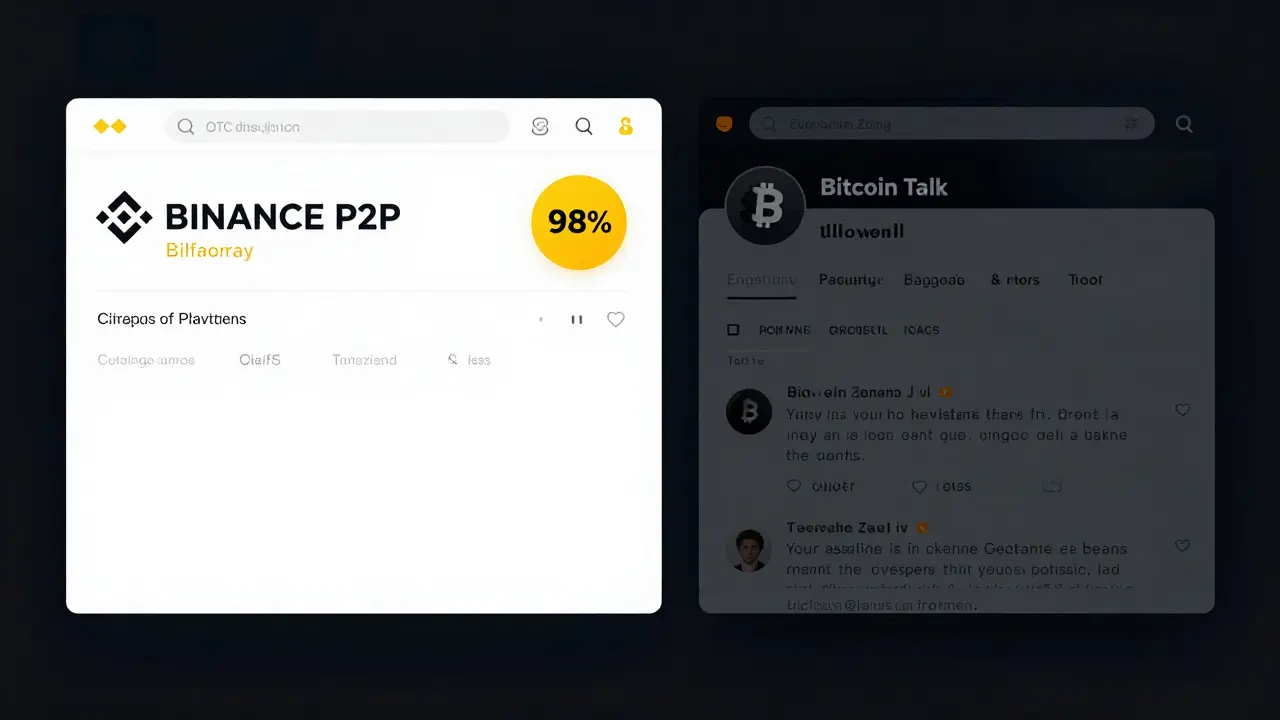
Settlement: How Fast Is Fast Enough?
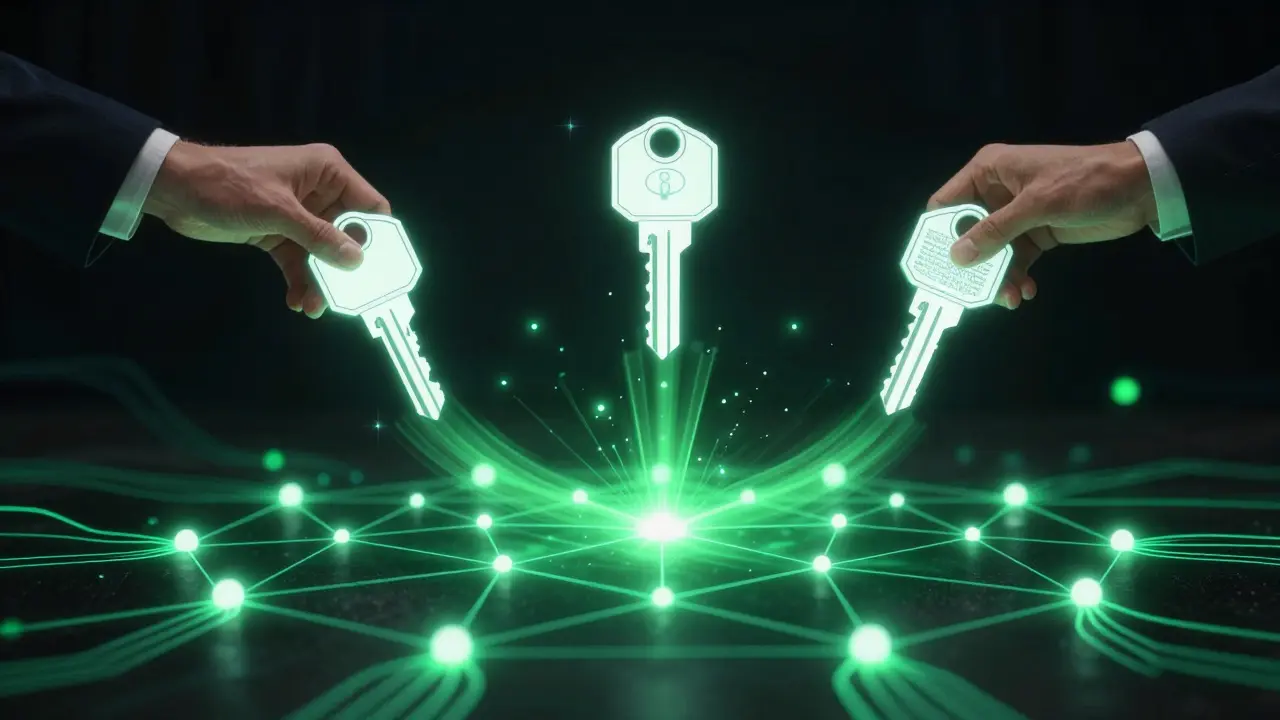
Settlement is when the deal actually completes. And this is where things get messy. Most people think crypto trades are instant. They’re not. If you’re using a service like Escrow.com or BTC Asia and paying via bank transfer, you’re waiting 3 to 5 business days. That’s because they use ACH or wire transfers-same as your bank. Crypto moves fast. Fiat doesn’t. On the flip side, if you use a multi-sig wallet like Safe (formerly Gnosis Safe), settlement happens on-chain. You and the other party each hold one key. A third party-a trusted friend or escrow agent-holds the third. All three keys are needed to release the funds. Once the buyer confirms payment, the seller signs. The third party signs. The transaction goes through in minutes. No bank delays. No platform interference. But you need to know how to use a wallet. You need to understand public keys. You need to be comfortable with blockchain tools. If you’re not, this isn’t for you. Binance P2P and Paxful settle faster because they’re centralized. They don’t wait for blockchain confirmations. They check bank deposits manually or through automated systems. So if you’re trading in EUR or GBP, you might get your crypto in under an hour. That’s the sweet spot for most users: speed without complexity.Which Escrow Service Should You Use?
There’s no single best option. It depends on what you value most.- For high-value trades ($10,000+): Use Escrow.com a licensed, regulated escrow service that verifies identities and offers legal protection for digital asset transactions. It’s the only one with formal dispute procedures and insurance. If something goes wrong, you can sue. That matters when you’re dealing in big money.
- For speed and simplicity: Binance P2P a peer-to-peer cryptocurrency trading platform integrated into Binance that offers zero-fee escrow with automated dispute handling. It’s free, fast, and has millions of users. You need KYC, but that’s the price of safety.
- For anonymity: Use a Bitcoin Talk forum a long-standing online community where users act as reputation-based escrow agents for cryptocurrency trades agent with 50+ verified trades and no negative reviews. Skip the KYC. But be ready to vet hard. Check their history. Ask for proof of past trades. Don’t rush.
- For tech-savvy users: Try CheckSig a multi-signature wallet provider offering institutional-grade cold storage and SOC1/SOC2 certified security for crypto escrow. It’s built for enterprises but open to individuals. You get bank-grade security, insurance, and time-locked withdrawals. No middleman. Just crypto, keys, and trust.
Don’t use Paxful for large trades if you’re accepting PayPal or gift cards. Don’t use Binance if you refuse KYC. Don’t trust a forum agent who won’t show you their trade history. Pick the tool that matches your risk tolerance.
Red Flags You Can’t Ignore
Here’s what a scam looks like in real life:- They refuse to use escrow. Ever. “I’m trusted. I’ve done this before.” That’s not confidence-it’s a setup.
- They ask you to send crypto first. Always, always, always have the escrow hold the asset until payment clears.
- The payment method is reversible. PayPal, Venmo, gift cards, cash deposits. These are all reversible. If the buyer reverses the payment after you send crypto, you lose everything.
- Their profile is new. No history. No reviews. Zero activity. Even if they say they’re “new but honest,” walk away.
- They pressure you. “I have another buyer. You need to act now.” Scammers use urgency to stop you from thinking.
Any of these? Cancel the trade. No exceptions.
What’s Next for OTC Trading?
The future isn’t about more escrow platforms. It’s about trustless systems. Smart contracts that auto-release funds when conditions are met. Decentralized escrow bots that don’t need a human to intervene. Some projects are already testing this. But right now, they’re clunky. They don’t accept bank transfers. They don’t work with fiat. So for now, the best option is still a mix of human oversight and smart tech.As of 2026, the safest OTC trades happen on platforms that combine escrow, reputation, and fast settlement. You don’t need to be a crypto expert. You just need to know which tools to use-and which to avoid.
Can I trade crypto without escrow and stay safe?
No. Escrow is the only reliable way to protect yourself in OTC crypto trades. Even experienced traders get scammed without it. Skipping escrow is like driving without seatbelts-maybe you’ll be fine, but the risk isn’t worth it.
Is Binance P2P really safe if it’s free?
Yes. Binance P2P is one of the safest OTC options because it’s backed by one of the largest exchanges in the world. It uses automated escrow, KYC verification, and has 24/7 support. The fact that it’s free means they absorb the cost to attract users-this isn’t a gimmick. It’s a business strategy built on trust.
Why do some escrow services charge 20%?
That’s a red flag. Legitimate services charge between 0.89% and 2%. Anything over 5% is suspicious. High fees often mean the service is either a scam or targeting inexperienced users. Always compare fees before you trade.
Can I use a multi-sig wallet for fiat trades?
Not directly. Multi-sig wallets only handle crypto. If you’re trading Bitcoin for bank transfer, you still need an escrow service to verify the fiat side. Multi-sig protects the crypto, but not the payment. You need both systems working together.
What’s the fastest way to settle a crypto trade?
The fastest way is using a platform like Binance P2P with a local bank transfer. Settlement can happen in under 30 minutes. If you’re using a multi-sig wallet and both parties have crypto on-chain, settlement takes 5-10 minutes. But if you’re using a bank like Chase or HSBC, expect 3-5 days.
Are escrow agents on Bitcoin Talk trustworthy?
Some are. Many aren’t. Look for agents with 50+ trades, consistent positive feedback over multiple years, and public proof of past transactions (screenshots, timestamps). Never trust someone just because they’ve been on the forum a long time. Scammers have been there for 10 years too.
Should I use Escrow.com for small trades under $1,000?
Probably not. Escrow.com is designed for high-value trades. Its fees are low, but the process is slow and requires full KYC. For trades under $1,000, use Binance P2P or a reputable forum agent. Save Escrow.com for deals over $5,000 where legal protection matters.

Comments (13)
Sanjay Mittal February 28 2026
Been using Binance P2P for over two years now, mostly trading INR for BTC. The escrow system works like clockwork. No issues, no delays. Just make sure you stick to verified traders with 100+ trades and 99%+ rating. I’ve seen people get scammed because they ignored the history tab. Don’t be that guy. Also, avoid any trade where they ask for UPI without escrow. That’s how you lose money.
Pro tip: Always check the payment method history. If someone’s been doing PayPal for 50 trades, that’s a red flag. Stick to bank transfers or NEFT. Instant, irreversible, clean.
Mike Zhong February 28 2026
You people are treating escrow like it’s some sacred ritual. It’s not. It’s just a middleman with a UI. The real issue is that OTC crypto trading is inherently flawed because it’s built on trust in a system designed to eliminate trust. You’re still trusting-just now you’re trusting a platform’s algorithm instead of a person. That’s not progress. That’s just outsourcing gullibility.
And don’t get me started on ‘reputation.’ A 98% rating on Binance means nothing if the account was created yesterday and the first 20 trades were bots. Algorithms can be gamed. Reputation is just a placebo. The only real safety is self-custody with multi-sig and on-chain settlement. Everything else is theater.
Jamie Roman February 28 2026
I’ve tried so many different methods over the years-Bitcoin Talk agents, Paxful, Escrow.com, even a random guy on Telegram who swore he’d hold my BTC in a multisig. I’ve lost money. I’ve gotten scammed. I’ve also had smooth, flawless trades that felt like magic.
Here’s what I learned: It’s not about the platform. It’s about the person. A trader with 300 trades and a calm, detailed chat history? That’s your guy. A trader who sends a one-line message and says ‘send now, I’ll confirm in 5 mins’? Run.
And yeah, Binance P2P is the easiest. But even there, I always read the last 10 reviews. Not the average. The actual comments. People write about delays, fake payments, slow support. That’s the real intel. Don’t skip it. It’s worth the 3 minutes.
Salomi Cummingham February 28 2026
I just want to say-this post made me cry. Not because I’m emotional, but because I’ve been there. Last year, I sent 7 ETH to someone who ‘just needed a quick flip.’ No escrow. Said he’d been doing this since 2017. I checked his profile. 12 trades. All positive. All from the same IP. I didn’t know any better.
It took me six months to recover. I had to learn about multisig wallets. I had to join forums. I had to talk to strangers who became friends. Now I help new traders. I teach them to read the fine print. To check timestamps. To never trust a name alone.
If you’re reading this and you’re thinking about skipping escrow-please, stop. Breathe. Walk away. Your future self will thank you. I still have nightmares about that transaction.
Johnathan Rhyne March 1 2026
First off, ‘settlement’? That’s not a word you use in crypto. It’s ‘confirmation.’ Or ‘finalization.’ Or ‘on-chain settlement.’ You say ‘settlement’ like you’re filing taxes. Second, ‘Escrow.com’? That’s a 2005 relic. Who even uses that anymore? And ‘BTC Asia’? That’s a ghost site with a .com domain and a PayPal button.
Also, you say Paxful allows ‘reversible payments’ like it’s a surprise. Duh. PayPal is reversible. That’s its whole f***ing purpose. Why is this even a ‘red flag’? It’s not a flag-it’s a neon sign with a siren. And you’re acting like you just discovered fire.
Also, ‘CheckSig’? That’s not even a real product. It’s a GitHub repo with 3 stars. Stop pretending it’s institutional-grade. You’re not fooling anyone.
Jawaharlal Thota March 1 2026
As someone who’s done over 200 OTC trades in India, mostly INR to BTC and USDT, I can tell you this: the real danger isn’t the platform-it’s the pressure. Scammers don’t need fancy tricks. They just need you to feel rushed. ‘I have three buyers waiting. If you don’t send now, I’ll have to cancel.’ That’s the script. Always.
My rule? No matter how good the deal looks, I wait 24 hours. I sleep on it. If it’s still there tomorrow, I go ahead. If it’s gone? Good. That means I dodged a bullet.
Also, never trust someone who says ‘I’ve been on Bitcoin Talk since 2015.’ I’ve seen guys with 10-year-old accounts who’ve done 3 trades total. They’re just waiting for the next sucker. Reputation takes time to build, but it also takes time to fake. Look at the pattern, not the number.
Lauren Saunders March 3 2026
How quaint. You think Binance P2P is ‘safe’ because it’s ‘free’? That’s like saying a Tesla is safe because it doesn’t have a gas pedal. You’re not thinking about systemic risk. You’re thinking about transactional convenience. That’s why you’re still here, reading a Reddit post instead of running a node.
Escrow.com? A joke. They charge 0.89%? That’s for retail peasants. Real institutions use Chainlink Oracles with time-locked multisigs and legal wrappers under Delaware LLCs. You’re still stuck in Web2 thinking. You think KYC is safety? It’s just identity theater. The real safety is decentralization. The rest? You’re just paying for the illusion of security.
sonny dirgantara March 5 2026
bro just use binance p2p. its free and fast. i did a 5k trade yesterday and got my btc in 12 mins. no escrow needed. just pick someone with 500+ trades and 99% rating. done. why overcomplicate? also dont use paypal. ever. i lost 200 once. never again. simple.
Andrew Nashaat March 5 2026
Let’s be clear: You say ‘reputation’ like it’s a shield. It’s not. It’s a lie wrapped in a star rating. A 98% rating with 120 trades? That’s 2.4 failed trades. Two people got scammed. You’re fine with that? You’re fine with the fact that Binance’s ‘automated dispute system’ is a form you fill out and pray to? And you call that safety?
Also, ‘Escrow.com’? They require notarized ID? That’s not security-that’s surveillance. And ‘CheckSig’? You mean the project that hasn’t updated since 2021? With a GitHub issue titled ‘I can’t send BTC’ from last week? Don’t you dare call that ‘institutional-grade.’
And you say ‘don’t use Paxful for PayPal’ like it’s news. The platform itself admits it’s risky. Why are you even listing it as an option? You’re not educating people-you’re enabling them.
Gina Grub March 6 2026
Escrow? Reputation? Settlement? Please. You’re treating crypto like it’s a bank loan. It’s not. It’s code. It’s math. It’s a distributed ledger. You don’t need escrow-you need a smart contract. You don’t need reputation-you need on-chain history. You don’t need settlement-you need finality.
And yet here we are. 2026. People still begging for middlemen. Still trusting forums. Still using Binance P2P like it’s a sacred temple. You’re not trading crypto. You’re trading trust in a corporation that has a 2025 IPO plan.
Self-custody isn’t hard. It’s just inconvenient. And convenience is the enemy of security.
Nathan Jimerson March 7 2026
Just want to say-you’re not alone. I started trading OTC in 2021 with zero knowledge. Got burned twice. But I kept learning. Read every thread. Asked dumb questions. Found a mentor. Now I help new traders in my local crypto meetup. It’s not about the platform. It’s about the mindset. Slow down. Verify twice. Trust no one. Even if they’ve been on Bitcoin Talk since 2012.
You got this. Stay safe. And remember: every expert was once a beginner who didn’t give up.
Sandy Pan March 8 2026
There’s something deeply poetic about how we’ve built entire systems of trust around the very thing that was meant to eliminate trust. We created crypto to remove intermediaries. Then we built a new class of intermediaries-platforms, reputation scores, escrow agents, KYC forms-and called it progress.
Is Binance P2P safe? Maybe. But is it honest? No. It’s a beautifully designed trap: free, fast, easy-until you need help. Then you’re talking to a bot that says ‘we’re investigating.’
And Escrow.com? It’s a relic of the old world. A legal shell with a blockchain logo. The real future isn’t in escrow. It’s in decentralized arbitration-on-chain dispute resolution powered by token-weighted voting. We’re not there yet. But we’re closer than you think.
For now? Use Binance. But know this: you’re not trading crypto. You’re trading faith.
Mike Zhong March 9 2026
And yet, you still cling to platforms. You still say ‘use Binance.’ That’s not safety-that’s surrender. The moment you hand over your keys-even to ‘trusted’ systems-you’ve lost. True decentralization isn’t about who holds the keys. It’s about whether you even need to hand them over.
Multi-sig isn’t ‘for tech-savvy users.’ It’s for anyone who refuses to be a pawn. You don’t need to be a developer. You need to be willing to learn. The tools are there. The guides are free. But you’d rather scroll through Reddit and say ‘Binance is fine.’
Wake up. The system you’re trusting is the same one that froze $30B in crypto during the FTX collapse. You’re not safe. You’re just comfortable.