
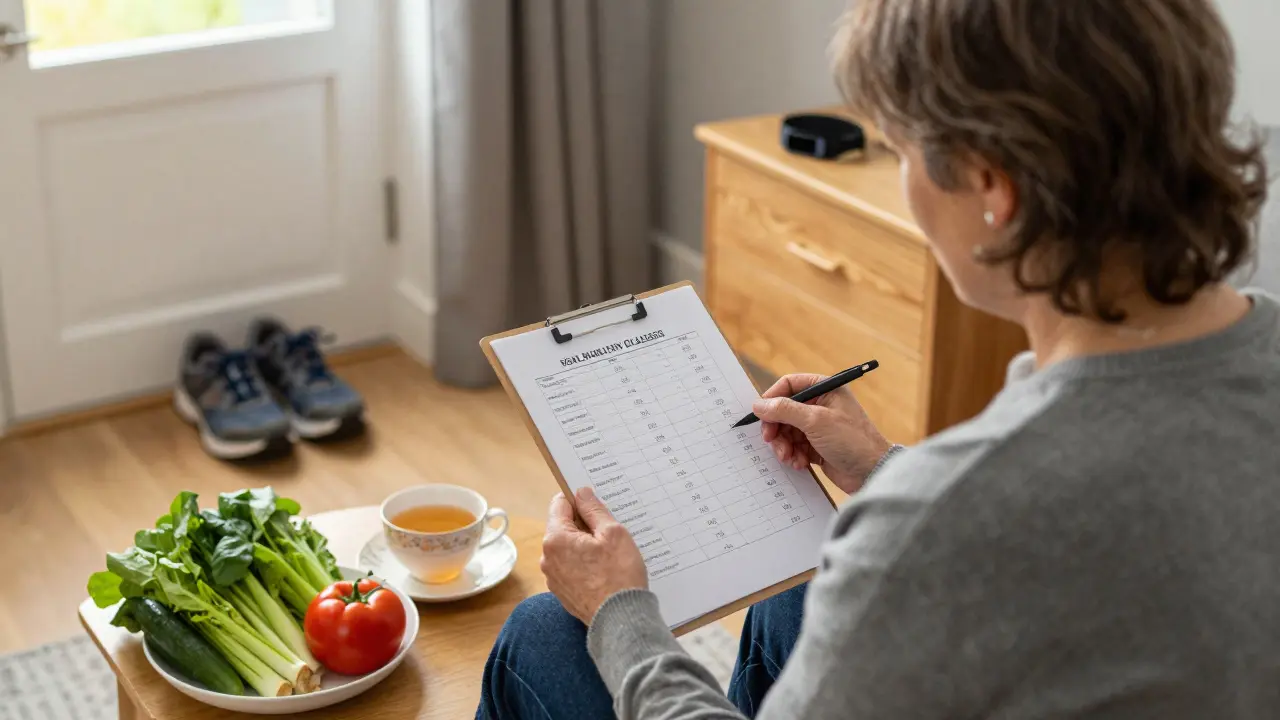
What Preventative Care Really Means
Preventative care isn’t just about getting a yearly checkup. It’s the daily choices that keep you from ending up in the hospital in the first place. Think of it like maintaining a car-you don’t wait for the engine to fail before changing the oil. You do it regularly, before anything breaks. The same applies to your body. Preventative care includes screenings, vaccinations, lifestyle habits, and early detection. It’s not magic. It’s routine. And it works.
In Scotland, the NHS recommends blood pressure checks every five years after 40, cholesterol tests every five years, and bowel cancer screening from age 50. But those are just the baseline. True preventative care goes deeper. It’s about understanding your family history, tracking your sleep, managing stress, and knowing your numbers-blood sugar, BMI, waist circumference. Most people don’t realize that 80% of chronic diseases like type 2 diabetes and heart disease are preventable with simple, consistent habits.
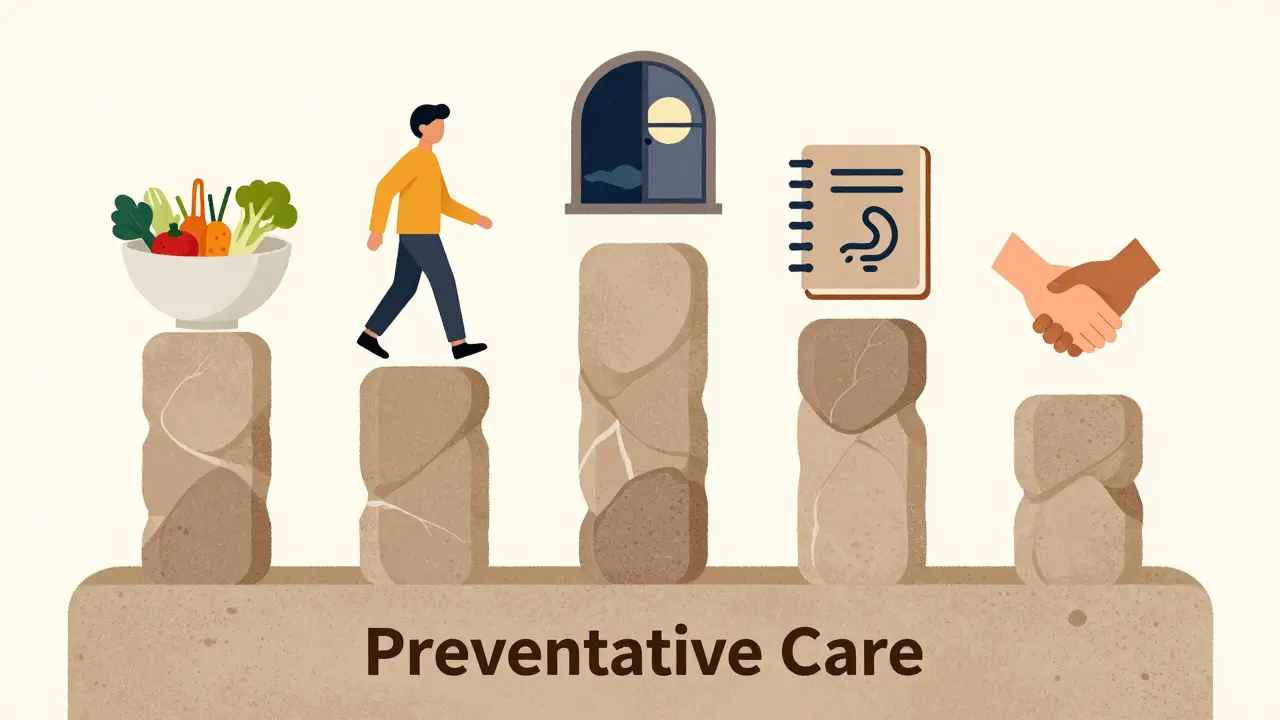
Core Pillars of Wellness Fundamentals
Wellness isn’t a trend. It’s a system. And it’s built on five non-negotiable pillars: nutrition, movement, sleep, mental health, and social connection. Skip one, and the whole structure wobbles.
- Nutrition: Focus on whole foods-vegetables, legumes, whole grains, lean proteins, healthy fats. Avoid processed snacks labeled "low-fat" or "sugar-free"-they’re often full of hidden additives. A 2023 study from the University of Edinburgh found that people who ate at least five servings of vegetables daily had 30% lower risk of early death.
- Movement: You don’t need to run marathons. Walking 30 minutes a day, five days a week, cuts your risk of heart disease by nearly half. Strength training twice a week helps preserve muscle mass after 40, which is critical for metabolism and balance.
- Sleep: Seven to nine hours isn’t a suggestion. It’s a biological requirement. Chronic sleep deprivation raises cortisol, weakens immunity, and increases cravings for sugar and carbs. If you’re tired every morning, it’s not normal-it’s a warning sign.
- Mental Health: Stress isn’t just "in your head." It affects your gut, your heart, your immune system. Daily practices like breathing exercises, journaling, or even five minutes of quiet outside can reset your nervous system. Therapy isn’t for crises-it’s for maintenance.
- Social Connection: Loneliness is as harmful as smoking 15 cigarettes a day. Regular contact with friends, family, or even your local walking group reduces inflammation and lowers depression risk. Humans aren’t meant to be isolated.
How This Course Is Structured
This isn’t a lecture series. It’s a 12-week hands-on program designed for people who are tired of generic advice and want real, actionable steps. Each week builds on the last, with no fluff.
- Week 1-2: Know Your Baseline-Get your key health numbers: blood pressure, fasting glucose, cholesterol, BMI, and waist-to-hip ratio. No guessing. No assumptions.
- Week 3-4: Food as Fuel-Learn to read labels, build balanced meals, and replace one processed item per week with a whole-food alternative. No diets. Just smarter choices.
- Week 5-6: Move Without the Gym-Create a movement plan that fits your life. Walking, stretching, stair climbing, gardening-anything that gets you moving consistently.
- Week 7-8: Sleep and Recovery-Fix your bedtime routine. Learn how blue light, caffeine timing, and room temperature impact sleep quality. Track your sleep for two weeks and adjust.
- Week 9-10: Stress Reset-Identify your top three stress triggers. Practice one mindfulness technique daily. No apps required. Just breath, paper, and time.
- Week 11: Connection Check-Reach out to three people you haven’t spoken to in months. Schedule one social activity per week, even if it’s a coffee chat or phone call.
- Week 12: Build Your Personal Plan-Pull everything together into a simple, written plan you can stick to. No perfection. Just progress.
What You’ll Actually Walk Away With
By the end of this course, you won’t have a pile of handouts. You’ll have:
- A clear understanding of your personal health risks and how to reduce them
- A customized wellness routine that fits your schedule, not the other way around
- Real data from your own body-not someone else’s stats
- Confidence to make decisions without relying on fads or influencers
- A checklist to revisit every six months
One participant, a 52-year-old teacher from Glasgow, lost 14 pounds without dieting. She didn’t cut carbs. She just started walking after dinner, slept seven hours, and stopped eating dessert after 8 p.m. That’s it. No supplements. No shakes. Just consistency.
Common Misconceptions About Preventative Care
There are myths that keep people from taking real action.
- "I’m young, I don’t need this yet."-The damage from poor habits builds silently. High blood pressure doesn’t cause symptoms until it’s too late.
- "I can’t afford it."-Many preventative services are free through the NHS. Blood tests, flu shots, and health screenings cost you nothing. The real cost is ignoring them.
- "It’s too hard to change."-You don’t have to overhaul your life overnight. One small change, repeated daily, creates lasting results. The brain rewards consistency, not intensity.
- "Wellness is just yoga and smoothies."-It’s not about aesthetics. It’s about function. Can you climb stairs without getting winded? Can you carry groceries without back pain? That’s wellness.
Who This Course Is For (and Who It’s Not)
This isn’t for people looking for quick fixes. If you want a 7-day detox or a miracle pill, this isn’t for you.
This is for:
- People who feel tired all the time and don’t know why
- Those with a family history of diabetes, heart disease, or high blood pressure
- Anyone who’s tried diets, apps, or fitness challenges-and quit
- People who want to stay independent as they age
If you’re already healthy and active, you might not need this course. But if you’ve ever thought, "I should probably do something about this," then you’re exactly who this is for.

Why This Works When Other Programs Fail
Most wellness programs fail because they’re too broad, too rigid, or too focused on weight loss. This one isn’t.
It’s based on real-world behavior change science. We don’t ask you to meditate for an hour or run five miles. We ask you to drink one extra glass of water a day. To take the stairs once. To turn off your phone an hour before bed. Tiny actions. Big results.
And it’s not about motivation. It’s about design. We help you structure your environment so the healthy choice is the easy one. Keep fruit on the counter. Put your walking shoes by the door. Schedule your sleep like a meeting. Small tweaks. Big impact.
What Comes After the Course
This isn’t a one-time event. Preventative care is a lifelong practice. After the 12 weeks, you’ll get access to a private monthly check-in group. No sales pitches. Just support. You’ll be asked to update your numbers every six months. We’ll help you adjust your plan as you age, as your life changes, as your needs shift.
Because health isn’t static. Your body changes. Your job changes. Your stress levels change. Your plan should too.
Getting Started
You don’t need to be perfect. You don’t need to know everything. You just need to start. The best time to begin preventative care was years ago. The second-best time is today.
Sign up for the next cohort. Gather your health records. Write down one thing you want to improve. And take that first step-not a giant leap, just one small, steady movement forward.
Is preventative care covered by the NHS in Scotland?
Yes. The NHS Scotland provides free annual health checks for people over 40, including blood pressure, cholesterol, and diabetes screening. Flu and pneumonia vaccines are free for those over 65 or with chronic conditions. Bowel cancer screening is offered every two years from age 50. Some services like dental checkups and eye tests have eligibility rules, but most preventative care is free at the point of use.
Do I need to be fit to join this course?
No. This course is designed for people at any fitness level. Whether you haven’t moved in years or you’re just starting to walk more, the focus is on building habits that fit your current life. There are no workouts to keep up with. Only small, sustainable changes.
How long does each weekly session take?
Each week includes one 45-minute group session and about 15-20 minutes of personal tasks-like tracking sleep, writing down meals, or reaching out to someone. The work is light but consistent. You’re not signing up for a time sink-you’re signing up for lasting change.
Can I do this if I have a chronic condition?
Yes. Many participants have type 2 diabetes, high blood pressure, or arthritis. The course helps you manage those conditions better by reinforcing habits that reduce inflammation, improve mobility, and lower medication reliance. Always consult your doctor before making major changes, but most adjustments here are safe and supportive.
What if I miss a week?
Life happens. If you miss a week, just pick up where you left off. There’s no penalty. No shame. This isn’t a test. It’s a practice. The goal isn’t perfection-it’s progress. One missed week doesn’t undo your progress. Stopping for good does.

Comments (10)
Vishal Bharadwaj December 25 2025
Look, I get the whole 'preventative care' spiel, but let's be real-most people don't have the time, money, or mental bandwidth to track their waist-to-hip ratio while juggling 3 jobs and a kid with ADHD. The NHS gives you a free checkup once every 5 years and calls it a day. This course sounds like a luxury for people who already have their shit together. And don't even get me started on 'no supplements'-have you seen the price of organic kale in Delhi?anoushka singh December 26 2025
I love this so much!! I started walking after dinner last week and I swear I slept better!! Also I stopped eating dessert after 8pm and my skin cleared up?? I'm not even trying!! This is like magic but real!!Jitendra Singh December 27 2025
I appreciate the structure here. The focus on small, consistent changes makes sense. I tried one of those 7-day detoxes last year and ended up binge-eating noodles for a week. This feels… sustainable. I’m going to start with the water and stairs thing. No pressure.Madhuri Pujari December 28 2025
Oh wow. Another 'wellness guru' pushing 'tiny habits' like it's some revolutionary concept. Did you know the WHO published a 2018 report saying 70% of chronic disease prevention is already covered by public health policy? You're not teaching anything new-you're repackaging public health 101 as a 12-week paid course. And 'no apps required'? Really? You're not using any tech, but you're charging for this? What's next-a $200 PDF on 'breathe deeply'?Sandeepan Gupta December 28 2025
Madhuri has a point about the repackaging, but the core message is solid. The real win here is the emphasis on data over dogma. Most people don’t know their fasting glucose or BMI. Getting those numbers is the first step-no fluff, no guilt. And the social connection part? Underestimated. Loneliness kills quietly. This course gets that.Tarun nahata December 30 2025
This isn’t just a course-it’s a lifeline for people drowning in hustle culture. You don’t need to be a yogi or a biohacker to thrive. Just move. Sleep. Eat real food. Talk to someone. That’s it. I watched my uncle go from diabetic to walking 5K every morning without meds. He didn’t change his life-he changed his routine. One tiny step. Every day. That’s the power here.Aryan Jain December 30 2025
They’re lying. This is all a cover. The NHS doesn’t give free screenings to everyone. They only do it to keep you docile while Big Pharma sells you pills later. And what about the 5G towers? They’re lowering your immune response. That’s why you’re tired. Sleep? Nah. It’s the EMFs. You think this course is about health? It’s about control. They want you dependent on their 'plans' so you never question the system.Nalini Venugopal December 31 2025
I just want to say how much I appreciate the clarity on mental health as maintenance-not crisis management. I’ve been seeing a therapist for 2 years now, not because I’m broken, but because I’m human. And yes, talking to that one friend I haven’t spoken to in 8 months? I did it last week. We cried. It was beautiful. Thank you for normalizing this.Pramod Usdadiya December 31 2025
In India, we have this saying: 'Chhoti chhoti baatein, badi badi baatein.' Small things, big results. This course gets it. My aunt in Ranchi started drinking water before chai every morning. Lost 10kg. No diet. Just consistency. Also, I typoed 'waist' as 'wast' earlier. Sorry. But the point stands.Aditya Singh Bisht January 1 2026
I’m signing up tomorrow. I’ve been tired since 2020. Not because I’m old. Because I’ve been running on fumes. This isn’t about fixing me-it’s about remembering I’m alive. One glass of water. One flight of stairs. One text to an old friend. That’s enough. I’m ready to start.