
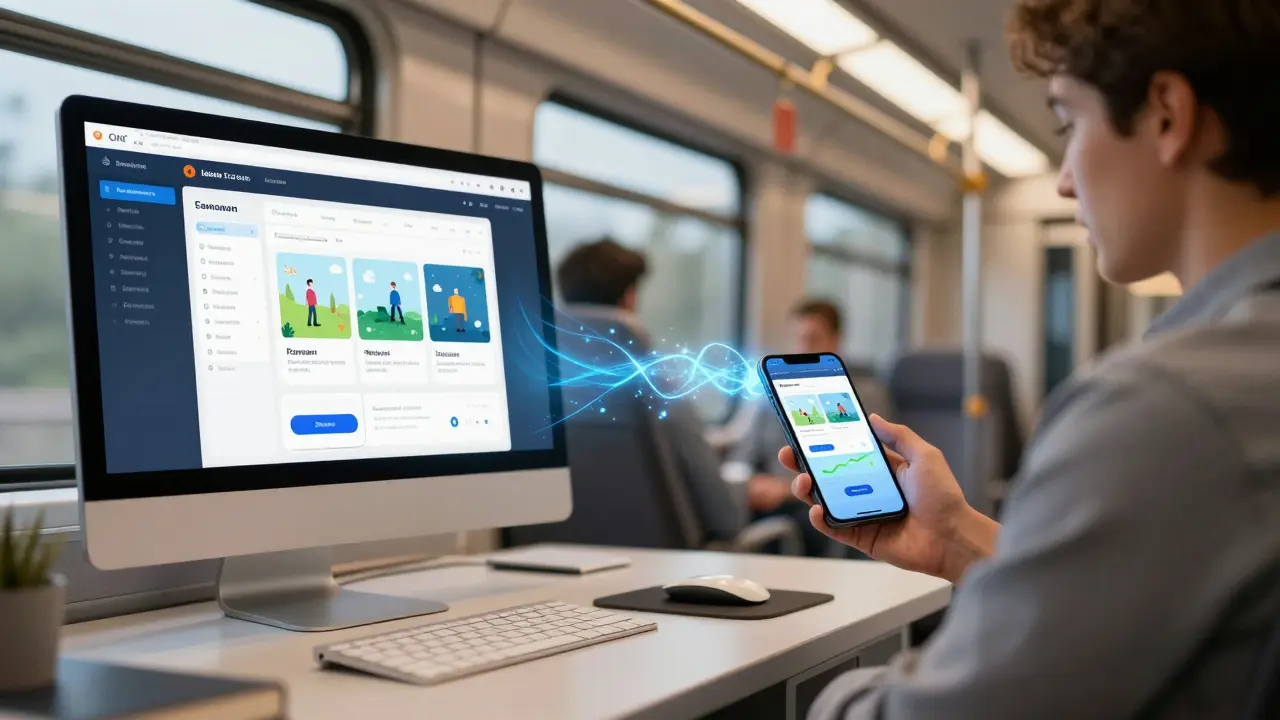
Imagine a user completing a training module on their desktop during work hours. Later that evening, they open the same course on their phone while commuting. They earn a badge for finishing the lesson, but when they return to their computer the next day, the progress is missing. The streak is broken. The motivation evaporates. This disconnect is exactly what Cross-Platform Gamification is designed to fix.
Gamification isn't just about adding points or badges to an interface. It is about creating a continuous loop of engagement that follows the user regardless of the device they are using. When you integrate web platforms, mobile apps, and Learning Management Systems (LMS), you create a seamless ecosystem where every interaction counts. In 2026, users expect this fluidity. If your system forces them to restart their journey because they switched devices, you have already lost them.
The Core Challenge of Multi-Device Engagement
The biggest hurdle in cross-platform gamification is data fragmentation. Most organizations treat their web portal, mobile app, and LMS as separate silos. The web team builds a leaderboard for the browser version. The mobile team creates push notifications for the app. The LMS administrator tracks completion rates in a backend dashboard. None of these systems talk to each other effectively.
This separation leads to a fractured user experience. A learner might feel motivated by a daily login bonus on the mobile app but receive no recognition for that same action on the web platform. Conversely, complex assessments taken on a desktop might not translate into micro-rewards on mobile. To build a successful strategy, you must unify these touchpoints under a single identity layer.
Consider the concept of User Identity Resolution the process of linking multiple device profiles to a single user account. Without this, you cannot calculate true engagement metrics. You need a central database that recognizes User A on iOS, Android, and Chrome as the same person. Only then can you apply consistent gamification rules across all platforms.
Web vs. Mobile: Designing for Context
While the data must be unified, the presentation must adapt. Web and mobile serve different contexts, and your gamification mechanics should reflect that. Desktop users typically engage in longer, more focused sessions. They are willing to navigate complex dashboards, view detailed leaderboards, and complete multi-step quests. Mobile users, however, interact in short bursts. They want quick wins, instant feedback, and minimal friction.
| Mechanic | Web Implementation | Mobile Implementation |
|---|---|---|
| Leaderboards | Detailed rankings with filters (team, department, time) | Simplified top 5 view with swipe-to-refresh |
| Quests | Multi-stage missions with progress bars | Single-task challenges with one-tap completion |
| Rewards | Unlockable content modules or certificates | Instant badges, confetti animations, haptic feedback |
| Social Interaction | Comment threads, forum posts | Reactions, emoji shares, quick polls |
To make this work, you need responsive design principles applied to game mechanics. A quest that requires typing a long answer on a desktop should perhaps become a multiple-choice selection on mobile. The underlying logic remains the same, but the interaction model shifts to suit the device constraints. This ensures that the cognitive load stays low, keeping the user engaged rather than frustrated.
Integrating the LMS: The Backbone of Learning
The Learning Management System is often the source of truth for educational content, but it is rarely the most engaging interface. Traditional LMS platforms like Moodle an open-source learning management system widely used in education or Blackboard a comprehensive cloud-based learning management system provide structure, compliance tracking, and content delivery. However, they lack the dynamic feedback loops that drive behavior change.
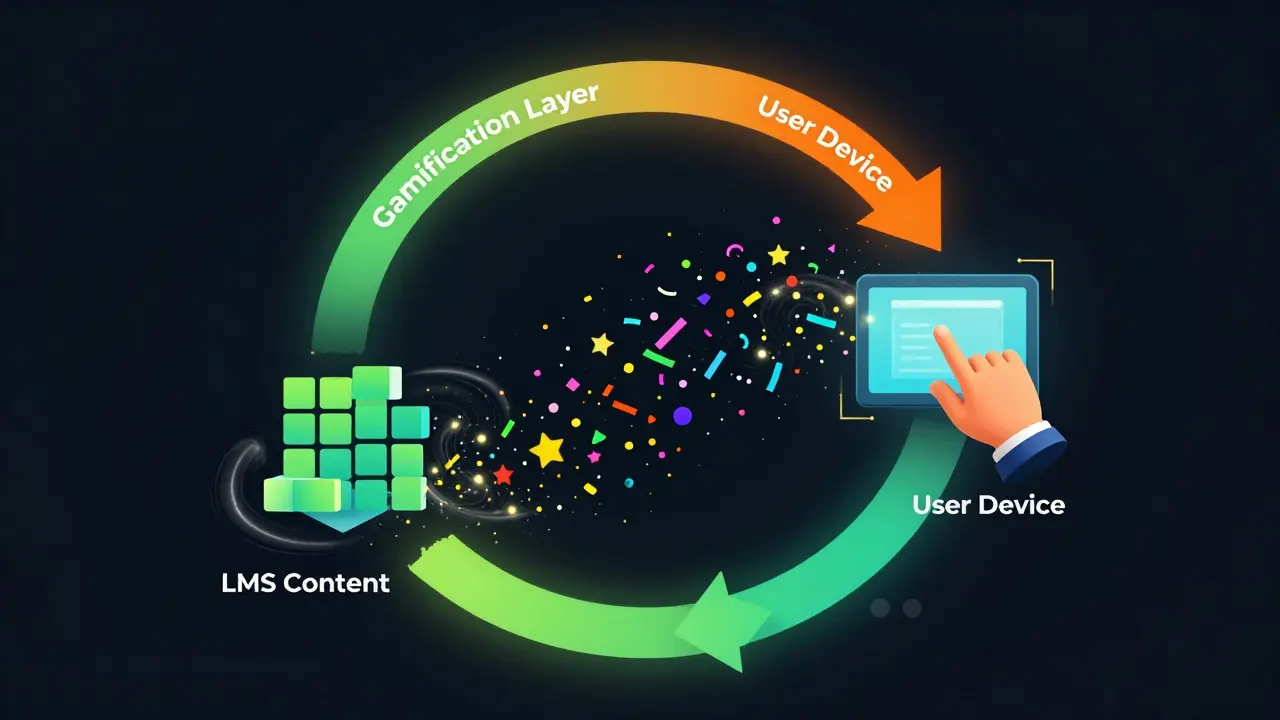
Cross-platform gamification bridges this gap by overlaying game elements onto the rigid LMS structure. The key here is API integration. Your gamification engine must connect to the LMS via REST APIs application programming interfaces that allow software applications to communicate or xAPI the Experience API, a standard for tracking learning experiences. This allows real-time data exchange. When a user completes a course in the LMS, the gamification layer instantly awards points, updates the leaderboard, and triggers a notification on their mobile device.
This integration also enables personalized learning paths. Based on performance data from the LMS, the system can suggest specific quests or modules on the web or mobile app. If a user struggles with a particular topic in the LMS, the mobile app can push a micro-learning quiz related to that topic, offering extra points for mastery. This creates a closed-loop system where assessment drives engagement, and engagement reinforces learning.

Technical Architecture for Seamless Sync
Achieving true cross-platform consistency requires a robust technical architecture. You cannot rely on local storage or session cookies alone. You need a centralized state management system. This usually involves a headless CMS or a dedicated gamification backend that serves as the single source of truth for user progress.
Here is how the data flow should look:
- Action Triggered: User completes a task on any platform (web, mobile, or LMS).
- Data Transmission: The platform sends an event payload to the central gamification server via webhook or API call.
- Logic Processing: The server evaluates the action against predefined rules (e.g., "Award 10 XP for quiz completion").
- State Update: The user’s profile is updated in the central database.
- Broadcast: The updated state is pushed to all connected clients in real-time using WebSocket connections or Server-Sent Events (SSE).
This architecture ensures that if a user earns a badge on their phone, it appears immediately on their web dashboard without requiring a manual refresh. Latency is critical here. Delays longer than two seconds break the illusion of continuity and reduce the emotional impact of the reward.
Designing Unified Reward Structures
Rewards must be meaningful across all platforms. Points are easy to track, but they don’t always drive long-term engagement. You need a tiered reward system that combines intrinsic and extrinsic motivators. Extrinsic rewards include digital badges, certificates, and access to premium content. Intrinsic rewards involve social recognition, status levels, and the satisfaction of mastering a skill.
One effective strategy is to use Progressive Disclosure a design technique that reveals information gradually as the user advances. On the web, users might see a full map of available achievements. On mobile, they only see the next immediate goal. This prevents overwhelm and keeps the focus on actionable steps. Additionally, ensure that high-value rewards require cross-platform participation. For example, a "Champion" badge could require completing three modules on the LMS, participating in one forum discussion on the web, and logging in daily on mobile for a week. This encourages users to engage with the entire ecosystem.
Measuring Success and Iterating
You can’t improve what you don’t measure. Cross-platform gamification requires advanced analytics to track user journeys across devices. Key metrics include Daily Active Users (DAU), retention rates, time spent per session, and conversion rates for specific quests. More importantly, you need to track cross-device attribution. How many users who start on mobile finish on web? What percentage of LMS completions are driven by gamified prompts?
Use heatmaps and funnel analysis to identify drop-off points. If users consistently abandon a quest after step two on mobile but complete it on web, there may be a UI issue on the mobile interface. Iterate quickly. A/B test different reward values, notification timings, and visual designs. Remember that gamification is not a set-and-forget solution. It requires constant tuning to maintain novelty and prevent boredom.
Common Pitfalls to Avoid
Many organizations fail at cross-platform gamification because they prioritize aesthetics over functionality. Fancy animations and complex point systems mean nothing if the underlying data sync is broken. Always prioritize reliability first. Ensure that user progress is never lost due to network errors or server downtime. Implement offline modes for mobile apps that cache actions and sync them when connectivity is restored.
Another common mistake is over-gamifying simple tasks. Not every click needs a sound effect or a badge. Reserve high-energy rewards for significant milestones. Subtle feedback, such as color changes or progress bar fills, is often sufficient for routine actions. Balance is key. Too much noise desensitizes users; too little fails to motivate. Find the sweet spot where the gamification enhances the core experience without distracting from it.
What is the best way to sync user progress between LMS and mobile apps?
The most reliable method is using xAPI or REST APIs to send event data from both the LMS and mobile app to a central gamification backend. This backend acts as the single source of truth, updating user profiles in real-time and broadcasting changes to all connected platforms via WebSocket or Server-Sent Events.
How do I handle offline mode in mobile gamification?
Implement local caching on the mobile device to store user actions when there is no internet connection. Once connectivity is restored, the app should automatically sync these cached events with the central server. Ensure your backend has conflict resolution logic to handle cases where data was updated on another device while the mobile app was offline.
Should gamification rules be identical across web and mobile?
The underlying logic and point values should be identical to maintain fairness. However, the presentation and interaction models should differ. Web interfaces can support complex quests and detailed leaderboards, while mobile interfaces should focus on quick tasks, instant feedback, and simplified views to match shorter usage sessions.
What are the key metrics for measuring cross-platform gamification success?
Focus on Daily Active Users (DAU), retention rates, cross-device attribution, and completion rates for specific quests. Track how many users switch between platforms seamlessly and whether gamified prompts increase engagement with core LMS content. Monitor drop-off points to identify UX issues on specific devices.
Can I use existing LMS plugins for cross-platform gamification?
Most native LMS plugins only affect the LMS environment itself. For true cross-platform integration, you need a dedicated gamification engine that connects to your LMS via API. These engines can manage web and mobile frontends independently while syncing data back to the LMS for official record-keeping.
