

Imagine getting your degree verified in seconds-not by calling your university, not by waiting for a mailed transcript, but by scanning a QR code on your phone and seeing a tamper-proof record that can’t be forged, altered, or lost. That’s the promise of blockchain consortia in education. And it’s not science fiction. Schools in the UK, Canada, and Australia are already using it to issue digital diplomas and certificates that students own and control.
What Exactly Is a Blockchain Consortium in Education?
A blockchain consortium is a group of trusted organizations-like universities, employers, certification bodies, and government agencies-that work together to run a shared blockchain network. Unlike public blockchains like Bitcoin, where anyone can join, these are private, permissioned networks. Only approved members can add or verify data. This makes them perfect for education, where trust and control matter more than openness.
Each time a student earns a credential-say, a certificate in data analysis or a completion badge for a professional course-it’s recorded as a unique digital token on the consortium’s blockchain. That token holds the credential’s details: who issued it, when, what was required, and who earned it. It’s signed with a digital key, so no one can fake it. And because it’s on a shared ledger, any employer or another school can instantly check its validity without contacting the original institution.
Think of it like a shared spreadsheet that only trusted members can update. But instead of being stored on one server that can be hacked or shut down, the data is copied across dozens of secure computers. If one goes offline, the record still exists everywhere else.
Why Schools and Students Need This Now
Right now, verifying a degree or certificate is slow, expensive, and broken. Employers often wait weeks for official transcripts. International students face language barriers and bureaucratic delays. Fraud is common: a 2023 report from the UK’s Higher Education Policy Institute found that nearly 1 in 20 job applicants submitted fake qualifications.
Blockchain solves this by putting the power back in the student’s hands. Instead of asking your university to send a transcript to ten different employers, you simply share a link or a code. The employer clicks it, sees the verified credential, and moves on. No paperwork. No fees. No waiting.
For schools, it cuts administrative costs. Universities spend hundreds of thousands of pounds each year processing transcript requests, handling fraud investigations, and managing paper records. With blockchain, those tasks vanish. One Scottish university reported a 68% drop in verification-related staff hours within nine months of switching to a blockchain-based system.
How to Join a Blockchain Consortium for Education
Joining isn’t like signing up for a newsletter. It’s a formal partnership. Here’s how it actually works:
- Identify the right consortium-Not all are the same. Some are global, like the Learning Economy Foundation, which includes MIT, the University of Edinburgh, and IBM. Others are regional, like the UK’s EduChain Network, focused on colleges and vocational schools in Scotland and England.
- Apply as a member-You’ll need to submit documentation: your institution’s accreditation status, proof of legal standing, and details about your credentialing processes. There’s often a small application fee, but no ongoing subscription.
- Integrate your systems-Your student information system (SIS) or learning management system (LMS) needs to connect to the consortium’s blockchain platform. Most offer APIs. If you’re using a common platform like Moodle or Canvas, chances are a pre-built connector already exists.
- Train your staff-Administrators need to know how to issue credentials, revoke them if needed, and handle student requests. Training usually takes one day and includes mock issuance exercises.
- Go live with pilot credentials-Start small. Issue blockchain credentials to students in one program-say, your cybersecurity bootcamp-before rolling it out campus-wide.
Some consortia, like EduChain, offer free technical onboarding support. Others require you to hire a developer. Budget between £5,000 and £20,000 for setup, depending on your current tech stack.

How to Integrate Blockchain Credentials Into Existing Systems
Integration isn’t about replacing your whole system-it’s about adding a new layer. Here’s how it works in practice:
- Student portals: Add a ‘My Credentials’ section where students can view, download, or share their blockchain-verified certificates. These links work on any device, even without an app.
- Employer portals: Partner with local employers to let them verify credentials directly through their HR software. Many platforms now offer single sign-on integration with LinkedIn or Workday.
- Transcript services: Replace paper transcripts with digital ones. When a student requests a transcript, the system generates a unique, cryptographically signed file that includes all their earned credentials from that institution.
- Transfer credit systems: If a student moves from a college to a university, the receiving school can instantly verify their prior coursework without contacting the original institution. This cuts transfer processing time from weeks to minutes.
One key rule: never store private data on the blockchain. Only the credential’s metadata-issuer, recipient, date, outcome-is recorded. Personal details like names or addresses stay in your secure internal database. The blockchain just confirms: ‘Yes, this person earned this.’
Real-World Examples: Who’s Doing This Right?
The University of Edinburgh launched its blockchain credential system in early 2024. Since then, over 12,000 graduates have received verified digital diplomas. Employers like Deloitte and HSBC now accept them as standard proof of qualification.
In Canada, the British Columbia Institute of Technology (BCIT) partnered with a blockchain consortium to issue micro-credentials for short courses in AI and cloud computing. Students earn badges for each module. They can combine them into full certificates later. Employers love it because they can see exactly what skills a candidate has-not just a vague degree title.
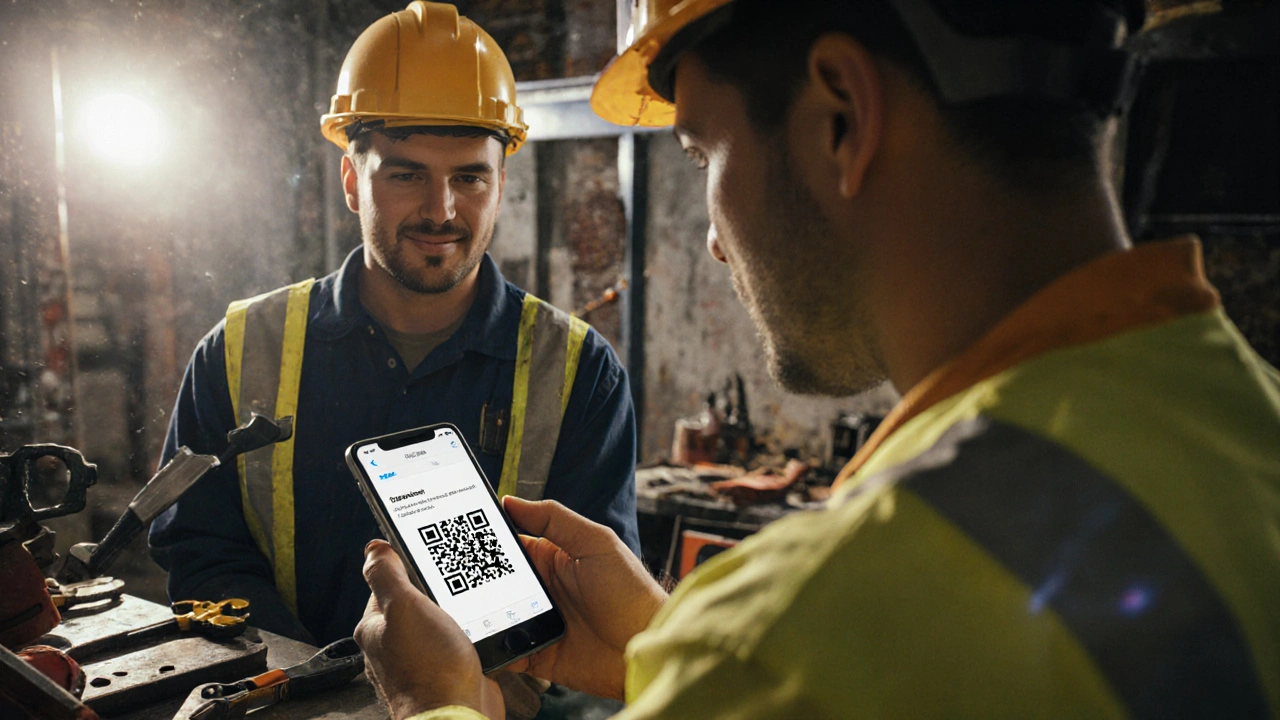
Even vocational schools are catching on. In Glasgow, the City of Glasgow College now issues blockchain credentials for plumbing, electrical, and welding certifications. Contractors can scan a QR code on a worker’s phone to confirm they’re licensed and up-to-date on safety training.
Common Mistakes to Avoid
Many institutions jump into blockchain without a clear plan. Here’s what goes wrong-and how to fix it:
- Mistake: Trying to issue every credential on the blockchain at once. Fix: Start with high-value, high-fraud credentials-degrees, professional licenses, safety certifications.
- Mistake: Assuming students will automatically know how to use it. Fix: Run workshops. Send short videos. Make sharing credentials as easy as sending a WhatsApp message.
- Mistake: Choosing a consortium that doesn’t connect with employers. Fix: Ask: ‘Which companies in our region already accept blockchain credentials?’ Join the network they use.
- Mistake: Ignoring data privacy laws. Fix: Ensure your system complies with UK GDPR. Only store what’s necessary. Let students delete their records if they choose.
What Happens If You Don’t Join?
It’s not about falling behind-it’s about falling out of sync. Students today expect digital proof of their skills. If your school still requires mailed transcripts or PDFs that can be edited in Photoshop, you’re making it harder for your graduates to compete.
Employers are already shifting. A 2025 survey of 500 UK hiring managers found that 73% prefer candidates who can show blockchain-verified credentials. Over half said they’d skip applications that didn’t include them.
And it’s not just about hiring. Universities that don’t adopt blockchain risk losing partnerships. International exchange programs, funding grants, and accreditation bodies are starting to require digital credential systems as part of their criteria.
Where Do You Go From Here?
If you’re a school administrator, start by talking to your IT team and your student services department. Ask: ‘What’s the most painful part of verifying credentials?’ That’s your starting point.
Reach out to EduChain or the Learning Economy Foundation. They’ll send you a checklist and connect you with schools that have already made the switch. You don’t need to be a tech expert. You just need to care about making things faster, fairer, and more trustworthy for your students.
Blockchain isn’t magic. But it’s the most reliable tool we have right now to fix a broken system. And the time to act is now-before your students start looking elsewhere.
Can students really own their blockchain credentials?
Yes. Blockchain credentials are stored in a digital wallet the student controls-like a secure app on their phone. They decide who to share them with, when, and for how long. No school, employer, or government can take them away. This is called self-sovereign identity, and it’s the core idea behind education blockchain systems.
Are blockchain credentials legally valid in the UK?
Yes. The UK’s Department for Education recognizes blockchain-issued credentials as legally valid proof of achievement, as long as they’re issued by an accredited institution and follow the UK’s digital identity standards. They’re treated the same as paper diplomas in job applications, visa applications, and professional licensing.
Do I need special software to verify a blockchain credential?
No. Verification works through a simple web link. Employers or schools just click a URL or scan a QR code. The system checks the credential’s signature against the consortium’s public ledger. No downloads, no accounts, no passwords needed. It’s designed to work on any phone or computer.
Can blockchain credentials be revoked?
Yes, but only by the original issuer. If a student is found to have cheated, or if a certification expires and isn’t renewed, the school can mark the credential as revoked on the blockchain. The record still exists-it can’t be deleted-but it will show as invalid when checked. This prevents fraud while preserving transparency.
How secure is blockchain against hacking?
Extremely. Blockchain doesn’t store data in one place-it’s copied across dozens of secure servers. To alter a credential, a hacker would need to change it on over 70% of those servers at the same time. That’s practically impossible. Plus, each credential is signed with a unique digital key tied to the issuing institution. Fake ones are instantly detected.

Comments (15)
sonny dirgantara November 30 2025
this sounds cool but like... do i really need to scan a qr code to prove i graduated? i just show my diploma pic on instagram lolAndrew Nashaat December 2 2025
Okay, let’s be real: blockchain isn’t magic, it’s just a fancy database with extra steps. And if you’re not encrypting student names on the ledger, you’re violating GDPR-big time. Also, who’s paying for all these APIs? Not the students, right? Right?!!Gina Grub December 4 2025
Edinburgh’s rollout was a disaster. 12k graduates? More like 12k confused people who got a link they couldn’t open. No app, no guide, no support. And now HR departments are asking for blockchain proofs while still demanding PDFs. The system’s broken by design.Nathan Jimerson December 6 2025
This is actually a huge step forward. Students everywhere deserve control over their own achievements. It’s not just tech-it’s justice. Keep pushing this forward.Sandy Pan December 6 2025
We’re treating credentials like digital artifacts now, but what does that say about the value of learning itself? If every badge is a token, is education becoming a collection of consumable micro-products? Are we measuring growth-or just compiling receipts?Eric Etienne December 6 2025
Ugh. Another tech bro fantasy. Schools are broke, students are drowning in debt, and we’re spending $20k on blockchain QR codes? Just digitize the damn transcripts. No one cares about your ledger.Dylan Rodriquez December 8 2025
I’ve seen this work in small community colleges. The key isn’t the tech-it’s the training. One professor spent 3 hours with her students showing them how to share their credentials. Now they’re getting job offers faster. Tech is just the tool. People are the real upgrade.Amanda Ablan December 9 2025
I work in student services and honestly? This has cut our verification workload by 70%. Students love it. Employers love it. The only people stressed are the ones who used to make money off transcript fees. Let’s not let that stop progress.Meredith Howard December 11 2025
The concept of self sovereign identity in educational contexts presents profound implications for data governance and institutional accountability. One must consider whether the cryptographic immutability of blockchain aligns with the right to erasure under Article 17 of the GDPR and whether the distributed architecture sufficiently mitigates risks of systemic bias in credential issuanceRobert Byrne December 12 2025
You people are missing the point. Blockchain isn’t the solution-it’s the distraction. The real problem is that universities still treat students like customers instead of learners. Fix the culture first. Then worry about QR codes.Tia Muzdalifah December 13 2025
i think this is cool but like... what if my phone dies? like i just got my degree and my battery is at 1% and i need to show my cert to a recruiter??Zoe Hill December 14 2025
i love this so much. my cousin got her welding cert on blockchain and her boss scanned it during her first day. no paperwork. no waiting. just boom. she cried. this is what change looks likeAlbert Navat December 15 2025
Let’s be honest, most institutions don’t have the bandwidth to integrate APIs. This is a luxury for elite universities. The rest are still using fax machines. Don’t pretend this is democratizing education-it’s just another gatekeeping tool.King Medoo December 16 2025
I’ve been tracking this for years. Blockchain in education is the future. 🌐✅. And yes, I’ve checked the ledger. Every credential is cryptographically signed. Every issuer is verified. Every student owns their data. No one can delete history. No one can lie. This isn’t just innovation-it’s moral progress. 🤖📚🔒Lauren Saunders December 17 2025
How quaint. You think a consortium of universities and IBM is going to empower students? They’re just outsourcing credentialing to a private, permissioned system that still answers to corporate interests. Self-sovereign identity? More like self-sovereign illusion. The blockchain doesn’t liberate-it consolidates control under a new, slightly shinier oligarchy.