

Imagine this scenario: It is 2 AM on a Tuesday. Your legal team just sent an urgent email stating that the safety protocol in your latest manufacturing training module is outdated due to a regulation change passed yesterday. You scramble to update the content, but then you realize half of your sales team has already completed the old version. Now, they are certified based on incorrect information. This isn't just a minor administrative headache; it is a massive liability risk.
This is why content governance matters. In Learning and Development (L&D), governance is not about bureaucracy or slowing down innovation. It is about ensuring that every piece of training material is accurate, current, and legally defensible. Without a solid framework for versioning and compliance, your L&D department becomes a source of risk rather than value. Let’s look at how to build a system that keeps your organization safe and your learners informed.
The Core Problem: Why Training Content Rotates
Training content has a shelf life. Unlike a novel, which remains relevant for decades, corporate training is tied to three volatile factors: regulatory changes, product updates, and organizational shifts. A cybersecurity policy from 2024 might be dangerously obsolete by mid-2026. A software tutorial recorded last year might show buttons that no longer exist.
Most organizations treat their Learning Management System (LMS) as a digital library where files are uploaded and forgotten. This approach fails because it lacks active management. When content sits stagnant, two things happen:
- Compliance Gaps: Employees complete courses that do not meet current legal standards, leaving the company exposed to fines or lawsuits.
- Learning Fatigue: Learners lose trust in the training when they encounter outdated information, leading to lower engagement rates across all modules.
To fix this, we need to shift from passive storage to active governance. This means treating training content like a living product that requires regular maintenance, clear ownership, and strict version control.
Building a Robust Version Control Strategy
Versioning is the backbone of content governance. It answers the critical question: "Which version of the truth did the learner see?" Without proper versioning, you cannot audit who learned what and when.
Effective versioning goes beyond simply renaming a file from "Safety_Training_v1" to "Safety_Training_v2." It requires a structured approach that integrates with your LMS capabilities.
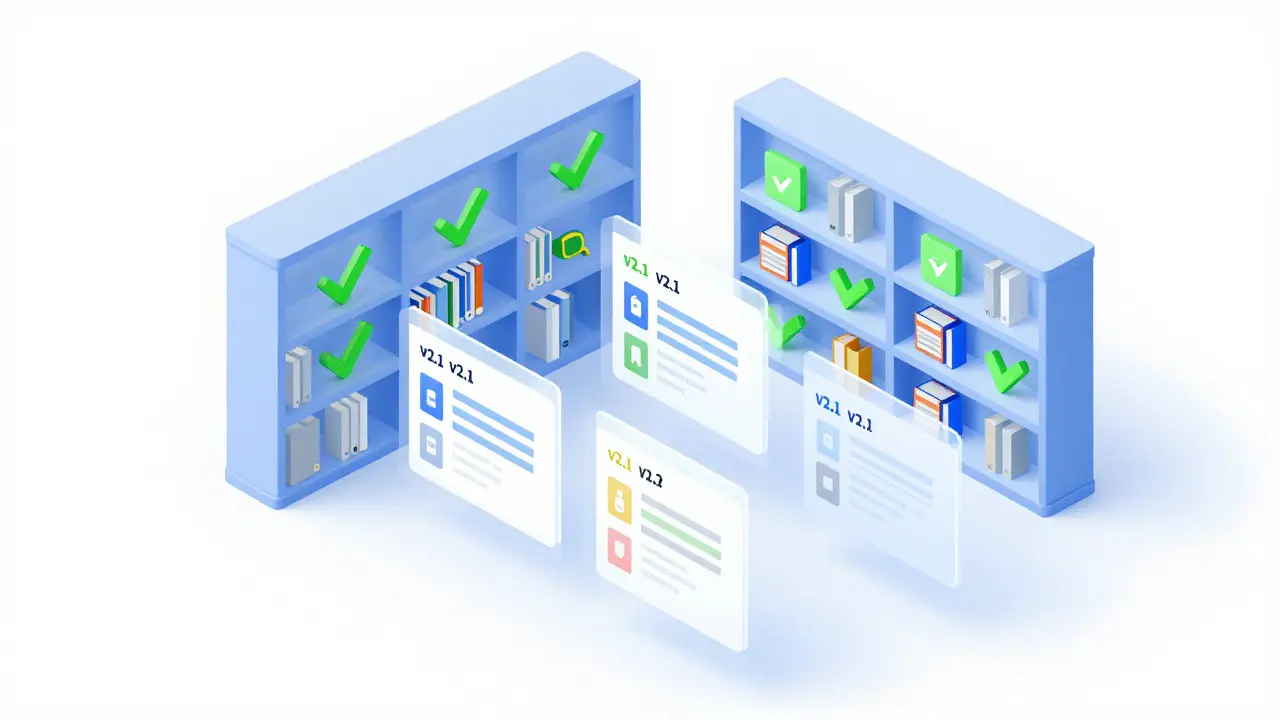
- Standardized Naming Conventions: Adopt a clear format such as [Topic]_[YYYYMMDD]_[vX.X]. For example, "GDPR_Compliance_20260609_v2.1". This allows anyone to instantly identify the date and iteration without opening the file.
- LMS Version Attributes: Use your LMS features to tag versions. Most modern platforms allow you to create multiple "editions" of a course. Always keep the previous edition archived but accessible for audit purposes, while making only the current version available for new enrollments.
- Changelog Documentation: Maintain a simple document or field within the LMS that lists exactly what changed between versions. Did you update a graphic? Change a legal clause? Fix a typo? Documenting these changes helps instructors explain updates to skeptical learners.
Consider the difference between major and minor versions. A minor update (e.g., v1.1) might correct a factual error or update a contact number. A major update (e.g., v2.0) usually implies a significant structural change or a new regulatory requirement. Major updates often require re-certification, meaning employees must retake the entire course. Minor updates might only require a quick acknowledgment quiz.
| Change Type | Example Scenario | Action Required | Re-certification? |
|---|---|---|---|
| Minor (Cosmetic/Typo) | Fixing a broken link in the resource list | Update file silently | No |
| Minor (Clarification) | Adding a footnote to clarify a policy nuance | Notify learners via email | No |
| Major (Regulatory) | New OSHA safety requirement added | Archive old version, launch new | Yes |
| Major (Structural) | Complete rewrite of onboarding flow | Retire old course entirely | Yes (for new hires) |
Navigating Compliance and Legal Requirements
Compliance is not optional. Whether you are dealing with HIPAA in healthcare, GDPR in Europe, or SOX in finance, the stakes are high. Content governance ensures that your training aligns with these external mandates.
The first step is mapping your content to specific regulations. Every training module should have metadata tags indicating which laws or internal policies it addresses. For instance, a data privacy course should be tagged with "GDPR," "CCPA," and "Internal Policy 4.2." This tagging system makes audits significantly easier. Instead of manually reviewing hundreds of videos, auditors can filter your LMS report to show only courses tagged with "GDPR" and verify their last update dates.
However, tagging alone is not enough. You need a review cycle. Regulations change, and so should your content. Establish a mandatory review schedule:
- Annual Reviews: For general soft skills or leadership training.
- Semi-Annual Reviews: For technical skills and product knowledge.
- Quarterly or Event-Driven Reviews: For compliance-heavy topics like anti-harassment, data security, and financial reporting.
When a regulation changes, your governance process must trigger an immediate alert to the subject matter experts (SMEs) responsible for that content. This is where automation helps. Some advanced LMS platforms allow you to set expiration dates on content. If a course hasn’t been reviewed by its expiry date, it automatically becomes unavailable to learners until a manager approves the renewal. This prevents the accidental delivery of expired advice.
Defining Roles and Responsibilities
A common failure point in content governance is ambiguity over who owns the content. Who decides if a slide needs updating? Who approves the final version? Without clear roles, content stagnates because everyone assumes someone else is handling it.
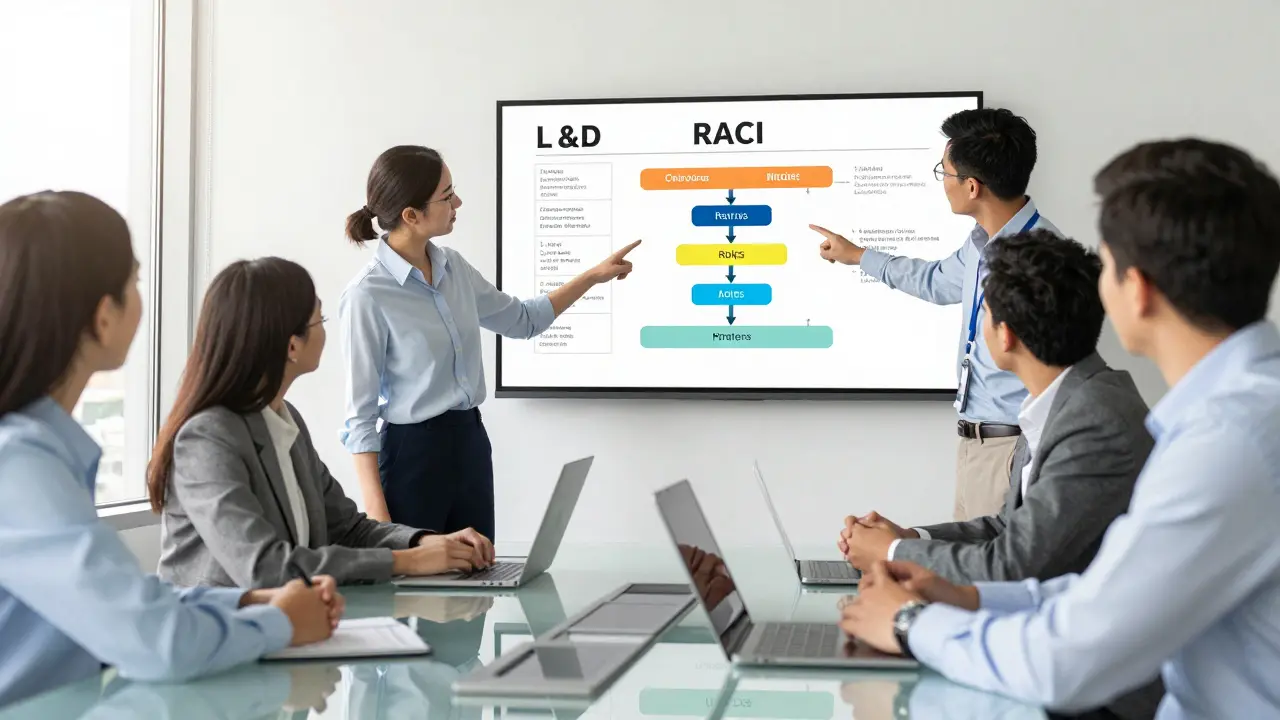
Implement a RACI matrix (Responsible, Accountable, Consulted, Informed) for your training assets:
- Responsible: The instructional designer or SME who creates and updates the content. They do the heavy lifting of research and editing.
- Accountable: The L&D Manager or Department Head who signs off on the final version. There should be only one accountable person per course to avoid decision paralysis.
- Consulted: Legal, HR, or IT teams who provide input on accuracy and compliance. They don’t make the final call but their feedback is mandatory.
- Informed: The learners and department managers who need to know when updates occur.
For example, when updating a cybersecurity training module, the IT Security Lead is Consulted, the Instructional Designer is Responsible, and the CISO is Accountable. This clarity speeds up the approval process and ensures that the right expertise is applied at each stage.
Technology as an Enabler, Not a Barrier
Your tools should support your governance strategy, not complicate it. While a robust LMS is essential, other technologies play crucial roles in maintaining content integrity.
Learning Record Stores (LRS) are components of the xAPI ecosystem that store detailed learning activity data. Unlike traditional LMS reports, an LRS can track exactly which version of a course a user interacted with, down to the specific video timestamp. This granularity is invaluable for forensic audits. If an employee claims they didn’t see the updated safety warning, the LRS data can prove whether they viewed the pre-update or post-update version.
Additionally, consider using a Content Management System (CMS) specifically designed for e-learning, such as Articulate 360 or Adobe Captivate Prime. These tools often include built-in collaboration features, allowing multiple SMEs to comment on drafts without creating messy email chains. They also facilitate single-sourcing, where a central text repository feeds into multiple outputs (PDFs, web pages, mobile apps). Updating the source once updates all derivatives, reducing the risk of version drift.
Measuring Success: Governance Metrics
How do you know if your governance strategy is working? You need to measure it. Move beyond completion rates and look at health metrics for your content library.
- Content Freshness Score: The percentage of active courses reviewed within the last 12 months.
- Time-to-Update: The average time it takes to publish a correction after a regulatory change is identified.
- Version Adoption Rate: How quickly learners transition from old to new versions after an update.
- Audit Pass Rate: The percentage of internal or external audits that find no compliance gaps related to training content.
If your Time-to-Update is consistently high, your approval workflow is likely too complex. If your Content Freshness Score is low, you may lack dedicated resources for maintenance. Tracking these metrics helps you refine your processes continuously.
Practical Steps to Start Today
You don’t need to overhaul your entire L&D operation overnight. Start small and scale up.
- Audit Your Top 10 Courses: Identify the highest-risk training modules (compliance, safety, legal). Check their last update dates and version history.
- Establish a Naming Convention: Roll out a simple standard for file naming and immediately apply it to new uploads.
- Create a Review Calendar: Set recurring reminders for quarterly reviews of critical compliance content.
- Define Owners: Assign an accountable owner for each major course category. Send them a welcome email outlining their responsibilities.
By taking these steps, you transform content governance from a feared bureaucratic hurdle into a strategic asset. You protect your company from risk, empower your learners with accurate information, and demonstrate professional maturity in your L&D function. In a world where information changes daily, the ability to govern that information effectively is a competitive advantage.
What is the difference between content governance and content management?
Content management refers to the day-to-day creation, storage, and distribution of materials. Content governance is the overarching framework of policies, roles, and procedures that dictate how that management happens. Think of management as driving the car, and governance as the traffic laws and vehicle maintenance schedule that ensure the drive is safe and legal.
How often should compliance training be updated?
At minimum, compliance training should be reviewed annually. However, for highly regulated industries like finance or healthcare, quarterly reviews are recommended. Additionally, any time a relevant law or regulation changes, the associated training must be updated immediately, regardless of the scheduled review cycle.
Do I need to retrain employees for every minor content update?
No. Minor updates, such as correcting typos or clarifying language, typically do not require full retraining. Instead, use micro-assessments or acknowledgment quizzes to confirm learners have seen the changes. Full re-certification is reserved for major updates that alter the core knowledge or legal requirements of the course.
What is the role of an LRS in content governance?
A Learning Record Store (LRS) provides granular data on learner interactions. In governance, it helps verify which specific version of a course a learner accessed. This is crucial for audits, as it proves that an employee was trained on the most current, compliant version of the material at the time of certification.
How can we prevent version confusion in our LMS?
Prevent confusion by using standardized naming conventions, archiving old versions instead of deleting them, and clearly labeling the "current" version in the LMS interface. Communicate changes to learners via email notifications and maintain a changelog that explains what was updated and why.
