
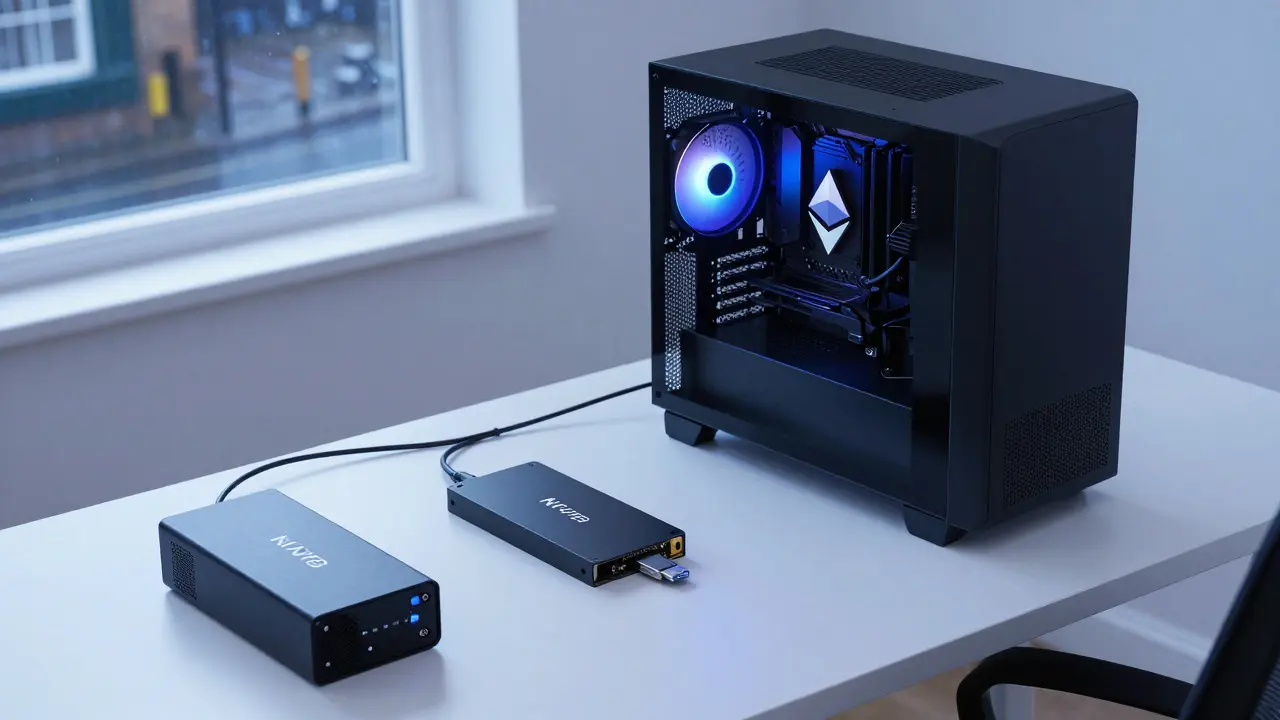
Running a blockchain validator is not just about locking up some coins and hoping for the best. It is a technical commitment that demands specific hardware, reliable internet, and a solid understanding of how consensus mechanisms work. If you are looking to move away from traditional proof-of-work mining or want to earn passive income through staking, you need to know exactly what it takes to stay online and avoid penalties.
The landscape has changed dramatically since the early days of Bitcoin. Today, networks like Ethereum is the leading smart contract platform that transitioned to proof-of-stake in 2022 and Solana is a high-performance blockchain known for its speed and low transaction costs have completely different rules. One asks for a heavy financial deposit but modest hardware, while the other requires enterprise-grade servers but has no strict minimum stake. Getting this wrong means missed rewards or worse-slashing your funds.
Core Concepts of Proof-of-Stake Validation
Before buying any hardware, you need to understand the basic job of a validator. In a proof-of-stake (PoS) system, validators replace miners. Instead of solving complex mathematical puzzles with energy-hungry GPUs, validators lock up their own tokens as collateral. This stake acts as a security deposit. If they behave honestly and keep their nodes online, they earn rewards. If they go offline for too long or try to cheat by signing conflicting blocks, the protocol slashes (destroys) part of their stake.
This mechanism creates two main barriers to entry:
- Economic Barrier: The amount of native tokens you must lock up. On Ethereum, this is fixed at 32 ETH. On other chains, it can be lower or non-existent.
- Technical Barrier: The hardware and network infrastructure required to process transactions and maintain synchronization with the network.
The goal of these requirements is decentralization. Networks want enough independent validators to prevent any single entity from controlling the chain, but they also need enough resources to ensure the network remains secure and fast.
Ethereum Validator Requirements: The Standard Benchmark
Ethereum set the standard for modern PoS validation after its "Merge" in September 2022. As of mid-2026, running a solo validator on Ethereum is accessible to many technically skilled individuals, provided they can afford the initial capital.
| Component | Minimum Requirement | Recommended for Reliability |
|---|---|---|
| Stake | 32 ETH | 32 ETH (Fixed Protocol Rule) |
| CPU | 4 Cores / 8 Threads | Modern 8-Core Processor (e.g., Intel i7/i9 or AMD Ryzen 7/9) |
| RAM | 16 GB | 64 GB DDR4/DDR5 |
| Storage | 1 TB SSD | 4-8 TB NVMe SSD (High Endurance, >1,000 TBW) |
| Network | Unmetered Broadband | 50 Mbps Down / 25 Mbps Up, Static IP Preferred |
While older guides might suggest you can run a node on a Raspberry Pi or an old laptop, that advice is outdated. By 2026, the Ethereum state size has grown significantly. A consumer-grade SSD will wear out quickly due to constant read/write operations. You need an NVMe drive with high endurance ratings. Furthermore, if you plan to use MEV-Boost (which helps maximize rewards), you will need more RAM and processing power to handle additional block-building services.
The economic barrier here is the biggest hurdle. With ETH prices fluctuating, 32 ETH represents a substantial investment. However, the hardware cost is relatively low-you can build a capable machine for under $1,500. Many people choose to join staking pools if they cannot meet the 32 ETH requirement, allowing them to participate with much smaller amounts.
Solana Validator Requirements: High Performance, High Cost
Solana takes a different approach. It prioritizes extreme speed and throughput, aiming for thousands of transactions per second. This design choice shifts the burden from economic stake to raw computing power. There is no strict minimum SOL stake required to run a validator, but without significant stake delegated to you, you won't be chosen to produce blocks, meaning you earn nothing.
The hardware requirements for Solana are staggering compared to Ethereum. You are essentially running a data center server in your home or office.
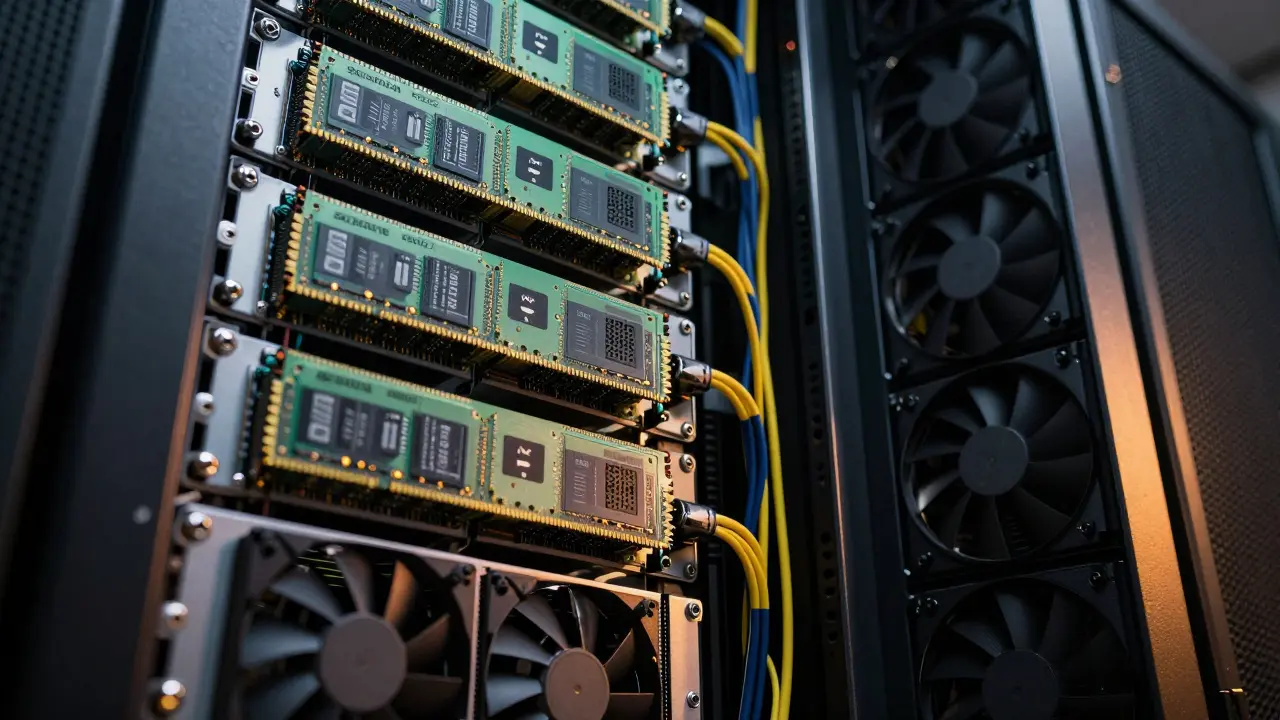
- CPU: You need a high-end processor with strong single-thread performance and support for AVX-512 instructions. Think AMD EPYC or Intel Xeon Scalable processors. At least 24 cores are recommended.
- RAM: Memory is critical. While 128 GB might have sufficed a few years ago, current best practices recommend 384 GB to 512 GB of ECC (Error-Correcting Code) RAM. ECC memory prevents data corruption, which is vital for maintaining ledger integrity.
- Storage: Solana’s ledger grows rapidly. You need multiple enterprise-grade NVMe drives. A typical setup includes separate partitions for the OS, accounts, ledger, and snapshots. Total storage often exceeds 4 TB, with sequential write speeds being crucial.
- Network: This is where most home users fail. Solana validators require massive bandwidth. You need at least 1 Gbps upload speed, ideally 10 Gbps, and unmetered traffic. Monthly data transfer can exceed 100 TB. Most residential ISPs do not offer this.
The upfront cost for a proper Solana validator rig ranges from $20,000 to $50,000. Ongoing electricity and cooling costs are also significant. Consequently, Solana validation is dominated by professional hosting providers and large infrastructure firms rather than individual hobbyists.
Other Major Chains: Cardano, Cosmos, and Polkadot
Not every blockchain follows the Ethereum or Solana model. Many newer chains use variations of PoS that balance accessibility and security differently.
Cardano uses a delegated proof-of-stake model. Anyone can delegate their ADA to a stake pool operator. Running a stake pool requires moderate hardware-similar to a high-end desktop PC-and a small bond (deposit) of ADA. The focus is on uptime and reliability. If your pool goes offline, you lose delegation because users prefer pools with perfect records.
Cosmos SDK chains (like Atom, Osmosis, etc.) typically allow anyone to become a validator, but only the top 100-200 validators (by stake) actively secure the network and earn rewards. Hardware requirements are generally lightweight: a modern CPU, 16-32 GB RAM, and a fast SSD. The challenge here is community management and maintaining high uptime to attract delegators.
Polkadot uses Nominated Proof-of-Stake (NPoS). Validators must stake a significant amount of DOT and pass rigorous audits. They compete for nominators who back them with their own DOT. Hardware requirements are moderate, similar to Ethereum, but the operational complexity is higher due to the need to manage parachain connections and ensure cross-chain message passing works correctly.
Operational Risks: Slashing and Downtime
Running a validator is not a "set it and forget it" investment. You are responsible for keeping your node synchronized with the network. If your internet drops, your power fails, or your software crashes, you miss slots. Missing occasional slots reduces your rewards, but prolonged downtime can lead to ejection from the validator set.
The real danger is slashing. Slashing occurs when a validator commits a malicious act, such as double-signing a block (signing two different blocks at the same height). This is considered a severe offense because it threatens the integrity of the blockchain. The penalty varies by network but can range from losing a portion of your stake to losing everything. For example, on Ethereum, a slash can result in the destruction of several ETH plus removal from the validator set. Always use reputable client software and never run multiple instances of the same validator key on different machines.
Hardware Maintenance and Security Best Practices
To succeed as a validator, you need to treat your setup like a business-critical server.
- Power Redundancy: Use an Uninterruptible Power Supply (UPS). A brief power outage shouldn’t take your node offline. Ensure your UPS can keep the system running long enough to shut down gracefully or ride out short grid fluctuations.
- Network Stability: If possible, get a static IP address. Configure your firewall strictly, opening only the necessary ports for peer-to-peer communication. Monitor your bandwidth usage to ensure you aren’t hitting ISP caps.
- Key Management: Your validator keys are your identity. Store them securely, preferably in encrypted keystores or hardware security modules (HSMs). Never share your private keys. Keep backups in a safe, offline location.
- Regular Updates: Blockchain clients receive frequent updates for security patches and protocol upgrades. Subscribe to official developer channels and Discord groups to stay informed. Test updates on a testnet before applying them to your mainnet node.
- Monitoring: Set up monitoring tools to track your node’s health. Alert yourself via email or SMS if your node falls behind, if disk space runs low, or if CPU usage spikes unexpectedly.
Decision Framework: Should You Validate?
Deciding whether to run a validator depends on your resources and goals. Ask yourself these questions:
- Do I have the capital? Can I afford 32 ETH for Ethereum, or tens of thousands of dollars for Solana hardware? If not, consider liquid staking or delegating to an existing pool.
- Do I have the technical skills? Are you comfortable with Linux command line, troubleshooting network issues, and managing server configurations? If not, start by learning Linux basics or using managed hosting services.
- Is my internet reliable? Do you have unmetered, high-speed broadband with good uptime? Residential connections often lack the symmetry and volume needed for high-throughput chains like Solana.
- Am I willing to maintain it? Validators require ongoing attention. Are you prepared to deal with hardware failures, software updates, and occasional emergencies?
If you answer yes to most of these, running a validator can be a rewarding way to support decentralized networks while earning passive income. If you answer no, there are still many ways to participate in PoS ecosystems without the heavy lifting.
What happens if my validator goes offline?
If your validator goes offline, you will miss opportunities to propose or attest to blocks, resulting in reduced rewards. Short downtimes usually only affect earnings. However, prolonged offline periods can lead to your validator being ejected from the active set, requiring you to reactivate it, which may incur additional fees or delays. In severe cases involving malicious behavior, you could face slashing.
Can I run an Ethereum validator on a laptop?
Technically, yes, but it is highly discouraged. Laptops lack the sustained cooling, power stability, and storage endurance required for 24/7 operation. The risk of hardware failure, thermal throttling, and accidental shutdowns is too high. A dedicated desktop PC or server with proper ventilation and a UPS is strongly recommended.
How much does it cost to run a Solana validator?
The upfront hardware cost for a competitive Solana validator ranges from $20,000 to $50,000, depending on CPU, RAM, and storage choices. Additionally, you need enterprise-grade internet connectivity (1 Gbps+ unmetered), which can cost hundreds of dollars per month. Electricity and cooling costs also add to the operational expenses.
What is slashing in proof-of-stake?
Slashing is a penalty mechanism where a portion of a validator's staked tokens is destroyed if they violate protocol rules. Common offenses include double-signing blocks (proposing two different blocks at the same height) or being offline for extended periods. Slashing serves as a deterrent against malicious behavior and ensures network security.
Do I need to be a programmer to run a validator?
You don't need to be a software developer, but you should be proficient with Linux operating systems, command-line interfaces, and basic network administration. Understanding how to configure firewalls, manage processes, and troubleshoot server issues is essential. Many resources and communities provide step-by-step guides to help non-programmers get started.

Comments (15)
Edward Gilbreath July 4 2026
its all a scam anyway they just want your money and data
Lisa Nally July 5 2026
I must interject with the most egregious oversight in this entire discourse: the complete lack of emphasis on enterprise-grade redundancy protocols for Ethereum validators. While the author mentions NVMe endurance, they fail to adequately address the critical necessity of RAID-Z2 configurations or even ZFS pools for ledger integrity, which is absolutely paramount for any serious operator who values their capital above mere hobbyist status. Furthermore, the suggestion that one might consider staking pools if they cannot afford 32 ETH is practically insulting to those of us who understand that true decentralization requires solo validation, not delegation to centralized entities that inevitably become single points of failure. The hardware specifications listed are merely the bare minimum for survival, not for thriving in an increasingly competitive MEV landscape where milliseconds dictate profitability.
One must also consider the thermal dynamics of running such high-endurance storage solutions continuously; consumer-grade SSDs will degrade exponentially faster under constant write loads than the article implies, leading to premature failure and potential slashing events due to downtime. It is truly disheartening to see such superficial analysis presented as comprehensive guidance when the reality of validator operations demands a level of technical rigor that borders on obsessive. We are not merely 'locking up coins'; we are participating in the foundational security layer of a decentralized financial infrastructure, and treating it with anything less than surgical precision is negligence.
kimberly de Bruin July 6 2026
the machine becomes the master when we outsource our trust to algorithms do we really want to live in a world where our value is determined by uptime metrics
Edward Nigma July 6 2026
You guys are completely missing the point because the whole concept of proof-of-stake is fundamentally flawed from an energy perspective since electricity is still being consumed just shifted from miners to server farms so its not green at all just rebranded for marketing purposes and anyone who thinks otherwise is delusional about the environmental impact of data centers which are massive polluters regardless of what crypto bros tell you
Francis Laquerre July 7 2026
It is fascinating to observe how different cultural approaches to technology manifest in these requirements. In my experience working with infrastructure teams across Europe and Asia, the Solana model reflects a very specific industrial mindset-high throughput, high cost, exclusive access-reminiscent of traditional banking infrastructure. Meanwhile, Ethereum’s approach feels more akin to a cooperative movement, where individual participation is encouraged despite barriers. This dichotomy shapes not only the technology but the communities around them. One fosters elitism through hardware costs; the other fosters inclusion through economic thresholds. Both have merit, yet both carry profound societal implications for who gets to govern digital assets.
Bineesh Mathew July 7 2026
The moral decay of society is evident in how we treat these machines as mere tools for profit rather than sacred guardians of truth. When you slash a validator, you are not just destroying tokens; you are executing a digital citizen for perceived crimes against the consensus. Is this justice? Or is it tyranny enforced by code? I have seen men lose their life savings because of a power outage, and no one asks why the grid failed, only why they did not have a UPS. We are building a new world on the backs of exploited labor and burning silicon, and we call it freedom. It is a tragedy wrapped in mathematics.
Oskar Falkenberg July 8 2026
i mean looking at the solana specs it seems like you basically need a small data center in your garage which is kinda crazy but i guess if you have the cash and the internet connection its worth a shot maybe someone could help me figure out if my current setup would work for cardano instead since that seems way more manageable for a regular person like me who doesnt want to spend fifty grand on hardware
Caitlin Donehue July 10 2026
I wonder if the rise of specialized hosting providers will eventually make solo validation obsolete for most people?
Stephanie Frank July 11 2026
typical bro science article ignoring the fact that most validators are run by whale corporations anyway so your little home setup doesnt matter much in the grand scheme of things
Patrick Dorion July 11 2026
Let's step back and look at the philosophical underpinning here. Validation is essentially a social contract encoded in software. By staking, you are betting your reputation and capital on the truth of the ledger. The hardware is merely the vessel for this intent. Whether you use a Raspberry Pi or a supercomputer, the core question remains: can you be trusted to stay online? The technical specs are important, yes, but they are secondary to the reliability of the operator. Many newcomers focus too much on the gear and not enough on the discipline required to maintain it. Start small, learn Linux, understand the network before you invest heavily.
Marissa Haque July 13 2026
Oh my gosh! Did you all read the part about slashing?! It is literally terrifying!!! I was thinking about trying this but now I am scared to death of losing everything because of a simple internet glitch!!! Who designed this system anyway?! It seems so cruel and unforgiving!!!
Keith Barker July 14 2026
existence is suffering and so is running a validator
Lisa Puster July 14 2026
only americans think they can run a global network from their basement while the rest of the world suffers from poor infrastructure its arrogant and naive
Joe Walters July 16 2026
lol you guys take this way too seriously i bought a used gpu for fifty bucks and im gonna mine eth on it till the cows come home let the pros worry about the fancy servers
Robert Barakat July 18 2026
The silence of the void echoes louder than any blockchain transaction. We seek permanence in impermanence, stability in chaos. The validator is a monk in a digital monastery, guarding the flame of consensus against the winds of entropy. Yet, who guards the guardian? The answer lies not in hardware, but in the collective will of the participants. Without that will, the best server in the world is just a paperweight.