

You’ve spent months building a high-quality online course is a structured digital learning experience that teaches specific skills or knowledge through video, text, and interactive elements. The curriculum is tight. The videos are crisp. But when you hit "publish," the silence is deafening. You aren’t alone. Most course creators fail not because their product is bad, but because they treat marketing like an afterthought rather than the engine of growth.
This is where content marketing is a strategic approach focused on creating valuable, relevant content to attract and retain a clearly defined audience. comes in. Specifically, using your blog as the primary vehicle. Unlike paid ads that stop working the moment you stop paying, a well-optimized blog post can bring students to your door for years. It builds trust before you ever ask for a sale. In this guide, we’ll break down exactly how to turn blog traffic into course enrollments without sounding like a desperate salesman.
The Psychology of Trust in Educational Sales
Before writing a single word, you need to understand why people buy courses. They aren’t buying information; the internet is full of free information. They are buying transformation, credibility, and a shortcut. When someone lands on your blog, they are usually in the "problem awareness" or "solution awareness" stage. They know something is wrong (e.g., "my code is buggy" or "I can’t lose weight") but don’t know who to trust with the fix.
Your blog posts serve as proof of competence. If you can solve a small problem for free in a blog post, the reader assumes you can solve the big problem via your paid course. This is the core mechanism of authority building is the process of establishing oneself as a credible expert in a specific niche through consistent demonstration of knowledge.. Without this foundation, your sales pages will feel hollow. With it, your course becomes the logical next step.
Mapping Content to the Student Journey
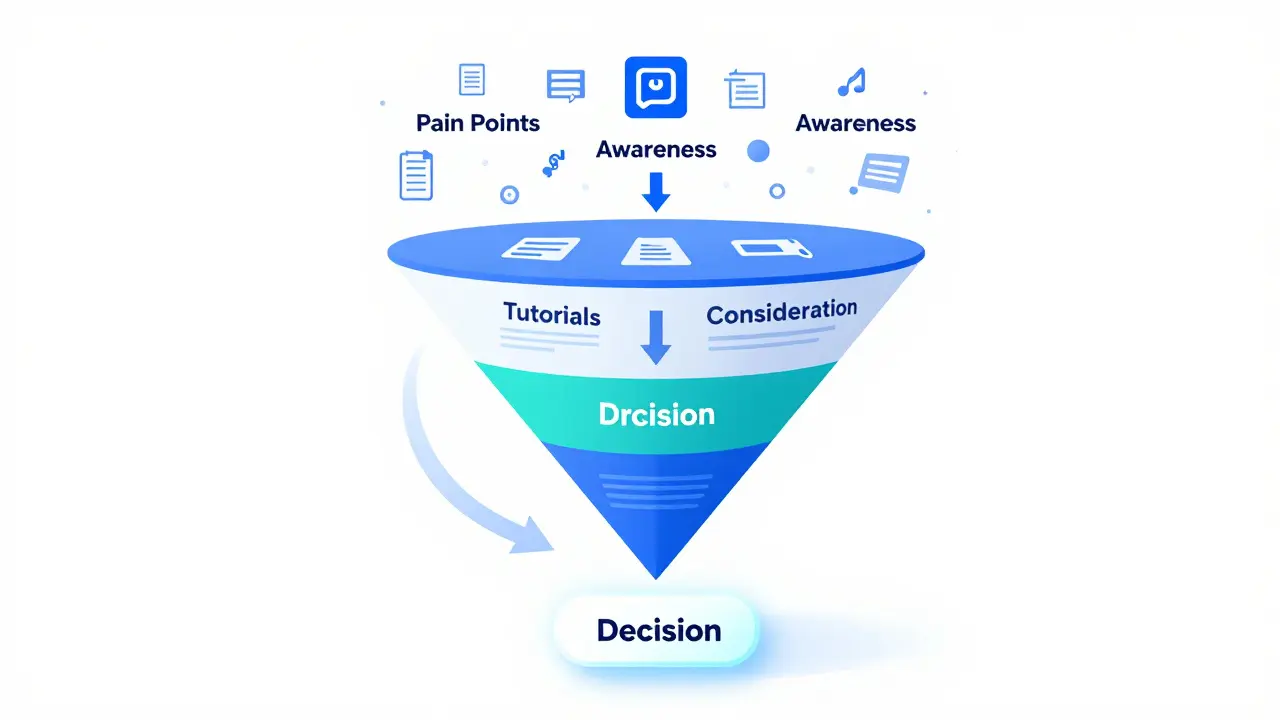
Not all blog posts do the same job. To effectively promote your course, you need to map your content to where the user is in their journey. Think of this as a funnel built out of articles.
- Top of Funnel (Awareness): These posts address broad pain points. For a coding course, this might be "Why Your Python Scripts Keep Crashing." The goal here is traffic and email sign-ups, not immediate sales.
- Middle of Funnel (Consideration): Here, the reader knows what they want but is comparing options. A post like "5 Common Mistakes in React Development" positions your course as the solution to these mistakes.
- Bottom of Funnel (Decision): These are comparison posts or case studies. "How I Learned Data Science in 3 Months" directly leads to your course landing page.
If you only write top-of-funnel content, you’ll have lots of readers but few buyers. If you only write bottom-of-funnel content, you won’t have enough people entering the funnel to begin with. Balance is key.
Strategic Pillars for Course-Promoting Blogs
To keep your strategy focused, build your blog around three main pillars. These ensure you’re always providing value while subtly guiding readers toward your course.
- Tutorials and How-To Guides: Teach a specific skill related to your course topic. Include a "deep dive" call-to-action (CTA) at the end that links to the relevant module in your course.
- Case Studies and Success Stories: Show real results. "How Sarah Went from Zero to Freelance Designer" proves your method works. Use screenshots, testimonials, and specific metrics.
- Myth-Busting and Contrarian Takes: Challenge common beliefs in your industry. This generates engagement and shares. For example, "Why SEO Doesn’t Matter for Local Businesses" sparks debate and attracts attention.
Each pillar serves a different psychological trigger: tutorials build utility, case studies build social proof, and contrarian takes build intrigue.
Optimizing On-Page Elements for Conversions
Writing great content isn’t enough if no one sees it or acts on it. You need to optimize both for search engines and human behavior.
| Element | Purpose | Actionable Tip |
|---|---|---|
| Title Tag | Click-through rate from search | Include primary keyword + benefit (e.g., "Learn Photoshop Fast") |
| Meta Description | Clarify intent | Write a compelling summary with a clear value proposition |
| Internal Links | Guide users deeper | Link to your course landing page naturally within the text |
| Call-to-Action (CTA) | Drive enrollment | Place CTAs after solving a mini-problem, not just at the end |
Notice the emphasis on internal linking. Don’t just link to your homepage. Link directly to the course module that solves the specific problem discussed in the post. This reduces friction and increases conversion rates.
Leveraging Email Integration
Your blog should feed your email list, which then feeds your course sales. One-time visitors rarely buy immediately. You need to nurture them.
Embed opt-in forms strategically. Instead of a generic "Subscribe to my newsletter," offer a lead magnet related to the blog post. If the post is about "Excel Formulas for Budgeting," offer a free "Budgeting Template." This aligns the incentive with the user’s immediate interest.
Once they’re on your list, automate a sequence that delivers more value and gradually introduces your course. The blog gets them in the door; the email keeps them warm until they’re ready to buy.

Measuring What Matters
Don’t get distracted by vanity metrics like total page views. Focus on metrics that correlate with revenue.
- Conversion Rate: Percentage of blog readers who click through to your course page.
- Email Sign-up Rate: Percentage of readers who join your list.
- Time on Page: Indicates content quality and engagement.
- Bounce Rate: High bounce rates suggest mismatched expectations or poor readability.
Use tools like Google Analytics and heatmaps to see where users drop off. If everyone leaves right after the first paragraph, your hook isn’t strong enough. If they leave before the CTA, your content might be too long or distracting.
Common Pitfalls to Avoid
Even experienced marketers make these mistakes. Steer clear of them to maximize your impact.
- Being Too Salesy: If every post screams "BUY NOW," readers will tune out. Follow the 80/20 rule: 80% value, 20% promotion.
- Inconsistent Publishing: Search engines favor fresh, regular content. Set a realistic schedule (e.g., once a week) and stick to it.
- Igning SEO Basics: Not optimizing titles, headers, and meta descriptions means missing out on organic traffic.
- No Clear CTA: Assume readers won’t know what to do next. Always tell them explicitly.
Avoiding these pitfalls ensures your efforts compound over time rather than fizzling out.
How often should I blog to promote my online course?
Consistency matters more than frequency. Aim for one high-quality post per week. This keeps your site fresh for search engines and gives your audience a reason to return regularly. Quality over quantity prevents burnout and ensures each post provides genuine value.
Can I use old blog posts to sell new courses?
Absolutely. Evergreen content-posts that remain relevant over time-is gold. Update old posts with new information, refresh the design, and add new CTAs pointing to your latest course. This leverages existing traffic without starting from scratch.
What type of content converts best for courses?
Case studies and detailed tutorials tend to convert best. Case studies provide social proof, showing real people achieving results. Tutorials demonstrate your expertise and give readers a taste of your teaching style, reducing perceived risk.
Do I need to be an SEO expert to succeed?
No, but you need basic knowledge. Focus on keyword research to understand what your audience is searching for, optimize your title tags and meta descriptions, and ensure your site loads quickly. You don’t need advanced technical skills to start seeing results.
How long does it take to see results from content marketing?
It varies, but typically 3-6 months for significant organic traffic growth. Content marketing is a marathon, not a sprint. Early results may be slow, but compounding effects kick in as older posts continue to drive traffic and build authority over time.
