
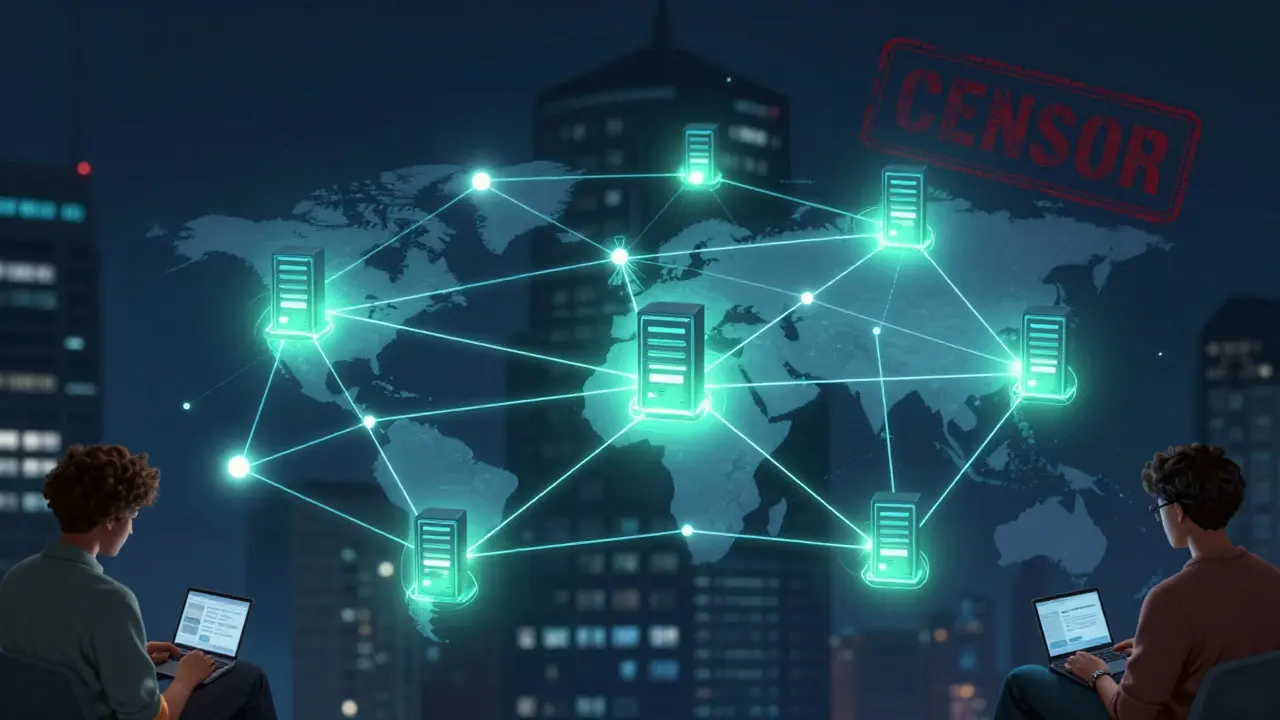
Imagine posting something online-maybe a rant, a photo, or a political opinion-and knowing no single company can delete it just because they disagree. That’s the promise of decentralized social networks. Unlike Facebook, Twitter, or Instagram, where one corporation holds all the power to censor, ban, or shadowban you, these networks spread control across thousands of independent servers. No central boss. No corporate algorithm deciding what you can say. Just communities, rules, and users who actually help run the system.
How Decentralized Social Networks Work
Decentralized social networks don’t rely on one big server farm owned by a tech giant. Instead, they use a network of independent servers-called nodes-that talk to each other using open protocols like ActivityPub a decentralized communication protocol that allows different social platforms to interoperate. Think of it like email: you can have an account on Gmail, and still send messages to someone on Outlook. Same idea here.
When you join a decentralized platform-say, Mastodon a popular federated social network built on ActivityPub, often used as a Twitter alternative-you pick a server. That server is run by someone else: maybe a hobbyist in Berlin, a nonprofit in Toronto, or even a group of friends in Edinburgh. Your posts live on that server, but because of ActivityPub, they show up on every other server that follows yours. Your followers on other servers see your content. You can follow people on totally different servers. It’s all connected.
This isn’t just about tech. It’s about ownership. Your data isn’t locked inside a corporate vault. You own it. You can move your account to another server anytime without losing followers or posts. No one can shut you down unless your own server’s admins decide to. And if they do? You just hop to another one. No paperwork. No appeal process. Just freedom.
Who Moderates the Content?
Here’s where it gets interesting. In centralized platforms, moderation is handled by a team of employees, often under pressure from advertisers, governments, or PR teams. In decentralized networks, moderation is handled by the community.
Each server sets its own rules. One server might ban hate speech completely. Another might allow graphic political content but forbid spam. A third might let anything fly, as long as it’s not illegal. The people who run these servers-called server admins individuals or groups who operate and manage independent nodes on decentralized social networks-decide what’s allowed. They can block other servers that post content they don’t like. They can mute users. They can even ban entire servers from interacting with theirs.
This is similar to how Reddit a centralized platform that implements decentralized moderation through subreddit-specific rules and volunteer moderators works. Reddit itself sets broad rules, but each subreddit has its own team of volunteer moderators who decide what gets removed. The difference? On decentralized networks, there’s no Reddit HQ to overrule them. If a server admin bans someone, it’s final-unless someone else on a different server decides to unban them.
Community moderation means more diversity. You can find servers that match your values. If you’re into art, there’s a server for that. If you’re into radical politics, there’s one for that too. You’re not forced into a single, homogenized feed. You choose your community.
Why This Matters: Censorship Resistance
Let’s say you live in a country where the government blocks social media. Or maybe you’re an activist posting about corruption. On Facebook or Twitter, your account could vanish overnight. No warning. No explanation. Just gone.
On a decentralized network? Not so easy. To silence you, the government would have to shut down every server where your content exists. That’s impossible. Even if they block one server, your posts are still on others. Your followers can still see your content. Your voice survives.
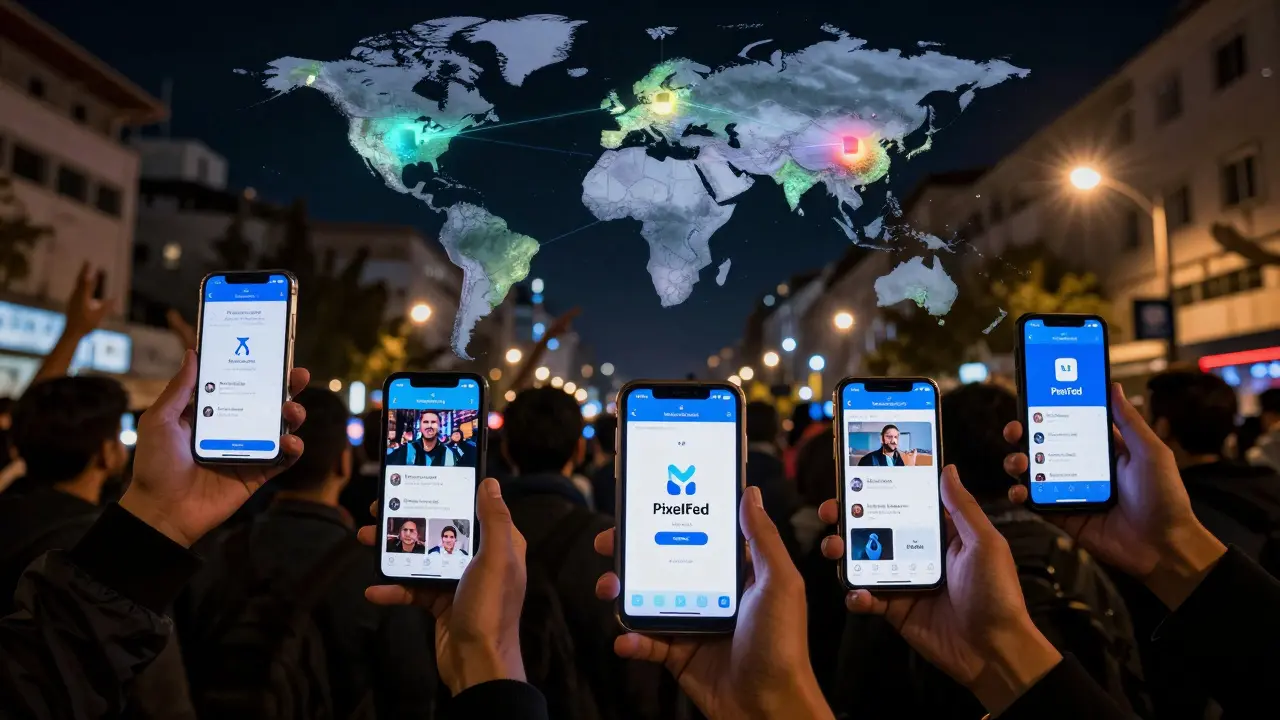
This isn’t theoretical. In 2023, during protests in Iran, users migrated from Instagram to decentralized platforms like PixelFed a decentralized photo-sharing platform based on ActivityPub, used as an alternative to Instagram and PeerTube a decentralized video-sharing platform, often used to bypass state censorship. Videos of protests stayed online for weeks, even after centralized platforms deleted them. That’s the power of distribution.
The Dark Side: Chaos and Inconsistency
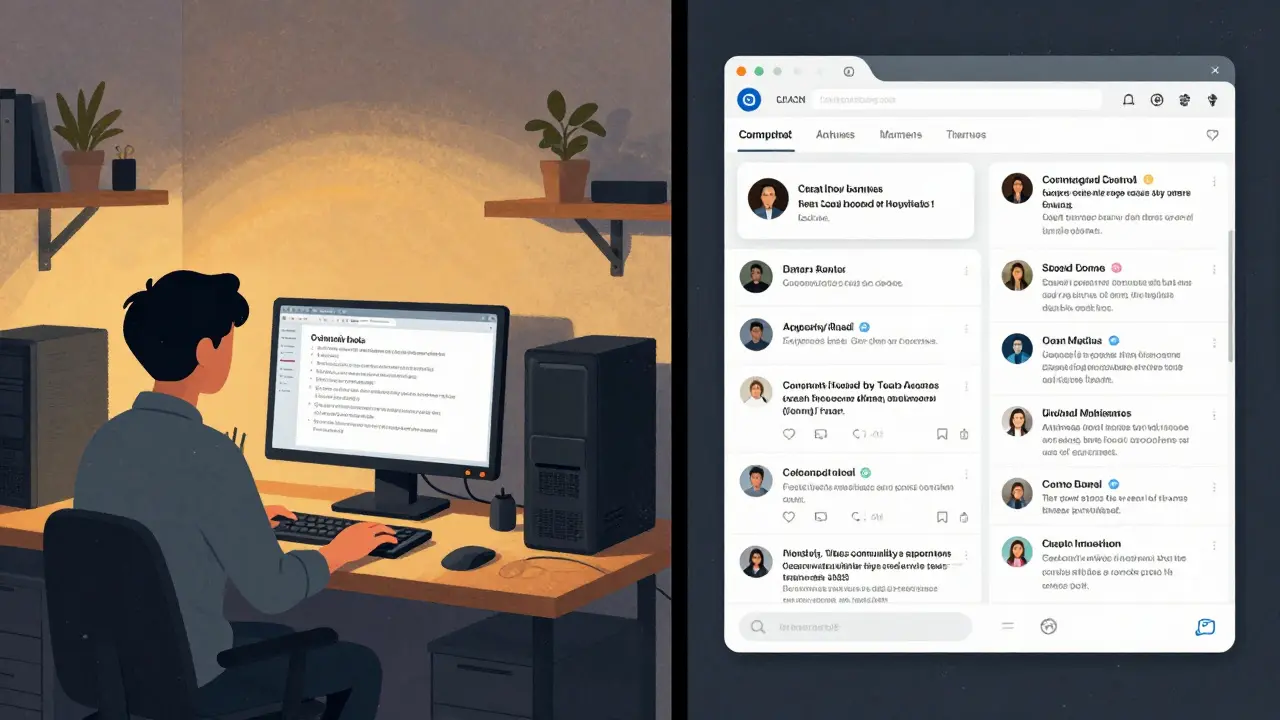
But freedom comes with risk. If every server sets its own rules, you get chaos. One server might let hate speech slide. Another might ban political jokes. Some servers have no moderation at all. That means you could follow someone on one server, and later find their posts are blocked on another.
And what about illegal content? Child abuse, threats, terrorism? Decentralized networks don’t have a central team to scan everything. If someone posts illegal material on a server with no active admins, it might stay up for months. There’s no single entity responsible for sweeping the entire network clean.
Some people argue this is a feature, not a bug. They say it’s better to let communities decide than to let corporations or governments decide for everyone. But it’s a hard trade-off. You gain autonomy, but you lose consistency. You get freedom, but you also get responsibility. If you want to use these platforms, you have to learn how to choose your servers wisely. And sometimes, you’ll have to block entire networks because they don’t match your values.
Data Privacy and Ownership
On centralized platforms, you’re not the customer-you’re the product. Your data is sold to advertisers. Your behavior is tracked. Your attention is monetized.
On decentralized networks? None of that. Most platforms don’t track you. They don’t serve ads. They don’t collect your data to sell. Your profile, your posts, your followers-they all belong to you. You can download your data anytime. You can even host your own server if you know how.
Some platforms go further. Bluesky a decentralized social network developed by Twitter’s former CEO, built on the AT Protocol uses a system called AT Protocol a decentralized social protocol developed by Bluesky, designed for user-controlled identity and data portability that lets users control their own identity and data streams. You’re not tied to one company’s rules. You can switch protocols, switch servers, or even build your own app to interact with your network.
Real-World Impact: Who’s Using This?
It’s not just techies. In 2025, over 12 million people were active on decentralized social networks worldwide. Universities use them for open research discussions. Journalists use them to share sources without fear of being deplatformed. Artists use them to sell work directly to fans, with no middleman taking a cut.
Even governments are paying attention. The EU’s Digital Markets Act a European Union regulation that mandates interoperability for major digital platforms to prevent monopolistic control now requires big platforms to let users move their data to decentralized alternatives. That’s huge. It means Facebook and X might soon have to let you export your friends and posts to a Mastodon server. Not because they want to-but because the law says they have to.
What’s Next?
Decentralized social networks aren’t perfect. They’re harder to use. They’re slower. They’re messy. But they’re growing. And they’re changing how we think about online freedom.
For now, if you want to try one, start with Mastodon. Pick a server that feels right. Read their rules. Talk to the admins. See how moderation works in practice. You might not love it. But you’ll understand something important: the internet doesn’t have to be controlled by a few companies. It can be shaped by communities. And that’s worth experimenting with.
Can decentralized social networks stop illegal content like child exploitation?
No single system can completely stop illegal content, but decentralized networks make it harder for abusers to hide. While there’s no central team scanning everything, many servers actively monitor and ban abusive users. Some servers use automated tools to flag known illegal material. If abuse is reported, admins can block the offending server entirely. However, because there’s no global enforcement, some illegal content may remain on unmoderated servers. Users are encouraged to report abuse to their server admins, and many networks collaborate with law enforcement when necessary.
Do I need to know how to code to use decentralized social media?
No. Most users don’t need to code at all. Platforms like Mastodon, PixelFed, and PeerTube have simple, app-like interfaces that work just like Instagram or Twitter. You sign up, post, follow, and interact-all without touching code. Only if you want to run your own server or build a custom app do you need technical skills. For 99% of users, it’s as easy as using any other social app.
What happens if my server shuts down?
If your server shuts down, you lose access to your account there-but not your data. Most platforms let you download a backup of your posts, followers, and media. You can then sign up on another server and import your data. Your followers will still be able to find you, because your identity (like your username) stays the same. It’s like changing your email provider: you keep your address, just move it to a new host.
Are decentralized networks more private than Facebook or Twitter?
Yes, by design. Most decentralized platforms don’t track your behavior, don’t sell ads, and don’t collect personal data beyond what’s needed to run your account. Your posts aren’t analyzed by algorithms to predict what you’ll click on. You’re not turned into a marketing profile. Privacy isn’t an add-on-it’s built in. Even if a server is hacked, your data isn’t stored in one place, so the damage is limited.
Can I follow someone on a different server?
Yes, and that’s the whole point. If someone is on a Mastodon server in Japan, and you’re on one in Canada, you can still follow them, reply to their posts, and see their updates in real time. The network connects them automatically through ActivityPub. You don’t need to join their server. You just follow their username like you would on any social app. Cross-server interaction is seamless and built into the protocol.
Why aren’t decentralized networks as popular as Instagram or TikTok?
They’re not as polished. They lack viral algorithms, trending feeds, and slick mobile apps. Most decentralized platforms are built by volunteers, not billion-dollar companies. They’re slower to load, harder to discover, and less optimized for attention. But they’re growing fast. As people get tired of censorship and surveillance, more are switching. It’s not about replacing Instagram tomorrow-it’s about offering a real alternative for those who want control back.

Comments (12)
Lissa Veldhuis March 4 2026
This whole decentralized thing is just a fancy way of saying "let the chaos reign"One server lets pedophiles post freely because "free speech"
Another bans mentions of coffee because it's "capitalist propaganda"
You think you're free until you realize half the internet is a toxic dumpster fire and you can't even report it to anyone
James Boggs March 5 2026
I appreciate the thoughtful breakdown of how decentralized networks operate. The analogy to email is particularly apt. While the model has challenges, the underlying principle of user sovereignty is both principled and pragmatic.Addison Smart March 6 2026
What’s fascinating about decentralized networks isn’t just the tech-it’s the cultural shift. We’re moving from passive consumption to active stewardship. Every server is a micro-society with its own norms, values, and guardrails. That’s not a bug-it’s evolution. Imagine a world where your community’s values shape your feed, not a Silicon Valley algorithm optimized for outrage. Sure, it’s messy. But isn’t that how real democracy works? Not perfect, not centralized, but alive. We’re not just changing platforms-we’re redefining what online belonging means. And honestly? That’s worth the learning curve.David Smith March 6 2026
So let me get this straight-you’re telling me the solution to corporate censorship is to hand moderation over to random dudes in basements who can’t even spell "moderation"?One server bans all mentions of Biden. Another lets people post snuff videos because "it’s not illegal where I live".
Oh wait-this is the future? I’d rather have Zuckerberg than this anarchist clown show.
Frank Piccolo March 7 2026
Decentralized? More like decentralized chaos.Every time someone says "no central authority" they’re really saying "no one’s in charge so good luck when the Nazis take over server 7B".
Meanwhile, Facebook at least has a 24/7 team that responds to reports. Here? You’re on your own.
And don’t even get me started on "I can move my account"-yeah, cool, until you lose 3,000 followers because your new server has 12 users and they all follow each other.
This isn’t freedom. It’s loneliness with extra steps.
Michael Jones March 8 2026
Freedom isn’t clean it’s messy and loud and sometimes terrifyingBut it’s still freedom
You want safety? Go live in a walled garden where every word is scanned and monetized
You want power? Build your own server
Or join one that reflects who you are not who some corporation thinks you should be
The internet was never meant to be a shopping mall
It was meant to be a town square
And town squares have arguments
They have graffiti
They have people shouting at each other under streetlights
That’s not broken
That’s alive
allison berroteran March 9 2026
I’ve been on Mastodon for over a year now, and what surprised me most wasn’t the tech-it was the quiet humanity. No autoplay videos. No engagement metrics. Just people sharing art, poetry, and late-night rants. I found a server for indie musicians, another for disabled writers, another for retired engineers who build model trains. There’s no algorithm pushing me toward outrage. I choose what to see. And when something’s wrong? I report it to the admins who actually reply. It’s not perfect, but it feels real. Like the internet before it got sold to the highest bidder.Gabby Love March 9 2026
Just a quick note on data ownership: most platforms let you export your data via JSON or Atom feeds. You don’t need to be a coder. Just go to your profile settings, click "export", and you’ve got a backup of everything. If your server shuts down, you import it to another. It’s like moving houses-you take your furniture with you. Simple. No drama.Jen Kay March 10 2026
Ah yes, the classic "decentralized = better" narrative. Let’s not pretend this is some utopian paradise. Yes, you can move your account. But good luck finding a server that doesn’t have a 12-page rulebook written in legalese by a 19-year-old who thinks "no hate speech" means "no political disagreement".And don’t even get me started on "community moderation"-that’s just volunteer burnout with extra steps.
Real freedom isn’t having 100 servers with 100 conflicting rules. It’s having one system that’s fair, consistent, and accountable.
But hey, if you like chaos, go ahead. I’ll be over here where content moderation still means something.
Michael Thomas March 11 2026
The EU’s Digital Markets Act? Pathetic. You think forcing Meta to let people move to Mastodon fixes anything? You’re just exporting the problem. Now we’ll have Russian bots on Canadian servers, Chinese state media on German ones. Decentralized doesn’t mean untouchable. It just means harder to track. And that’s a nightmare for law enforcement.Abert Canada March 13 2026
I run a small server for Canadian poets and it’s been the most rewarding thing I’ve ever done. No ads. No tracking. Just people sharing work. Last week, a user from Japan posted a haiku about snowfall. A guy in Quebec replied with a sonnet. No one paid for it. No algorithm pushed it. It just happened. That’s the magic. Not the tech-the human connection.Lissa Veldhuis March 14 2026
You think that’s sweet? Last month a server I followed got taken over by a neo-Nazi group. Took three weeks for another admin to block it. Meanwhile, I had to manually unfollow 800 people who got caught in the crossfire. So yeah, "human connection". Also: trauma.