
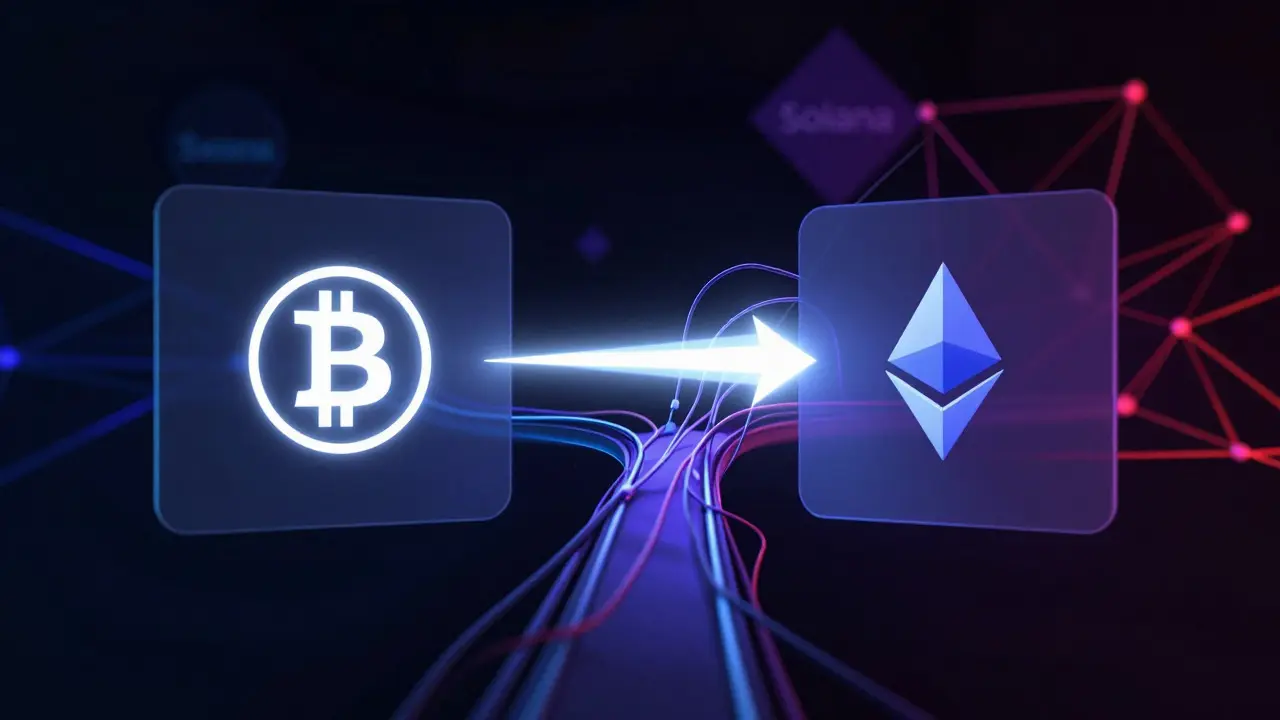
Imagine wanting to trade your Bitcoin for Ethereum. In the old days of decentralized finance, this was a headache. You’d have to wrap your BTC into a token like wBTC, move it to an Ethereum-based exchange, and hope the bridge didn’t fail. It was slow, risky, and required trusting third-party custodians. Today, that friction is disappearing thanks to Cross-Chain DEXs, which are decentralized exchanges that enable direct trading of native assets across different blockchain networks without wrapped tokens or centralized intermediaries. These platforms let you swap ETH on Ethereum for SOL on Solana in one click, keeping your funds non-custodial throughout the process.
Why Cross-Chain DEXs Matter Now
The crypto ecosystem has become fragmented. We have dozens of blockchains-Ethereum, Solana, Avalanche, Binance Smart Chain-each with its own liquidity pools and users. This creates silos. If you’re on Ethereum, you can’t easily access the deep liquidity available on Solana without using a centralized exchange like Coinbase or Binance. That means giving up control of your keys.
Cross-chain DEXs solve this by creating interoperability between these isolated islands. According to data from DeFi Llama, cross-chain protocols held $1.87 billion in Total Value Locked (TVL) as of late 2023, growing faster than single-chain DEXs. The goal is simple: allow any pair to be traded on any chain. No more wrapping assets. No more trusting a central entity with your money. Just pure, peer-to-peer value transfer.
How They Work Under the Hood
You might wonder how two completely different blockchains talk to each other. It’s not magic; it’s sophisticated cryptography and game theory. Most cross-chain DEXs rely on a few key mechanisms:
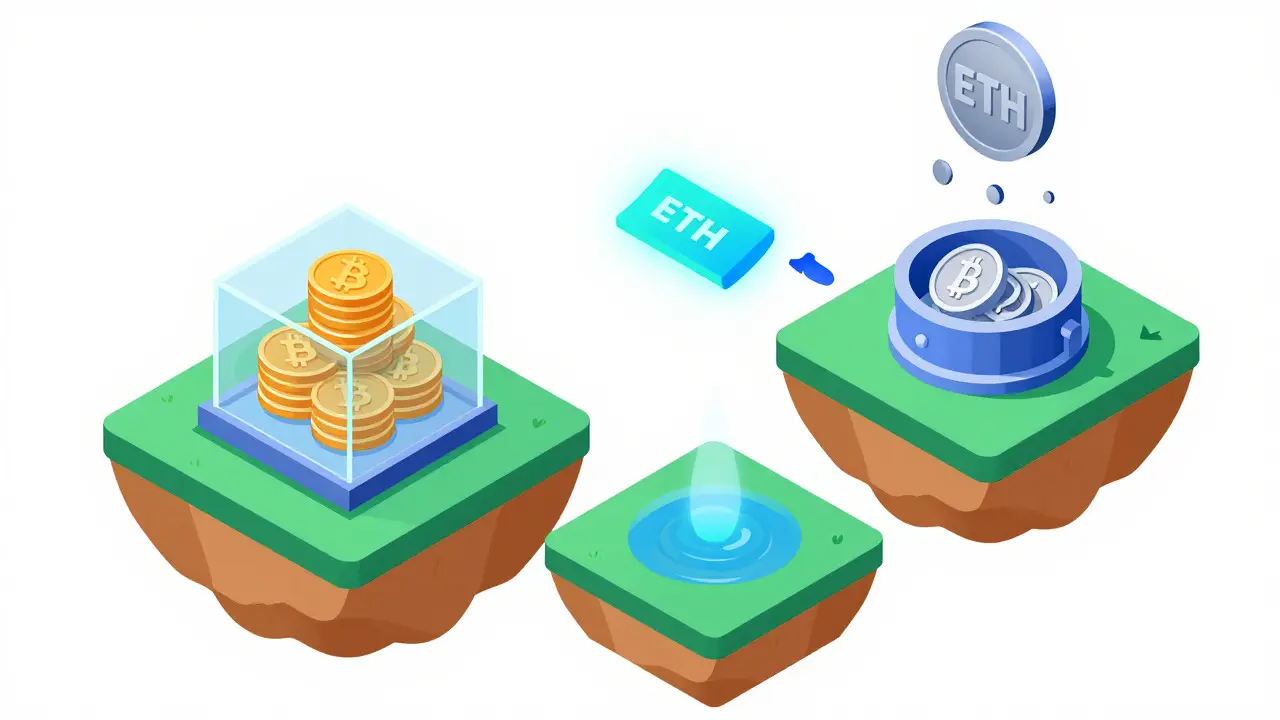
- Asset Locking: When you initiate a swap, your original asset is locked in a smart contract on the source chain. It isn’t destroyed or moved; it’s frozen until the transaction completes.
- Cross-Chain Communication: Specialized nodes or validators monitor the source chain. Once they see your asset is locked, they signal the destination chain to release the target asset to your wallet.
- Liquidity Pools: Unlike traditional bridges that just move assets, DEXs need actual liquidity. Providers deposit native assets (like real BTC and real ETH) into pools. When you swap, you’re pulling from these pools, not minting a new token.
This architecture eliminates the need for wrapped tokens. Wrapped tokens are liabilities issued by a company or protocol. If that company gets hacked or goes bankrupt, your wrapped token could become worthless. Native swaps avoid this risk entirely because you always hold the real asset.
Top Players in the Space
Not all cross-chain solutions are created equal. Here are the leading platforms dominating the market right now:
| Platform | Key Feature | Supported Chains | Security Model |
|---|---|---|---|
| THORChain | Native BTC swaps, no wrapped assets | Ethereum, BSC, Litecoin, Bitcoin, Cosmos | Validator node consensus with slashing penalties |
| Chainflip | High throughput, user-friendly interface | Ethereum, Polkadot, Solana | Byzantine Fault Tolerant (BFT) validator set |
| Axelar Network | Infrastructure for developers, unified liquidity | 15+ chains including Polygon, Avalanche, Fantom | General purpose cross-chain message passing |
THORChain currently leads the pack with over $842 million in TVL. Its unique selling point is native Bitcoin support. You don’t need to convert BTC to ERC-20 tokens. You send real BTC to a THORChain address, and receive real ETH in return. Chainflip focuses on speed and ease of use, targeting mainstream adoption with a cleaner UI. Axelar Network takes a different approach, acting as infrastructure that allows other apps to build cross-chain features, rather than being a standalone exchange.
Pros and Cons: Is It Right for You?
Cross-chain DEXs offer significant advantages, but they aren’t perfect. Let’s break down the reality of using them today.
The Advantages
- True Ownership: Your assets never leave your control until the moment of swap. There is no custodian holding your funds.
- Better Liquidity Access: By aggregating pools across chains, you often get better prices for obscure tokens. Slippage can be lower (0.3-0.5%) compared to fragmented single-chain pools during high volatility.
- No Wrapped Token Risk: You eliminate the counterparty risk associated with wrapped assets like wBTC or stETH.
The Drawbacks
- Speed: Cross-chain transactions are slower. While a centralized exchange swap takes seconds, a cross-chain DEX swap can take 30 to 120 seconds depending on network congestion and finality times.
- Complexity: You need gas fees on both the source and destination chains. Forgetting to keep some ETH for gas on Ethereum while swapping from BNB Chain can lead to stuck transactions.
- Security Risks: Bridges are historically vulnerable. In 2022, cross-chain bridges accounted for 64% of DeFi hack losses, totaling $2.1 billion. While newer protocols are more secure, the risk remains higher than single-chain swaps.

Security First: Protecting Your Funds
When dealing with cross-chain technology, security is paramount. The complexity of interacting with multiple consensus mechanisms introduces new attack vectors. Here is how to stay safe:
- Use Audited Protocols: Stick to established names like THORChain or Chainflip. Avoid new, unaudited bridges promising high yields.
- Check Gas Balances: Always ensure you have enough native tokens (ETH, SOL, AVAX) on the destination chain to pay for gas after the swap arrives.
- Start Small: Test with a small amount first. Verify the transaction hash on explorers for both chains before moving large sums.
- Monitor Validator Health: For protocols like THORChain, check if the validator set is healthy and if there are any ongoing governance issues.
Remember, once a cross-chain transaction is initiated, it’s hard to reverse. If a timeout occurs due to network congestion, you may need to manually cancel the transaction on the source chain, which costs additional gas.
The Future of Interoperability
We are still in the early stages. As of 2026, the trend is moving toward standardization. Projects like the Interchain Foundation and Axelar are working on universal communication protocols. This means in the near future, you won’t think about "cross-chain" at all. You’ll just click "swap," and the backend will handle the routing seamlessly across any number of chains.
Institutional adoption is also rising. Major firms are using cross-chain DEXs for arbitrage and treasury management, recognizing the efficiency of native asset transfers. However, regulatory scrutiny is increasing. Governments are watching cross-chain bridges closely, fearing they could be used for illicit flows. Expect clearer regulations in the coming years.
What is the difference between a cross-chain DEX and a regular DEX?
A regular DEX operates within a single blockchain, allowing you to swap tokens only on that specific network (e.g., swapping USDC for ETH on Uniswap). A cross-chain DEX allows you to swap assets between different blockchains directly (e.g., swapping BTC on Bitcoin for ETH on Ethereum) without needing to wrap the assets or use a centralized exchange.
Are cross-chain DEXs safe to use?
They are generally safe if you use reputable, audited platforms like THORChain or Chainflip. However, they carry higher risks than single-chain DEXs due to the complexity of bridge technology. Historically, bridges have been targeted by hackers. Always start with small amounts and ensure you understand the security model of the protocol you are using.
Do I need wrapped tokens to use a cross-chain DEX?
No, that is the main advantage of modern cross-chain DEXs. They facilitate native asset swaps. You send real Bitcoin and receive real Ethereum. You do not need to convert your assets into wrapped versions like wBTC or renBTC, which reduces counterparty risk.
How long does a cross-chain swap take?
Transaction times vary based on the blockchains involved and network congestion. Typically, a cross-chain swap takes between 30 seconds and 2 minutes. This is slower than centralized exchanges but much faster than older bridge methods that could take hours.
What are the fees for using cross-chain DEXs?
Fees include the network gas fees for both the source and destination chains, plus a protocol fee paid to liquidity providers and validators. Fees can be higher than single-chain swaps, especially during periods of high network congestion, but they are often competitive when considering the cost of using centralized exchanges and withdrawal fees.
Which cross-chain DEX is best for beginners?
Chainflip is often considered more user-friendly due to its intuitive interface and focus on ease of use. THORChain is the most established and supports the widest range of major assets, including native Bitcoin, making it a strong choice for experienced users looking for deep liquidity.
