
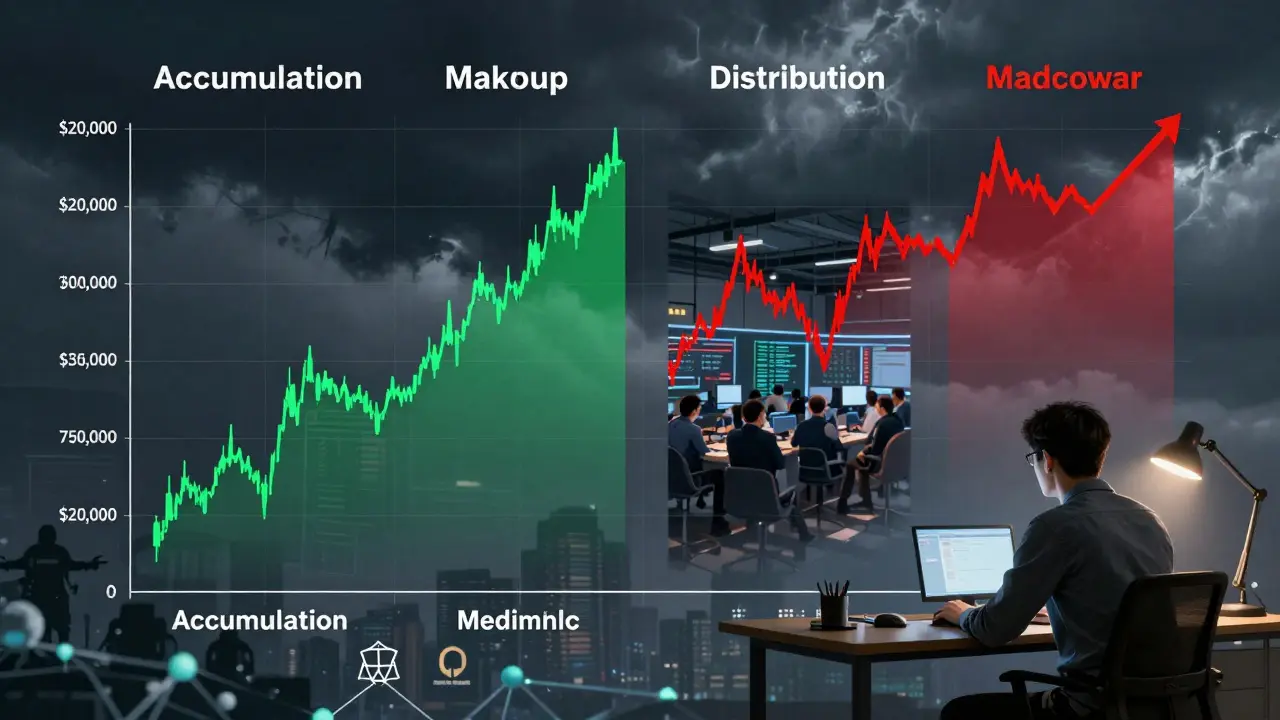
When Bitcoin hit $69,000 in November 2021, everyone was talking about how it would hit $100,000 next. By July 2022, it was down to $19,000. People who bought at the top lost half their money in months. But those who held on? By early 2024, Bitcoin was back above $60,000. This isn’t luck. It’s a pattern. Cryptocurrency markets don’t move randomly. They swing between bull and bear phases like a pendulum - and if you understand how, you can stop reacting emotionally and start planning ahead.
What Actually Defines a Bull Market in Crypto?
A bull market isn’t just when prices go up. It’s when confidence spreads. People stop worrying about losing money and start talking about how they’re going to get rich. Trading volume spikes. New users sign up for exchanges. Startups launch apps that actually get used - not just sold as hype. In crypto, bull markets usually follow a major event that increases liquidity. The most obvious one is Bitcoin’s halving. Every four years, the reward for mining Bitcoin drops by 50%. That means less new Bitcoin enters the market. Less supply, same or growing demand? Prices rise. That’s basic economics. The halvings in 2012, 2016, and 2020 were all followed by massive price runs. The 2024 halving? It kicked off the latest bull run. But halvings aren’t the whole story. Institutional adoption matters too. When companies like MicroStrategy or Tesla buy Bitcoin as treasury assets, or when countries like El Salvador make it legal tender, it signals to the world that this isn’t just gambling anymore. It’s real money. During bull markets, liquidity is high. You can buy or sell large amounts without moving the price. Exchanges are crowded. New altcoins pop up daily. People invest in DeFi protocols, NFTs, Layer-2 networks - anything that sounds like the next big thing. This is when innovation thrives.What Happens in a Bear Market?
Bear markets feel like a punch to the gut. Prices drop. 60%, 70%, even 80% from the peak. News headlines scream about scams. FTX collapses. Luna crashes. Regulators crack down. People sell everything because they’re scared. But here’s the truth most people miss: bear markets are when the real work gets done. While everyone’s panicking, smart investors are quietly buying. Startups that survived the crash are building better products. Developers fix bugs. Infrastructure improves. Wallets get more secure. Exchanges clean up their compliance. The 2018-2020 bear market didn’t kill crypto. It killed the fake projects. The ones with no code, no team, no roadmap. The ones that raised money on TikTok ads. After that cleanup, Bitcoin and Ethereum became stronger. The market that emerged in 2021 was more mature. More resilient. Bear markets also reset psychology. When prices fall hard, people who bought on leverage get wiped out. Those who didn’t understand the tech give up. The noise dies down. And that’s when the next bull run begins - not because of hype, but because real demand is finally building under the surface.The Four Phases of Every Crypto Cycle
Every crypto cycle follows the same four stages. If you can spot which phase you’re in, you’re already ahead of 90% of traders.- Accumulation - This happens right after a crash. Prices stop falling. Trading volume stays low. Most people think it’s still going lower. But the smart money - hedge funds, early adopters, miners - are quietly buying. No one talks about it. No media coverage. This phase can last months. It’s boring. But it’s where fortunes are made.
- Markup (or Expansion) - Prices start climbing. First slowly, then faster. Media begins to notice. Reddit threads explode. Your cousin asks if you’re still into crypto. This is when real adoption kicks in. Exchanges add new coins. Payment processors start supporting crypto. Institutions enter. Volume surges. This is the phase to buy.
- Distribution - Growth slows. Prices stall. Volatility spikes. People who bought early start selling. The media goes all-in on “Bitcoin will hit $100K!” Everyone’s talking about it. FOMO hits. New investors pour in, buying at the top. This is when you see the biggest pump-and-dump schemes. Altcoins with no utility spike 10x. Then crash 90%.
- Markdown (or Correction) - The bubble bursts. Prices fall fast. Panic sells. Wallets empty. Exchanges see record withdrawals. This phase lasts until the next accumulation phase begins. It’s painful. But it’s necessary.
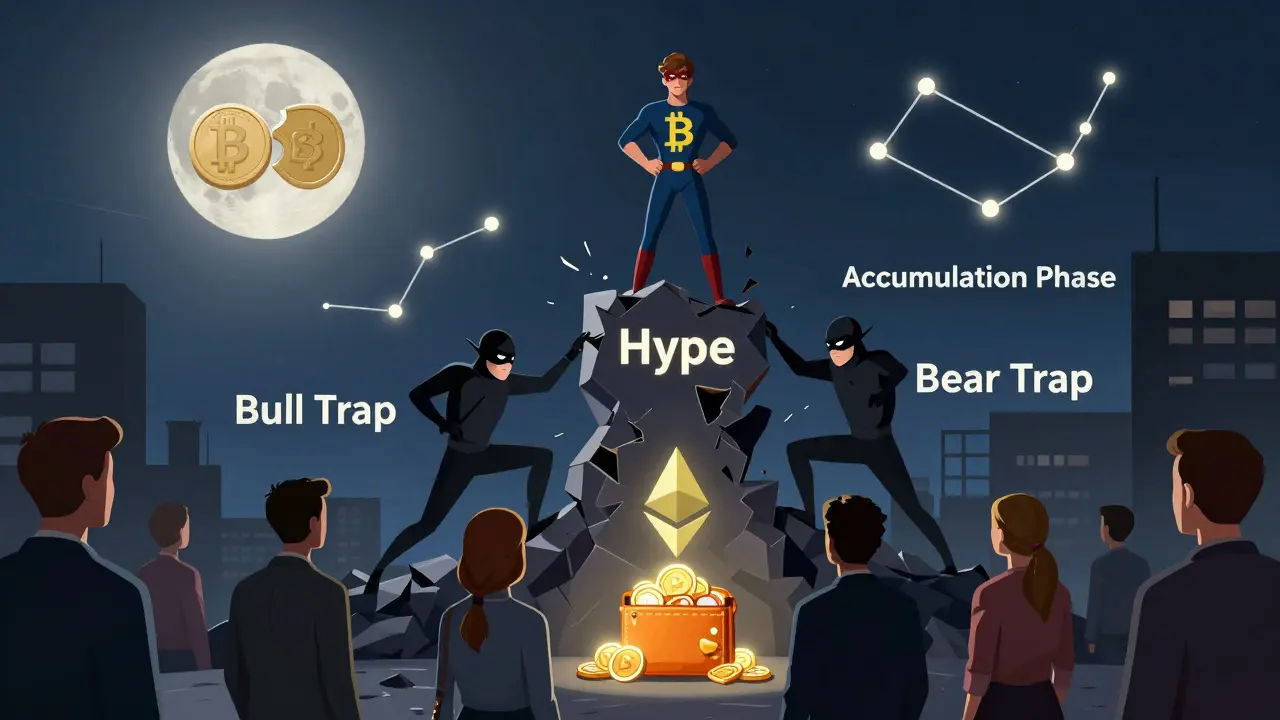
Bull and Bear Traps - How You Get Fooled
Traders get caught in traps all the time. And they’re designed to make you lose. A bull trap happens during a bear market. Prices rise 15% on high volume. You think the bottom is in. You buy. Then it crashes again. Why? Because whales pushed the price up just enough to lure in retail buyers, then sold their holdings. You’re the last one holding. This often happens on weekends when volume is low - it takes less money to fake a rally. A bear trap is the opposite. Prices dip sharply, triggering stop-loss orders. Everyone sells. Then it rockets back up. You missed it. You sold at the bottom. This usually happens when a major support level holds - but traders assume it’s broken. How to spot them?- Look at volume. If a price breakout happens on low volume, it’s likely fake. Real moves have strong volume behind them.
- Check RSI or MACD. If price makes a new high but RSI makes a lower high, momentum is fading. That’s a bearish divergence - a warning sign.
- Watch for ascending wedges. These look like they’re building up to a breakout, but 70% of the time in crypto, they reverse downward. They signal exhaustion.
- Don’t chase breakout levels. If a coin breaks $100 but doesn’t hold it for 48 hours, it’s probably a trap.
How to Use This Knowledge
You don’t need to time the exact top or bottom. You just need to know where you are in the cycle. If you’re in accumulation: This is your best time to buy. Focus on Bitcoin and Ethereum. They’re the safest bets. Ignore altcoins. They’re risky. If you’re in markup: Start diversifying. Look for projects with real usage - payments, identity, decentralized storage. Don’t buy memes. Buy infrastructure. If you’re in distribution: Start taking profits. Don’t get greedy. If you doubled your money, take half off the table. Keep the rest for the long term. The market is overheating. This is when most people lose everything. If you’re in markdown: Don’t panic. Don’t sell. This is when the next generation of crypto is being built. If you have cash, start buying again. But only the strong ones. Bitcoin. Ethereum. Maybe Solana. The rest? Wait.
Why the 4-Year Cycle Keeps Repeating
It’s not magic. It’s mechanics. Bitcoin’s halving reduces supply. That creates scarcity. Scarcity drives price. But it takes time for demand to catch up. That’s why the bull run doesn’t start right after the halving. It starts 6-12 months later. That’s when liquidity floods in - from institutions, from new investors, from global macro shifts. Liquidity cycles are the real driver. When central banks print money - like after the pandemic - people look for assets to store value. Bitcoin becomes that asset. When interest rates rise, money flows out of risky assets. That’s when bear markets begin. The halving isn’t the cause. It’s a catalyst. The real cause is money supply. And that’s something you can track - through Fed policy, global inflation, and bank reserves.What Comes Next?
As of early 2026, we’re in the early stages of a new bull market. Bitcoin hit $70,000 in late 2024. Ethereum ETFs launched. Layer-2 networks like Arbitrum and zkSync are handling millions of transactions daily. Real businesses are using crypto for payroll, cross-border payments, and loyalty programs. But the next trap is already forming. Everyone thinks this bull run will last years. It won’t. The next halving is in 2028. The next peak? Probably 2027. Then the correction begins. The key isn’t predicting the next peak. It’s knowing you’re in a cycle. And cycles always repeat. The same patterns. The same psychology. The same mistakes. If you learn to read them, you won’t get scared. You won’t get greedy. You’ll just keep playing the game - and win.How long does a crypto bull market usually last?
Historically, crypto bull markets last between 12 and 24 months. The 2020-2021 bull run lasted about 15 months. The 2016-2017 run lasted 18 months. Bear markets tend to be longer - often 18 to 36 months. The key is not to confuse a short-term rally with the start of a new bull cycle. Look for sustained volume, institutional adoption, and real-world usage, not just price spikes.
Is Bitcoin halving the only reason for bull markets?
No. While Bitcoin halvings have coincided with past bull runs, they’re not the root cause. The real driver is liquidity - how much money is flowing into the market. When central banks loosen monetary policy (like after the 2020 pandemic), investors seek alternatives to fiat. Bitcoin becomes a store of value. Halvings reduce supply, but liquidity creates demand. The two work together. Without liquidity, even a halving won’t spark a bull market.
Can you make money in a bear market?
Yes - if you know how. Most people lose money in bear markets because they sell in panic. But smart investors buy during accumulation. Others use strategies like dollar-cost averaging, staking, or lending crypto to earn yield. Some even trade short positions using derivatives. The key is not trying to time the bottom. It’s building positions slowly, staying disciplined, and focusing on assets with strong fundamentals - not hype.
What’s the difference between a bull trap and a real breakout?
A real breakout has three signs: high trading volume, strong follow-through over several days, and price closing above key resistance levels with conviction. A bull trap has low volume, a quick spike that fades within hours, and price falling back below the breakout level. Watch for divergence in indicators like RSI or MACD - if price goes up but momentum drops, it’s a trap. Also, avoid chasing breakouts on weekends - low volume makes fake moves easier.
Should I sell all my crypto at the top of a bull market?
No - unless you need the cash. Selling everything at the top is nearly impossible. Even experts miss it. Instead, take profits strategically. If you doubled your money, sell 30-50% to lock in gains. Keep the rest. Bitcoin has never permanently lost its value after a bull run. The market resets, but the long-term trend is upward. The goal isn’t to catch the peak. It’s to stay in the game long enough to ride the next cycle.

Comments (12)
Patrick Tiernan February 20 2026
bro just buy bitcoin and hODL lmao why are we overcomplicating this like its some kind of finance phd thesis i mean sure the halving thing is cool but honestly if you didnt already know this by now you probably got scammed by a coinbase ad anywayPatrick Bass February 21 2026
The article presents a reasonably coherent framework for understanding crypto cycles. However, it overlooks the role of regulatory uncertainty as a dampening factor during accumulation phases. The psychological reset in bear markets is well-noted, yet the structural shifts in liquidity sourcing-particularly from non-Western institutional players-are underexplored.Tyler Springall February 22 2026
Let me stop you right there. You think this is about economics? No. This is about human behavior. The halving is a narrative device. The real driver is the collective delusion that this time, it’s different. Every cycle repeats because people refuse to learn. You don’t need a PhD in finance-you need a diagnosis of narcissism.Colby Havard February 22 2026
The assertion that Bitcoin’s halving is a catalyst-rather than a root cause-is both accurate and profoundly underappreciated. One must consider the interplay between monetary policy, fractional reserve banking, and the erosion of fiat credibility. The 2020 liquidity surge was not an anomaly; it was an inevitability. Crypto is not a speculative asset-it is a systemic response to institutional failure.Amy P February 23 2026
I just cried reading this. Like, actual tears. I bought ETH at $800 in 2021, sold at $3800, then bought back at $1800 in 2022, and now I’m holding through this whole thing. It’s not about money-it’s about believing in something when no one else does. I’m so proud of myself for not panicking. This article made me feel seen.Alan Crierie February 25 2026
I appreciate how you framed the four phases. It’s rare to see someone explain accumulation without sounding like a guru. I’ve been in this space since 2015, and I’ve watched the same patterns repeat-every time, new people think they’re the first to ‘figure it out.’ You’re right: it’s not magic. It’s mechanics. And mechanics can be learned.Nicholas Zeitler February 27 2026
Great breakdown. One thing I’d add: never underestimate the power of community momentum. When you see devs actively pushing updates, when GitHub activity spikes during a bear market-that’s the real signal. Price lags behind utility. If you’re watching only charts, you’re already behind.Teja kumar Baliga February 28 2026
In India, we call this 'dhakkan ka dard'-the pain of the fool who chases pumps. We’ve seen this movie 5 times. The smart ones? They buy BTC on weekends when everyone else is partying. Simple. No fancy charts. Just patience.k arnold February 28 2026
Oh wow. So Bitcoin’s price is dictated by… economics? Who knew. Next you’ll tell me water is wet and the sun rises in the east.Tiffany Ho February 28 2026
this made me feel so much better honestly i was so scared when it dropped to 50k last month but now i get it its all part of the cycle and im not dumb for holding onmichael Melanson February 28 2026
I’ve been tracking this since 2017. The accumulation phase in late 2023 was unmistakable. Low volume, quiet dev activity, no media coverage. That’s when I doubled down. Not because I was smart. Because I remembered what happened last time.lucia burton March 2 2026
The structural underpinnings of crypto’s cyclical nature are rooted in the convergence of monetary expansion, decentralized network effects, and the entropy of speculative capital. During the markup phase, liquidity migration from traditional equity markets into permissionless infrastructure creates asymmetric upside potential. The distribution phase is essentially a liquidity cascade-where retail participation reaches critical mass, triggering feedback loops that invert into a negative-sum dynamic. The markdown phase isn’t destruction-it’s entropy-driven reallocation. The next cycle will be accelerated by institutional custody solutions, regulatory clarity in key jurisdictions, and the maturation of zk-proof-based compliance frameworks.