
Think about the last time you stuck with a habit-maybe daily meditation, learning Spanish, or practicing guitar. Did you do it because you were deeply motivated? Or did you do it because you saw a little badge pop up, or because you didn’t want to break a five-day streak? If it’s the latter, you’re not alone. The secret to building real learning habits isn’t willpower. It’s micro-rewards and streaks.
Why Big Goals Fail (And Tiny Wins Succeed)
Most people try to learn something new by setting huge goals: "I’m going to learn French in 30 days," or "I’ll read 100 pages a week." Then, life happens. You miss a day. You feel guilty. You quit.
That’s because the brain isn’t wired for long-term, abstract rewards. It responds to immediate feedback. A 2023 study from Stanford’s Behavior Design Lab tracked over 12,000 language learners using apps with and without streak features. Those with streaks were 3.4 times more likely to keep practicing after 90 days. Why? Because the streak wasn’t just a number-it became a psychological commitment. Not showing up felt like letting yourself down.
Micro-rewards work the same way. Not a trophy. Not a certificate. Something small, visual, and instant: a chime, a smiley face, a little animation. These aren’t fluff. They trigger dopamine, the brain’s "learning chemical." That tiny hit of pleasure tells your brain: "Do that again."
How Micro-Rewards Actually Work
Let’s say you’re learning Python. Every time you complete a 10-minute lesson, you get a single star. Not a medal. Not a badge. Just one star. That’s it. No leaderboard. No ranking. Just a single star.
That’s enough.
Why? Because the reward isn’t about the star. It’s about the pattern. Your brain starts to associate the action-opening the app-with the reward. Soon, you don’t even think about it. You just open the app because it feels right. That’s habit formation in action.
Real-world examples? Duolingo’s daily streaks. Notion’s completion animations. Forest’s growing tree. All of them use micro-rewards to turn learning into a ritual. No grand ceremony. No pressure. Just a quiet, satisfying click.
The Science Behind Streaks
Streaks aren’t just fun. They’re behavioral anchors. Once you hit Day 3, you’re already halfway to forming a habit. By Day 7, your brain starts treating the activity as part of your identity. "I’m the kind of person who learns every day." That’s powerful.
A 2024 meta-analysis of 47 habit-tracking apps found that users who maintained streaks of 21 days or longer were 89% more likely to continue the behavior six months later. The key wasn’t the length of the streak-it was the consistency. Even skipping one day dropped retention rates by 62%.
That’s why the best systems don’t punish breaks. They gently remind you: "You’ve got 12 days in a row. Want to make it 13?" No guilt. No pressure. Just a nudge.
Designing Your Own Micro-Reward System
You don’t need an app to use this. You can build your own.
- Choose one small learning behavior: 10 minutes of vocabulary, one coding problem, one page of reading.
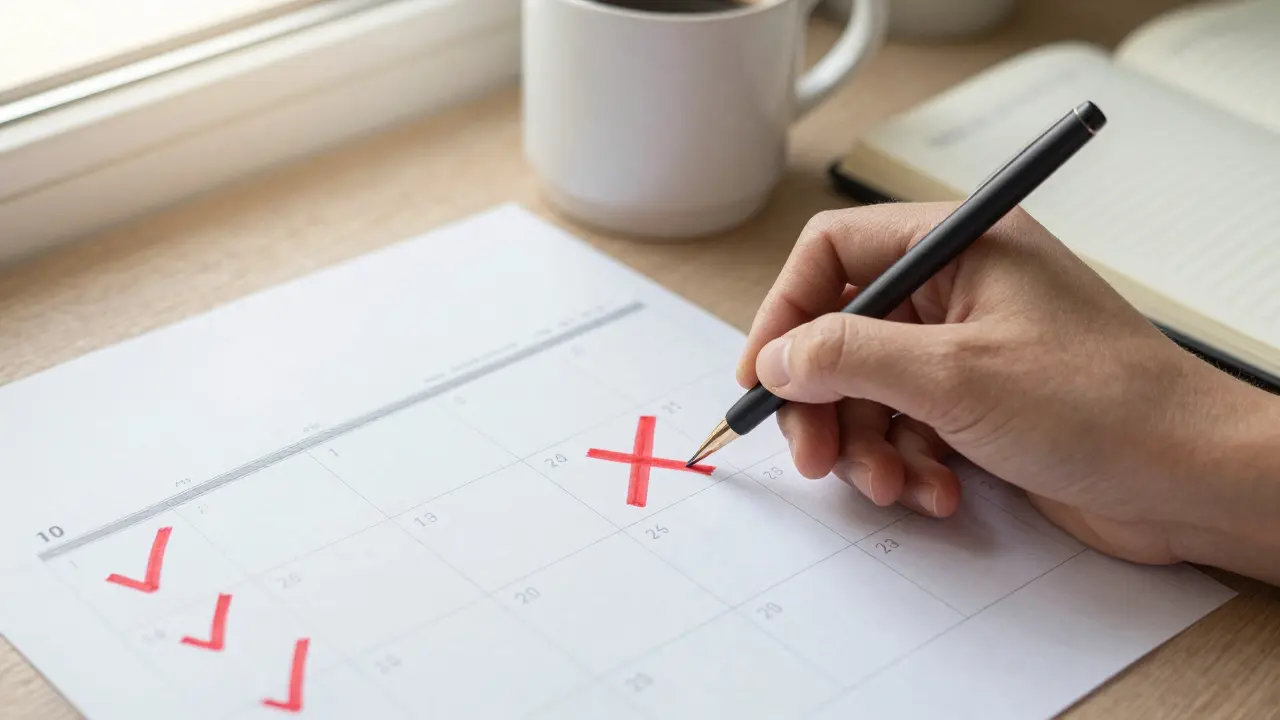
- Track it visually: A paper calendar with a red X, a sticker on your mirror, or a simple checklist.
- Give yourself an instant reward: A sip of coffee, a 30-second dance, a deep breath. Something physical and sensory.
- Never skip two days in a row. If you miss one, reset the streak-but don’t quit.
It’s not about perfection. It’s about rhythm. Your brain doesn’t care if you learn 5 minutes or 50. It just wants to know: "Can I count on this?"
Why This Beats Traditional Motivation
Most learning systems rely on motivation: "You should learn this because it’s important." But motivation fades. It’s unreliable.
Micro-rewards and streaks rely on ritual. Rituals don’t need inspiration. They need repetition. You don’t need to feel like learning. You just need to open the app. That’s it.
Think of brushing your teeth. You don’t need a motivational speech to do it. You do it because it’s part of your routine. That’s what streaks do for learning. They turn effort into habit.
Common Mistakes (And How to Avoid Them)
People try to gamify learning and end up making it worse. Here’s what goes wrong-and how to fix it:
- Mistake: Using big rewards (e.g., "I’ll buy myself a new book after 30 days"). Fix: Rewards should be immediate and tiny. Big rewards create pressure, not habit.
- Mistake: Tracking too many things at once. Fix: Focus on one habit. Master it before adding another.
- Mistake: Getting upset when you break a streak. Fix: Treat missed days like weather-no judgment. Just restart.
- Mistake: Relying on apps alone. Fix: Pair digital streaks with physical cues (e.g., leave your notebook on your coffee table).
Real People, Real Results
Jamal, 28, wanted to learn Spanish. He tried apps, tutors, YouTube. Nothing stuck. Then he downloaded a simple streak tracker. Every day, he answered three questions. No audio. No video. Just text. He got a green dot. That was it.
After 67 days, he surprised himself by ordering coffee in Spanish at a local café. "I didn’t even think about it," he said. "I just did it because I didn’t want to break the streak."
Same with Priya, 34, learning data analysis. She used a spreadsheet with colored cells. One cell per day. No fancy stats. Just color. After 92 days, she landed a promotion. "It wasn’t the skills," she told us. "It was the fact that I showed up every day. That’s what built my confidence."
What Happens When You Stop
Streaks aren’t forever. And they shouldn’t be. The goal isn’t to live in a world of green dots forever. The goal is to build a habit so strong, you don’t need the streak anymore.
After 6 months, Jamal stopped tracking. He still practices daily. Not because of a dot. Because he likes it. Because it’s part of who he is now.
That’s the magic. Micro-rewards and streaks are training wheels. They help you ride before you realize you don’t need them anymore.
Start Today-No App Required
You don’t need a fancy tool. You don’t need a subscription. You just need to pick one tiny thing and do it every day.
Open your notes app. Type: "Learned today: [one thing]." That’s your reward. That’s your streak.
Do it for 7 days. Then 14. Then 30.
You’ll be surprised how much you learn. And how little effort it takes.
Do micro-rewards really work for adults, or just kids?
They work even better for adults. Kids respond to external rewards like candy or stickers. Adults respond to subtle, self-directed signals-like a streak counter or a quiet sense of accomplishment. Adults are more motivated by autonomy and consistency than by flashy prizes. That’s why simple, invisible rewards like daily checkmarks or small animations are so effective for adult learners.
Can I use streaks for non-digital learning, like reading or journaling?
Absolutely. Streaks work best when they’re visible and personal. Use a paper calendar and mark each day with a pen. Put a sticky note on your mirror. Record your streak in a notebook. The key isn’t the tool-it’s the ritual. Seeing your progress every day builds momentum, whether you’re using an app or a pencil.
What if I miss a day? Should I start over?
No. Don’t restart. Reset. The goal isn’t perfection-it’s persistence. Missing a day doesn’t erase your progress. It just means you’re human. The best systems don’t punish breaks. They say: "You’ve done 12 days. Want to make it 13?" That gentle nudge keeps you going without guilt. Your streak is a tool, not a test.
Are there any downsides to using streaks?
Yes-if you treat them like obligations. Streaks can backfire if you feel anxious about breaking them, or if you start skipping meals, sleep, or real life to keep them going. That’s not learning-that’s performance. Keep it light. If a streak feels stressful, turn it off for a week. The habit will still be there when you come back.
How long does it take for a streak to become a habit?
There’s no fixed timeline. The old "21-day" myth is outdated. Research shows it varies from 18 to 254 days depending on the behavior and the person. But most people notice a shift after 30 days of consistent daily action. That’s when the behavior starts feeling automatic. The streak isn’t the finish line-it’s the path.
Do I need an app to use streaks and micro-rewards?
No. Apps make tracking easier, but they’re not required. Many people build better habits using paper, sticky notes, or even just a mental note. The real power isn’t in the tool-it’s in the daily action. A single checkmark on a calendar is just as powerful as a glowing badge.

Comments (8)
VIRENDER KAUL February 24 2026
The premise here is fundamentally flawed. Micro-rewards and streaks are not habit formation-they are behavioral conditioning. You're not building autonomy, you're building dependency on external validation. The brain doesn't need dopamine hits to form habits; it needs meaning. When you reduce learning to a checklist, you strip away intrinsic motivation and replace it with a Skinner box. This works for gamified apps, but it fails catastrophically in domains requiring critical thinking, creativity, or long-term synthesis. I've seen students who could track 100-day streaks in vocabulary apps but couldn't construct a coherent sentence in context. The system rewards compliance, not competence.
Mbuyiselwa Cindi February 26 2026
I love this. As someone who’s tried everything from flashcards to tutors, the streak method is the only thing that stuck. I started with just 5 minutes of Afrikaans daily using a notebook and a red pen. No app. Just a box I checked. After 37 days, I caught myself thinking in simple sentences without trying. It wasn’t about the streak-it was about the quiet rhythm. And when I missed a day? I just marked it with a little smile. No guilt. Just forward. This isn’t gamification. It’s gentle persistence. Thank you for saying this so clearly.
Krzysztof Lasocki February 26 2026
LMAO at the guy who thinks this is ‘conditioning.’ Bro, your brain is a rat in a maze. We all are. The difference is, this time, the rat gets to choose the maze. And it’s not candy-it’s a damn coffee sip or a 10-second dance. You think adults don’t respond to dopamine? Try telling your boss you’re ‘just doing your job’ while your calendar glows green. You’ll see how fast your cortisol drops. This isn’t for kids. It’s for overworked adults who’ve been told ‘just be disciplined’ for the last 20 years. Meanwhile, I’m over here learning Rust because I got a star. And I didn’t even know I liked it until I stopped asking why.
Henry Kelley February 27 2026
Y’all are overthinking this. I tried the streak thing with journaling. Just one line a day. ‘Learned today: ___.’ No app. Just my phone notes. Missed two days in a row. Didn’t care. Came back. Did it for 4 months. Now I write 3–4 lines without thinking. It’s automatic. Like brushing teeth. No guilt. No pressure. Just… done. The magic isn’t in the star. It’s in the ‘I showed up.’ That’s the real reward. And yeah, I still do it even after the streak ended. Because it feels good. Not because I’m addicted. Because I’m me now.
Victoria Kingsbury February 28 2026
There’s a neurocognitive mechanism here that’s being grossly oversimplified. The dopamine release from micro-rewards is not merely about pleasure-it’s about prediction error minimization. The brain learns to anticipate the reward, and that anticipation becomes a reinforcing loop independent of the reward’s actual value. This is why the visual cue (a checkmark, a dot, a tree) is more potent than the reward itself. The cue becomes a conditioned stimulus that activates the ventral striatum even in the absence of the reward. That’s why you don’t need to ‘feel like it’-your neural architecture has been rewired to treat the behavior as a homeostatic imperative. Also, the 21-day myth is indeed outdated. The median habit formation time across 96 studies is 66 days. But for low-effort, high-frequency behaviors? 30–45 days. That’s the sweet spot. And yes, physical anchors like sticky notes outperform digital ones because they increase situational binding. Your environment becomes the cue. That’s classical conditioning with emotional valence. And it works.
Tonya Trottman February 28 2026
First off, ‘micro-rewards’ is a buzzword salad. Second, you say ‘no guilt’-but then you say ‘don’t skip two days in a row.’ That’s not a nudge. That’s a threat wrapped in glitter. And you call it ‘gentle’? Please. You’re just replacing one form of self-punishment with another. Also, ‘I’m the kind of person who learns every day’? That’s not identity-it’s performative narcissism. And the coffee sip? The dance? That’s not a reward. That’s a ritualized tic. You’re not building habits. You’re building OCD with a mobile app. And don’t get me started on the ‘21-day myth’ rebuttal. The original study never said 21 days. It said 18–254. You’re cherry-picking the middle to make your case. Stop pretending you’re science. You’re just selling a vibe.
Rocky Wyatt March 1 2026
Everyone here is acting like this is some revolutionary breakthrough. Newsflash: humans have used streaks for centuries. Monks kept prayer logs. Sailors marked days at sea. Soldiers tracked drills. The only difference now is we have phones. This isn’t psychology. It’s anthropology. And if you think dopamine is the secret sauce, you’ve never been depressed. When you’re numb, a green dot doesn’t help. It mocks you. The real trick isn’t the streak-it’s the safety. You can’t build a habit if you’re terrified of failing. That’s why this works for some and fails for others. The system doesn’t account for trauma, anxiety, or burnout. It assumes you’re already stable. You’re not. And if you are? Good for you. But don’t act like this is universal. It’s not. It’s a privilege.
Santhosh Santhosh March 3 2026
I have been thinking about this for weeks. Not because I’m trying to learn something, but because I’m trying to understand why something so simple works so well. I used to think habits were about willpower. Now I think they’re about rhythm. Like breathing. You don’t decide to breathe every second. You just do it. That’s what these streaks do-they turn learning into a breath. Not a chore. Not a goal. A rhythm. I tried it with reading. One page. Every day. Sometimes I read two. Sometimes I read one sentence. But I always did it. After 47 days, I found myself picking up a book during my lunch break without thinking. Not because I wanted to. Not because I was motivated. But because it was time. It was my rhythm. And I realized-I didn’t need to force it. I just needed to show up. The streak wasn’t the reward. The quietness after the page turned was. That’s the thing no one talks about. It’s not about the dot. It’s about the silence that follows. The peace of knowing you kept your promise to yourself. Even if it was small. Even if it was messy. Even if you cried while doing it. You showed up. And that’s enough.