

Going through an online course can feel lonely. You watch the videos, complete the assignments, and even join the forums-but still, it’s hard to know if anyone else is really feeling the same way. That’s where community events and meetups for course participants come in. They turn passive learning into active connection.
Why Course Communities Need More Than Forums
Online forums are great for asking questions, but they’re not the same as sitting across from someone who just finished the same module you did. When you’re stuck on a Python script or confused about a marketing funnel, a chat message might get you an answer. But a real conversation? That gives you context, confidence, and sometimes, a new friend.Studies from the University of Edinburgh show that learners who attend even one in-person or live virtual meetup during a course are 40% more likely to complete it. Why? Because accountability isn’t just about deadlines-it’s about people.
Think of it this way: you wouldn’t train for a marathon alone in your garage if you had the option to join a running group. Learning is the same. Meetups give you a space to say, "I got stuck here too," and hear, "Here’s how I got through it."
What Kind of Events Actually Work?
Not all community events are created equal. The ones that stick have a few things in common.- Small groups-no more than 12 people. Big gatherings turn into noise. Small groups let everyone speak.
- Structured but casual-a quick round of introductions, then a focused topic: "Show me your project," "What surprised you most?" or "Where are you stuck?"
- Hosted by peers-not instructors. When a fellow learner leads, it feels less like class and more like hanging out.
- Real outcomes-people leave with something: a code review, a feedback loop on their portfolio, or just a WhatsApp group to keep talking.
One course in data analysis in Glasgow runs a monthly "Project Night." Participants bring their datasets and spend 90 minutes helping each other clean, visualize, and explain their findings. No slides. No lectures. Just real work, real feedback. Ten people showed up last month. Five of them started freelance gigs after.
How to Find or Start a Meetup
If your course doesn’t have events yet, don’t wait. You can start one. Here’s how:- Check your course platform-look for a "Community" or "Events" tab. Many platforms now offer built-in calendar tools.
- Look on Meetup.com-search for your course name + "meetup" or "study group." You’d be surprised how many exist already.
- Use LinkedIn or Discord-join the course’s official group. Post: "Anyone up for a virtual coffee next week to talk about Module 3?"
- Start small-invite five people who’ve been active in the forum. Suggest a 45-minute Zoom call on a Tuesday evening. Keep it simple.
- Repeat it-even if only two people show up the first time, do it again next month. Momentum builds slowly.
One student in Leeds started a weekly "Code Pairing" group for a web development course. She posted on Reddit, sent a message to the top 10 commenters in the forum, and set up a recurring Zoom link. Three months later, 18 people were showing up. Two of them now work at the same startup.
Virtual vs. In-Person: Which Is Better?
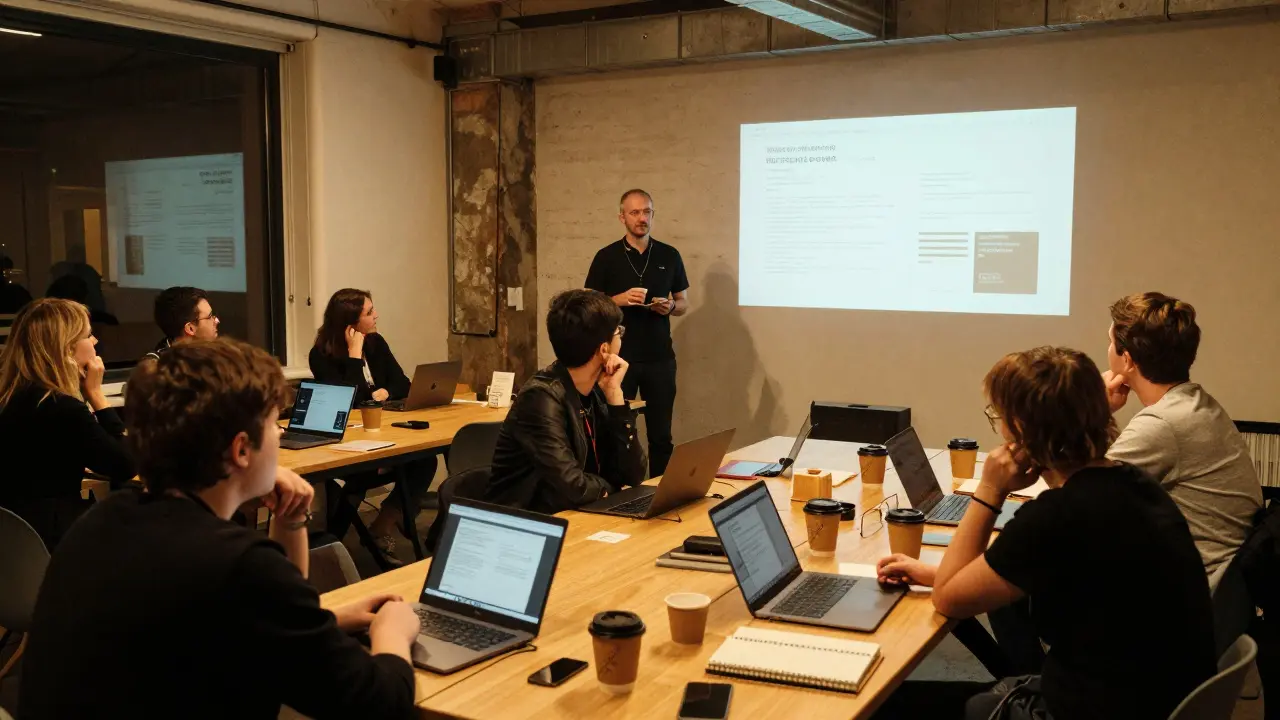
There’s no single answer. It depends on your life.If you’re in Edinburgh and have a 9-to-5, a 7 p.m. Zoom call works better than driving to Glasgow. If you’re in a city with a big student population-like Manchester or Bristol-meeting in person at a co-working space or café can be electric. The energy of being in the same room changes how people open up.
Hybrid is the sweet spot. Many courses now offer both: a monthly in-person meetup in major cities and a weekly Zoom call for remote learners. You don’t need to choose one. Show up to what fits your week.
Don’t let distance stop you. A student in Inverness joined a virtual writing group for a content marketing course. She never met anyone in person-but she got feedback on her blog drafts every Thursday. Two of those drafts got published on industry sites.
What to Say When You Show Up
If you’re nervous about attending your first meetup, here’s what works:- Start with your story-"I took this course because I wanted to switch from retail to digital marketing. I’m still figuring out SEO."
- Ask for help-"I’m stuck on the Google Analytics module. Anyone else find the conversion paths confusing?"
- Offer help-"I aced the quiz on email funnels. Happy to walk someone through it if you’re stuck."
- Follow up-"Can I add you on LinkedIn? I’d love to keep in touch."
People are just as nervous as you are. Most of them are hoping someone else will say something first. Your words might be the one that breaks the ice.
Why This Matters Beyond the Course
These connections don’t end when the course does. The person you helped debug their portfolio might refer you to a job. The friend you made in the Slack group might start a podcast with you. The study buddy who gave you feedback on your presentation? They might be your next colleague.Employers don’t just hire skills. They hire people who can collaborate, communicate, and solve problems with others. A course community isn’t just support-it’s your first professional network.
One graduate from a UX design course in Dundee told me: "I didn’t get my job because of my portfolio. I got it because the person who interviewed me remembered me from the design critique meetup last year. He said, ‘You asked good questions. I knew you’d listen.’"

What to Do If No Events Exist
If your course has zero community events, here’s your action plan:- Send a polite message to the course team: "I’d love to see a monthly peer meetup. Would you be open to helping us organize one?"
- Start your own. Use a free tool like Google Calendar or Notion to create a simple event page.
- Post in the course forum: "I’m organizing a virtual coffee chat this Friday at 7 p.m. If you’re interested, reply and I’ll send the link."
- Invite the top 5 most active learners. Don’t wait for everyone.
- After the first one, send a quick thank-you note and ask: "What should we do next?"
You don’t need permission to build community. You just need to start.
Real Impact, Real Stories
A woman in Aberdeen took a course on digital storytelling. She was shy, working full-time, and didn’t know anyone else in the class. She joined a weekly Zoom call for learners who wanted to practice their narratives. After three months, she recorded a podcast episode based on her course project. It got 5,000 downloads. She was invited to speak at a local library event.Another guy in Cardiff completed a project management course. He joined a meetup where participants reviewed each other’s Gantt charts. He got feedback that helped him land a contract role at a tech startup. He still meets with three of those people every month.
These aren’t rare cases. They’re the result of showing up.
Are course meetups worth my time if I’m busy?
Yes-if you treat them like a 90-minute investment, not an extra chore. Even one meetup a month can give you clarity, motivation, and connections that save you hours of guesswork later. You’ll learn faster, feel less alone, and often land opportunities you wouldn’t have found on your own.
What if I’m shy or introverted?
You don’t need to be the loudest person in the room. Most introverts thrive in small, structured settings. Just show up, listen, and say one thing. Maybe it’s, "That idea reminded me of my project." That’s enough. People notice quiet, thoughtful contributions more than you think.
Can I join a meetup from another course?
Absolutely. Many communities welcome learners from similar fields-even if they’re from different courses. A data visualization meetup might include people from statistics, marketing, and design courses. The skill overlaps more than you’d expect. Don’t limit yourself to your own course group.
Do I have to present my work at a meetup?
No. Most meetups are low-pressure. You can just listen, ask questions, or share a small win. "I finally got my spreadsheet working" counts. You don’t need to be polished. The goal is progress, not perfection.
What if no one shows up to my meetup?
Try again. The first one often has low turnout. People are busy. Maybe they didn’t see your message. Send a reminder, tweak the time, or make it even simpler-like a 30-minute coffee chat. One person showing up is still a win. That’s your first community member.
