
Running an NFT community on Discord isn’t just about posting updates or announcing drops. It’s about building a safe, active, and trusting space where people feel valued-not just as holders, but as members. Too many NFT projects fail not because of weak tech or bad art, but because their Discord server turns into a spam-filled ghost town or a toxic echo chamber. The difference between a thriving community and a collapsed one comes down to three things: safety, moderation, and real engagement.
Start with Structure: Your Server Is Your Foundation
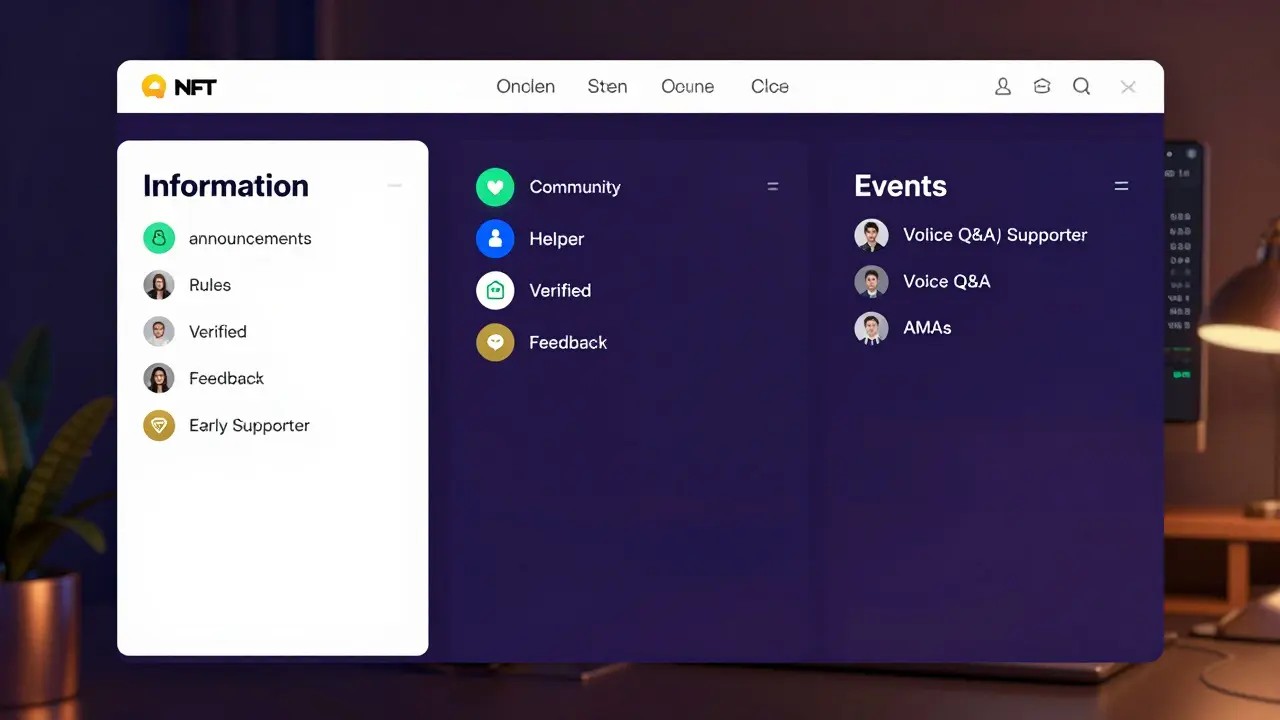
Before you even invite your first member, your server needs structure. A messy server with 50 random channels and no rules feels chaotic. People leave. Or worse-they stay but stop talking.Organize your server into clear categories. Use Text Channels for announcements, support, general chat, and feedback. Use Voice Channels for live Q&As, AMAs, or just casual hangouts. Group them under labeled categories like "Information," "Community," and "Events."
Assign roles with clear permissions. Don’t just have "Member" and "Admin." Add roles like:
- Mod - Can ban, mute, delete
- Helper - Can answer basic questions, guide new users
- Early Supporter - Visual badge for long-time members
- Verified - Only after completing KYC or holding a specific NFT
Color-code these roles. A green "Helper" tag is easier to spot than a gray one. Use role mentions like @Helper to tag people when you need help answering questions. This isn’t fluff-it’s efficiency. You’re not just organizing channels; you’re building a team.
Lock Down Safety: Stop Spam Before It Starts
NFT Discord servers are magnets for bots. They flood your chat with fake links, scam links, and "free NFT" traps. If you don’t act fast, your server becomes unusable.Start with two-factor authentication on your admin account. No exceptions. Then, install a moderation bot like Dyno or Carl-bot. Set them to:
- Auto-ban accounts created less than 24 hours ago
- Block links from unverified users
- Scan for known scam domains
- Auto-delete messages with more than 5 mentions
Enable Slow Mode on your main chat channels. 5-10 seconds per message stops spam floods without killing conversation. Use Verification to require users to solve a CAPTCHA or react to a message before they can speak. This filters out 90% of bots.
And never ignore reports. Set up a private #report channel where members can send screenshots of bad behavior. Assign a moderator to check it every hour. If someone gets reported three times in a week, ban them. No warnings. No second chances. Trust is fragile.
Build a Code of Conduct-Then Enforce It
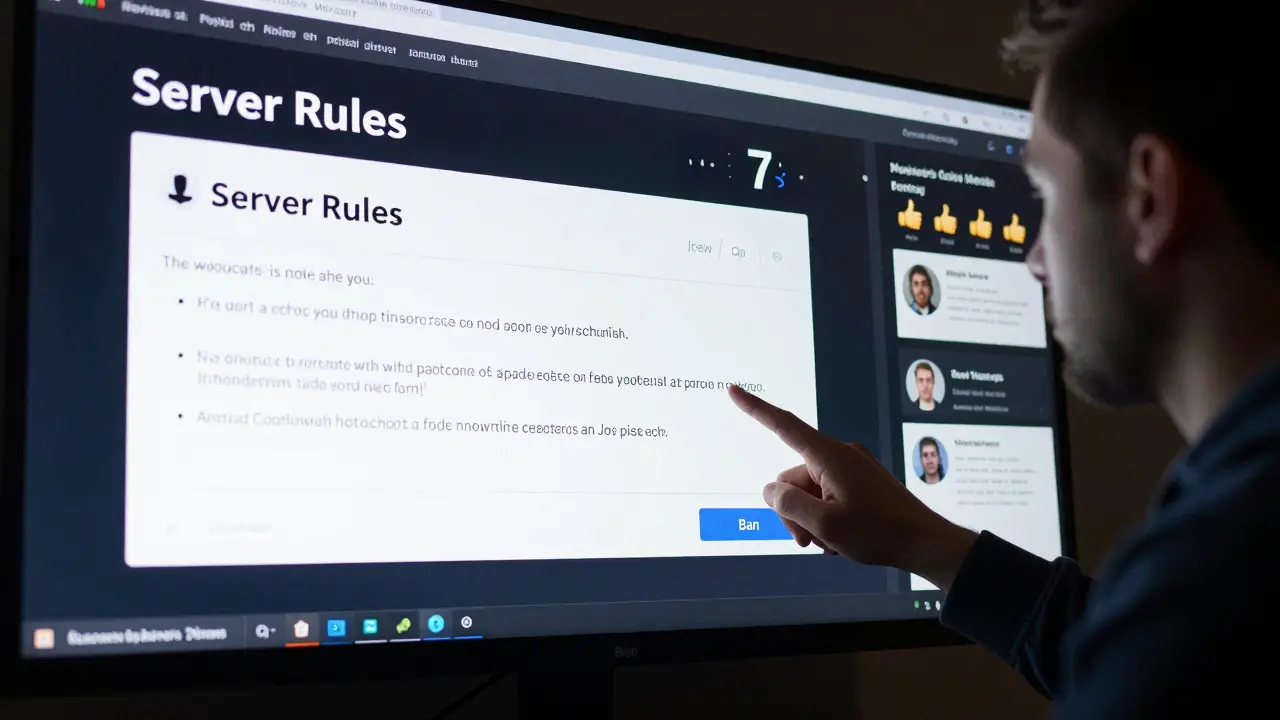
You can’t have a healthy community without rules. And rules aren’t just "Don’t be rude." They need to be specific.Create a pinned message called "Server Rules" with these points:
- No scams, phishing, or fake links
- No spamming, excessive self-promotion, or DMing strangers
- No hate speech, harassment, or personal attacks
- No sharing of private keys or wallet details
- Respect all members-no gatekeeping, elitism, or "real NFTs only" talk
Make it visible. Pin it. Link it in your welcome message. Every new member should see it before they type a word.
Enforcement is where most projects fail. If a member breaks a rule once, warn them privately. If they do it again, mute them. Three strikes? Ban. Don’t argue. Don’t explain. Just act. Consistency builds trust. If people see you let things slide, they’ll test you.
Engagement Isn’t a Task-It’s a Habit
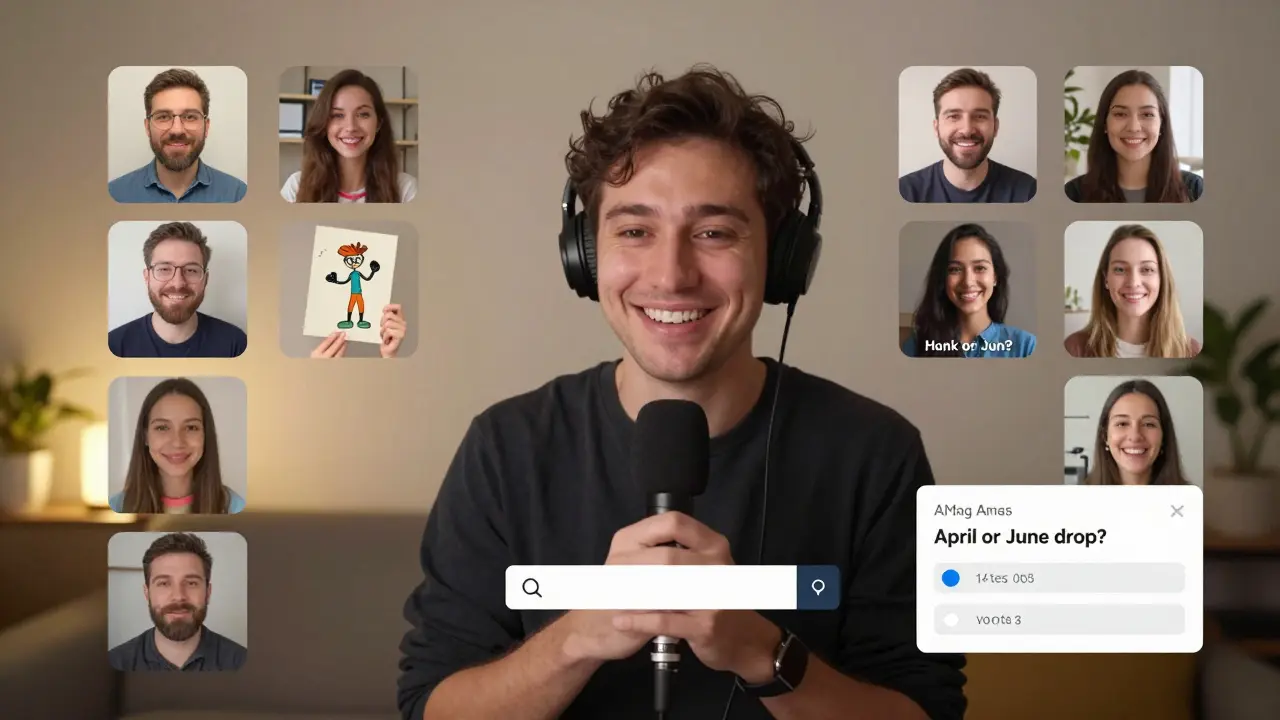
People don’t join your Discord to read announcements. They join because they want to feel part of something. So stop treating engagement like a checklist.Host a weekly AMA with your team. Not a scripted Q&A. A real, unfiltered chat. Let the lead dev answer questions about the roadmap. Let the artist explain how they made the 10,000th NFT. Let someone say, "I messed up last month-we’re fixing it."
Run monthly giveaways for active members-not just for holding the NFT, but for helping others. Give away merch, exclusive art, or early access. Make it fun. Make it fair.
Use reactions to vote on next steps. "Should we drop the next collection in April or June?" Let members pick. They’ll feel heard. And they’ll stick around.
Tag your most active members. Say their name. Thank them. "Thanks, @Alex, for helping 12 new members this week." Public recognition is free. It’s powerful.
Listen-Really Listen
You don’t need a survey. You just need to pay attention.Create a #feedback channel. Ask: "What’s one thing we’re doing wrong?" Don’t delete negative posts. Answer them. "You’re right-we should explain the mint process better. Here’s a guide."
Track what people talk about. If 20 people ask about wallet setup, make a pinned guide. If no one talks about the roadmap, maybe it’s too vague. If people keep saying "I don’t know who to trust," you need more transparency.
Community managers who only post updates are just broadcasters. The ones who listen? They build loyalty.
Don’t Try to Do It All Alone
One person can’t moderate 10,000 members. You need a team.Recruit moderators from your most active members. Not your friends. Not your devs. The people who help others, stay calm under pressure, and reply with kindness. Give them a custom role, a thank-you message, and clear boundaries: "You can mute and warn, but not ban. That’s mine."
Train them. Show them how to use the bots. Show them how to respond to angry users. Role-play a conflict. "Someone says your NFT is worthless. How do you reply?" Practice makes confidence.
And yes-your project lead should show up. Not every day. But once a month. A 5-minute voice chat from the founder says more than 100 pinned posts.
When Things Go Wrong
Even the best servers have crises. A rug pull rumor. A hacked account. A viral post calling your team scammers.Don’t panic. Don’t delete everything. Don’t go silent.
Go public. In your #announcements channel, post: "We’re aware of the rumors. Here’s what’s true, what’s not, and what we’re doing." Link to your official site. Share a screenshot of your wallet. Show your team’s names and faces.
Then, lock down the server. Disable new joins for 24 hours. Let the dust settle. Reopen with a new rule: "No rumors. Only verified info."
Trust isn’t built in a week. It’s rebuilt one honest post at a time.
What Keeps a Community Alive?
NFTs come and go. But communities? They last. The projects that survive are the ones that treat Discord like a home-not a billboard.People don’t remember your art. They remember how you made them feel. Did you answer their question? Did you listen when they complained? Did you celebrate them when they helped someone else?
That’s the real value of your NFT community. Not the image on the blockchain. The people behind it.
How do I stop bots from joining my NFT Discord server?
Use a moderation bot like Dyno or Carl-bot to auto-ban new accounts under 24 hours old, block links from unverified users, and enable CAPTCHA verification before speaking. Combine this with slow mode and role-based permissions to limit spam. Never skip verification-90% of bots are stopped at this step.
How many moderators do I need for a 5,000-member NFT Discord?
For 5,000 members, aim for 3-5 active moderators. One should be on duty during peak hours (evenings UTC), and another should monitor reports. Add a backup team of 2-3 volunteers who step in during emergencies. Quality matters more than quantity-choose calm, consistent members over just active ones.
Should I use a welcome message in my NFT Discord server?
Yes. A custom welcome message with server rules, pinned links, and a role assignment step reduces confusion and cuts support tickets by 40%. Use bots like MEE6 or Carl-bot to auto-send it. Include a quick link to your FAQ and a reminder to read the rules. Make it friendly-not robotic.
How often should I host events in my NFT Discord community?
Once a week is ideal. A 15-minute voice AMA, a poll for the next drop, or a simple "show your NFT" thread keeps energy high. Don’t overdo it-quality beats frequency. One well-run event per week builds more trust than five rushed ones.
What’s the biggest mistake NFT projects make in Discord?
Waiting too long to act. Many projects let spam and toxicity grow before doing anything. By then, the community is damaged. The best servers act fast: rules up on day one, bots installed before launch, and moderators hired before the first 100 members join. Prevention is cheaper than repair.

Comments (8)
Teja kumar Baliga February 24 2026
Love this breakdown. Real talk-most NFT projects treat Discord like a billboard, not a living room. I’ve seen communities crumble because no one bothered to train mods or set up verification. In India, we’ve got tons of new crypto users joining servers with zero context. A simple welcome message and a pinned FAQ cuts down the noise by half. Just make sure it’s in plain language, not jargon. People aren’t dumb-they’re just new.
Zelda Breach February 24 2026
Stop pretending ‘respect all members’ means tolerating people who don’t even know what a wallet is. If someone can’t figure out how to join a voice channel after a 30-second walkthrough, they don’t belong here. This post reads like a kindergarten syllabus for degens who think ‘community’ means free handouts.
Nicholas Zeitler February 25 2026
Finally, someone gets it! Structure isn’t optional-it’s survival. I’ve managed three NFT servers, and every time we skipped role-color coding or skipped slow mode? Chaos. Absolute chaos. People start spamming because they can. Then bots flood in. Then real members leave. I can’t tell you how many times I’ve had to rebuild from scratch because the owner thought ‘we’ll fix it later.’ Later never comes. Do it right on day one. Or don’t bother.
lucia burton February 26 2026
The paradigm shift here is monumental-moving from transactional engagement to relational stewardship. When you institutionalize recognition through public tagging and structured feedback loops, you’re not just managing a server-you’re architecting a social contract. The psychological anchoring effect of consistent, visible validation creates neurochemical loyalty loops that outlast market cycles. This isn’t moderation-it’s behavioral economics in practice, and it’s the only sustainable model in Web3’s attention economy.
k arnold February 28 2026
Wow. A 12-page essay on how to not get scammed. Groundbreaking. Next up: ‘How to Use a Fork’.
Tiffany Ho February 28 2026
This is so helpful thank you I’ve been trying to run a small server and I was so overwhelmed I just stopped posting I think I’ll try the weekly AMA and the feedback channel I feel like this might actually work
Alan Crierie March 2 2026
One thing I’d add: never underestimate the power of a simple ‘thank you’. I had a member in my server who helped 20+ people set up their wallets, never asked for anything in return. I sent them a DM and pinned a public thanks in #general. They’ve been our most active mod for a year now. Kindness isn’t soft-it’s strategic. And yes, emojis are optional, but a 🙏 goes a long way.
michael Melanson March 2 2026
Agreed with the structure part. The biggest thing I see missing? A ‘no self-promo’ rule that actually gets enforced. I’ve seen projects let influencers spam their own links because ‘they’re big’. That’s not community. That’s a billboard with a Discord logo.