
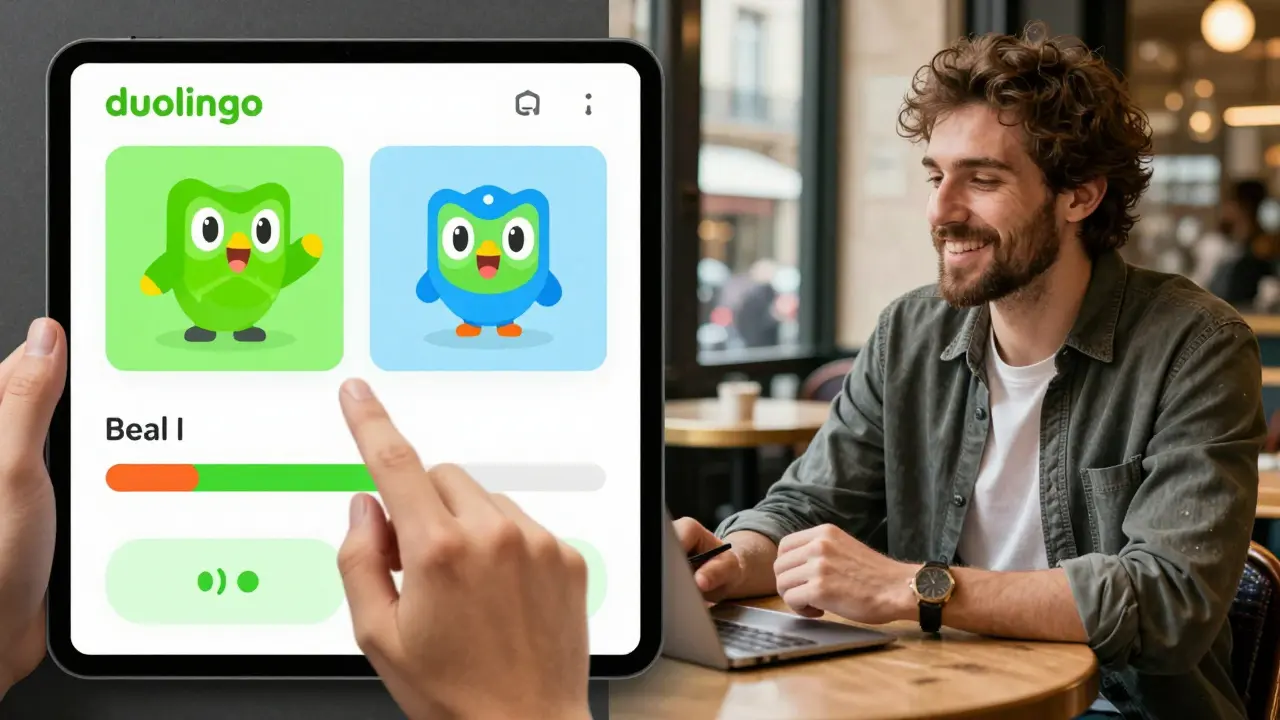
Learning a new language used to mean buying heavy textbooks, sitting in crowded classrooms, or hiring expensive tutors. Now, all you need is a phone and 10 minutes a day. But with over 100 language apps on the market, how do you pick the right one? Not all apps are made equal. Some feel like games with no real progress. Others give you grammar drills that leave you confused. The best ones? They make you actually speak, remember what you learn, and keep coming back.
What makes a language app actually work?
It’s not about flashy animations or cute animals. Real language learning apps do three things well: they get you speaking early, they use spaced repetition to lock words into your memory, and they adapt to your mistakes. If an app makes you memorize lists of vocabulary without context, it’s wasting your time. If it forces you to translate sentences in your head instead of thinking in the target language, you’ll never speak fluently.
Studies from the University of Edinburgh’s Language Learning Lab show that learners who use apps with real conversation practice improve their speaking skills 40% faster than those who only do flashcards. The key is interaction - not just repetition. Apps that connect you with native speakers, or simulate real conversations, create stronger neural pathways. That’s why some apps cost more - they’re not selling lessons. They’re selling practice.
Duolingo: The Free Starter That Works - Up to a Point
Duolingo is the most downloaded language app in the world. It’s free, fun, and feels like a game. You earn streaks, unlock levels, and get rewarded with virtual coins. It’s perfect for building daily habits. But here’s the catch: Duolingo doesn’t teach you how to hold a conversation. It teaches you how to pass a quiz.
Most lessons are multiple-choice or fill-in-the-blank. You’ll learn that “I eat an apple” is correct, but you won’t learn how to order coffee in Paris or ask for directions in Tokyo. The app’s speech recognition is decent, but it rarely pushes you beyond scripted phrases. It’s great for beginners who want to try a language before committing. But if you’re serious about speaking, you’ll hit a wall around A2 level.
Still, it’s the best free option. Over 500 million people have used it. And if you’re learning Spanish, French, or German, the content is solid. For less common languages like Welsh or Swahili, Duolingo might be your only digital option.
Babbel: The Practical Choice for Real Conversations
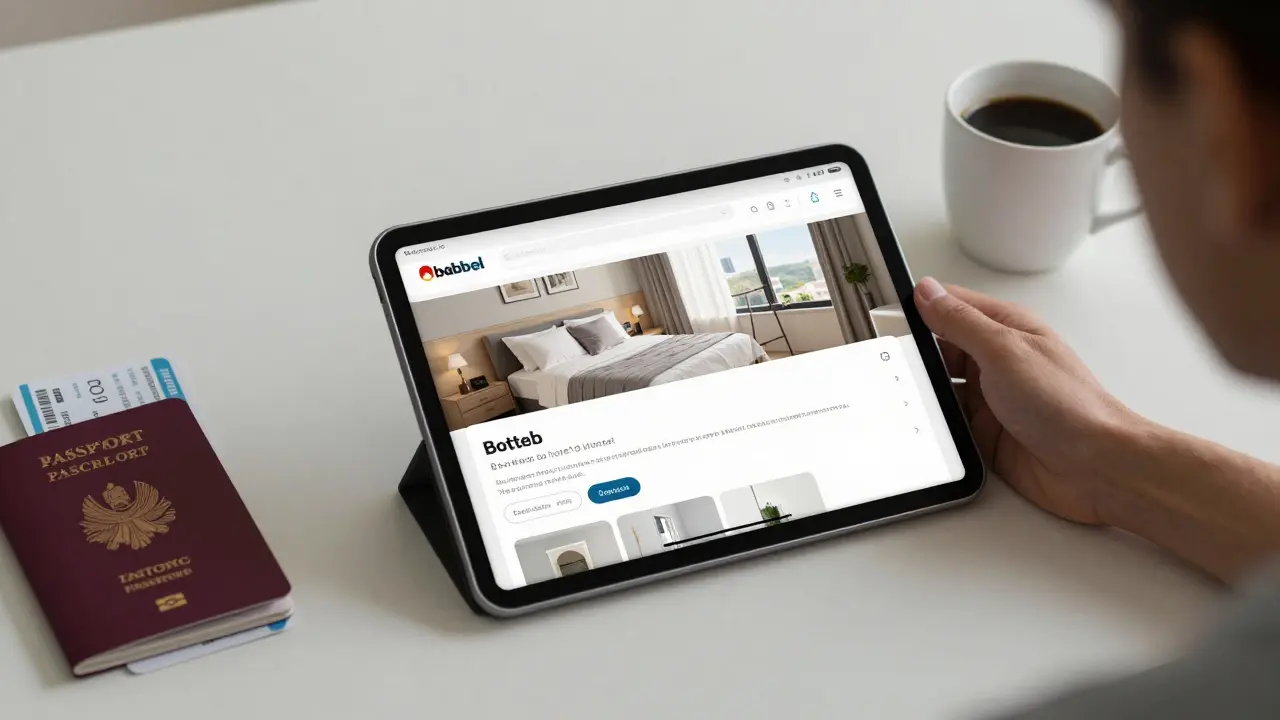
Babbel doesn’t try to be cute. It’s clean, focused, and built by language teachers. Each lesson is a mini-conversation - like booking a hotel room or discussing your hobbies. You learn phrases you’ll actually use, not random vocabulary.
What sets Babbel apart is its grammar integration. Instead of dumping rules on you, it explains them in context. If you’re learning how to use past tense in Spanish, you’ll do it while talking about last weekend’s trip. That’s how your brain remembers it.
It’s not free. Monthly subscriptions cost around $13, but you get structured lessons that build on each other. There’s no gamification overload. No streaks to chase. Just clear progress. If you want to travel, work, or connect with family in another language, Babbel gives you the tools to do it. It’s the most realistic app for adults who want results, not points.
Rosetta Stone: The Immersion Experiment
Rosetta Stone has been around since the 90s. It still uses the same method: no translations. You see a picture of a dog, hear “perro,” and you figure it out. The idea is immersion - like how kids learn their first language.
It works… if you’re patient. The lack of explanations can be frustrating. You might spend 10 minutes guessing what “el gato” means because the app won’t tell you. But once it clicks, the learning sticks. Many users report that after six months, they start thinking in the target language without translating.
It’s expensive - $20+ per month - and the interface feels dated. But the speech recognition is the most advanced of any app. It listens to your pronunciation and gives detailed feedback. If you’re a visual learner who hates grammar charts and loves puzzles, Rosetta Stone is worth a try. Just don’t expect quick results.
Memrise: Learning Through Real People
Memrise is different because it uses videos of native speakers. Not actors. Real people - in their homes, on buses, in markets - saying phrases naturally. You hear how they actually talk, with pauses, slang, and accents.
The app combines spaced repetition with these real-life clips. You learn “I’m running late” not as a textbook line, but as a woman in Mexico City saying it while rushing to work. The brain remembers stories and faces better than words.
Memrise also has user-generated courses for niche languages like Icelandic or Tagalog. If you’re learning a language not offered by other apps, Memrise might be your only option. It’s free to start, but the full experience costs $9/month. For learners who want authenticity over polish, it’s unmatched.
Busuu: The Social Language Lab
Busuu is the only app that connects you with native speakers who correct your writing and speaking. You record yourself saying a sentence, and a native speaker from Argentina, Japan, or Poland gives you feedback. It’s like having a language exchange partner - but built into the app.
Lessons are structured like a university course: vocabulary, grammar, listening, writing, and speaking. You even get a certificate when you finish a level. That’s useful if you’re studying for work or school.
It’s not perfect. Feedback can take days. Some corrections are vague. But the human element makes a difference. People who use Busuu consistently report higher confidence in real conversations. The premium plan costs $12/month. If you want to speak, not just pass tests, this is the app that gives you real-world practice.
Which app is right for you?
Here’s how to pick:
- If you want to try a language for free and build a habit → Duolingo
- If you want to travel or speak confidently in 6 months → Babbel
- If you love visual learning and don’t mind slow progress → Rosetta Stone
- If you want to hear real accents and slang → Memrise
- If you want feedback from native speakers → Busuu
Don’t just pick one and stick with it. Try two for a week each. See which one makes you want to open the app. That’s the sign of a good fit. Most people quit because the app feels like a chore. The right one feels like a conversation.

What’s missing from most apps?
None of these apps teach you cultural context. You can learn how to say “thank you” in Japanese, but not when to bow, when to stay silent, or how to refuse an offer without offending someone. That’s why pairing an app with a YouTube channel or podcast helps. Watch Japanese vloggers. Listen to French news on slow speed. Read simple stories in your target language.
Apps are tools. Not magic. The real breakthrough comes when you start using the language outside the app. Text a friend. Label your fridge in Spanish. Think out loud in Italian. That’s when fluency happens.
2026 update: What’s new?
This year, most apps added AI conversation partners. Babbel’s new AI tutor can simulate a job interview in German. Duolingo’s AI can chat with you about your weekend. These aren’t perfect - they sometimes give weird answers - but they’re getting better fast.
Also, offline mode is now standard. No more data worries when you’re on a train in Italy. And most apps now sync across devices. Start on your phone, finish on your tablet.
The biggest change? Personalization. Apps now track not just your mistakes, but your motivation. If you skip a week, they don’t nag. They ask: “Want to try a fun music lesson today?” That’s psychology working for you.
Final tip: Don’t chase perfection
You don’t need to learn 50 words a day. You need to use 5 words every day. One phrase. One sentence. One conversation. That’s how real fluency builds.
Choose an app that fits your life. Not your goals. If you only have 7 minutes before work, pick the one that loads fast and gives you one quick lesson. If you’re studying for a test, pick the one with grammar breakdowns. If you’re lonely and want to connect, pick the one with real people.
Language isn’t a subject. It’s a bridge. And the best app is the one that gets you across it - not the one with the most stars.
Are free language apps any good?
Yes - but only if you’re starting out or learning a common language like Spanish or French. Free apps like Duolingo and Memrise give you enough to build basic skills. But if you want to speak confidently, you’ll eventually need more than free lessons. Paid apps offer structured practice, real conversations, and feedback - things free apps usually skip.
How long does it take to become fluent with an app?
Fluency takes years - no app changes that. But you can reach conversational level in 6 to 12 months with daily use. That means holding a 10-minute chat, understanding the gist of a TV show, or ordering food without pointing. Apps help you get there faster, but only if you use them consistently and add real-life practice like listening to podcasts or talking to natives.
Can I learn a language with just one app?
You can learn a lot - but not everything. Most apps focus on speaking and listening. They’re weak on reading complex texts or writing essays. If you want full fluency, combine your app with a simple reader, a podcast, and maybe one weekly conversation with a tutor or language partner. One app is a great start. Two or three tools make you fluent.
Which app is best for beginners?
Duolingo is the easiest to start with. It’s friendly, free, and doesn’t overwhelm you. But if you want real progress, Babbel is better. It teaches you how to say things you’ll actually use, not just quiz answers. For absolute beginners, Babbel’s first lessons on greetings, ordering food, and asking questions give you immediate usefulness.
Do these apps work for kids?
Duolingo and Memrise work well for kids under 12 because they’re game-like. But older kids and teens benefit more from Babbel or Busuu, which teach grammar and real-life conversations. Apps alone won’t make a child fluent - they need interaction. Pair the app with watching cartoons in the target language or talking to a relative who speaks it.
Is it worth paying for a language app?
If you’re serious about speaking, yes. Free apps teach you vocabulary. Paid apps teach you how to use it. For $10-$15 a month, you get structured lessons, speaking practice, and feedback - things that save you months of trial and error. It’s cheaper than a tutor and more effective than a free app with no real progress.
What’s the most underrated language app?
Memrise. Most people overlook it because it doesn’t look as polished as Duolingo. But its use of real native speaker videos makes it the most authentic app for hearing how language is actually spoken. If you want to sound natural, not textbook-perfect, Memrise is the hidden gem.

Comments (8)
Rubina Jadhav January 11 2026
I tried Duolingo for a month and quit. It felt like playing a game where the goal was to collect coins, not learn Spanish.
Shivani Vaidya January 12 2026
I appreciate how you highlighted the difference between quiz-based learning and real conversation practice. As someone who learned French through Babbel and then practiced with native speakers on Tandem, I can confirm that structured lessons + human interaction is the only combo that works long-term. The grammar in context approach is silently genius.
Most apps treat language like a math problem. But it’s a living thing - it breathes in tone, pauses, and cultural nuance. That’s why Memrise’s real speaker videos are so powerful. You don’t just memorize ‘bonjour’ - you hear how a Parisian says it while rushing to catch the metro.
I also agree about cultural context being missing. I once said ‘I’m hungry’ to a Japanese host and they offered me food. I didn’t know that in Japan, saying you’re hungry in someone’s home is a subtle request for a meal. Apps don’t teach that. YouTube vloggers do.
And yes, personalization matters. My app noticed I skipped a week after my father passed away. Instead of nagging, it suggested a calming meditation in German. That’s empathy. That’s design that cares.
Fluency isn’t about volume. It’s about consistency. One sentence a day. One real interaction. That’s the bridge.
Raji viji January 12 2026
LMAO Duolingo is for people who think learning a language is like leveling up in Candy Crush. I used it for 3 months and could say ‘I eat an apple’ but couldn’t ask where the toilet was. Babbel? At least it doesn’t pretend you’re a pirate collecting treasure. But even Babbel is just fancy flashcards with a subscription model. Real fluency? You need immersion. Or a native spouse. Or both. Otherwise you’re just a walking grammar quiz with a phone.
And don’t get me started on Rosetta Stone. That thing is like being trapped in a 1998 Windows screensaver with a stubborn tutor who refuses to speak English. If you’re not a visual genius who enjoys guessing games, you’ll rage-quit by lesson 3.
Memrise? Okay, that one’s kinda cool. Real people saying real stuff? Yes. But half the videos are filmed in someone’s kitchen with a cat walking through frame. It’s authentic, sure. But also chaotic. And Busuu? Please. Waiting days for feedback from some random guy in Argentina who corrects your ‘hello’ with ‘you said ‘helo’ - typo? Cool. Thanks, captain obvious.
The truth? No app teaches you fluency. They teach you how to pass their tests. Real fluency happens when you’re stuck in a train station at 2am trying to ask for directions and your brain suddenly doesn’t translate - it just *thinks* in the language. That’s magic. And no algorithm can give you that.
sumraa hussain January 13 2026
Man I used to hate language apps until I found Memrise - now I’m obsessed. I’m learning Bengali through clips of my grandma’s cousin talking about buying fish at the market. It’s weird. It’s real. It’s beautiful.
I tried Duolingo first - cute, but felt like a corporate toy. Babbel? Too stiff. Like a teacher who never smiles. Rosetta Stone? Felt like a puzzle I didn’t want to solve. But Memrise? It’s like listening to your favorite aunt tell stories while cooking. You don’t even realize you’re learning.
And the AI tutors now? Honestly? Kinda scary. My Babbel AI asked me ‘What’s your favorite childhood memory?’ in German and then gave me a 10-minute lecture on why my answer was emotionally inauthentic. I nearly deleted the app.
But hey - if you’re serious, don’t just use one app. Use two. One for structure. One for soul. And then go outside. Talk to someone. Even if you mess up. Even if you sound dumb. That’s when it sticks.
Language isn’t a subject. It’s a handshake. And the best app? The one that gets you to reach out.
Rajashree Iyer January 14 2026
What if language learning isn’t about acquisition at all? What if it’s about surrender? The apps promise mastery - but mastery is a myth. The real journey is the unraveling of the ego. To speak another tongue is to dissolve the illusion that your mind is the center of meaning.
Duolingo’s streaks? A modern idolatry. Babbel’s structure? A cage of logic. Rosetta Stone’s silence? A mirror. Memrise’s real voices? Echoes of ancestral breath. Busuu’s corrections? The gentle hand of a stranger saying: ‘I see you. Try again.’
Fluency is not a destination. It is the quiet collapse of separation. When you dream in a language you didn’t know yesterday, you are no longer just learning. You are becoming.
And in 2026, when AI whispers to you in Mandarin while you brush your teeth - is it teaching you? Or is it inviting you to forget yourself?
Perhaps the best app is the one that disappears. The one that leaves you speaking - not to the screen - but to the silence between words.
Parth Haz January 15 2026
Great breakdown. I’ve used all of these over the past two years while teaching English in rural India. My students love Duolingo for the gamification - it keeps them coming back daily. But when we move to real conversations, they freeze. That’s when Babbel and Busuu shine.
I’ve seen students go from zero to holding 10-minute chats in 8 months using Babbel + weekly Zoom calls with native speakers. The key isn’t the app. It’s the habit. Ten minutes a day, every day, even if it’s just repeating one phrase out loud.
And yes - cultural context is the missing piece. I make my students watch one 5-minute YouTube video in the target language every week. Just to hear the rhythm, the laughter, the pauses. That’s where real understanding begins.
Don’t overcomplicate it. Pick one app. Stick with it. Add one real interaction a week. That’s all you need.
Vishal Bharadwaj January 16 2026
Ugh this article is so basic. Everyone’s acting like these apps are revolutionary. Newsflash: they’re just glorified flashcard bots with AI wrappers. Duolingo’s AI chat? It gave me a 300-word essay on why I should ‘embrace my inner potato’ when I said ‘I like potatoes.’
Babbel? Same content as 2018. Rosetta Stone still uses the same dog picture from 1999. Memrise? Half their ‘native speaker’ videos are from Fiverr freelancers. Busuu? My ‘feedback’ came from a guy who corrected my ‘thank you’ to ‘tank you’ and then asked me for my Instagram.
And don’t get me started on ‘personalization.’ My app noticed I skipped a week and said ‘want to try a fun music lesson?’ Bro I just lost my job. I don’t want a song. I want to not feel stupid.
Real fluency? You need immersion. Or a tutor. Or a girlfriend who speaks it. Apps? They’re distractions with subscription buttons.
anoushka singh January 17 2026
Wait so you’re saying I should pay $12 a month to learn Spanish? But I already have Duolingo and a Google Translate bookmark. Why spend money when I can just point at my coffee and say ‘café’? Also, I tried Busuu once and the feedback took 3 days. By then I forgot what I even wrote. Not worth it.
Also, why does everyone act like Rosetta Stone is deep? It’s just pictures. I could do that with a kids’ book. And Memrise? I watched a video of someone in Mexico saying ‘I’m late’ and then the cat jumped on the keyboard. That’s not learning. That’s chaos.
Also, I’m not going to talk to strangers just to learn a language. I’m shy. And I don’t have time. I’m busy. I just want to say ‘hello’ and ‘thank you’ and be done with it.
So… Duolingo. Free. Easy. Done.