
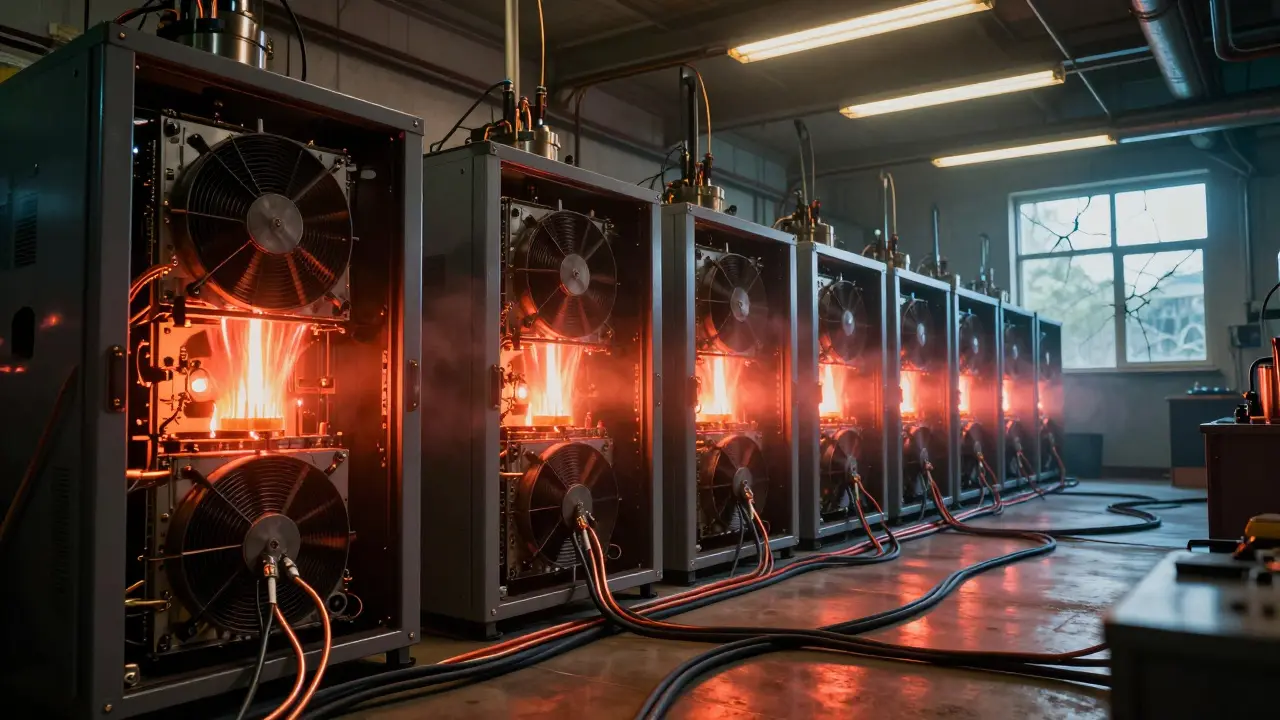
There was a time when running a blockchain felt like trying to power a small city just to move money around. In the early days, critics pointed out that Bitcoinis a decentralized cryptocurrency network that relies on energy-intensive proof-of-work mining consumed more electricity than entire nations annually. This reality created a massive barrier for anyone wanting to use crypto responsibly. By March 2026, however, the conversation has shifted. We aren't just asking if blockchain can work; we are asking how efficiently it runs.
The answer lies in the architecture known as Layer 2 Solutionsare secondary frameworks built on top of existing blockchains to improve scalability and reduce transaction costs. These technologies act like high-speed lanes added to a congested highway. They handle the heavy lifting off the main network, drastically cutting the energy required for each transaction. Understanding this shift isn't just about tech specs; it's about understanding whether digital infrastructure can coexist with a sustainable planet.
The Legacy of High-Energy Mining
To appreciate the savings, you have to understand the baseline we moved away from. Traditional blockchain networks relied on Proof-of-Workis a consensus mechanism where miners solve complex mathematical puzzles to validate transactions. This process ensures security but demands immense computational power. Think of it as a competition where everyone races to solve a puzzle, and only the winner gets to write the ledger.
That race requires specialized hardware and constant cooling. Bitcoin continues to run this way, making every transaction energy-costly by design. Before 2022, Ethereumis a major smart contract platform that initially used proof-of-work before transitioning to proof-of-stake followed suit. The environmental criticism wasn't baseless; it was mathematically inevitable given the technology. If every single transaction needs full network consensus, the energy bill scales linearly with usage. As adoption grew, so did the carbon footprint, raising red flags for institutions and regulators alike.
The Foundation Change: Proof-of-Stake
A major turning point occurred with the Ethereum upgrade to Proof-of-Stakeis an alternative consensus mechanism that validates transactions based on stake ownership rather than computational power. This change alone slashed energy consumption by approximately 99.95%. According to the Ethereum Foundation, annual electricity demand dropped from roughly 23 million megawatt-hours to around 2,600 megawatt-hours.
This transition set the stage for even greater efficiency. While Proof-of-Stake made the base layer cleaner, it didn't solve congestion. You still had millions of users trying to settle transactions on the main chain. Even efficient systems get bottlenecked. Layer 2 technology emerged to solve the scaling issue without sacrificing the gains made by Proof-of-Stake. Other chains like Algorandis a blockchain platform designed from inception with sustainability using pure proof-of-stake also demonstrate this trend, reporting an annual carbon footprint equivalent to a small office building.
How Layer 2 Architectures Save Energy
Layer 2 works by processing transactions off the main chain. Instead of validating every single coffee purchase on the primary ledger, Layer 2 aggregates them. It bundles hundreds or thousands of actions into a single submission. This batch processing is the secret sauce for energy reduction.
When you process one hundred transactions individually on Layer 1, you pay the energy cost one hundred times. When you bundle them on Layer 2 and post a single proof, the main chain only verifies that one summary. It's the difference between checking every item in a supermarket basket versus scanning a pre-totalized receipt. This architectural innovation reduces the computational overhead required for validation.
| Feature | Traditional Layer 1 (PoW) | Modern Layer 1 (PoS) | Layer 2 Scaling |
|---|---|---|---|
| Consensus Type | Mining Hardware | Validator Stakes | Batched Submissions |
| Energy per Tx | Very High | Low | Extremely Low |
| Throughput | Low | Moderate | High |

Zero-Knowledge Rollups and Efficiency
One of the most effective Layer 2 categories is Zero-Knowledge Rollupsare a scaling technique that uses cryptographic proofs to verify transactions without revealing data. Networks like Lineais a zk-rollup network enabling scalable transactions with low environmental impact exemplify this approach. ZK-Rollups don't just batch data; they compress proofs of validity.
In technical terms, a mathematical proof confirms the state of the transactions is correct without needing to re-run the computation on the main chain. This means the validators on the main Ethereum chain perform minimal work to check the truth of the batch. For DeFi protocols and gaming applications, this allows for frequent interactions that would otherwise drain resources. The energy cost becomes negligible per user interaction compared to settling directly on the mainnet.
Optimistic Rollups and the Lightning Model
Not all Layer 2 solutions use zero-knowledge cryptography. Optimistic Rollupsassume transactions are valid unless challenged, reducing immediate computational requirements operate on a different principle but achieve similar scaling effects. They assume a transaction is legitimate unless someone provides evidence otherwise within a challenge window. While slightly less immediate in finality, they significantly offload the heavy verification work.
We see a similar logic in Lightning Networkis a second-layer protocol for Bitcoin that enables instant, low-cost payments. This system creates payment channels between two parties. They can trade back and forth infinitely off-chain, only closing the channel and recording the net result on the Bitcoin blockchain when finished. This method minimizes the number of blocks required, directly reducing the energy burden on the PoW network.
Real-World Sustainability Metrics
It isn't enough to say "it's better"; we need numbers to trust the claim. Since the widespread adoption of Layer 2 tools, we have seen quantifiable improvements. A typical Layer 1 transaction might require kilowatt-hours of energy depending on network load. Layer 2 transactions inherit the security of the base chain but share the computational cost across millions of micro-transactions.
If you look at DeFi protocols running on Layer 2, the gas fees (which reflect resource usage) are often a fraction of a cent. Lower gas fees correlate directly with lower energy expenditure because there is less computation requested from the global validator set. Companies analyzing ESG compliance now view Layer 2 networks as essential infrastructure. They allow enterprises to utilize blockchain tracking without violating their carbon neutrality goals.
Integration with Renewable Energy
The software architecture is only half the story. The physical infrastructure powering the validators is increasingly shifting to renewables. Some networks explicitly reward validators who use solar or wind power. Blockchain itself is becoming a tool to track renewable energy credits in real-time. This creates a feedback loop where the technology tracks its own footprint.
As hardware advances continue, mining rigs and validator nodes become more efficient. Specialized chips lower the joules-per-operation metric. Combined with Layer 2 batching, the trajectory points toward a future where digital asset transfer uses less energy than traditional banking systems, which rely on massive centralized server farms.
Why This Matters for Developers
For a developer choosing a stack, sustainability is now a feature. Building on a Layer 2 network means your application doesn't face backlash over high carbon emissions. Users care about where their data lives. If an NFT mint or a game transaction burns the equivalent energy of a household dinner party, it stops adoption.
By leveraging solutions like Linea or other Optimistic platforms, developers unlock high performance for social apps without the guilt. It removes the friction between innovation and responsibility. You can scale your user base exponentially without needing an exponential increase in power plants.
Ultimately, the evolution from Proof-of-Work to Proof-of-Stake, capped with Layer 2 scaling, represents a maturation of the technology. It proves that decentralization does not require excessive waste. The industry has shown it can iterate, learn, and pivot toward a greener infrastructure model that supports global connectivity.
Does Layer 2 compromise security?
No, Layer 2 solutions derive security from the underlying Layer 1 blockchain. While processing happens off-chain, the final settlement and fraud proofs rely on the main chain's security guarantees, maintaining trust.
Is Layer 2 cheaper than Layer 1?
Yes, significantly. Because Layer 2 batches multiple transactions together, the gas fees per individual transaction are drastically lower compared to settling directly on Layer 1.
Can Layer 2 networks support enterprise ESG goals?
Absolutely. Layer 2 networks have a much smaller carbon footprint, making them compliant with Environmental, Social, and Governance standards required by many large organizations.
Which Layer 2 is best for low energy use?
Zero-Knowledge Rollups are generally the most efficient, as they use cryptographic proofs that require minimal data to be stored on the main chain, further reducing energy needs.
Will Bitcoin ever adopt Layer 2?
Bitcoin already has the Lightning Network as a Layer 2 solution. Further development aims to expand its capacity and interoperability to reduce reliance on the main chain for small transactions.

Comments (13)
Michael Thomas March 30 2026
The data supports this shift away from mining hardware dependency. Efficiency gains are mathematically clear regardless of opinion. High throughput does not equal high waste anymore.
Scott Perlman April 1 2026
This makes me feel better about using digital coins.
Xavier Lévesque April 1 2026
Funny how the industry keeps pivoting until someone stops calling it bad news. I guess profit always finds a way to justify itself.
Buddy Faith April 3 2026
they know something we do not about the power grid manipulation i bet the elites love the quiet nodes
Ian Maggs April 5 2026
What! Is! This! Not! The! Ultimate! Truth!! Technology! Evolves!! We! See! Progress!!! Everywhere!!!
Thabo mangena April 5 2026
The architectural evolution represents a significant step towards sustainable digital economics. Such advancements align well with global environmental objectives and corporate governance standards.
Karl Fisher April 5 2026
Indeed. One must appreciate the sophistication required to maintain such delicate infrastructural balances.
Priyank Panchal April 6 2026
People claim security but who watches the validators now. Trust me they are selling your data.
Sandi Johnson April 7 2026
Wow nothing kills a vibe faster than paranoia than actual code audit logs.
Eva Monhaut April 8 2026
I love seeing innovation bloom in unexpected places like financial tech. It feels like we are building a garden instead of a factory floor.
Michael Gradwell April 9 2026
Most folks ignore the real cost of computing power here but the numbers speak volumes.
Addison Smart April 9 2026
It really feels like we are finally seeing the maturity that was promised years ago regarding green tech in crypto.
Back when I started investing, the noise about bitcoin destroying the planet was loud and persistent.
We spent so much time arguing about carbon footprints that we forgot the utility of the ledger.
Now, with these layer two solutions, the conversation has shifted entirely toward efficiency metrics.
It is fascinating to note how batching transactions changes the fundamental cost model of validation.
Most people still think of blockchain as purely expensive storage, but the math suggests otherwise now.
When you bundle hundreds of actions together, the energy per action drops precipitously.
I find the comparison to supermarket receipts quite apt in describing the verification process.
Validators do not need to check every item, just the final receipt authenticity.
This allows the system to scale without burning resources linearly with demand.
Proof of stake already helped, yet it did not solve the congestion issues alone.
Adding second layer networks on top creates a symbiotic relationship that benefits everyone involved.
Regulators are beginning to take notice of these quantifiable improvements in ESG reports.
It is encouraging to see that sustainability can actually be a feature rather than a bug.
We need to continue educating institutions on why this architecture matters for their compliance goals.
Abert Canada April 10 2026
Hey listen the main thing is getting adoption up fast while keeping the lights on.