
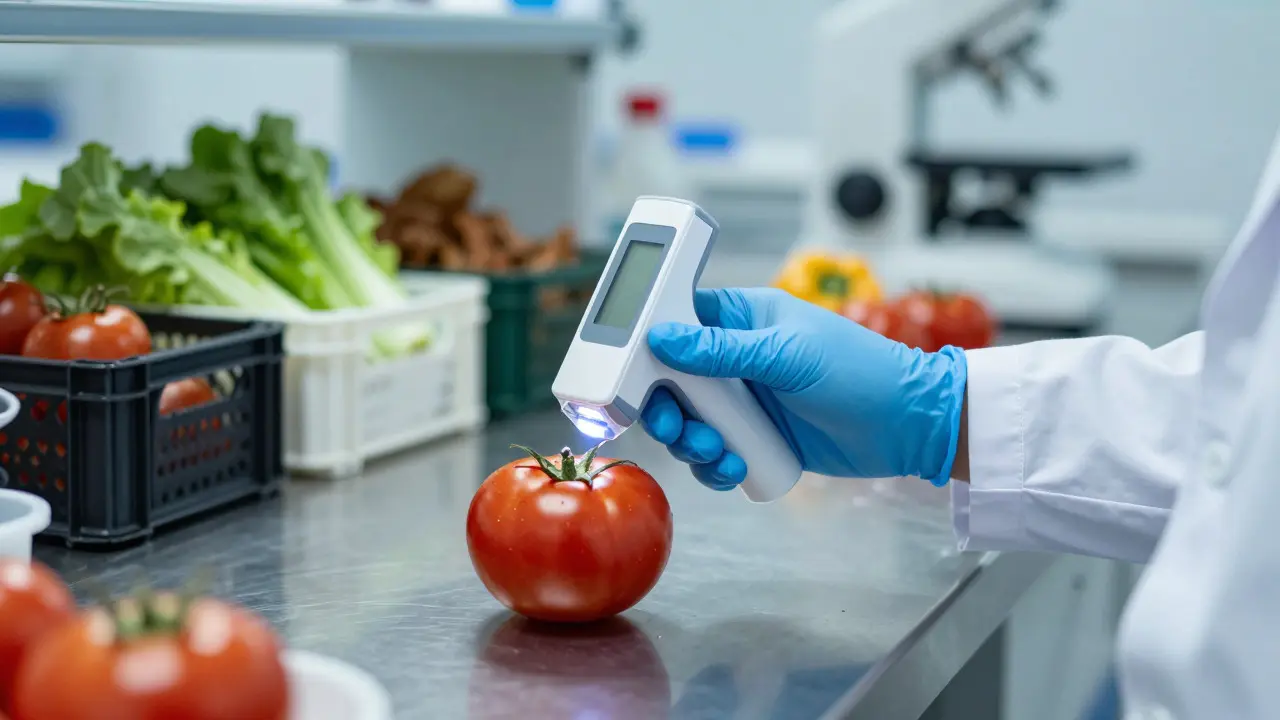
Imagine a salmonella outbreak in leafy greens. In the old days, finding the source took days or weeks. Today, thanks to food traceability pilots, we can pinpoint the exact farm in seconds. This shift isn't just about technology; it's about saving lives and protecting brand reputations.
Regulators, retailers, and tech companies have been running these experiments for over a decade. From Walmart tracking mangos to Thai durians crossing borders, these case studies reveal what works, what fails, and where the industry is heading. Let’s look at the real outcomes from these critical projects.
The Regulatory Foundation: FSMA and the FDA
It all started with the U.S. Food Safety Modernization Act (FSMA). Signed into law in January 2011, Section 204 required the U.S. Food and Drug Administration (FDA) to test rapid product tracing methods. The FDA partnered with the Institute of Food Technologists (IFT) to run two major pilots between 2011 and 2012. One focused on fresh tomatoes, the other on dry spices.
The results were eye-opening. The IFT team found that inconsistent record formats and lack of standardized data elements were the biggest hurdles. Even when electronic systems were used, missing data fields slowed down investigations. The key takeaway? You need harmonized Key Data Elements (KDEs) and Critical Tracking Events (CTEs) before you even think about fancy tech. These early findings laid the groundwork for the FDA’s “New Era of Smarter Food Safety” blueprint released in 2020, which prioritizes interoperability and digital data sharing.
Blockchain in Action: The Walmart and Driscoll’s Experiment
Perhaps the most famous pilot involves Walmart, IBM, and Driscoll’s. Around 2016, they tested Hyperledger Fabric, a private blockchain platform, to track mangos in the U.S. and pork in China. The goal was simple: cut the time it takes to trace a product’s origin.
The results were dramatic. Tracing a batch of sliced mangos using traditional paper and spreadsheet methods took about six to seven days. On the blockchain system, the same query took approximately 2.2 seconds. That’s a reduction in latency of over 99.9%. Driscoll’s also tested harvest data capture at the farm level. While shipment traceability worked well, they identified challenges in scaling hardware for small growers and integrating the system into daily operations without causing friction.
| Pilot / Project | Technology Used | Commodity | Key Outcome / Metric |
|---|---|---|---|
| Walmart & IBM | Hyperledger Fabric (Blockchain) | Mangos, Pork | Trace time reduced from ~7 days to 2.2 seconds |
| FDA/IFT FSMA | Electronic vs. Paper Records | Tomatoes, Spices | Highlighted need for standardized KDEs; manual records failed mock recalls |
| GS1/ADB Durian | GS1 Standards (GTIN, EPCIS, QR) | Durian | Cross-border interoperability between Thailand and China |
| CherryHill Orchards | RFID & QR Codes | Cherries | Improved internal logistics; highlighted hardware cost challenges |
Standards-Based Approaches: GS1 and Cross-Border Trade
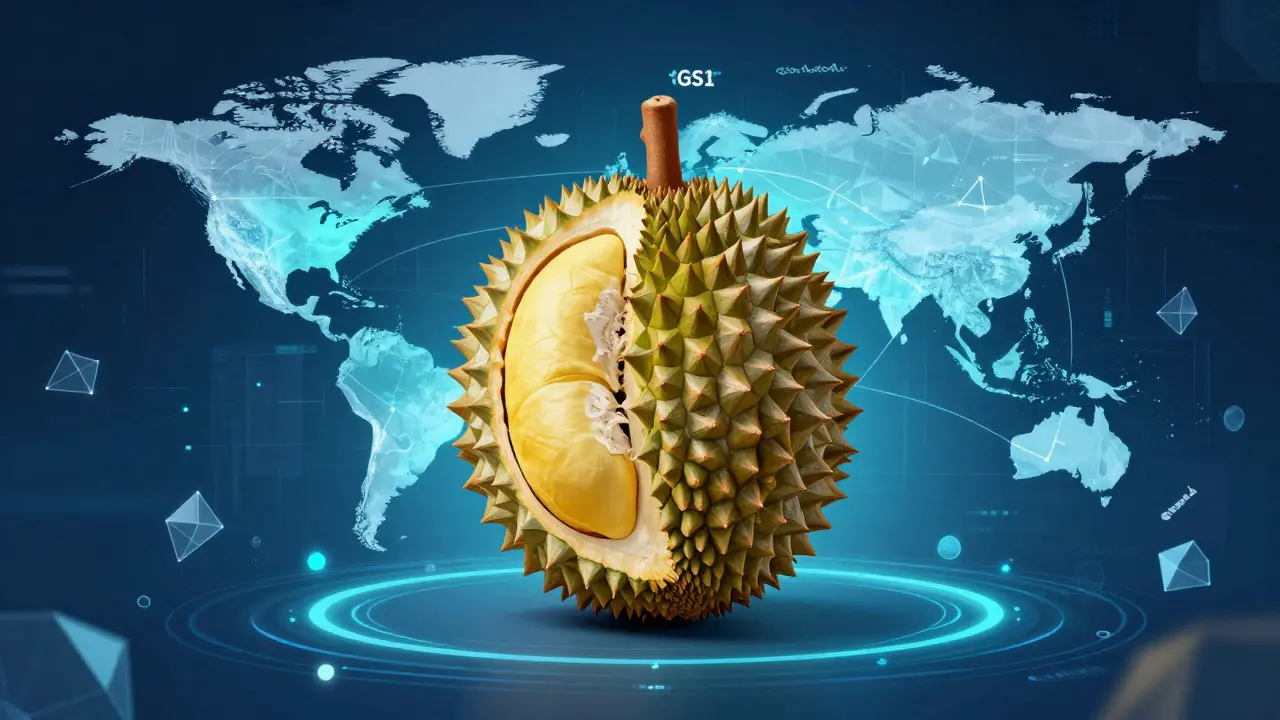
Not every solution requires blockchain. Sometimes, global standards are enough. A notable example is the durian export pilot from Thailand to China, supported by the Asian Development Bank (ADB) and GS1. Running from 2023 to 2024, this project used Global Trade Item Numbers (GTINs) and EPC Information Services (EPCIS) to track shipments across borders.
Why use standards instead of a shared ledger? Interoperability. By using common identifiers like GTINs and QR codes, Thai exporters and Chinese regulators could exchange data without needing to agree on a single proprietary software platform. This approach proved effective for reducing documentation errors and verifying origin. It shows that for many businesses, especially those involved in international trade, adhering to established standards like GS1 is often more practical and scalable than building custom blockchain networks.
Producer-Level Innovations: RFID and Consumer Transparency
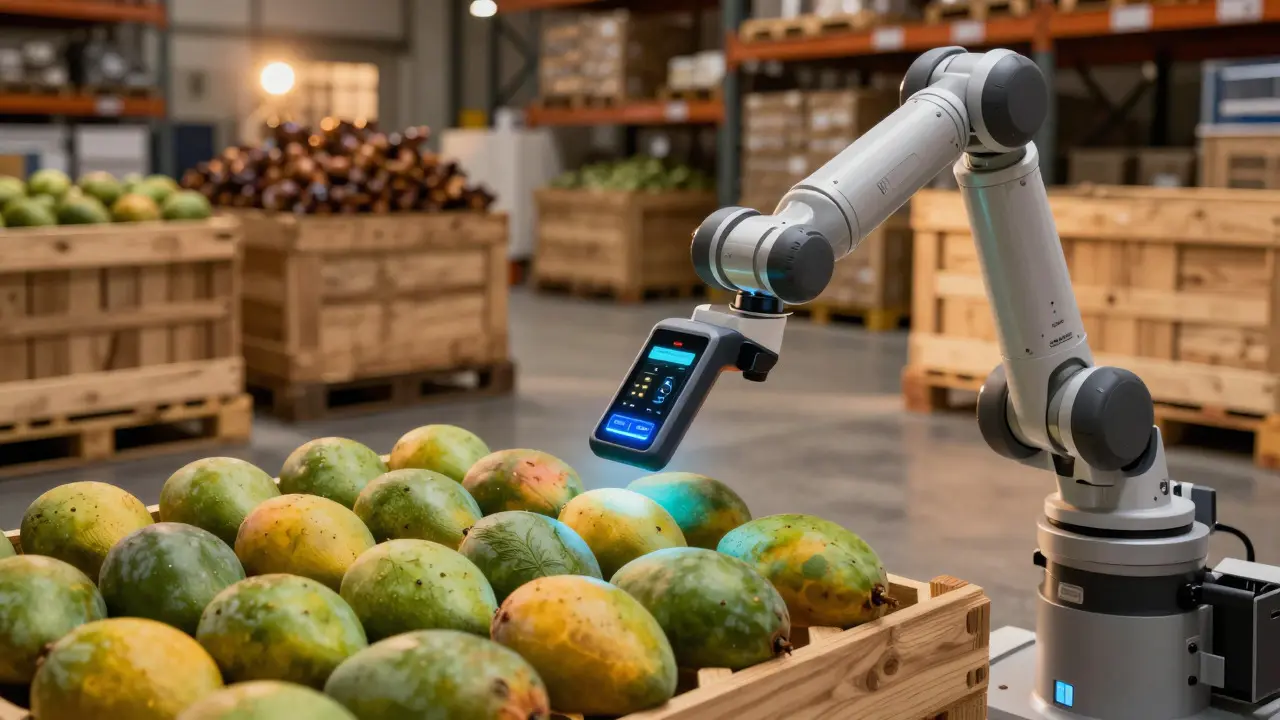
At the farm level, technology is getting closer to the consumer. Cherry Growers Australia and Agriculture Victoria piloted a system using RFID tags and QR codes at CherryHill Orchards in Victoria. The RFID tags automated data capture during harvest, packing, and distribution. Meanwhile, QR codes allowed consumers to scan the box and see exactly where their cherries came from.
The benefits were twofold: operational efficiency for the orchard and increased trust for the buyer. However, the pilot also revealed real-world constraints. Hardware costs per pallet added up quickly, and rural connectivity issues made consistent data transmission tricky. Training staff to consistently scan tags became a significant part of the implementation effort. This highlights a crucial lesson: technology must fit the operational reality of the producer, not just the theoretical model.
Academic Insights: Dairy, Honey, and Smart Contracts
Academic researchers have also contributed valuable data through controlled pilots. A 2021 study implemented a private blockchain in a dairy supply chain, testing smart contracts to ensure data authenticity. Another 2024 proof-of-concept focused on honey and coriander powder, demonstrating how blockchain can integrate with existing enterprise resource planning (ERP) systems.
These academic pilots tend to focus on technical metrics like transaction throughput and storage overhead. They confirm that while blockchain offers tamper-evident logs, governance and key management remain complex. For smaller supply chains, the complexity of maintaining a distributed ledger might outweigh the benefits unless there is a clear regulatory driver or premium market demand.
What Works: Best Practices from the Field
Looking across all these case studies, several best practices emerge. First, start small. Successful pilots usually focus on a single commodity and a limited number of partners. This allows teams to validate data models and workflows before scaling up. Second, define your Key Data Elements clearly. Whether you use blockchain or GS1 standards, if the data isn’t standardized, the trace will break somewhere in the chain.
Third, involve end-users early. If farmers find the scanning process cumbersome, they won’t do it consistently. Finally, measure everything. Use mock recall scenarios to test your system’s speed and accuracy. The goal isn’t just to have a cool dashboard; it’s to be able to remove contaminated food from shelves faster than ever before.
Challenges and Limitations to Watch
Despite the successes, hurdles remain. Smallholders often struggle with the upfront cost of hardware like RFID readers or IoT sensors. There’s also the issue of data ownership. Who controls the data on a shared blockchain? How is privacy maintained for competitors? These governance questions don’t have one-size-fits-all answers yet.
Additionally, technology fragmentation is a risk. If one retailer uses Hyperledger and another uses a different platform, interoperability suffers. This is why the FDA and GS1 emphasize open standards and public-private data sharing. The future likely lies in hybrid models that combine the immutability of blockchain with the broad compatibility of GS1 standards.
Frequently Asked Questions
What is the main benefit of food traceability pilots?
The primary benefit is reducing the time to identify the source of contamination. Pilots like Walmart’s mango project showed trace times dropping from days to seconds, allowing faster removal of unsafe products from the market.
Is blockchain necessary for effective food traceability?
No. While blockchain provides immutable records, standards-based systems using GS1 identifiers and EPCIS events have proven effective for cross-border trade and large-scale retail. The choice depends on specific needs like data integrity requirements and partner compatibility.
What are Key Data Elements (KDEs) in traceability?
KDEs are the minimum set of data points needed to reconstruct a product’s journey. Examples include lot numbers, dates, locations, and supplier details. Standardizing these ensures that different companies can share data effectively.
How do small farms participate in these pilots?
Small farms often face higher relative costs for hardware and training. Success depends on low-cost solutions, such as QR codes rather than expensive RFID, and support from cooperatives or larger buyers who invest in the infrastructure.
What role does the FDA play in these pilots?
The FDA mandates pilots under FSMA Section 204 and uses findings to create regulations like the Food Traceability Final Rule. They focus on high-risk commodities and interoperability to ensure public health protection.

Comments (14)
Amara Akbar August 21 2026
It is truly wonderful to see such a comprehensive overview of the field. The transition from paper records to digital systems is not merely an upgrade; it is a fundamental shift in how we ensure public health. I appreciate how the post highlights the FDA's early work with tomatoes and spices, as those foundational lessons are often overlooked in favor of newer tech trends.
The point about harmonized Key Data Elements being more important than the specific technology stack is a crucial one that deserves more attention in industry discussions. We must remember that data without structure is just noise, no matter how advanced the platform is.
Mark Harvey August 23 2026
love this stuff man. the mango thing was wild when i first heard about it. 2 seconds vs days? that’s insane. feels like we’re finally getting serious about actually fixing the supply chain instead of just talking about it
Art HND August 25 2026
Blockchain hype again. They solved a problem that didn't exist by adding complexity to a system that already worked if you had decent spreadsheets. The real issue is never the ledger, it's the human error at the farm gate. Fix the humans, keep the database simple.
Brandon Olvera August 25 2026
Good for US companies leading the charge. But let's be honest, if China wants to trade durians with us, they better play by our rules or risk getting locked out. This is about national security as much as food safety. Our farmers need these tools to compete globally without relying on foreign standards.
Elizabeth Brooks August 26 2026
just wanted to add that the GS1 standards part is so underrated. everyone gets excited about blockchain but honestly for cross border trade like that durian example, standard identifiers are way less headache. also the cherry pilot showed how hard it is to get rural wifi working which is something most tech demos ignore lol
Deb Kortyna, MBA August 26 2026
One must observe the dramatic irony here: we are spending billions on immutable ledgers to track fruit, yet we still cannot agree on basic data formats for medical records. The 'New Era' of smarter food safety sounds grand, but until the smallholder farmer can afford an RFID reader without going bankrupt, it remains a luxury good for large agribusinesses. The gap between the pilot and the implementation is where all the value leaks away.
alex kobri August 27 2026
i think the biggest takeaway is that tech doesn't fix bad processes. if your farm records are messy putting them on a blockchain just makes them messier faster. you need clean data first then the tooling matters. also who owns the data is a huge question nobody answers well yet
Zach Loescher August 29 2026
Interesting read. I’ve been following the dairy supply chain pilots mentioned in the academic section. It’s fascinating how smart contracts are being used to verify authenticity, but the governance overhead is significant. For smaller cooperatives, the cost-benefit analysis often tips against full decentralization unless there is a strong regulatory mandate forcing compliance.
Quintin Franzese August 30 2026
Sure, 2.2 seconds is great for the PR team. But have you tried scanning a QR code in a humid packing house with gloves on? Good luck. Technology always assumes perfect conditions. Reality is sweaty hands and broken tablets.
Susan Cole August 31 2026
Thank you for including the challenges section. It’s refreshing to see a post that acknowledges hardware costs and connectivity issues rather than just celebrating the success metrics. It’s easy to look at a dashboard in a boardroom, but the people doing the scanning are the ones who determine if the system works or fails. Respect for the operational reality here.
Tamara Miller August 31 2026
Let’s be clear, this is mostly a marketing exercise for tech vendors. The FDA mandates are the only reason any of this is happening. Without regulation, why would a competitor share data? Trust is low in this industry. Blockchain doesn’t solve trust, it just adds a layer of expensive bureaucracy to existing distrust.
Savara Gunn September 1 2026
good summary. i work near some of these orchards and yeah the training part is real. you spend weeks just getting staff to scan consistently. once they do though the logistics get smoother. nice to see it documented properly
Anthony Miller September 3 2026
You are all missing the point. This is not about saving lives, it is about control. Who controls the traceability data controls the market. The FDA is creating a backdoor for corporate consolidation under the guise of public health. Wake up. The small farmer is now a data node in a giant corporation's network. Resistance is futile but awareness is necessary. Do not let them define the narrative.
Chris Neal September 4 2026
Actually, the comparison between Hyperledger and GS1 is slightly misleading because they solve different problems. Hyperledger provides a shared source of truth for multi-party collaboration where trust is low. GS1 is a standard for identification and event reporting. You can use GS1 data *on* a blockchain, or you can use GS1 data in a centralized database. The choice isn't binary. It depends on whether you need immutability across competitors or just efficient data exchange within a trusted partner group. Most retail chains are moving toward hybrid models anyway, using GS1 for identifiers and various platforms for the ledger layer. It's more nuanced than 'blockchain vs standards'.