
You’ve spent months building your online course is a structured educational program delivered via the internet. You’ve recorded the videos, written the worksheets, and set up the payment gateway. But have you actually protected yourself? Most creators launch with excitement but zero legal guardrails. That’s a recipe for disaster.
Imagine this: A student downloads your entire curriculum, resells it on eBay for $5, and then demands a full refund because they "didn’t like the font." Without a solid Terms of Service (ToS) is a legally binding contract between a service provider and its users, you’re stuck. You can’t stop them from stealing your work, and you might even be forced to refund them under consumer protection laws.
This isn’t just about being difficult. It’s about defining the rules of engagement before anyone clicks "Buy." In this guide, we’ll break down exactly what needs to go into your Terms of Service for online courses. We’ll look at a practical template structure and dive deep into the specific clauses that keep your business safe in 2026.
The Core Purpose of Your Course Agreement
Why do you need a ToS? Think of it as the rulebook for your digital classroom. It tells students what they can do, what they can’t do, and what happens if things go wrong. It shifts the relationship from a casual transaction to a governed partnership.
In the world of digital products are intangible goods sold electronically, such as software, e-books, or courses, the risk is higher than physical goods. Once someone has access, you can’t physically take it back easily. Your ToS acts as the lock on the door. It clarifies ownership, limits your liability, and sets expectations around refunds and support.
Without these clauses, you leave yourself open to three major risks:
- Intellectual Property Theft: Students sharing login credentials or scraping content.
- Unlimited Liability: Being sued because a student didn’t get the job they expected after taking your coding bootcamp.
- Refund Abuse: People consuming 90% of your course and then claiming dissatisfaction.
Essential Clause 1: Intellectual Property Rights
This is the most critical section for any educator. You need to make it crystal clear that buying access does not mean buying ownership. When a student pays for your course, they are purchasing a license to view the material, not the material itself.
Your ToS must explicitly state that all content-including video lectures, PDF guides, code snippets, quizzes, and community discussions-remains your property. Use strong language here. Avoid vague phrases like "please don’t steal." Instead, use legal terminology that holds weight.
| Allowed Actions | Prohibited Actions |
|---|---|
| Personal viewing and study | Downloading for resale or redistribution |
| Creating personal notes | Screen recording or screenshotting lessons |
| Using skills learned for personal projects | Sharing login credentials with friends/family |
| Quoting short excerpts for reviews | Reposting full transcripts or slides |
If you use a platform like Teachable, Kajabi, or Thinkific, check their default settings. Many platforms automatically prevent downloading, but your ToS should still forbid screen recording. Technology can be bypassed; contracts provide the legal basis to sue if they do.
Essential Clause 2: Limitation of Liability
Online education often promises transformation. "Learn Python in 30 days" or "Double your income with SEO." These are marketing hooks, but they can become legal liabilities if interpreted as guaranteed outcomes. You must protect yourself from claims that your course failed to deliver a specific result.
Include a clause stating that results depend on the student’s effort, background, and market conditions. You are providing information and instruction, not a guarantee of employment, profit, or skill mastery. This is known as an "educational disclaimer."
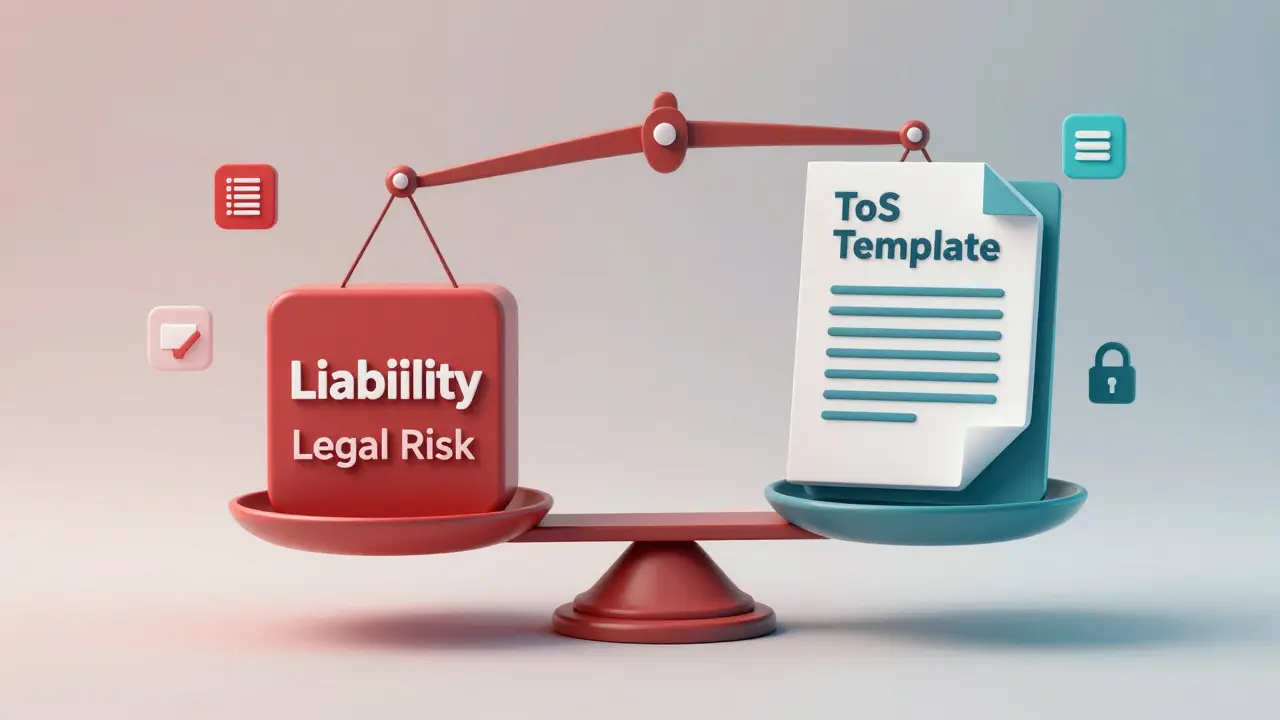
Furthermore, limit your financial liability. If a bug in your platform causes a student to lose data, or if a third-party tool recommended in your course fails, you shouldn’t be liable for their lost wages or consequential damages. Cap your liability at the amount the student paid for the course. This is standard practice in software licensing is the legal framework governing how software can be used by customers and applies equally to digital education.
Essential Clause 3: Refund Policy and Cancellation
Refunds are where most disputes happen. In many jurisdictions, including the UK and EU, consumers have statutory rights to cancel digital purchases within 14 days *unless* they explicitly waived this right upon purchase. For digital content, once consumption begins, the right of withdrawal usually lapses.
Your ToS must clearly outline your refund window. Are you offering a 7-day money-back guarantee? A 30-day satisfaction promise? Or no refunds at all? Be specific.
- No Refunds After Access: State clearly that once the student accesses the first module, the refund period ends. This protects against "free trials" where people binge-watch and then ask for their money back.
- Technical Issues Only: Offer refunds only if the platform is broken or content is missing, not if the student simply changed their mind.
- Process: Explain how to request a refund (e.g., email address) and the timeline for processing (e.g., 5-10 business days).
Ambiguity here leads to chargebacks. Payment processors like Stripe favor merchants who have clear, documented policies. If a student files a dispute, your ToS is your primary evidence that you provided the service as agreed.
Essential Clause 4: User Conduct and Community Guidelines
Most modern online courses include a community element-a Slack group, a Discord server, or a forum. This introduces human behavior risks. You need rules for interaction.
Define prohibited behaviors: harassment, hate speech, spamming, self-promotion without permission, and sharing pirated content. Give yourself the right to terminate access immediately if these rules are broken. This is crucial for maintaining a safe learning environment.
Also, address account security. The student is responsible for keeping their password secure. If they share their login with five friends, that’s a breach of contract. You reserve the right to ban accounts that show unusual activity patterns, such as multiple logins from different countries simultaneously.
Essential Clause 5: Termination and Account Closure
You need the power to cut ties. Specify under what circumstances you can terminate a student’s access. Common reasons include:
- Piracy or unauthorized distribution of content.
- Violation of community guidelines.
- Fraudulent payment methods.
- Non-payment for subscription-based courses.
Clarify what happens after termination. Do they lose access immediately? Do they keep their certificates? Usually, access is revoked instantly, and any unearned credits are forfeited. Make sure this is stated plainly so there’s no surprise when the lights go out.
Essential Clause 6: Governing Law and Dispute Resolution
If someone sues you, where does it happen? You don’t want to defend a case in a country halfway across the world. Include a "Governing Law" clause that specifies your local jurisdiction. Since you are based in Edinburgh, Scotland, you would specify that the laws of Scotland apply.
Additionally, consider adding an arbitration clause. Instead of going to court, disputes are resolved through a neutral third party. This is faster and cheaper for both sides. While some consumer protection laws limit mandatory arbitration for small claims, having it in your ToS shows you’ve thought about efficient resolution.
Template Structure for Your Terms of Service
Here is a simplified outline you can adapt. Remember, this is a template, not legal advice. Always consult a qualified solicitor to review your final document, especially given the specific regulations in the UK and EU regarding digital services.
- Introduction: Welcome the user and state that using the course constitutes agreement to these terms.
- Definitions: Clarify terms like "Course," "Student," "Content," and "Platform."
- License Grant: Define the limited, non-exclusive, non-transferable license to access materials.
- Intellectual Property: Assert ownership of all content and prohibit infringement.
- User Obligations: List acceptable use, account security, and community conduct.
- Payment and Refunds: Detail pricing, billing cycles, and the refund policy.
- Disclaimers: No guarantees of results; educational purposes only.
- Limitation of Liability: Cap liability at the purchase price; exclude indirect damages.
- Termination: Conditions for ending access.
- Governing Law: Specify jurisdiction (e.g., Scotland).
- Contact Information: Provide an email for legal inquiries.
Implementation Tips for 2026
Having a ToS isn’t enough; you must enforce visibility. In 2026, courts increasingly look at whether the user had a fair chance to see the terms. Don’t hide them in a footer link.
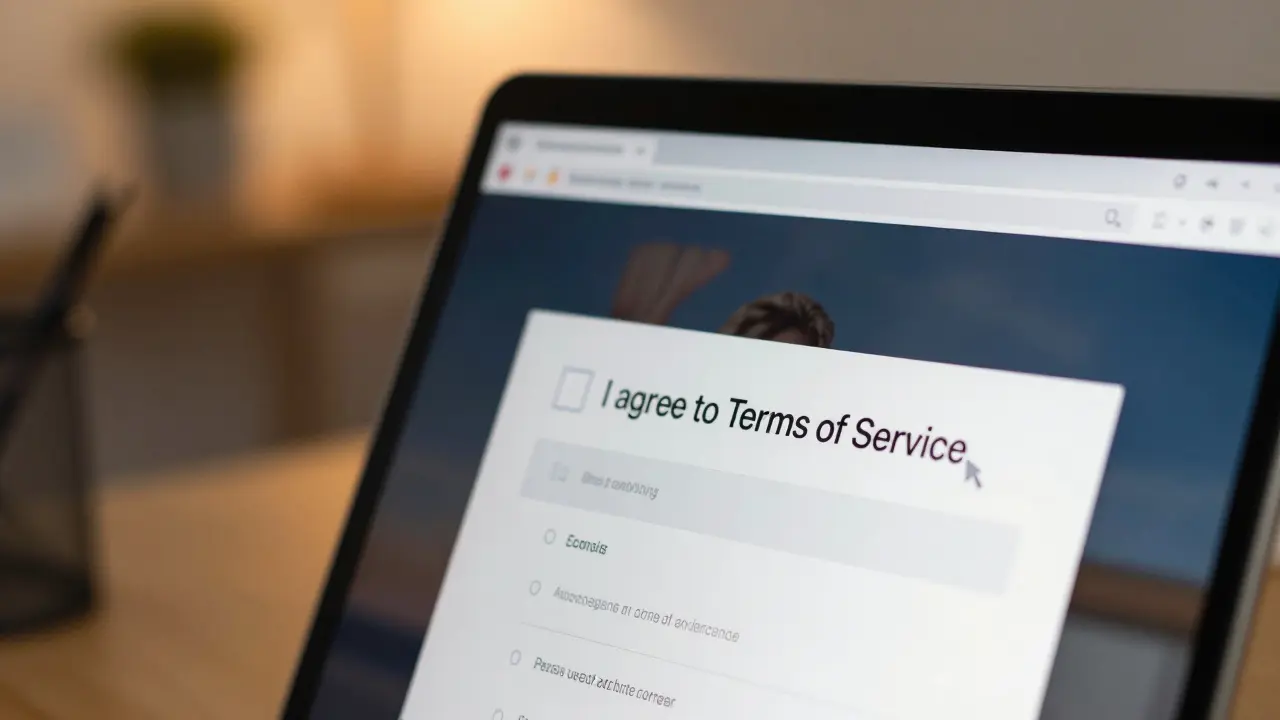
Use a checkbox during checkout that says, "I agree to the Terms of Service and Privacy Policy." This creates an explicit record of consent. Also, update your ToS regularly. As your course evolves, add new modules, change prices, or introduce new tools, your terms should reflect those changes. Notify existing students of significant updates via email.
Finally, pair your ToS with a robust Privacy Policy. While the ToS covers the contractual relationship, the Privacy Policy handles data protection under GDPR and other privacy laws. They work together to form the legal backbone of your online education business.
