

Most leadership development programs fail not because the content is bad, but because the design ignores how adults actually learn. You spend thousands on workshops, yet six months later, your managers are back to their old habits. The gap between a shiny new curriculum and actual behavioral change is where most budgets go to die. If you want leaders who can navigate ambiguity rather than just recite frameworks, you need to rethink how you build, launch, and measure these initiatives.
The Core Problem with Traditional Leadership Training
Think about the last time you attended a generic leadership seminar. Chances are, it was a one-off event disconnected from daily work realities. This approach treats leadership as a static set of skills-like learning to use Excel-rather than a dynamic capability that evolves with context. Research from the Center for Creative Leadership suggests that without reinforcement, up to 87% of learned behaviors fade within weeks. Why? Because traditional programs often lack three critical components: contextual relevance, ongoing support, and clear accountability.
You’re likely facing specific pain points: high-potential employees leaving because they see no growth path, or middle managers burning out because they weren’t prepared for the shift from doing to leading. A generic program doesn’t solve this. It needs to be tailored to your company’s strategic goals. If your business is pivoting to digital transformation, your leadership program must focus on digital literacy and agile decision-making, not just emotional intelligence basics.
Designing a Program That Actually Sticks
Effective design starts with diagnosis, not prescription. Before buying any external course, ask yourself: What specific behaviors do our current leaders exhibit that hold us back? Is it poor delegation? Lack of strategic thinking? Inability to manage conflict?
Competency modeling is your first step. Define exactly what "good" looks like in your organization. Don't borrow a generic model from a textbook. Create a framework that reflects your culture. For example, if innovation is key, include attributes like "risk tolerance" and "creative problem-solving." Once you have your competencies, map them against your current leadership pipeline using assessments.
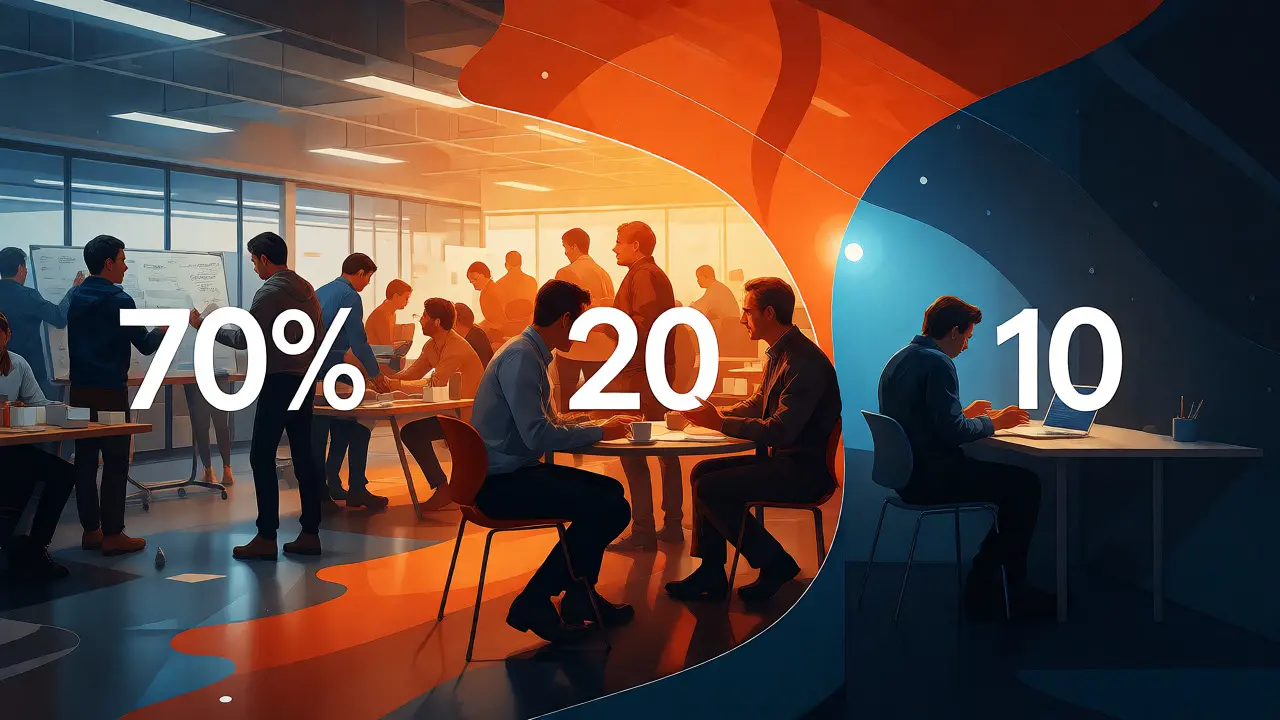
Then, structure the learning journey. Avoid the "spray and pray" method. Instead, use the 70-20-10 rule: 70% experiential learning (on-the-job challenges), 20% social learning (coaching, mentoring, peer groups), and only 10% formal education (courses, reading). This mix ensures that learning happens in the flow of work, making it stickier and more relevant.
Strategic Rollout: Beyond the Kickoff Event
Launching a program is easy; sustaining momentum is hard. Many companies treat rollout as a logistical challenge-booking venues, sending invites. But rollout is a change management project. You need to prepare the ecosystem around the participants.
Start with stakeholder alignment. Senior executives must visibly champion the program. If the CEO skips the kickoff, why should anyone else take it seriously? Communicate the "why" clearly. Participants need to know how this impacts their career trajectory, not just that it’s a nice perk.
Consider a phased rollout. Pilot the program with a small cohort of high-potentials. Gather feedback, tweak the content, and refine the facilitation style before scaling. This reduces risk and allows you to iron out kinks. During the pilot, focus heavily on application. Assign real-world projects tied to business outcomes. For instance, if the module is about cross-functional collaboration, require participants to lead a joint initiative between two departments during the program.
Measurement: Moving Beyond Smiley Sheets
If you’re still measuring success by participant satisfaction scores, you’re missing the point. High ratings often mean fun trainers and good catering, not behavior change. To prove value, you need data that links learning to business results.
Use the Kirkpatrick Model as a baseline, but push further. Level 1 is reaction (did they like it?). Level 2 is learning (did they acquire knowledge?). Level 3 is behavior (are they applying it?). Level 4 is results (did it impact the bottom line?). Most programs stop at Level 2. You need to get to Level 3 and 4.
How do you measure behavior? Use 360-degree feedback pre- and post-program. Ask direct reports and peers about specific changes in management style. Are meetings shorter? Is feedback more frequent? Track retention rates of participants versus non-participants. Compare promotion velocities. Did those who completed the program get promoted faster?
| Metric Type | What It Measures | Data Source | Timeframe |
|---|---|---|---|
| Reaction Score | Participant satisfaction | Post-session surveys | Immediate |
| Knowledge Gain | Understanding of concepts | Pre/post tests | During program |
| Behavioral Change | Application of skills | 360 reviews, manager observations | 3-6 months post |
| Business Impact | ROI, retention, performance | HR analytics, financial data | 6-12 months post |
Leveraging Technology for Scalable Learning
You don’t need a massive LMS budget to start, but you do need tools that support continuous learning. Modern Learning Experience Platforms (LXPs) offer personalized pathways that adapt to user progress. Unlike traditional LMSs, which are compliance-driven, LXPs encourage exploration and micro-learning.
Integrate coaching platforms that allow participants to book sessions with internal or external coaches directly through the system. Data from these interactions can reveal common struggles across cohorts. If many leaders are booking coaching on "difficult conversations," you might need to beef up that module in future iterations.
Don’t ignore the power of social learning tools. Slack channels or Teams groups dedicated to program participants can keep the conversation alive between sessions. Share articles, debate case studies, and celebrate wins. This community aspect combats isolation and reinforces the identity of being a "leader" within the company.

Common Pitfalls to Avoid
Even well-designed programs can stumble due to execution errors. Here are the most common traps:
- Ignoring the Manager’s Role: If a leader’s boss doesn’t reinforce new behaviors, the learning dies. Train the bosses too. Teach them how to coach, not just command.
- One-Size-Fits-All Content: A senior VP needs different content than a newly promoted team lead. Segment your audience and tailor the depth accordingly.
- Lack of Executive Sponsorship: Without visible support from the top, participation becomes optional and low-priority.
- No Clear Success Criteria: If you don’t define what success looks like upfront, you can’t measure it later.
Building a Culture of Continuous Leadership Growth
A program isn’t an event; it’s a signal. It tells your organization that you value growth and are willing to invest in people. But the investment must be sustained. Leadership development shouldn’t end when the certificate is handed out. It should feed into succession planning, performance reviews, and career pathing.
Consider creating alumni networks for past participants. These groups can serve as informal advisory boards for new cohorts, sharing lessons learned and best practices. This creates a self-sustaining ecosystem where learning is valued and shared.
Finally, stay agile. The business landscape changes fast. Your leadership competencies need to evolve with it. Review your program annually. Update content based on emerging trends like AI integration, remote work dynamics, or sustainability goals. The goal is not to have a perfect program today, but a responsive one tomorrow.
How long should a leadership development program last?
There is no one-size-fits-all answer, but most effective programs run for 6 to 12 months. Shorter programs often fail to drive deep behavioral change, while longer ones risk losing momentum. The duration should align with the complexity of the skills being taught and the pace of organizational change.
Can we measure the ROI of soft skills training?
Yes, though it requires careful tracking. Look at proxy metrics such as employee retention rates, engagement scores, and productivity levels in teams led by program graduates. Comparing these metrics against a control group of non-participants can help isolate the impact of the training.
Should we hire external vendors or build internally?
A hybrid approach often works best. Use external vendors for specialized expertise, fresh perspectives, and scalability. Build internal capabilities for cultural nuance, continuity, and cost-efficiency over time. Start with external support and gradually transition key elements in-house as your internal L&D team matures.
How do I get buy-in from skeptical executives?
Speak their language: business outcomes. Present data linking leadership gaps to specific business problems, such as high turnover costs or missed revenue targets. Propose a small pilot with clear success metrics to demonstrate value before committing to a large-scale rollout.
What is the biggest mistake companies make with leadership training?
Treating it as a standalone HR initiative rather than a strategic business tool. When leadership development is siloed away from business strategy, it lacks relevance and urgency. Integrating it into broader talent management and operational goals ensures higher engagement and impact.
