
Imagine handing over the keys to a vault containing millions of dollars to a single person. Now imagine that person gets hacked, loses their phone, or simply decides to run away with the money. This was the reality for many early Decentralized Autonomous Organizations (DAOs), where a founder’s single private key controlled the entire treasury. One slip-up meant total loss. Today, that model is considered dangerously obsolete. The industry standard has shifted entirely to multi-sig wallets, smart contracts that require multiple people to approve any transaction before funds move.
This shift isn’t just about technology; it’s about trust. By distributing control among a group of signers, DAOs eliminate the single point of failure that plagued early projects. But setting up a secure multi-signature system is more than just adding a few addresses to a contract. It involves careful configuration, rigorous operational habits, and an understanding of how human error can still bypass even the best code. Here is what you need to know to secure your DAO’s assets in 2026.
How Multi-Sig Wallets Actually Work
At its core, a multi-signature wallet is a smart contract that requires M-of-N signatures to execute transactions. Instead of one key opening the door, you need a specific number of keys from a larger pool. For example, in a 3-of-5 setup, five different individuals hold unique private keys, but at least three must co-sign every withdrawal or contract interaction. If two keys are compromised or lost, the funds remain safe because the threshold hasn’t been met.
The most widely used implementation for this on Ethereum is Safe Gnosis Safe the leading multi-signature smart account platform for shared custody. Originally known as Gnosis Safe, it has evolved into the canonical experiment in on-chain shared custody. Unlike a traditional wallet where you hold the balance directly, Safe uses a linked list of owner addresses on-chain. When a transaction is proposed, the contract checks if enough valid signatures exist for that specific action. Only then does the `execTransaction` function fire, moving the tokens or calling another contract.
This architecture solves a critical problem: unilateral spending. In a single-key wallet, if a signer’s browser is infected with malware, the attacker drains the account instantly. In a multi-sig, the attacker would need to compromise not just one device, but a majority of the distributed signers simultaneously-a significantly harder task.
Choosing the Right Threshold: Security vs. Speed
One of the first decisions you’ll face is determining the ratio of required signatures (M) to total signers (N). There is no perfect number, only trade-offs between security and operational efficiency.
| Configuration | Security Level | Operational Speed | Best Use Case |
|---|---|---|---|
| 2-of-3 | Low-Medium | High | Small teams, daily operations, low-value funds |
| 3-of-5 | Medium-High | Medium | Standard DAO treasuries, balanced risk management |
| 4-of-7+ | Very High | Low | Large treasuries, institutional funds, high-collusion risk |
A 2-of-3 setup is fast. You only need two people to agree, which keeps things moving quickly for small expenses like paying a developer or buying domain names. However, it offers less protection against collusion. If two signers decide to team up maliciously, they can drain the treasury without needing the third person’s permission.
For most DAOs managing significant capital, a 3-of-5 configuration is the sweet spot. It requires a clear majority, making accidental approvals unlikely and collusion difficult. For massive treasuries holding billions in assets, experts often recommend 4-of-7 or higher. This ensures that no small subgroup can hijack the funds, though it does slow down decision-making. Remember, the goal is to balance the speed of execution with the resilience of the vault.
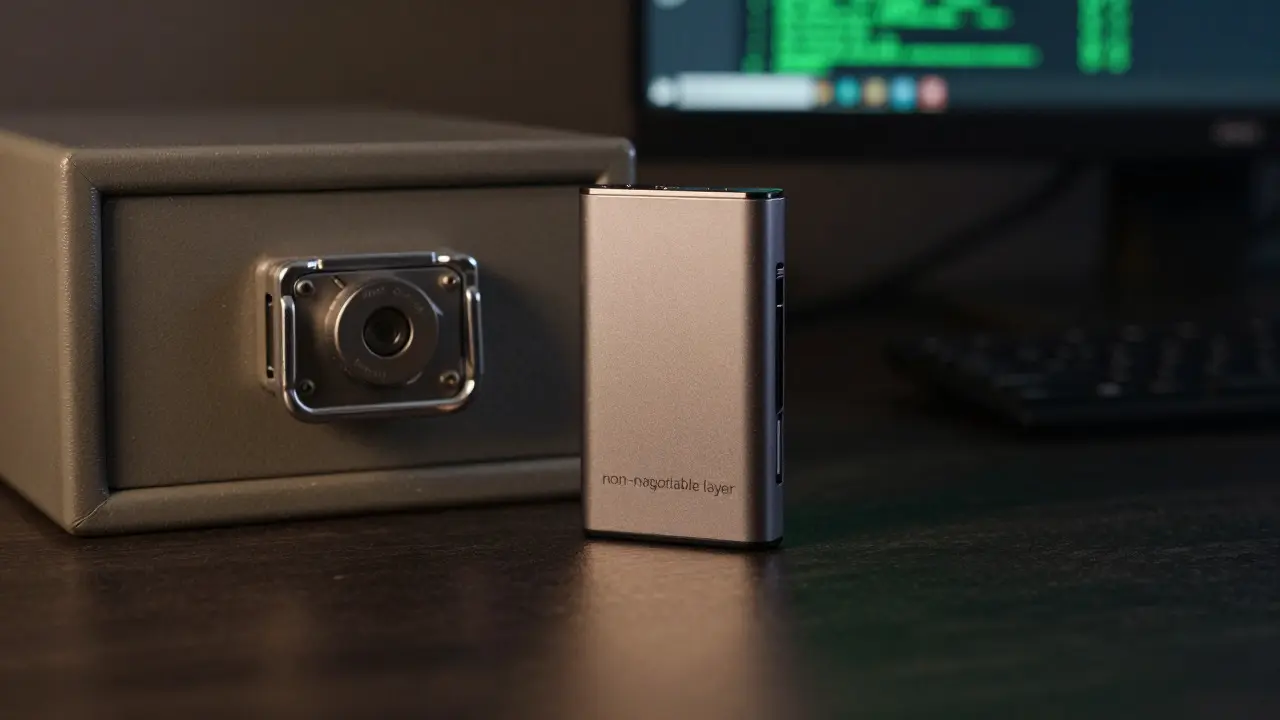
Hardware Wallets: The Non-Negotiable Layer
You can have the best smart contract in the world, but if your signers store their private keys in a browser extension like MetaMask on a laptop connected to public Wi-Fi, you’re already vulnerable. The single biggest mistake DAOs make is treating multi-sig signers like regular hot wallets.
Every signer should use a dedicated hardware wallet physical device for storing private keys offline such as a Ledger or Trezor. These devices keep the private key isolated from the internet. Even if a signer’s computer is infected with keyloggers or phishing malware, the attacker cannot extract the seed phrase. They can only see that a transaction is being signed, but they cannot forge the signature themselves.
Furthermore, ensure physical separation. Don’t let all five signers store their backup phrases in the same safe deposit box or cloud drive. Geographic and organizational diversity matters. If one office is raided or one server is hacked, the other keys should remain untouched. This physical distribution is what turns a digital protocol into a robust security system.
Advanced Defenses: Guards, Time-Locks, and Monitoring
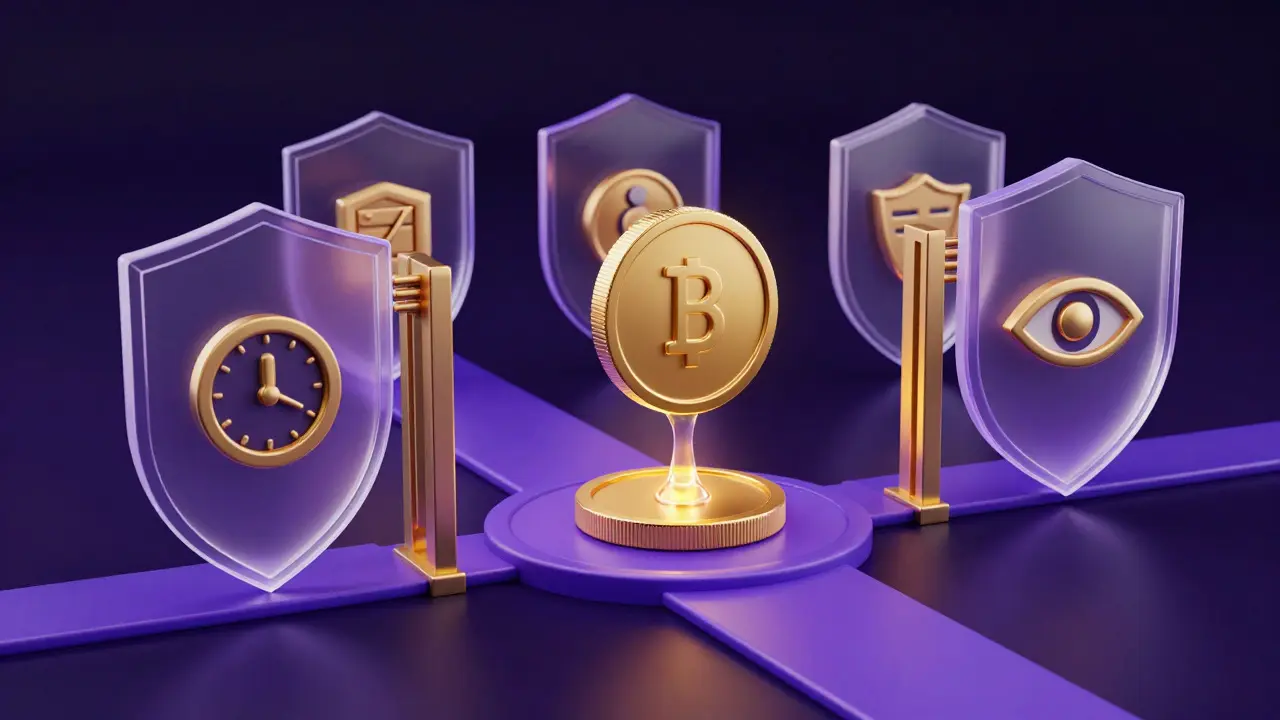
Basic multi-sig functionality is just the starting point. To truly protect a DAO treasury, you need to layer additional mechanisms on top of the signature requirement. These are often called "defense-in-depth" strategies.
First, consider transaction guards smart contract modules that validate transaction parameters beyond signatures. These are small pieces of code attached to your Safe wallet that check rules before a transaction executes. For instance, a guard could prevent any transfer to a blacklisted address, or cap the maximum amount that can be sent in a single day. If a signer accidentally approves a transaction sending 1 million USDC instead of 1,000, the guard rejects it automatically, regardless of how many signatures it has.
Second, implement time-locks for large movements. A time-lock introduces a mandatory delay-say, 24 or 72 hours-between when the final signature is collected and when the transaction actually executes. This window gives token holders and monitoring bots time to react. If someone sees a suspicious proposal heading toward execution, they can alert the community, pause the process, or revoke permissions. It adds friction, but that friction is exactly what stops panic-driven errors or coordinated attacks.
Finally, set up real-time monitoring. Tools like Forta on-chain network security monitoring platform or Tenderly can watch your treasury’s activity. They send alerts to Discord or Telegram whenever a new transaction is proposed or executed. Without monitoring, you might not realize a signer has gone rogue until the funds are already gone. With alerts, you can intervene immediately.
Operational Hygiene: Rotation and Documentation
Technology doesn’t fix bad processes. Many DAO hacks happen not because the code was broken, but because the humans running it were sloppy. Operational hygiene is just as important as the smart contract itself.
Key rotation is critical. People leave DAOs. Devices get lost. Compromises happen. You should have a documented schedule for rotating signers. For example, the Aave Grants DAO rotates its keys quarterly. Every three months, old keys are removed, and new ones are added. This limits the "exposure window"-the time during which a compromised key could be used by an attacker. If a key is stolen today, but rotated out next month, the attacker has only a short time to act.
Documentation is equally vital. Who are the signers? What are their roles? How do we handle an emergency if a key is lost? Write this down and publish it. Transparency builds trust with your community. If your treasury config is hidden, token holders will assume the worst. Publicly listing your signers and thresholds shows you have nothing to hide.
Also, test everything. Before moving your main treasury into a new multi-sig setup, test it on a testnet. Send dummy tokens back and forth. Try to break it. Verify that the time-locks work and that the guards reject invalid transactions. It takes a few days of coordination, but it saves you from catastrophic mistakes later.
Common Pitfalls to Avoid
Even with the best intentions, DAOs often stumble. Here are the most common failures:
- Centralization in disguise: Having 5 signers, but 4 of them are employees of the same company. If that company faces legal pressure or internal theft, the treasury is effectively single-controlled.
- Ignoring downstream risks: Your multi-sig is secure, but you deploy those funds into an unaudited DeFi protocol that gets hacked. The multi-sig didn’t fail; your investment strategy did. Always audit the protocols where your treasury yields are generated.
- Social engineering: Attackers often target signers directly via phishing emails or fake Discord messages. Train your signers to verify every request through multiple channels before signing.
- Stale keys: Forgetting to remove a former contributor who left six months ago. That person still holds a key, and now they have a grudge. Rotate keys regularly.
Conclusion: A Foundation, Not a Silver Bullet
Multi-sig wallets are essential infrastructure for any serious DAO. They replace trust in individuals with trust in mathematics and process. By using platforms like Safe, enforcing hardware wallet usage, and implementing time-locks and monitoring, you drastically reduce the risk of loss. According to Immunefi’s 2023 report, DAOs using multisig controls experienced approximately 87% fewer successful hacks than those relying on single-key wallets. That’s a compelling statistic.
But remember: a multi-sig wallet is a tool, not a guarantee. It protects you from external hackers stealing keys, but it doesn’t stop signers from approving bad deals. It doesn’t fix poor governance. And it certainly doesn’t save you if you lose your hardware wallet backups. Secure your treasury by combining strong technology with disciplined, transparent, and human-centric processes.
What is the safest multi-sig configuration for a small DAO?
For a small DAO with limited funds, a 2-of-3 configuration is often sufficient. It balances security with ease of use, ensuring that no single person can drain the treasury while keeping operational friction low. As the treasury grows, consider upgrading to 3-of-5.
Is Safe (Gnosis Safe) free to use?
The core Safe smart contract is open-source and free to deploy on Ethereum. However, you will pay gas fees for every transaction and signature. Some hosted interfaces or enterprise support plans may charge subscription fees for advanced features like analytics or priority support.
Can a multi-sig wallet be hacked?
While the smart contract code of established solutions like Safe is highly audited and secure, the system can be compromised through human error. Social engineering of signers, poor key management (like storing keys online), or misconfigured thresholds can lead to losses. The code is rarely the weak link; the humans usually are.
How often should I rotate my multi-sig signers?
Industry best practices suggest rotating keys every quarter (every 3 months) or whenever a signer leaves the organization. Regular rotation minimizes the exposure window if a key is compromised without the team knowing.
Do I need hardware wallets for all signers?
Yes. Using hardware wallets like Ledger or Trezor is considered a non-negotiable best practice for any treasury holding significant value. They keep private keys offline, protecting them from browser-based malware and phishing attacks.
