
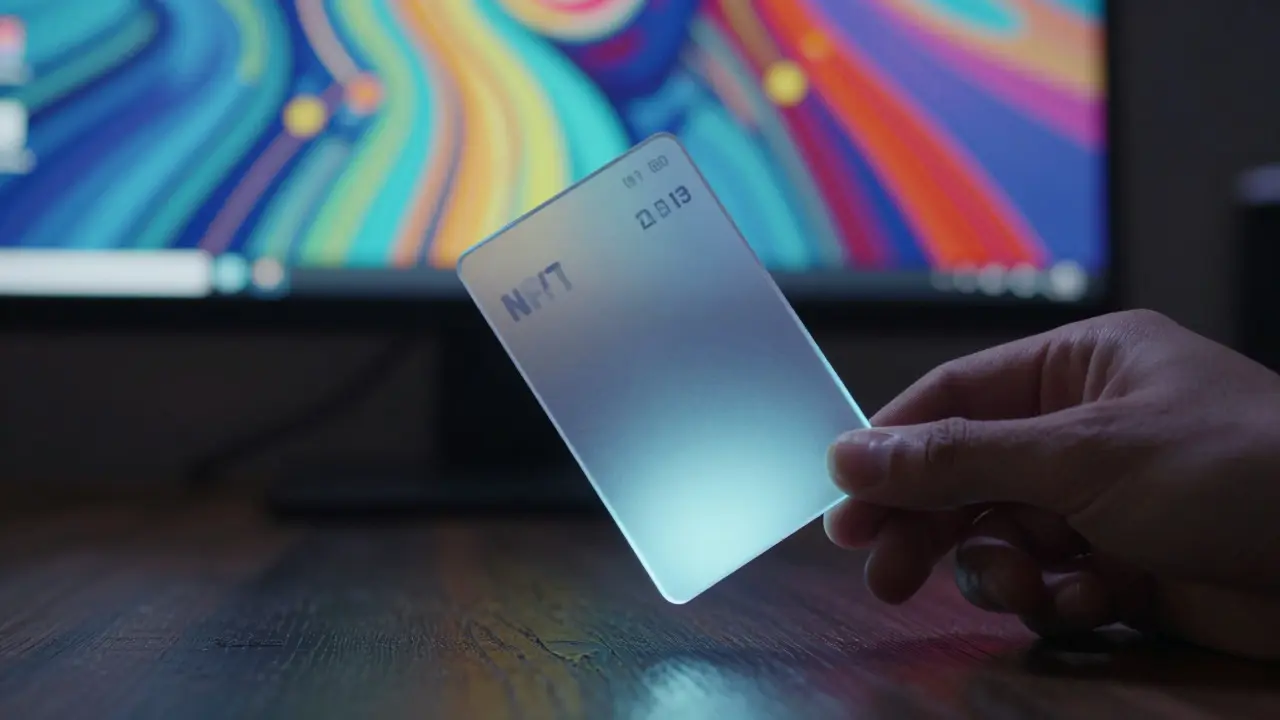
Buying an NFT is often described as owning a piece of digital art. But legally? It’s usually just owning a receipt.
Here’s the uncomfortable truth: when you buy an NFT, you don’t automatically own the copyright to the artwork. You own the token-a unique string of data on the blockchain. The artist keeps the copyright unless they explicitly sign it over to you in writing. This distinction confuses collectors, frustrates artists, and creates legal gray areas that are only getting more complex as the market matures.
The Core Confusion: Token vs. Artwork
To understand why this matters, you have to separate four distinct property interests that people often lump together:
- The physical original: If the work exists on canvas or paper, who holds the object?
- The digital copies: Anyone can right-click and save the image. Who owns those files?
- The copyright: The legal right to reproduce, display, or create derivatives. Who holds this?
- The NFT token: The smart contract entry on the blockchain. Who controls the private key?
When you purchase an NFT, you typically acquire only the fourth item. The smart contract gives you sole access to that specific tokenized record. But copyright law operates under a default presumption: the creator owns the copyright until they take affirmative legal action to transfer it. No signature, no transfer. It’s as simple as that.
What the Law Says About Transfers
Under U.S. Copyright Code Section 204(a), any transfer of copyright ownership must be made in signed writing to be valid. This isn’t a suggestion; it’s a legal requirement. If an artist mints an NFT and sells it without a written agreement stating "copyright assigned," the buyer gets the token, but the artist retains the right to sell prints, license the image for merchandise, or use it in films.
This creates two main pathways for rights management beyond a full assignment:
- Exclusive License: The licensee becomes the only person authorized to use specific rights (e.g., commercial display). The copyright owner cannot license those same rights to anyone else. This must be in writing to be enforceable.
- Non-Exclusive License: The licensee can use the rights, but the copyright owner can also license them to others. While technically possible orally, relying on implied consent is risky and rarely advisable in high-value transactions.
Most NFT marketplaces don’t handle this paperwork for you. They verify wallet addresses, not intellectual property portfolios. So if you’re buying an NFT expecting commercial rights, check the metadata or contact the artist directly. Don’t assume the sale includes more than the token itself.
The Right-Click Problem
One of the biggest sources of frustration for NFT owners is the technical reality that anyone can copy the underlying file. If someone right-clicks your $50,000 Beeple-style artwork and saves it to their desktop, have they infringed your rights?
Not necessarily. Owning the NFT means you’re the registered owner of the designated original copy on the blockchain. The person who saved the file possesses only a copy. Unless the copy was used to create a derivative work or sold as a competing asset, it might not trigger a copyright claim. However, if they mint *their* copy as a new NFT and sell it, that’s where infringement usually kicks in.
This gap between technical accessibility and legal protection is why provenance matters. The blockchain records who held the token at each point in time, creating a verifiable history of ownership. That history doesn’t stop piracy, but it strengthens your position in court by proving you were the legitimate holder of the primary asset.
Who Can Sue for Infringement?
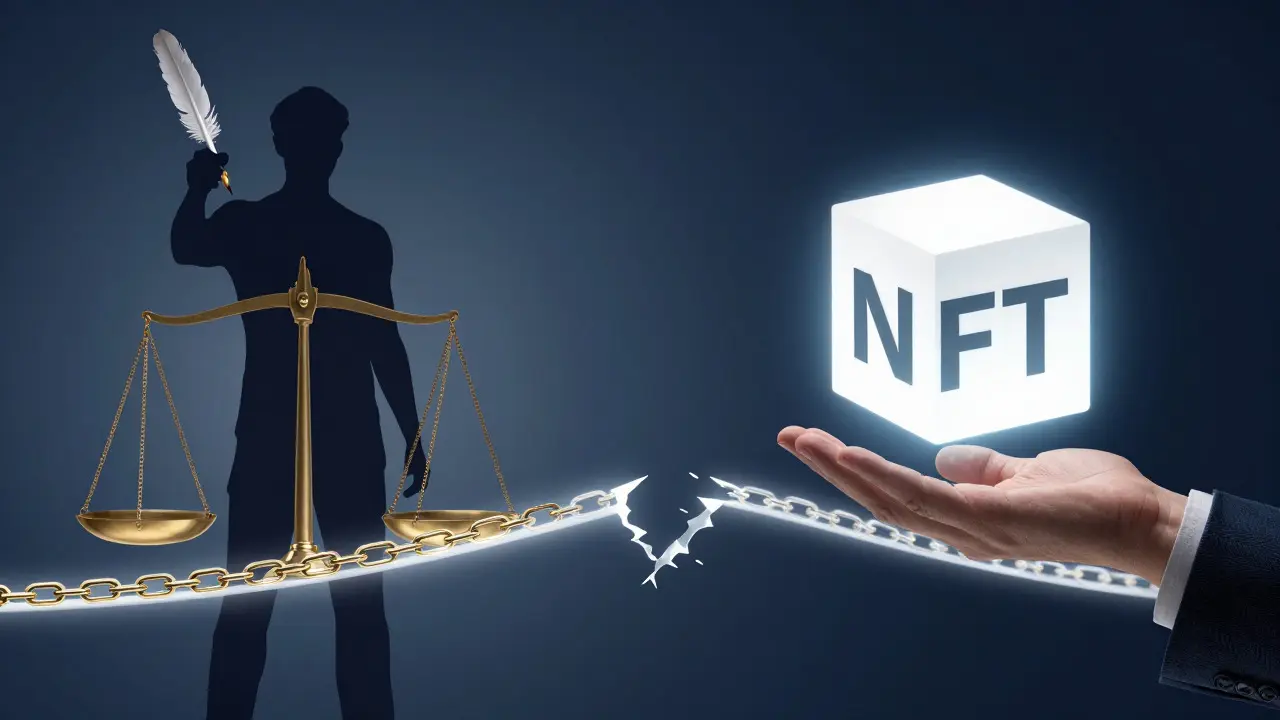
Only the copyright owner-or someone specifically authorized by them-can legally enforce copyright claims against an infringing NFT. This creates a significant enforcement challenge because NFT marketplaces typically perform no verification of copyright ownership before an NFT is minted.
Bad actors exploit this by minting popular artworks without permission. By the time the real artist notices, the infringing NFT may already be purchased by an innocent third party. Requests to prove ownership are frequently made only after the fact, which slows down takedowns and complicates legal resolution.
If you’re an artist, document your creation process. Keep source files, timestamp drafts, and consider registering your work with the U.S. Copyright Office. These steps make it easier to prove authorship if someone steals your work and mints it as an NFT.
Hidden Pitfalls: Employment and Commissions
Not all artists own the copyrights to their creations. A critical exception exists for works created under employment or commission contracts. If an artist created a piece for an employer, or if a client commissioned the work through a written contract specifying ownership, the hiring party usually holds the copyright.
This means an artist might mint an NFT of a logo they designed for a company, only to find out the company owns the copyright. The artist can sell the token, but they can’t guarantee the buyer has clear title to the underlying IP. For buyers, this adds another layer of due diligence: ask if the work was created independently or under contract.
Do NFTs Themselves Have Copyright?
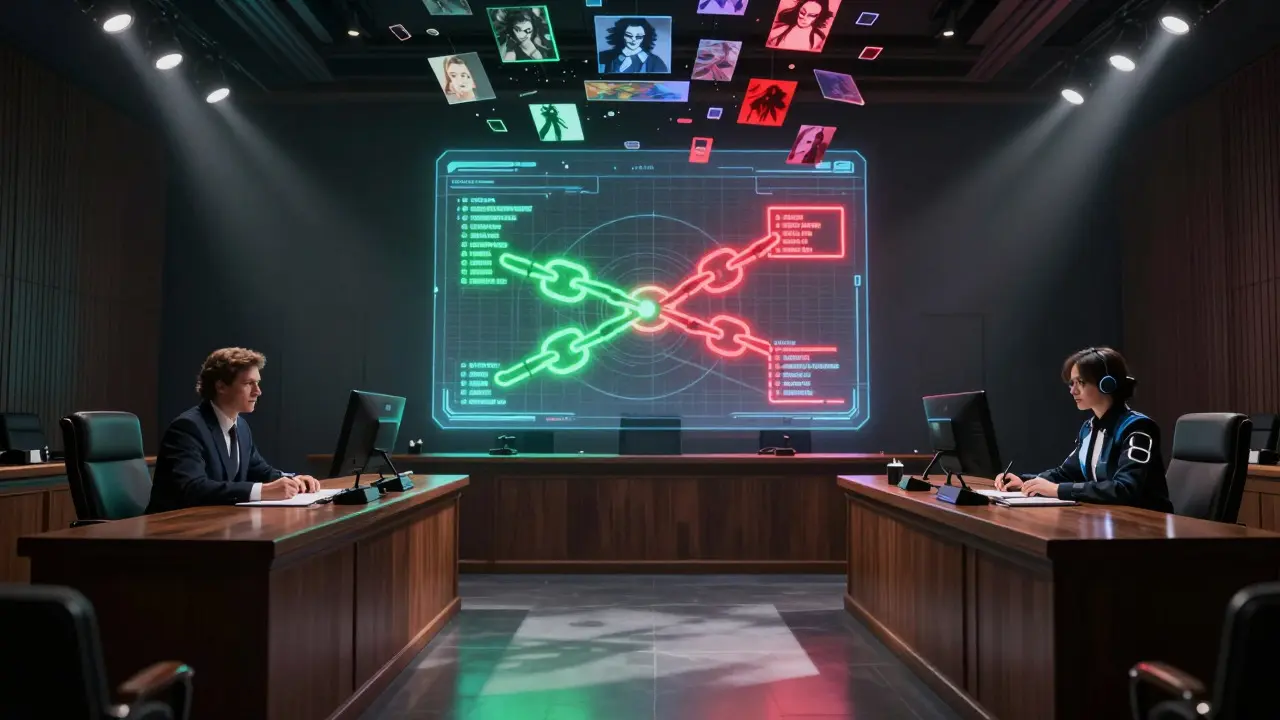
Surprisingly, the NFT token itself is likely not protected by copyright. Copyright requires an "original work of authorship." An NFT is essentially data on a blockchain-a unique identifier linked to a file. It doesn’t meet the creative threshold for copyright protection.
However, the artwork *associated* with the NFT may be protected. If the artist created an original digital painting, that painting has copyright. The NFT serves as a certificate of authenticity for that painting, but the legal protection flows from the art, not the token structure.
Beyond Copyright: Personality Rights and Third Parties
Copyright isn’t the only legal issue. If an NFT features a recognizable celebrity, brand, or trademark, other rights come into play. For example, using a famous actor’s likeness without permission violates their right of publicity. The NFT buyer owns the token, but they don’t own the right to use that celebrity’s face commercially.
Similarly, if the artwork includes a trademarked character, the trademark owner could sue for infringement. These third-party rights exist independently of copyright and aren’t transferred simply by selling the NFT. Always check for embedded IP risks before buying high-profile collaborative pieces.
Practical Steps for Buyers and Sellers
Navigating this landscape requires intentionality. Here’s how to protect yourself:
- Read the Metadata: Check the token’s description field for explicit statements about rights. Look for phrases like "Personal Use Only" or "Commercial License Included."
- Get It in Writing: If you need commercial rights, negotiate a separate license agreement. Don’t rely on verbal promises or marketplace terms.
- Verify Provenance: Use blockchain explorers to trace the token’s history. Ensure the seller is the current owner and that the chain of custody is unbroken.
- Document Creation: Artists should keep proof of authorship. Registration with the Copyright Office provides strong evidence in disputes.
- Clarify Resale Royalties: Some smart contracts include built-in royalties for secondary sales. Understand how these work and whether they apply to your specific transaction.
The legal framework for NFTs is still evolving. The U.S. Copyright Office and Patent and Trademark Office have noted that while NFTs offer benefits like enhanced provenance and automated royalty payments, they also create challenges due to pseudonymous ownership and decentralized storage. As regulations tighten, expect clearer guidelines on what constitutes a valid transfer of rights.
For now, the safest rule remains: the NFT is the ticket, not the show. You own the entry pass, but the performance belongs to the creator unless they say otherwise in writing.
Does buying an NFT give me the right to sell prints of the artwork?
Usually, no. Selling prints requires the reproduction right, which is part of copyright. Unless the artist explicitly transfers or licenses this right in a written agreement, you only own the NFT token, not the right to produce physical or digital copies for sale.
Can I use my NFT artwork in a movie or video game?
Only if you have a license or assignment covering derivative works and public performance/display rights. Most standard NFT sales do not include these commercial usage rights. Contact the copyright holder to negotiate a specific license for media production.
What happens if an artist dies? Do I get the copyright?
No. Copyright is inheritable property. If the artist dies, their copyright passes to their heirs or estate according to their will or local inheritance laws. Your NFT ownership does not change this. You still only own the token unless a prior agreement stated otherwise.
Is it illegal to screenshot an NFT?
Taking a screenshot is generally not illegal in itself, as it creates a personal copy. However, distributing that copy commercially or minting it as a new NFT without permission likely constitutes copyright infringement. The legality depends on how you use the copy, not just the act of saving it.
How do I prove I own the copyright to my NFT artwork?
Keep detailed records of your creative process, including source files, timestamps, and drafts. Registering the work with the U.S. Copyright Office provides the strongest legal proof of authorship and ownership, making it easier to enforce your rights in case of disputes.

Comments (13)
Dave Gibbeson August 23 2026
Let's cut through the noise here. You are buying a receipt, not the art. Period.
If you think you own the copyright because you spent $50k on a JPEG, you are delusional. The law is clear: Section 204(a) requires signed writing for transfer. No signature? No rights.
Stop acting like the blockchain magically grants you IP rights. It doesn't. It just tracks who holds the token. That's it. That's all it does.
So if you want to sell prints or license the image for a movie, go ask the artist. And get it in writing. Don't rely on vibes or marketplace terms. They mean nothing in court.
Sabrina Newland August 23 2026
this whole thing feels so paradoxical 🤔
we treat these digital objects like they have soul and history but legally they are just strings of code
it makes me wonder what we actually value when we buy something online
is it the object itself or the story attached to it?
i think the 'receipt' metaphor is spot on but also kind of sad
we are paying for a certificate of authenticity in a world where copying is free
maybe that is the new luxury
owning the original link rather than the file itself
Courtney Wagstaff August 25 2026
Okay, this is super helpful because I’ve been feeling a bit fuzzy about this stuff lately. I bought a cool generative art piece last year and honestly never thought twice about whether I could make a t-shirt with it on it. Now I’m pretty sure I can’t! 😂
I love how you broke down the four distinct property interests. It’s like untangling a really messy ball of yarn. The physical original, the copies, the copyright, and the token. Keeping those separate in my head is going to be a game changer for my next purchase.
Also, the part about right-clicking saved me from some anxiety. I was worried someone stealing my wallpaper would sue me, but sounds like it’s only a problem if they try to mint their own version. Phew!
Art HND August 26 2026
Most people don't read past the first paragraph.
They see 'NFT' and think 'money'.
They miss the legal nuance.
The token is the only thing that matters.
Copyright is a relic.
Don't waste your time worrying about it unless you plan to sue someone.
Which you won't.
You're too busy chasing the next trend.
Amara Akbar August 28 2026
Thank you for such a thorough breakdown. It is quite refreshing to see a post that distinguishes between the token and the intellectual property so clearly. Many discussions in this space tend to conflate the two, leading to unnecessary confusion among collectors.
I particularly appreciate the section on employment and commissions. This is a hidden pitfall that many independent artists overlook when minting work created for clients. It is crucial for buyers to verify the chain of title to ensure they are not purchasing a token with encumbered rights.
Your advice to check the metadata for explicit statements regarding usage rights is also very practical. It empowers buyers to take an active role in understanding exactly what they are acquiring, rather than relying on assumptions.
Mark Harvey August 29 2026
great points everyone
really need to read the fine print before hitting buy
its like buying a house without checking the deed
you might think you own the land but maybe you just own the mailbox
keep those records folks
timestamp everything
protect your work
Brandon Olvera August 31 2026
American law is the only standard that matters here. If you are buying an NFT in the US, you follow US Copyright Code. Don't let foreign jurisdictions muddy the waters. The smart contract is binding, but the copyright is sovereign territory. Keep it domestic. Keep it clean. The rest is noise.
Elizabeth Brooks August 31 2026
Just wanted to add that checking provenance isn't just about money, its about trust. I once bought a piece from an artist i loved and later found out he had sold the commercial rights to a brand three years prior. So the token was legit but the rights were already gone. Super frustrating. Always double check the history on the explorer before you drop big numbers. Its a small step but saves so much headache later.
Deb Kortyna, MBA August 31 2026
One must understand that the distinction between the asset and the right is fundamental to any serious investment strategy. To ignore this is to invite litigation. The market has matured; the excuses have evaporated. If one desires commercial utility, one must negotiate a license. Otherwise, one is merely holding a decorative token. Do not mistake possession for ownership. The law is unforgiving of ignorance.
alex kobri September 2 2026
interesting take on the 'right click' issue
i think we underestimate how hard it is to enforce these rights across borders
if someone in another country mints a copy do we even care
the blockchain proves ownership but not global enforcement
so in practice the 'original' is only as strong as the community behind it
which brings us back to reputation over law in many cases
Quintin Franzese September 2 2026
Sure, you own the receipt. Just like you own the ticket to the concert, but you can't walk onto the stage and start playing the drums. Unless the band says otherwise. Which they rarely do. Enjoy your little plastic card, it's all you've got.
Susan Cole September 3 2026
It is... interesting... to see so many people still confused by this basic concept. One would think that after a decade of digital assets, the difference between a file and a legal right would be obvious. But no. We keep pretending that the blockchain solves all legal problems. It doesn't. It just creates new ones. Perhaps if we slowed down and actually read the contracts, we wouldn't be surprised when our 'ownership' turns out to be purely symbolic. But then again, symbolism is all this industry ever was, wasn't it?
Tamara Miller September 4 2026
Finally, a post that admits the truth: we are all just holding IOUs. The 'art' is an illusion, the 'value' is a collective hallucination, and the 'law' is whatever the judge decides on a Tuesday morning. Stop romanticizing the tech. It's a database with extra steps. And yes, you can probably sue the person who stole your screenshot, but good luck getting them to pay up. The system is broken, and pretending otherwise is just expensive cope.