

What’s really happening with digital money?
Imagine paying for coffee with a digital token that settles in under a second, no bank in between. Now imagine that same payment is tracked, logged, and monitored by your government. These aren’t science fiction scenarios-they’re real choices shaping the future of money. On one side, you’ve got CBDCs-Central Bank Digital Currencies-issued and controlled by governments. On the other, private stablecoins like USDT and USDC, backed by real assets and running on public blockchains. They’re not just different technologies. They represent opposing philosophies about who should control money.
As of early 2026, 134 countries are exploring CBDCs. Eleven have already launched them. Meanwhile, private stablecoins are handling over $250 billion in daily transactions, with a total market cap of $300 billion. That’s not a niche experiment-it’s a parallel financial system already in motion. So are they rivals? Or can they actually work together?
How CBDCs and stablecoins are built differently
At their core, CBDCs and stablecoins are built for completely different reasons. Stablecoins were born out of crypto’s need for price stability. Tether (USDT) launched in 2015 to let traders hold a digital asset that didn’t swing like Bitcoin. Today, they’re minted and burned based on demand. If you buy $1 million in USDC, Circle issues $1 million in reserves to back it. Simple. Market-driven.
CBDCs are the opposite. They’re policy tools. China’s e-CNY, for example, isn’t just a digital yuan-it’s a way for the People’s Bank of China to control how money flows. They can program expiration dates on stimulus payments. They can restrict spending to certain stores or categories. That’s not convenience-it’s economic control.
Technically, stablecoins run on public blockchains: Ethereum, Solana, Tron. Settlements take 1-2 seconds. Fees? Less than a penny. They work 24/7, no holidays, no bank closures. CBDCs? They’re a patchwork. China’s system is hybrid-part centralized, part distributed. The EU’s digital euro prototype is still in testing. Project mBridge, a multi-country CBDC initiative, can settle cross-border payments in seconds-but only between participating central banks. No public access.
Privacy: Your money, your secrets-or the government’s?
This is where things get personal. With stablecoins, transactions are pseudonymous. You don’t need to give your name. Blockchain explorers show addresses and amounts, but not who owns them-unless you link your wallet to an exchange that knows your ID. That’s why people use them in places with capital controls or unstable currencies.
CBDCs are designed for visibility. Every transaction can be traced back to your identity. The European Central Bank and IMF both admit this. Their goal isn’t secrecy-it’s compliance. Fighting money laundering, tax evasion, terrorism financing. But that also means your spending habits become data points in a government database. In China, e-CNY users report feeling watched. One Reddit user wrote: “I can’t buy a book from an independent publisher without wondering if it’s flagged.”
There’s no middle ground here. You can’t have both anonymity and state oversight. Pick your side.
Who’s using what-and why
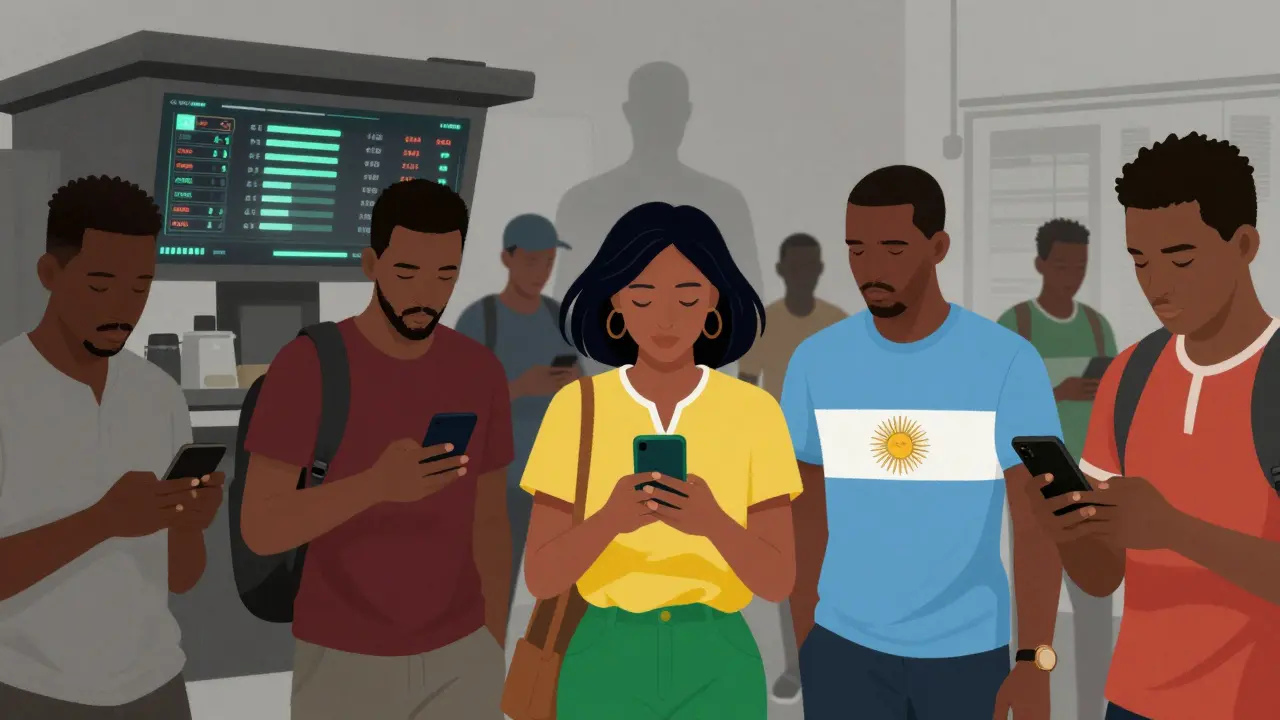
Stablecoins are winning in the real world. Merchants in Nigeria, Argentina, and even parts of the U.S. are adopting them because they cut transaction fees from 3% down to 0.5%. Cross-border remittances? Stablecoins bring fees from 6.5% to under 1%. That’s $58.5 billion saved annually on global remittances, according to the World Bank.
Enterprise adoption? Over $190 billion in stablecoin use cases already-payroll, supply chain payments, international invoicing. Companies like Circle and Coinbase offer developer tools that let businesses integrate USDC in days. StackOverflow’s 2025 survey gave USDC’s API a 4.7 out of 5 for ease of use.
CBDCs? Mostly government pilots. Sweden’s e-krona took 6-8 months just to connect to banks. Nigeria’s CBDC, the eNaira, has seen minimal adoption. Why? Because you need a bank account, a government ID, and approval from the central bank. Stablecoins? Just download an app. Any phone with internet works.
And here’s the kicker: stablecoins don’t need permission. CBDCs do.
Can they coexist? The emerging middle ground
It’s not a zero-sum game. The most forward-thinking central banks already know this. The Bank of England’s 2026 paper proposed “synthetic CBDCs”-where regulated private stablecoin issuers operate under central bank supervision. Think of it like a licensed bank, but digital. The BIS’s Project Atlas already proved CBDCs and stablecoins can talk to each other in cross-border tests.
Professor Neha Narula from MIT put it best: “Stablecoins handle international commerce. CBDCs manage domestic policy.” That’s not competition-it’s division of labor.
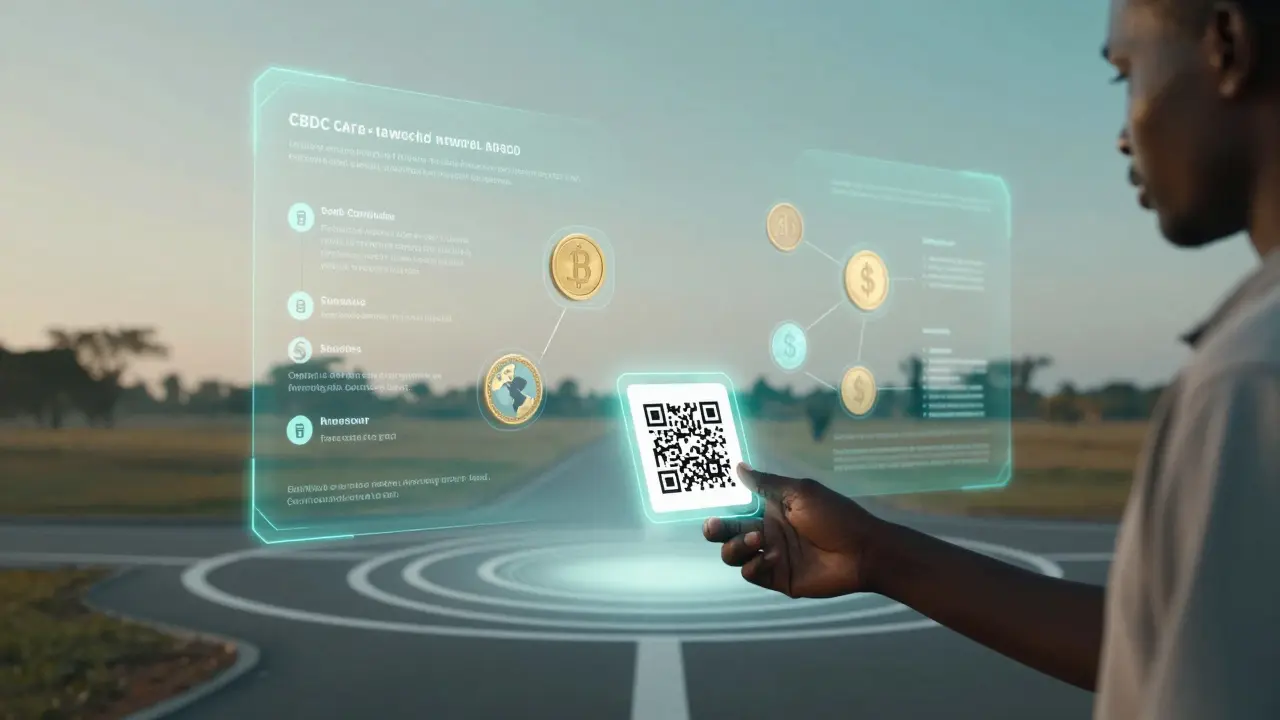
Imagine this: A Ugandan farmer sells coffee to a buyer in Germany. The buyer pays in USDC. The German retailer converts it to a digital euro via a regulated gateway tied to the ECB. The farmer gets paid instantly, at near-zero cost, and the central bank still controls the domestic money supply. That’s the hybrid future.
But it only works if regulation is clear. Singapore’s 2025 Payment Services Act is a blueprint-require reserves, mandate audits, allow innovation under guard. Nigeria’s ban? That’s a dead end. It pushes users underground and cuts them off from global finance.
The risks if we get this wrong
Stablecoins aren’t perfect. They’ve had runs-remember TerraUSD collapsing in 2022? That’s why the U.S. passed the Stablecoin Transparency Act in 2024: 100% reserve backing, monthly audits. It’s strict, but necessary. Without it, trust evaporates.
CBDCs carry their own dangers. If every transaction is tracked, what stops governments from freezing accounts? What happens if a regime uses CBDCs to punish dissent? China’s e-CNY already restricts spending on “non-essential” goods in pilot zones. That’s not financial innovation-it’s social control.
And then there’s fragmentation. If the U.S. launches a digital dollar, the EU a digital euro, and China a digital yuan-all with different rules, no interoperability-you get digital trade blocs. Small economies get locked out. That’s the IMF’s biggest fear: a splintered global financial system.
But the alternative isn’t chaos. It’s coordination. The World Economic Forum predicts three models by 2030: CBDC-dominant, stablecoin-integrated, or hybrid. The winners will be the countries that build bridges, not walls.
What does this mean for you?
If you’re a small business owner: stablecoins give you faster, cheaper payments. Use them. But make sure you’re using regulated ones-USDC, DAI, or EURC-not random tokens.
If you live in a country with inflation or capital controls: stablecoins are your financial lifeline. They’re not perfect, but they’re better than losing half your savings to currency devaluation.
If you’re a policymaker: don’t ban stablecoins. Regulate them. Partner with them. Let innovation happen under guard.
CBDCs aren’t going away. They’re coming. But they don’t have to replace everything. They can work alongside stablecoins-if we choose cooperation over control.
Are CBDCs the same as stablecoins?
No. CBDCs are digital versions of national currencies issued by central banks-like a digital dollar or euro. Stablecoins are privately issued tokens pegged to assets like the U.S. dollar or gold. CBDCs are policy tools; stablecoins are market-driven. One is government-controlled, the other is privately backed and operated.
Can I use stablecoins instead of my bank account?
Yes, in many places. If you have internet access, you can hold, send, and receive stablecoins without a bank. People in countries like Nigeria and Argentina use them to bypass currency controls and inflation. But they’re not FDIC-insured, so there’s no government guarantee if the issuer fails. Use regulated ones like USDC or USDT with full reserve transparency.
Why do some governments ban stablecoins?
Governments ban stablecoins when they lose control over their currency. Nigeria banned them in 2025 after the naira crashed, fearing people would abandon the local currency. China restricts them to prevent capital flight. But bans often backfire-they push users into unregulated channels, hurt financial inclusion, and isolate the economy from global digital finance.
Do CBDCs offer better privacy than stablecoins?
No. CBDCs are designed for government oversight-every transaction can be traced to your identity. Stablecoins offer pseudonymity: your wallet address is visible, but not your name. Privacy with stablecoins depends on how you use them-using an exchange that knows your ID reduces anonymity. But CBDCs are built to track.
Will CBDCs replace cash?
Some central banks say they want to keep cash as an option. The ECB and Bank of England both stress that CBDCs should complement, not replace, physical money. But in practice, if digital payments become the only option-especially with programmable features like expiration dates or spending limits-cash could fade out quietly. The risk is losing financial freedom for convenience.
Which is better for international payments: CBDCs or stablecoins?
Right now, stablecoins win. They settle in seconds, cost pennies, and work across borders without intermediaries. CBDCs are still mostly domestic. Multi-CBDC projects like mBridge show promise, but they require central banks to agree on standards-which takes years. Stablecoins are already doing it, with $250 billion in daily cross-border volume.
Can I lose money using stablecoins?
Yes. If the issuer doesn’t hold enough reserves, the peg can break-like TerraUSD in 2022. That’s why you should only use stablecoins with full, audited backing: USDC (Circle), USDT (Tether), or DAI (MakerDAO). Look for monthly reserve reports. Avoid obscure tokens with no transparency.
What’s the future of CBDCs and stablecoins?
The future isn’t one replacing the other. It’s hybrid. Regulated stablecoins will handle global commerce and fast payments. CBDCs will manage domestic monetary policy, stimulus, and financial inclusion. Countries that build interoperability-like Singapore and the EU-will lead. Those that ban or ignore one side will fall behind.
Final thought: It’s not about technology-it’s about power
CBDCs and stablecoins aren’t just different payment methods. They’re different visions of society. One gives control to the state. The other gives power to the individual. The real question isn’t which is faster or cheaper. It’s: who do you trust to manage your money?

Comments (9)
Paul Timms February 4 2026
Stablecoins are just digital cash with better tech. No need for overregulated CBDCs when the market already solved it.
Jeroen Post February 4 2026
CBDCs are the first step to full financial enslavement. They track your coffee, your books, your protests. The Fed's already testing spending limits. This isn't innovation-it's a surveillance grid dressed as currency. They'll freeze your account if you buy the wrong book. You think this is about efficiency? It's about control. Welcome to the digital gulag.
Nathaniel Petrovick February 5 2026
Man I’ve been using USDC for my freelance gigs and it’s been a game changer. No more waiting 3 days for PayPal to clear. Just send and get paid instantly. And the fees? Like 0.1%. I wish more small biz owners knew about this.
Honey Jonson February 7 2026
im just glad i can send money to my fam in mexico without them getting charged like 10% lol stablecoins are lifesavers. also why does everyone act like cbdc’s are the future like its inevitable? maybe people just dont want to be tracked??
Sally McElroy February 8 2026
It's not just about privacy-it's about sovereignty. When you allow the state to monitor every transaction, you surrender your autonomy. The fact that people are okay with this shows how deeply conditioned we've become to surveillance capitalism. This isn't progress-it's a quiet coup.
Destiny Brumbaugh February 9 2026
CBDCs are American innovation. We built the internet, we built the dollar, now we're building the future of money. Why are we letting private companies like Tether run wild? They don't answer to anyone. The U.S. digital dollar will be secure, transparent, and backed by the full faith of the United States. That's what real leadership looks like.
Sara Escanciano February 10 2026
Stablecoins are a scam waiting to collapse. TerraUSD wiped out billions. Tether's reserves are a black box. If you're using them, you're gambling with your life savings. CBDCs may be invasive, but at least they're backed by actual governments-not some crypto bros in a garage.
Elmer Burgos February 11 2026
I think both have their place. Stablecoins for global trade and fast payments, CBDCs for domestic policy and financial inclusion. The real win is if they can talk to each other. Singapore’s already doing it. Why can’t we? No need to pick sides if we can build bridges.
Jason Townsend February 12 2026
They’re not coexisting. They’re converging. The moment the Fed says ‘use USDC under our watch’-that’s the end of true decentralization. You think you’re free because you hold USDC? Nah. You’re just a node in a government-controlled system with a fancy name. The crypto dream is dead. They own it now.