
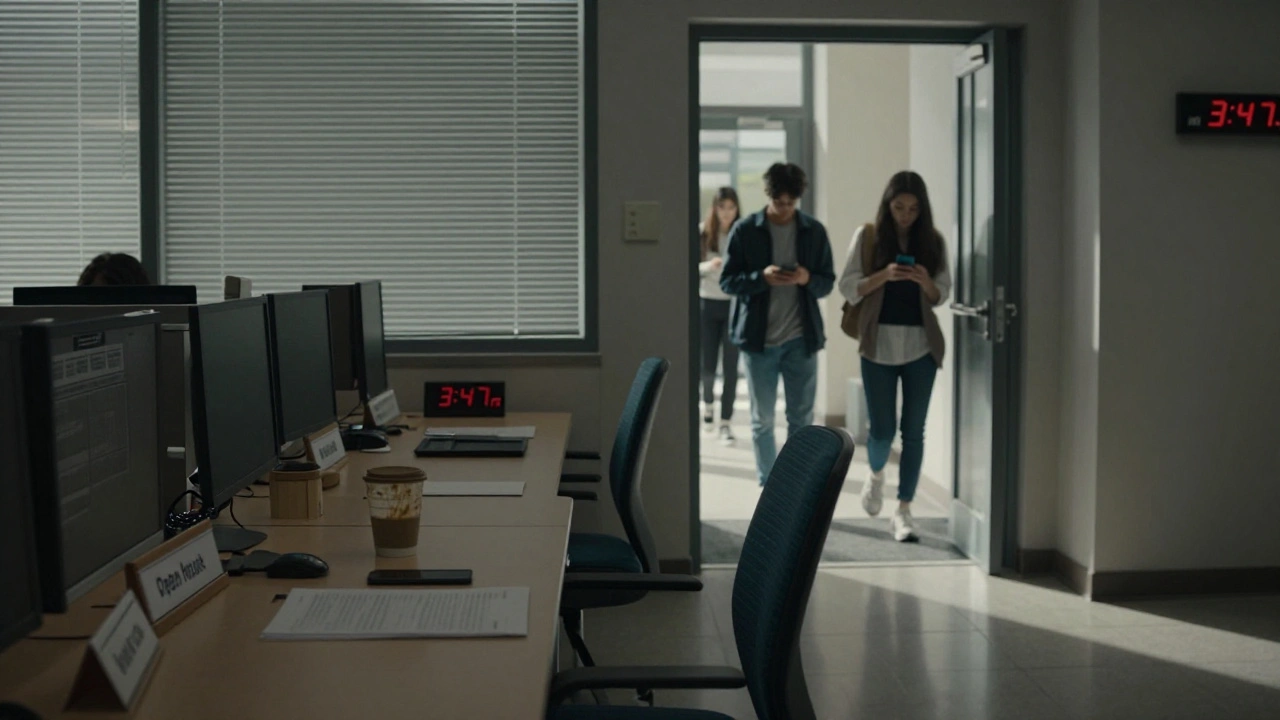
Students show up to office hours expecting help. What they often get is confusion, long waits, or worse - silence. If your office hours feel like a ghost town, or worse, a bottleneck, it’s not because students aren’t trying. It’s because the format is broken. The old model of open office hours - sitting alone at a desk, waiting for someone to knock - doesn’t work anymore. Students don’t just need answers. They need structure, relevance, and connection.
Open Office Hours: The Default That’s Failing
Open office hours are simple in theory: show up whenever you can, stay as long as you need. In practice? They’re a gamble. Most students won’t come unless they’re desperate. Why? Because they don’t know if you’ll be there. They don’t know if you’ll have time. They don’t know if their question will even make sense to you.
A 2024 survey of 1,200 undergraduates across UK universities found that only 23% of students attended open office hours regularly. The rest said they waited until the night before an exam - or gave up entirely. The biggest reason? Uncertainty. Students don’t want to waste time showing up to an empty room.
Open office hours aren’t useless. They work for students who are self-directed, have flexible schedules, or need one-on-one troubleshooting. But for the majority? They’re a passive solution to an active problem.
Themed Office Hours: Focus Where It Matters
What if you stopped asking students to figure out what to ask - and told them exactly what you’d cover?
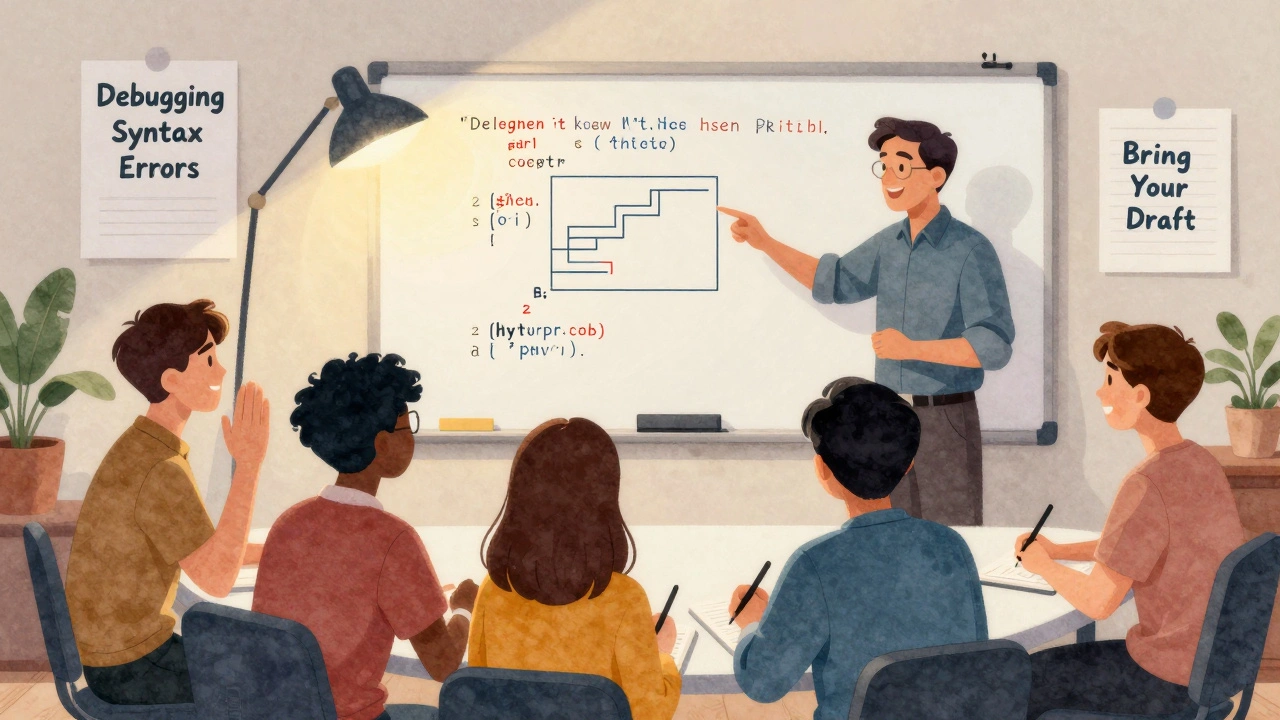
Themed office hours change the game. Instead of "Come with any question," you say: "This week, we’re tackling Python loops and debugging syntax errors." Or: "Bring your draft thesis statement - we’ll workshop structure."
Students show up because they know what to expect. They come prepared. They know they’ll get targeted help. And you? You stop wasting time on questions you’ve answered a dozen times. You focus on the gaps.
At the University of Edinburgh, a computer science department switched from open to themed office hours last semester. Attendance jumped from 18% to 67%. Why? Because students could plan around them. They didn’t need to guess. They could block time in their calendar, just like a lecture.
Themed hours also let you group similar problems. One session on citation formatting. Another on interpreting feedback. Another on time management for group projects. Each becomes a mini-workshop. You’re not just answering questions - you’re teaching skills.
Coaching Rotations: The Peer-Powered System
What if your office hours didn’t rely on you being the only expert?
Coaching rotations bring in trained peer mentors - usually upper-year students who’ve aced the course - to lead small-group sessions alongside you. You rotate through groups every 15-20 minutes, jumping in where help is needed most. The mentors handle routine questions. You handle the deep dives.
This isn’t just about reducing your workload. It’s about trust. Students often feel more comfortable asking a peer than a professor. They’re less afraid of sounding "stupid." And mentors learn by teaching - which boosts their own retention and confidence.
A 2025 study from the University of Glasgow tracked 800 students in STEM courses using coaching rotations. Those who participated scored 12% higher on final assessments. More importantly, 89% said they felt less anxious about asking for help.
Setup is simple: recruit 3-5 mentors per course. Give them a 90-minute training on active listening and common student misconceptions. Schedule 2-3 rotation sessions per week. You stay involved, but you’re no longer the bottleneck.
Why One Format Isn’t Enough
Some instructors swear by open hours. Others love themed sessions. Coaching rotations feel like overkill. But here’s the truth: students aren’t one-size-fits-all.
First-year students? They need structure. Themed hours give them direction. Second-years? They’re more confident but juggling deadlines. Coaching rotations offer quick, low-pressure help. Advanced students? They want deep conversations. Open hours let them linger and explore.
The best approach blends all three - not all at once, but in rotation. Week 1: themed sessions on core concepts. Week 2: coaching rotations for problem sets. Week 3: open hours for final project feedback.
This rhythm gives students choice without chaos. It builds familiarity. They know what to expect next. And you? You’re not just reacting - you’re designing engagement.
How to Start Without Overwhelming Yourself
You don’t need to overhaul everything tomorrow. Start small.
- Try one themed session per week. Pick the topic students struggle with most - check your LMS analytics or ask in a quick poll.
- Recruit one peer mentor. Give them a simple guide: "Answer these 5 common questions. If they ask something you don’t know, write it down and pass it to me."
- Keep open hours, but make them optional. Post a sign-up sheet. Say: "Only come if you’ve tried everything else."
After four weeks, ask students: "Which format helped you the most? Why?" Their answers will tell you what to keep, drop, or expand.

Common Pitfalls and How to Avoid Them
Themed hours can feel rigid. If you only cover what’s on the syllabus, you miss the real struggles. Always leave 10 minutes at the end for "anything else."
Coaching rotations fail when mentors aren’t trained. Don’t assume they know how to explain things. Teach them to ask, "What have you tried so far?" instead of giving answers.
Open hours become meaningless if you don’t show up. Block the time. Put it on your calendar. Treat it like a class. If you’re sick or late, cancel and reschedule - don’t ghost.
And never, ever say, "I’m here if you need me." That’s code for "I’m not really here."
What Success Looks Like
Success isn’t just higher grades - though those help. It’s students who feel seen. Who know where to go. Who aren’t afraid to ask. Who come back next week.
At Heriot-Watt University, a physics lecturer started themed office hours and coaching rotations in January. By April, she had 12 students who came every week - not because they were failing, but because they liked the space. One told her: "It’s the only time I feel like I’m not just a number."
That’s the goal. Not more attendance. More belonging.
Which office hours format works best for first-year students?
Themed office hours work best for first-year students because they provide clear structure and reduce anxiety about what to ask. First-years often don’t know how to phrase their questions or which topics are most important. By naming the focus - like "debugging Python loops" or "understanding lab reports" - you give them a roadmap. This leads to better preparation and higher attendance.
Can coaching rotations replace professor office hours entirely?
No, coaching rotations should not replace professor office hours. They’re designed to support them. Peer mentors handle routine questions and common misunderstandings, freeing up the professor for deeper conceptual work, complex feedback, and one-on-one mentorship. The professor’s presence signals authority and availability for advanced or personal concerns. The best systems use both: mentors for efficiency, professors for depth.
How do I train peer mentors for coaching rotations?
Start with a 90-minute session covering three things: common student mistakes in your course, how to ask guiding questions instead of giving answers, and when to escalate to you. Provide a one-page cheat sheet with top 5 questions students ask and how to respond. Role-play scenarios. Encourage mentors to take notes on recurring issues - you’ll use those to improve your lectures and themed sessions.
Should I offer office hours during exam week?
Yes - but change the format. During exam week, students are overwhelmed. Skip themed sessions. Avoid long coaching rotations. Instead, offer short, scheduled 15-minute slots. Use a sign-up sheet. Focus only on clarifying key concepts or last-minute confusion. Keep it fast, focused, and low-pressure. Many students won’t come unless they know exactly when you’ll be available.
What if no one shows up to my themed office hours?
First, check your topic. Did you pick something students actually struggle with? Look at quiz scores, assignment feedback, or LMS analytics. Second, promote it. Don’t just post it on the syllabus. Send a short email the day before: "Tomorrow’s office hour is all about fixing your essay thesis - come with your draft. We’ll fix it together." Third, make it low-stakes. Say: "No prep needed - just bring curiosity." Sometimes, it takes two or three tries before students trust the format.
Next Steps: Try One Change This Week
You don’t need a full system overhaul. Pick one thing to test.
- If you’re doing open hours: try one themed session next week. Pick the topic that shows up most in your emails.
- If you’re already doing themed hours: recruit one peer mentor. Give them a list of 5 common questions and let them lead the first 10 minutes.
- If you’re unsure: send a 30-second poll to your students: "What would make office hours more useful?" Use their answer to shape your next move.
Student engagement isn’t about being available. It’s about being predictable. When students know what to expect, when to come, and what they’ll get - they show up. And that’s when real learning begins.

Comments (8)
Abert Canada December 10 2025
Themed office hours are a game changer. I used to skip mine until finals, but now I show up every Tuesday because I know exactly what we're doing. Last week it was debugging Python loops and I walked out with my code actually working. No more guessing games.
Xavier Lévesque December 12 2025
So you're telling me the solution to student disengagement is... giving them a schedule? Shocking. Next you'll say water is wet and gravity exists.
Thabo mangena December 13 2025
It is truly commendable to observe such thoughtful pedagogical innovation. In my home country, we have long recognized that structured academic support systems foster not only academic excellence but also psychological safety for learners. The integration of peer mentoring, in particular, reflects a profound understanding of communal learning traditions.
Karl Fisher December 14 2025
Look, I’ve taught at Stanford and MIT, and let me tell you - this is basic. Everyone knows open office hours are dead. The real question is why it took you 2025 to figure it out. Also, did you know Harvard’s been doing coaching rotations since 2019? And they use AI to predict which students will drop out based on attendance patterns. Just saying.
Buddy Faith December 16 2025
Just try one themed hour. One. If no one comes you try something else. No big deal. Students ain't dumb they just need a nudge. I did this last semester and now my room is packed every week. Seriously. One change. That's all.
Sandi Johnson December 17 2025
Oh wow so we're not just supposed to show up and hope for the best anymore? What a radical idea. Next you'll tell me we should also not leave our keys in the car and always check the weather before going outside.
Eva Monhaut December 19 2025
I used to dread office hours. Felt like walking into a courtroom where everyone was judging your questions. Then we switched to themed sessions - one week on thesis structure, another on citation chaos. I showed up because I knew I’d leave with something useful, not just a shrug. Now I go even when I’m not struggling. It’s the only class time I feel like I actually belong.
Scott Perlman December 20 2025
My prof did coaching rotations and now I help other students. I didn’t know I knew so much until I had to explain it. Now I’m not scared to ask him stuff either. It’s like we’re all learning together.