
Most people think learning Python is just about writing scripts. They install the language, run a few 'Hello World' examples, and assume they are ready for a job. Then they hit a wall. The job market doesn't want scripters; it wants engineers who understand how data moves from a database to a user's screen without crashing the server. This gap between knowing syntax and building scalable systems is exactly why backend development bootcamps exist.
If you are looking at a Python backend bootcamp in 2026, you aren't just buying a course. You are investing in a structured transition from curiosity to employability. The landscape has shifted. AI-assisted coding is standard, cloud-native architectures are the norm, and employers expect you to know more than just the framework. This guide breaks down what a serious learning path looks like, what skills you will actually gain, and how to evaluate if a bootcamp is worth your time and money.
The Core Philosophy of a Backend-Focused Curriculum
A generic coding bootcamp often tries to teach everything: frontend, backend, design, and marketing. A specialized Python backend bootcamp goes deep rather than wide. The central entity here is Python Backend Development, which is the practice of building server-side logic, databases, and APIs using the Python programming language. Unlike frontend development, which focuses on visual elements, backend development is about reliability, security, and performance.
In a high-quality program, you will spend less time making buttons look pretty and more time ensuring that when 10,000 users click those buttons simultaneously, the server doesn't melt down. The curriculum typically revolves around three pillars:
- Server-Side Logic: How Python processes requests, handles authentication, and manages business rules.
- Data Persistence: Storing and retrieving information efficiently using relational and non-relational databases.
- API Design: Creating interfaces that allow different software systems to talk to each other securely.
This focus ensures that by the end of the program, you are not just a coder but a problem solver who understands the entire lifecycle of a request.
Essential Technologies You Will Master
You cannot learn backend development in a vacuum. You need tools. In 2026, the Python ecosystem is mature, but it is also fragmented. A good bootcamp curates this for you. Here are the specific entities you should expect to encounter and master.
| Technology Category | Primary Tools/Frameworks | Why It Matters |
|---|---|---|
| Web Frameworks | Django, FastAPI, Flask | Django offers an all-in-one solution with built-in admin panels. FastAPI is the modern choice for high-performance APIs and async operations. Flask provides minimalism for custom architectures. |
| Databases | PostgreSQL, Redis, MongoDB | PostgreSQL is the industry standard for relational data. Redis is used for caching and session management. MongoDB serves document-based storage needs. |
| DevOps & Deployment | Docker, Kubernetes, AWS/GCP | You must know how to containerize your app (Docker) and deploy it to the cloud. Employers rarely host apps on local servers anymore. |
| Testing & Quality | Pytest, Jest (for integration), CI/CD Pipelines | Writing code is easy; writing reliable code is hard. Automated testing ensures your changes don't break existing features. |
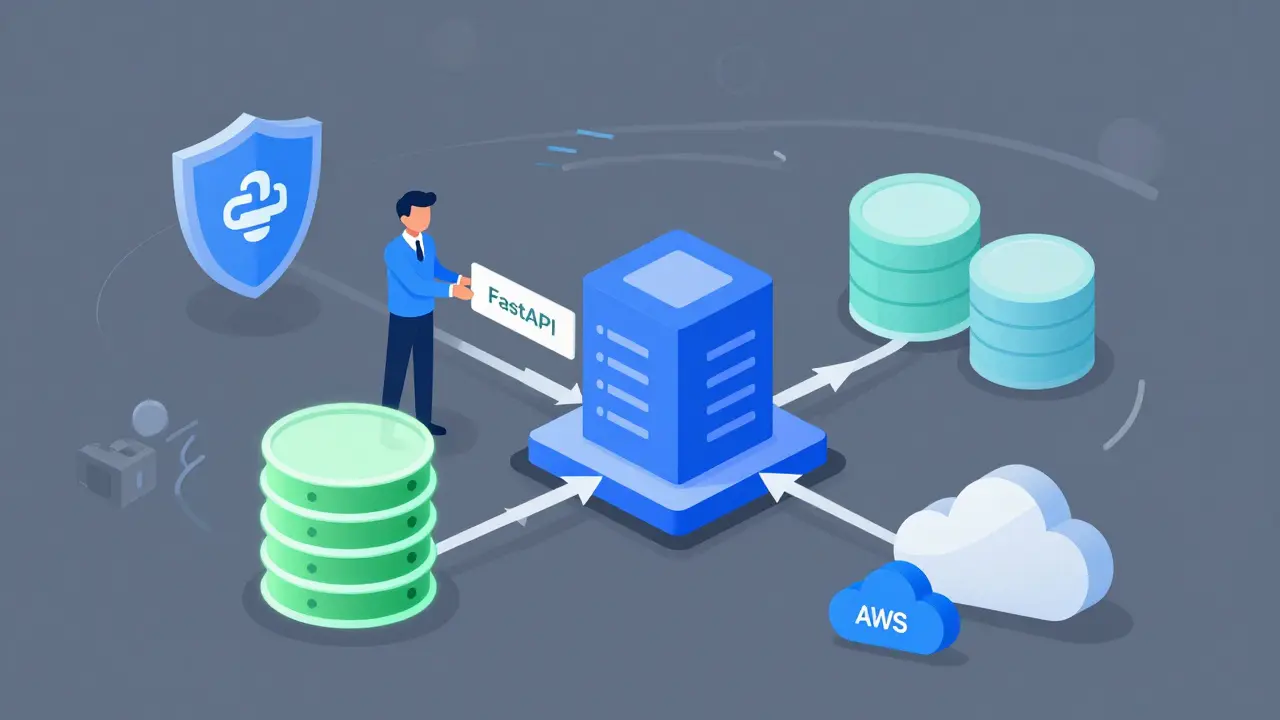
Notice the emphasis on FastAPI, which is a modern, fast web framework for building APIs with Python based on standard Python type hints. While Django remains dominant in enterprise legacy systems, FastAPI has surged in popularity for new projects due to its speed and automatic documentation generation. A forward-looking bootcamp will prioritize FastAPI alongside Django, giving you versatility.
The Project-Based Learning Methodology
The biggest mistake beginners make is watching tutorials without building anything. This is known as "tutorial hell." A legitimate bootcamp avoids this by forcing you into project-based learning early. You won't just read about RESTful APIs; you will build one.
Typically, the learning path follows a progression of complexity:
- The Static Site: You start by serving HTML files through a basic Python server. This teaches you the fundamentals of HTTP requests and responses.
- The Dynamic Application: You introduce a database. Now, when a user submits a form, the data is saved. You learn SQL queries and Object-Relational Mapping (ORM).
- The API Service: You strip away the frontend. Your Python app now returns JSON data. You learn authentication tokens (JWT) and rate limiting.
- The Microservice Architecture: You split your application into smaller services. One service handles users, another handles payments. They communicate via message queues like RabbitMQ or Kafka.
By the final project, you are usually tasked with building a clone of a real-world platform-like a simplified Airbnb or E-commerce store. This portfolio piece is crucial. When you apply for jobs, recruiters don't care about your certificate; they care about the GitHub repository you can show them.
Soft Skills and Engineering Practices
Coding is only half the job. The other half is collaborating. Backend developers rarely work in isolation. You will be part of a team that includes frontend developers, product managers, and DevOps engineers. Therefore, a comprehensive bootcamp integrates soft skills and engineering practices into the daily routine.
You will likely participate in:
- Code Reviews: Peers will critique your code. This sounds harsh, but it teaches you to write clean, readable code that others can maintain. You will learn to give and receive feedback constructively.
- Agile Methodologies: You will work in sprints, attend stand-up meetings, and use tools like Jira or Trello. This mirrors the actual workflow of most tech companies.
- Git Workflow: Version control is non-negotiable. You will learn branching strategies, merging conflicts, and pull request protocols. If you cannot use Git effectively, you cannot work in a professional team.
These practices transform you from a lone hacker into a professional engineer. Employers hire for attitude and train for skill, but they expect you to already understand how teams operate.
Evaluating Bootcamp Quality in 2026
Not all bootcamps are created equal. With the rise of AI coding assistants, some programs have cut corners, relying on students to generate code rather than understanding it. How do you spot a quality program? Look for these indicators:
1. Instructor Experience: Are the teachers current industry practitioners? Do they have GitHub profiles with recent activity? A teacher who hasn't coded in production in five years cannot teach you modern best practices.
2. Career Support Specificity: Generic career coaching is useless. Look for bootcamps that offer resume reviews tailored to technical roles, mock technical interviews with algorithm challenges, and direct introductions to hiring partners.
3. Transparency in Outcomes: Reputable bootcamps publish verified employment reports. Be wary of claims like "90% placement" without context. Ask about salary ranges and the types of roles graduates secure. Entry-level backend roles typically start between $70,000 and $90,000 in major US markets, depending on location.
4. Curriculum Freshness: Check the syllabus date. If it still heavily emphasizes jQuery or outdated Python 2 concepts, run away. The curriculum should reflect 2026 standards, including asynchronous programming, cloud deployment, and AI-integrated workflows.

Is a Bootcamp Right for You?
A bootcamp is an intense commitment. Most last between 12 to 24 weeks and require 40 to 60 hours per week. It is not a passive experience. You will face frustration, imposter syndrome, and long nights debugging code that refuses to work.
However, if you are disciplined and eager to pivot careers, the accelerated timeline is invaluable. Self-study can take years to reach the same level of competence because you lack structure and accountability. A bootcamp provides both. It forces you to confront your weaknesses and fills in the gaps in your knowledge systematically.
Consider your learning style. If you thrive in collaborative environments and benefit from immediate feedback, a cohort-based bootcamp is ideal. If you prefer self-paced learning, consider online alternatives, but be prepared to seek out community support independently.
Next Steps After Graduation
Graduating is not the finish line; it is the starting line. The job market for backend developers is competitive. To stand out, you should continue building projects post-bootcamp. Contribute to open-source Python libraries. Write technical blog posts explaining complex concepts. Network with other developers on platforms like LinkedIn and Twitter.
Remember, the goal is not just to get a job, but to build a sustainable career. The skills you learn in a Python backend bootcamp are transferable. Even if you switch frameworks later, the core principles of system design, database management, and API architecture remain constant. Invest in your education wisely, choose a program that prioritizes depth over breadth, and prepare to put in the work.
How long does it take to complete a Python backend bootcamp?
Most intensive, full-time Python backend bootcamps last between 12 and 16 weeks. Part-time options typically extend this duration to 24 to 36 weeks. The exact length depends on the curriculum depth and whether the program includes extensive career preparation modules.
Do I need prior coding experience to join a backend bootcamp?
While some bootcamps accept complete beginners, many backend-focused programs prefer candidates with basic programming knowledge. Understanding fundamental concepts like variables, loops, and functions before starting will significantly improve your chances of success. Some programs offer a pre-work module to bridge this gap.
What is the difference between Django and FastAPI for backend development?
Django is a "batteries-included" framework that provides everything you need out of the box, including an admin interface and ORM. It is great for rapid development of monolithic applications. FastAPI is a lightweight, high-performance framework focused on building APIs. It is better suited for microservices and applications requiring high concurrency and asynchronous processing.
Can I find a job as a backend developer after a bootcamp?
Yes, many bootcamp graduates secure entry-level backend developer roles. However, success depends on the quality of your portfolio, your ability to pass technical interviews, and the strength of the bootcamp's career services. Building real-world projects and networking are critical factors in landing your first role.
Is Python still relevant for backend development in 2026?
Absolutely. Python remains one of the top languages for backend development, particularly in data-intensive applications, machine learning integrations, and rapid prototyping. Its readability and vast ecosystem of libraries ensure its continued dominance in the industry.
