

Imagine waking up to find your project’s funding has dropped by 40% overnight. In traditional business, this is rare. In crypto, it’s Tuesday. This is the reality for decentralized autonomous organizations (DAOs) and blockchain protocols that hold their wealth in digital tokens. Without a solid plan, these volatile assets can evaporate before they ever fund development or pay salaries.
Treasury management is no longer just a finance buzzword for Web3 projects; it is the difference between survival and bankruptcy. It involves more than just holding coins in a wallet. It requires strategic allocation, risk mitigation, and active governance to ensure that token reserves are used effectively to sustain operations, grow the ecosystem, and weather market storms.
The Anatomy of a Modern Crypto Treasury
To understand how to manage a treasury, you first need to know what is inside it. A modern crypto treasury is rarely a single pile of cash. Instead, it is a diversified portfolio of digital assets designed to balance liquidity, growth, and stability.
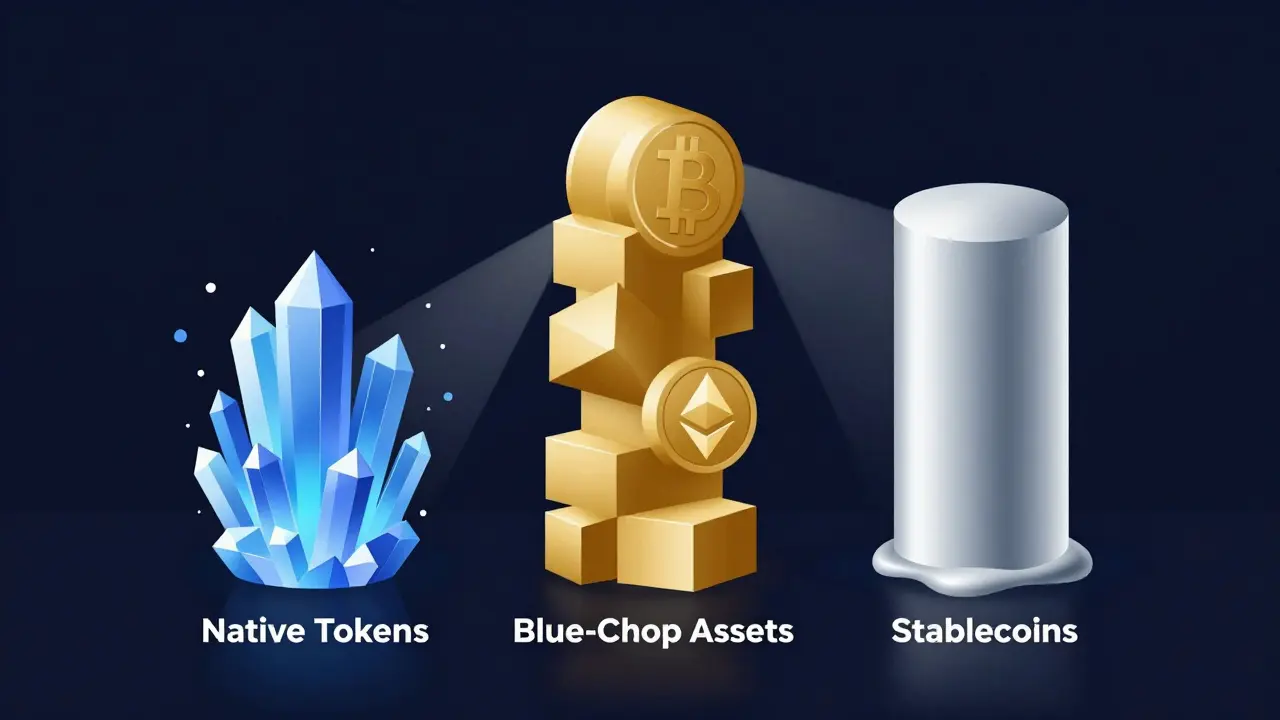
Most treasuries consist of three main components:
- Native Tokens: These often make up the bulk of the treasury’s nominal value. They represent governance power and future revenue potential but come with high volatility. If the project fails, these tokens become worthless.
- Blue-Chip Cryptocurrencies: Assets like Bitcoin (BTC) and Ethereum (ETH) serve as store-of-value holdings. They offer less correlation to the specific project’s performance than native tokens but still fluctuate significantly.
- Stablecoins: Tokens pegged to fiat currencies, such as USDC or USDT, act as the operational backbone. They provide the stability needed for payroll, vendor payments, and short-term expenses without worrying about daily price swings.
This mix allows projects to hedge against risk. For example, if the native token crashes, the stablecoin portion ensures the team can still get paid. Analytics platforms like Token Terminal now track these compositions explicitly, allowing investors to assess a protocol’s financial health based on its reserve diversity rather than just total value locked (TVL).
Core Operational Goals: Why Manage the Treasury?
You might wonder why a project needs a complex treasury strategy when they could just spend tokens as they come in. The answer lies in four core objectives that mirror traditional corporate finance but adapt to the 24/7 nature of blockchain.
- Protecting Against Volatility: Crypto markets do not sleep. A treasury must be structured to absorb shocks. Diversifying into BTC, ETH, and stablecoins prevents a single asset’s crash from wiping out the entire budget.
- Ensuring Liquidity: You cannot pay developers with illiquid assets. Treasuries must maintain enough easily tradable assets-often via over-the-counter (OTC) desks or liquid exchanges-to cover immediate bills.
- Generating Safe Returns: Idle money loses value due to inflation and opportunity cost. Treasuries deploy capital into staking, lending, or other yield-generating strategies to grow the reserve organically.
- Planning Cash Flow: Just like a startup needs runway, a DAO needs token runway. Forecasting expenses and monitoring market prices in real-time ensures the project doesn’t run out of funds during a bear market.
How Projects Actually Spend Their Reserves
Knowing what to hold is only half the battle. The real test is how those reserves are deployed. Here is how successful projects use their token reserves in practice.
Funding Operations and Extending Runway
The most basic function of a treasury is paying the bills. However, spending native tokens directly can be dangerous if their price is plummeting. Smart treasuries convert a portion of volatile native tokens into stablecoins like USDC or USDT. This creates a buffer. Chainlink notes that stablecoin treasury management enables programmable payments, allowing for automated monthly salary disbursements via smart contracts without waiting for banking hours or T+2 settlement windows.
Risk Management Through Diversification
Putting all eggs in one basket is a recipe for disaster. Caladan, a treasury advisory firm, highlights diversification as a central principle. Projects often convert a percentage of their native token reserves into Ethereum and stake it. This reduces exposure to their own token’s volatility while earning yield. Additionally, some treasuries use financial derivatives like futures and options to hedge against large market swings, smoothing out cash flows even when the broader market is chaotic.
Yield Generation via Staking and DeFi
Holding assets statically means losing purchasing power. Many protocols deploy idle capital into decentralized finance (DeFi) positions. A common approach is converting part of the treasury into ETH and staking it through validator infrastructure or liquid staking derivatives. Fireblocks emphasizes that while yield strategies (staking, lending, liquidity provision) are attractive, they must be vetted for smart contract risk and counterparty reliability. The goal is safe, sustainable yield, not high-risk gambling.
Ecosystem Funding and Grants
Beyond internal costs, treasuries fuel external growth. DAOs use reserves to fund grants for developers, incentivize liquidity mining, and support strategic partnerships. These outflows are tracked closely by analytics firms. Transparent reporting of these expenditures builds trust with the community and shows that the treasury is actively working to increase the network’s long-term value.
Governance and Security: Protecting the Keys
In the physical world, you secure cash with a bank vault. In crypto, security is cryptographic. Poor governance has led to the loss of billions in treasury funds through hacks and insider theft. Good governance turns a "crypto experiment" into a sustainable strategy.
Stripe stresses that every serious project needs a formal crypto treasury policy. This document defines who can access funds, which assets are permitted, and the approval workflows for transactions. Key elements include:
- Multisignature (Multisig) Wallets: No single person should control the treasury. Multisig wallets require multiple keys (e.g., 5 out of 9 signers) to authorize a transaction. This prevents rogue actors from draining funds.
- Multi-Party Computation (MPC): An advanced alternative to multisig, MPC splits private keys into shards held by different parties. It enhances security and usability by eliminating the need to store full private keys on any single device.
- Segregation of Duties: The person initiating a payment should not be the same person approving it. Audit logs and regular reviews ensure accountability.
Fireblocks recommends institutional-grade custody technology that combines MPC with hardware security modules (HSMs). They also advise verifying that treasury platforms have robust security certifications like SOC 2 Type II and ISO standards, along with third-party insurance covering assets both in storage and in motion.
Comparison: Traditional vs. Crypto Treasury Management
| Aspect | Traditional Corporate Treasury | Crypto/Token Treasury | Stablecoin-Focused Treasury |
|---|---|---|---|
| Core Assets | Fiat cash, bonds, money market funds | Native tokens, BTC, ETH, altcoins | Primarily stablecoins (USDC, USDT) |
| Market Hours | Banking hours; T+1/T+2 settlement | 24/7 markets; instant settlement | 24/7 on-chain transfers |
| Volatility | Low for cash, moderate for risk assets | High, especially for native tokens | Pegged to fiat; low volatility |
| Infrastructure | Banks, custodians, SWIFT | Exchanges, wallets, DeFi protocols | Stablecoin issuers, payment rails |
| Primary Goal | Liquidity, capital preservation | Liquidity, risk management, yield | Capital efficiency, speed |
This comparison highlights why crypto treasury management is distinct. While traditional treasuries rely on slow banking rails, crypto treasuries operate in real-time. However, this speed comes with higher complexity in risk management. Stablecoin-focused treasuries offer a middle ground, providing the speed of blockchain with the stability of fiat, making them ideal for operational expenses.

Best Practices for Implementation
If you are setting up or optimizing a token treasury, follow these expert-backed steps:
- Define Objectives and Risk Tolerance: Start with a clear statement. Are you holding crypto as a strategic investment, an inflation hedge, or working capital? Determine how much of your balance sheet can be exposed to volatility.
- Select Institutional Custody: Do not rely on simple hot wallets for significant reserves. Choose platforms with MPC architecture, broad asset support, and insurance coverage. Verify their security certifications independently.
- Establish Clear Policies: Write down your rules. Define asset classes, allocation limits, and approval workflows. Include board or DAO oversight for large exposures. Regularly review and update these policies as the market evolves.
- Diversify and Rebalance: Follow CoinTracker’s advice: start with blue-chip assets (BTC, ETH) and quality stablecoins. Periodically rebalance your portfolio between native tokens, major cryptos, and stablecoins based on liquidity needs and market conditions.
- Integrate Stablecoins for Liquidity: Use stablecoins for day-to-day operations. Pair them with on-chain automation for faster settlement and reduced float risk. This improves capital efficiency and makes managing cross-border payments easier.
- Monitor in Real-Time: Use mark-to-market accounting to update valuations daily. Track exposure as crypto prices change. Tools like Token Terminal help visualize trends and ensure transparency with stakeholders.
The Future of Token Treasuries
As the industry matures, we are seeing a shift toward greater institutionalization. Specialized platforms are building infrastructure specifically for managing digital asset treasuries, offering oracle-based automation and enterprise-grade security. We expect to see increased use of stablecoins and on-chain automation, allowing treasuries to react instantly to market changes.
Transparency will also intensify. With public data available on treasury balances and outflows, communities and investors will scrutinize decisions more closely. This pressure pushes projects toward clearer policies and more conservative risk management. Ultimately, effective treasury management is not just about preserving value; it is about enabling the project to thrive in a dynamic, decentralized economy.
What is the primary purpose of a crypto treasury?
The primary purpose of a crypto treasury is to manage a pool of digital assets to fund operations, grow the ecosystem, manage risk, and extend the project's financial runway. It ensures the organization has sufficient liquidity for expenses while protecting against market volatility.
Why are stablecoins important in token reserves?
Stablecoins like USDC and USDT provide stability and predictability. They allow projects to pay salaries and vendors without worrying about daily price swings of volatile cryptocurrencies. They also enable 24/7 liquidity and faster settlement times compared to traditional banking.
How do DAOs generate yield from their treasuries?
DAOs generate yield by deploying idle capital into decentralized finance (DeFi) strategies. Common methods include staking Ethereum, lending assets on protocols, or providing liquidity to pools. These strategies must be carefully vetted for smart contract and counterparty risks.
What is a multisig wallet and why is it used?
A multisignature (multisig) wallet requires multiple private keys to authorize a transaction. It is used to enhance security by preventing any single individual from accessing or moving funds unilaterally. This segregation of duties is critical for preventing fraud and hacks.
How does crypto treasury management differ from traditional treasury management?
Crypto treasury management operates 24/7 with digital assets that are highly volatile, whereas traditional treasuries deal with fiat currencies and slower banking settlements. Crypto treasuries also leverage blockchain-specific tools like smart contracts, staking, and decentralized exchanges for liquidity and yield generation.
What role does governance play in treasury management?
Governance establishes the rules for how treasury assets are managed. It includes written policies on asset allocation, approval workflows, and risk thresholds. Strong governance ensures transparency, accountability, and alignment with the project's long-term goals, often involving community voting in DAOs.
Can a project lose its entire treasury due to market crashes?
Yes, if a treasury is heavily concentrated in a single volatile native token and lacks diversification. To mitigate this, projects should hold a mix of stablecoins, blue-chip cryptocurrencies, and native tokens. Hedging strategies and maintaining operational liquidity buffers are essential safeguards.
