
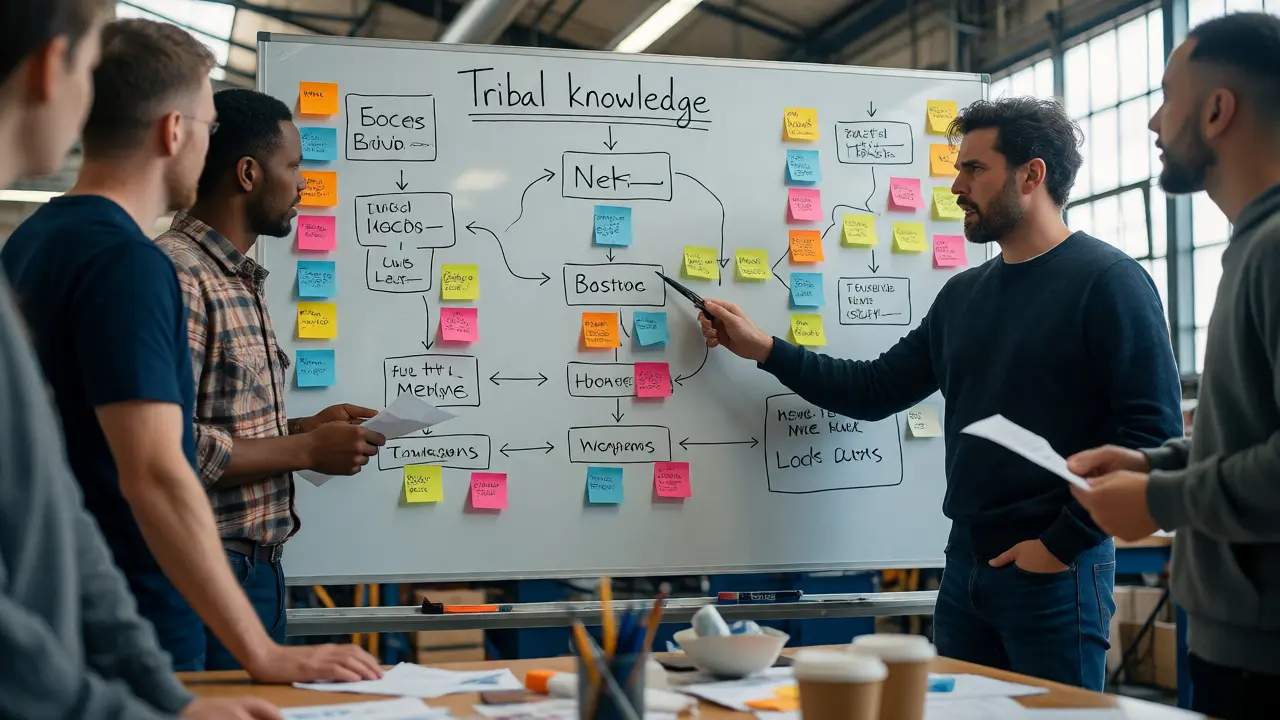
Ever watched a perfectly good team spin its wheels because nobody wrote down how things actually get done? It’s frustrating, right? You have talented people, but the output is inconsistent, errors creep in, and everyone blames the other department. This isn't usually a people problem; it's a process problem. And here is the kicker: most companies try to fix it with more meetings or stricter deadlines, which often makes things worse. The real solution lies in structured quality management and process improvement training. It’s not just about getting a certificate on the wall; it’s about giving your team a shared language to spot waste, reduce variation, and build systems that work even when the boss isn’t looking.
Why Your Current Processes Are Leaking Money
Let’s be honest. Most "processes" in small-to-medium enterprises are just tribal knowledge held in the heads of three key employees. If Sarah calls in sick, the order fulfillment process halts. That’s a risk you can’t afford. When you invest in training, you aren’t just teaching theory; you’re mapping out the actual workflow. We see this constantly in UK-based manufacturing and service firms where undocumented steps lead to rework costs that eat up 15-20% of revenue. By standardizing these steps through training, you turn individual heroics into repeatable reliability.
The core issue isn’t that staff are lazy or incompetent. It’s that they lack the tools to identify inefficiency. Without training, a worker sees a bottleneck as "just part of the job." With training, they see it as a defect waiting to be eliminated. This shift in mindset is what separates high-performing organizations from those stuck in firefighting mode.
The Core Methodologies: Lean vs. Six Sigma
You’ve probably heard the terms thrown around, but what do they actually mean for your daily operations? Think of them as two different lenses for viewing your business problems.
Lean is all about speed and flow. Its primary goal is eliminating waste-anything that doesn’t add value to the customer. In a logistics company, waste might be unnecessary movement of goods. In a software firm, it could be redundant code reviews. Lean training teaches teams to map their value stream, spotting non-value-added activities like waiting times, over-processing, or excess inventory.
Six Sigma focuses on precision and reducing variation. It uses statistical methods to ensure that defects drop to less than 3.4 per million opportunities. While Lean asks "how can we make this faster?", Six Sigma asks "how can we make this consistent?" For industries like healthcare or aerospace, where consistency is safety-critical, Six Sigma is non-negotiable. But here’s the thing: you don’t always need both. Choosing the right methodology depends on whether your pain point is speed (Lean) or accuracy (Six Sigma). Many modern programs combine them into Lean Six Sigma, offering a toolkit for both flow and precision.
What Does Effective Training Actually Look Like?
If you’re buying a generic online course where employees watch videos and take a multiple-choice quiz, save your money. That approach has a retention rate of less than 10%. Real impact comes from experiential learning. The best training programs follow the DMAIC framework: Define, Measure, Analyze, Improve, Control. This isn’t just an acronym; it’s a project lifecycle.
- Define: Trainees pick a real problem from their own desk. Not a hypothetical case study. Maybe it’s "reduce invoice processing time by 20%."
- Measure: They learn to collect baseline data. How long does it currently take? What is the error rate?
- Analyze: Using root cause analysis tools like Fishbone diagrams or the 5 Whys, they find out why the delays happen.
- Improve: They pilot a solution. Change one step in the process and measure the result.
- Control: They document the new standard so it doesn’t slide back.
This hands-on approach means the ROI isn’t theoretical. By the end of the training, your team has already delivered measurable savings. I’ve seen mid-sized marketing agencies in Edinburgh cut campaign launch times by half simply by applying Lean principles to their approval workflows, all while completing their certification projects.

Overcoming the "Too Busy to Train" Excuse
Managers often resist training because they fear losing productive hours. "We can’t spare three days for a workshop," they say. But consider the cost of doing nothing. If your team spends 10% of their week fixing mistakes caused by poor processes, that’s nearly half a day lost every single employee, every week. Over a year, that’s massive.
To mitigate this, look for blended learning models. Start with short, focused e-learning modules on specific tools (like Value Stream Mapping) during lunch breaks or quiet periods. Then, gather for intensive, in-person workshops to apply those tools to live business cases. This respects the team’s workload while ensuring deep engagement. Also, involve leadership early. If the director of operations sits in the first session, it signals that this is a priority, not a distraction.
Building a Culture of Continuous Improvement
Training ends, but improvement shouldn’t. The biggest failure mode in quality initiatives is the "initiative fatigue" that sets in six months post-training. People go back to old habits because the system didn’t support the change. To prevent this, integrate quality metrics into regular performance reviews. Don’t just track sales targets; track process adherence and improvement suggestions.
Create a safe space for reporting errors. In a blame culture, people hide mistakes. In a quality culture, mistakes are data points. If a developer finds a bug before deployment, celebrate the catch, not the fault. This psychological safety is crucial for sustaining the momentum gained from training. Encourage "Kaizen" events-short, intense bursts of improvement activity where cross-functional teams solve a specific problem in a day or two.

Choosing the Right Provider
Not all trainers are created equal. Avoid providers who only teach theory. Ask them: "Can you show me a case study where your students implemented a change that saved money within 90 days?" Look for instructors with industry-specific experience. A trainer who understands the nuances of NHS compliance will be far more valuable to a healthcare provider than one who only knows automotive manufacturing.
| Certification Level | Focus Area | Ideal Candidate | Typical Duration |
|---|---|---|---|
| Yellow Belt | Awareness & Basic Tools | All Staff / Team Members | 1-2 Days |
| Green Belt | Project Leadership & Data Analysis | Team Leads / Project Managers | 5-10 Days |
| Black Belt | Complex Problem Solving & Coaching | Senior Ops / Consultants | 20+ Days |
| ISO 9001 Lead Auditor | Compliance & System Auditing | Quality Managers / Auditors | 5 Days |
Frequently Asked Questions
Do I really need external training, or can we learn this internally?
You can learn the basics internally, especially if you have someone with prior experience. However, external training brings objectivity and standardized methodologies. Internal champions often struggle to challenge the status quo due to office politics. An external trainer can facilitate difficult conversations and provide credibility to new processes. Plus, accredited certifications (like Green Belt) carry weight with clients and stakeholders, signaling professional competence.
How long does it take to see results from quality management training?
Quick wins should appear within the first 30-60 days. These are usually low-hanging fruit, such as removing redundant forms or simplifying email chains. Larger structural changes involving data analysis and process redesign typically take 3-6 months to fully implement and demonstrate significant ROI. The key is to start small, prove value, and then scale up.
Is Lean Six Sigma relevant for service industries, or just manufacturing?
Absolutely relevant. In fact, service industries often benefit more because "waste" is harder to see than in factories. In banking, waste might be duplicate data entry. In hospitality, it could be guests waiting for check-in. The principles of reducing variation and eliminating non-value-added steps apply universally. Many top banks and hospitals now run dedicated Lean Six Sigma departments.
What is the difference between ISO 9001 and Lean Six Sigma?
ISO 9001 is a standard-it tells you *what* you need to have in place (a documented QMS, management review, corrective actions). Lean Six Sigma is a methodology-it tells you *how* to improve your processes using data and statistical tools. You can use Lean Six Sigma tools to help you comply with ISO 9001 requirements. They are complementary, not mutually exclusive. Many companies use LSS to achieve the continuous improvement required by ISO standards.
How do I keep the team engaged after the training ends?
Recognition and visibility are key. Celebrate successes publicly. Create a simple dashboard showing improvements made since the training started. Assign mentorship roles where certified staff guide newer employees. Finally, make sure leadership continues to ask questions based on the new terminology. If managers stop asking "What was the root cause?" and revert to "Who messed up?", the culture will slide back quickly.
