

You’ve probably seen it happen. You throw a leaderboard into a corporate training session, expecting instant engagement. Instead, you get eye rolls and awkward silence. Then, you try the same mechanic in a third-grade classroom, and suddenly everyone is leaning forward, desperate to beat their friend’s score. Why does the exact same game mechanic fail with adults but thrive with kids? It’s not because adults hate fun. It’s because we misunderstand what drives motivation at different stages of life.
Gamification isn’t a one-size-fits-all band-aid. Applying points and badges to a university lecture on thermodynamics might feel patronizing. Ignoring them entirely in a high school history class might mean losing half your students to their phones before the bell rings. The secret lies in matching the game mechanics to the cognitive and social needs of the specific age group. As an educator or trainer, your job isn’t just to make learning "fun"-it’s to align the reward systems with how that brain processes value, status, and progress.
Why One Size Fits None
Before we break down the groups, let’s look at the core problem. Most gamification fails because it focuses on extrinsic rewards (points, prizes) rather than intrinsic motivation (mastery, autonomy, purpose). For a five-year-old, a gold star is a tangible representation of success. For a thirty-five-year-old project manager, a digital badge on a profile feels like clutter unless it translates to career advancement or peer recognition.
The difference comes down to developmental psychology. Children are concrete thinkers who respond well to immediate feedback and visual progress. Adolescents are driven by social comparison and identity formation. Adults are motivated by utility, autonomy, and competence. If you give an adult a "streak counter" without explaining why it matters to their workflow, they’ll ignore it. If you don’t give a child a visual timer, they lose track of time and focus. Understanding these distinct psychological triggers is the first step to building a system that actually works.
Young Learners (Ages 5-10): Concrete Rewards and Visual Progress
For young children, abstract concepts like "leveling up" need to be made physical and visible. At this stage, kids are in the pre-operational to early concrete operational stages of development. They live in the "now." Delayed gratification is hard; immediate feedback is king.
Early Childhood Education benefits massively from mechanics that provide instant sensory feedback. Think sounds, animations, and colorful visuals. When a student answers correctly, the screen should burst with confetti or play a cheerful jingle. This isn’t just cute-it’s neurological reinforcement. Dopamine hits when the reward is immediate and predictable.
- Visual Progress Bars: Kids need to see how close they are to the finish line. A bar filling up is more motivating than a percentage number.
- Collectibles: Stickers, virtual pets, or avatars that change appearance. These tap into the natural desire to collect and own things.
- Simple Rules: Complex point systems confuse them. Stick to binary outcomes: Right = Good, Wrong = Try Again.
Avoid competition between peers too heavily here. Young children can take losing personally. Instead, use cooperative goals where the whole class unlocks a reward together. Did the class read 100 books? Everyone gets extra recess. This builds community without creating winners and losers.
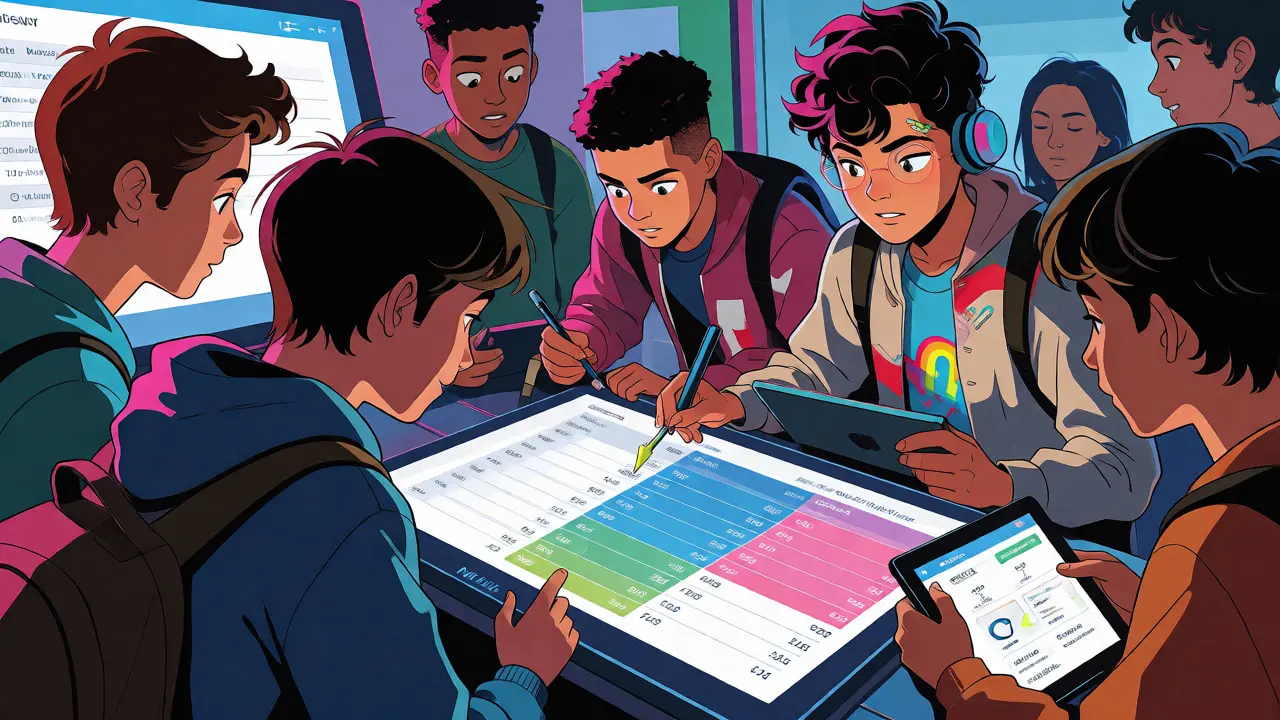
Adolescents (Ages 11-17): Social Status and Identity Formation
Teenagers are arguably the hardest audience to engage. Their brains are rewiring for social complexity. They care deeply about what others think, especially their peers. Gamification here must leverage social dynamics, not just individual achievement.
For this group, Social Comparison Theory is a powerful tool. Leaderboards work, but only if they are segmented. A global leaderboard discourages the bottom 80% of players because they know they’ll never win. A weekly leaderboard among friends, however, is highly competitive and engaging.
| Age Group | Primary Motivator | Effective Mechanics | Avoid |
|---|---|---|---|
| 5-10 Years | Immediate Feedback | Stickers, Animations, Cooperative Goals | Complex Stats, Long-term Goals |
| 11-17 Years | Social Status | Leaderboards, Team Challenges, Custom Avatars | Public Shaming, Patronizing Graphics |
| 18+ Years | Mastery & Utility | Progress Tracking, Unlockable Content, Real-world Skills | Childish Badges, Forced Competition |
Identity plays a huge role. Teens want to express themselves. Allowing them to customize their avatars or choose their team colors gives them a sense of ownership. Also, consider "status" markers. In many online games, rare items signal skill. In education, a "Master Analyst" title might carry weight if it’s respected by peers.
Be careful with public failure. Losing points in front of the whole class can trigger anxiety. Use anonymous leaderboards or allow students to hide their scores if they prefer. The goal is healthy competition, not humiliation.
Adults (18+): Autonomy, Mastery, and Purpose
When you move to higher education or corporate training, the rules change completely. Adults don’t want to be treated like children. They have jobs, families, and limited free time. If a gamified module feels like a chore disguised as a game, they will drop out.
According to Self-Determination Theory, adults are motivated by three things: autonomy (control over their learning), mastery (getting better at something), and purpose (why this matters). Gamification must support these pillars.
Corporate Training often suffers from "pointsification"-slapping points onto tasks without adding value. Instead, focus on unlockable content and skill visualization. For example, completing a compliance module doesn’t just give you 100 points; it unlocks a downloadable checklist or a certification that appears on their LinkedIn profile.
- Autonomy: Let learners choose their path. Should they start with the basics or jump to advanced topics? Give them control.
- Mastery: Show clear progression. Not just "Level 4," but "You’ve mastered Excel Pivot Tables." Specificity feels rewarding.
- Purpose: Connect the game to real-world outcomes. If they complete this simulation, they save time on actual reports next week.
Competition can still work, but keep it optional. Some adults love beating colleagues; others find it stressful. Provide both solo and team modes. Also, avoid childish graphics. Clean, professional interfaces signal respect for the learner’s maturity.

The Danger of Over-Gamification
There’s a tipping point where gamification becomes distracting. We call this the "Overjustification Effect." If you reward someone for doing something they already enjoy, their internal motivation drops. They start working for the reward, not the activity itself.
Imagine a student who loves reading. If you tell them they’ll get $1 for every book they read, they might read more initially. But once the money stops, they may stop reading altogether. The external reward overshadowed the intrinsic joy. This is critical for all age groups, but especially for adults who are self-directed learners.
To avoid this, ensure your game mechanics highlight competence rather than controlling behavior. Use feedback that informs ("You improved your accuracy by 15%") rather than controls ("Do this to get points"). Keep the stakes low for trivial tasks and high for meaningful achievements.
Practical Implementation Tips
So, how do you actually build this? Start small. Don’t rebuild your entire curriculum overnight. Pick one unit or module and apply targeted mechanics based on your audience.
- Analyze Your Audience: Are they motivated by social interaction, personal growth, or tangible rewards? Survey them. Ask what annoys them about current training.
- Choose the Right Mechanic: Match the mechanic to the motivation. Need engagement? Use streaks. Need retention? Use unlockables. Need performance? Use leaderboards.
- Test and Iterate: Watch how users interact. Do they ignore the badges? Remove them. Do they obsess over the leaderboard? Add filters so it’s fairer.
- Keep it Simple: Complexity kills adoption. If it takes more than 30 seconds to understand the scoring system, simplify it.
Remember, the technology is just a vehicle. The engine is human psychology. Whether you’re teaching math to eight-year-olds or sales techniques to executives, the principle remains: respect the learner’s developmental stage and design rewards that resonate with their values.
Is gamification effective for older adults?
Yes, but the approach must shift from competition to cognitive health and social connection. Older adults often prefer puzzles, memory games, and collaborative challenges that keep their minds sharp. Avoid fast-paced reflex-based games which can cause frustration. Focus on mastery and mental stimulation rather than speed or high scores.
How do I prevent cheating in gamified classrooms?
Design assessments that require application rather than recall. Multiple-choice questions are easy to guess; projects and open-ended problems are harder to fake. Additionally, use randomization in question order and timing limits. For younger kids, emphasize participation and effort over perfect scores to reduce the pressure to cheat.
Can gamification hurt intrinsic motivation?
It can, if implemented poorly. This is known as the overjustification effect. To prevent this, ensure rewards provide information about competence (e.g., "You solved this faster than last time") rather than just controlling behavior (e.g., "Do this to get a cookie"). Always tie rewards back to the value of the learning itself.
What tools are best for implementing age-appropriate gamification?
For young children, platforms like ClassDojo or Minecraft Education Edition offer visual, tactile rewards. For teens, Kahoot! or Quizizz provide social, competitive elements. For adults, Learning Management Systems (LMS) like Moodle or specialized corporate tools like Axonify integrate seamlessly with professional workflows, offering data-driven insights and professional certifications.
How long should a gamified learning session last?
Attention spans vary by age. For ages 5-10, sessions should be short, around 10-15 minutes. For adolescents, 20-30 minutes allows for deeper engagement without fatigue. Adults can handle longer blocks, 45-60 minutes, especially if the content is relevant to their work. However, micro-learning modules (5-10 minutes) are increasingly popular across all ages for quick refreshers.
