
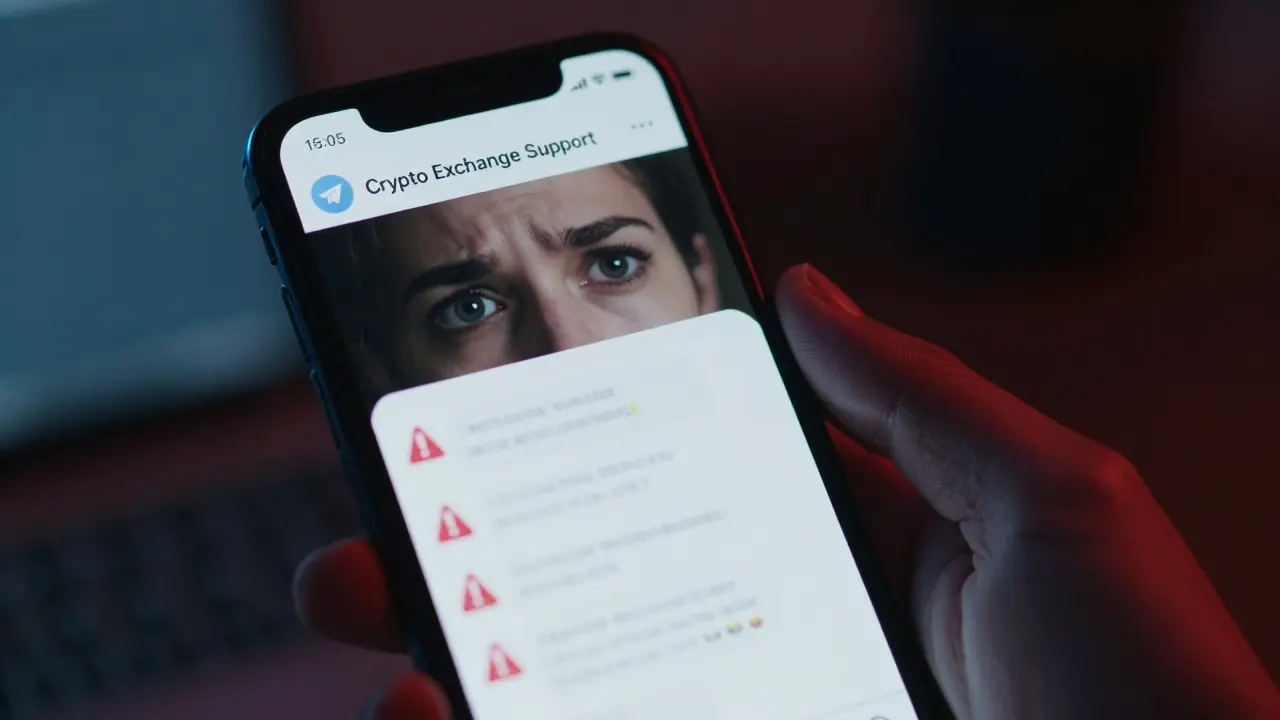
Imagine getting a direct message on Telegram from someone claiming to be support for your favorite exchange. They say your account is frozen due to a "security error" and need your seed phrase to unlock it. You panic, you comply, and within minutes, your funds are gone. This isn't a hypothetical scenario; it’s the daily reality for thousands of crypto users. In fact, social engineering is a psychological attack method where criminals manipulate victims into revealing sensitive information or performing actions that compromise their security, often by impersonating trusted entities like wallets and exchanges. Unlike technical hacks that break code, these attacks break trust.
In 2025 and early 2026, we’ve seen some of the largest thefts in crypto history driven not by broken encryption, but by human error. The Lazarus Group stole approximately $1.5 billion from the Bybit ecosystem in 2025 by targeting a third-party developer through deception. Then, in January 2026, a coordinated campaign linked to malicious wallet-drainers caused an estimated $282 million in losses, tricking even hardware wallet users. These numbers prove one thing: no amount of blockchain security matters if you give away the keys yourself.
The Anatomy of a Crypto Impersonation Scam
To protect yourself, you first need to understand how these attacks work. Social engineers don’t guess your password; they convince you to hand it over. They follow a predictable lifecycle designed to bypass your rational thinking and trigger an emotional response-usually fear, greed, or urgency.
The process typically starts with reconnaissance, which is the phase where attackers gather public information about a target to craft a believable pretext. They might look at your Twitter profile, see you holding a specific token, and note your recent complaints about a transaction delay. Next comes the contact. They reach out via DMs on X (formerly Twitter), Discord, or Telegram, posing as official support. They use logos, professional language, and sometimes even accurate partial account details to build credibility.
Once trust is established, they introduce pressure. Maybe your account is "under review" for anti-money laundering (AML) compliance. Maybe there’s a "limited-time bonus" if you verify now. The goal is to make you act fast so you don’t have time to think critically. Finally, they extract what they want: your seed phrase, a one-time password (OTP), or approval for a malicious smart contract transaction. Once they have that, the funds move instantly and irreversibly.
Common Tactics Used Against Wallet and Exchange Users
Scammers recycle proven methods, adapting them slightly for different platforms. Here are the most dangerous tactics you’ll encounter:
- Phishing Websites: Attackers register domains that look almost identical to legitimate ones, like
binance-support.cominstead ofbinance.com. They send links via email or SMS urging you to "secure your account." When you enter your credentials or seed phrase, you’re feeding data directly to the thief. - Fake Support Agents: On platforms like Telegram and Discord, scammers lurk in public channels. If you ask a question, an "admin" or "support" agent DMs you. They claim there’s a technical error blocking your withdrawal and guide you to share your screen or install remote access software like AnyDesk or TeamViewer. Never do this.
- Vishing and Smishing: Voice calls (vishing) or text messages (smishing) pretending to be from fraud prevention teams are common. They might call saying, "We detected a large unauthorized withdrawal. Please read out your 2FA code to stop it." Legitimate exchanges will never ask for your 2FA code over the phone.
- KYC Pretexting: Scammers exploit fear of legal trouble. They claim your account needs updated Know Your Customer (KYC) documents and provide a link to upload them. That link leads to a fake portal that steals your login details.
- Quid Pro Quo Offers: You receive a message offering free tokens, fee discounts, or exclusive airdrop eligibility. In exchange, they ask you to connect your wallet to a specific website or sign a transaction. That signature authorizes them to drain your balance.
Why Hardware Wallets Aren’t Enough
Many users believe buying a hardware wallet makes them immune to scams. This is a dangerous misconception. As highlighted in Cypherock’s 2026 analysis, the $282 million loss in January 2026 involved users who stored assets in hardware devices. Why? Because social engineering targets the user, not the device.
If a scammer convinces you to type your seed phrase, also known as a recovery phrase, which is a set of 12-24 words that provides full access to a cryptocurrency wallet into a fake website, or if they trick you into signing a malicious transaction on your device, the hardware wallet becomes just another tool for transferring funds to the attacker. The security of offline key storage is neutralized the moment you interact with a compromised interface or person.
| Attack Vector | Target | Effectiveness | Primary Defense |
|---|---|---|---|
| Smart Contract Exploit | Code vulnerabilities | High (if bug exists) | Audits, formal verification |
| Exchange Hack | Custodial infrastructure | Medium-High | Insurance, cold storage |
| Social Engineering | User psychology | Very High | Education, skepticism, 2FA |
| SIM Swapping | Phone number ownership | High | Authenticator apps, passkeys |

The Psychology Behind the Theft
Understanding why we fall for these scams is crucial. Kerberus and other security analysts note that attackers exploit four main emotional levers:
- Fear: "Your account will be locked forever unless you act now." Fear triggers fight-or-flight, shutting down critical thinking.
- Greed: "Click here to claim your 10% staking bonus." Greed makes us overlook red flags because the reward seems too good to miss.
- Urgency: "This offer expires in 10 minutes." Urgency prevents you from verifying the source independently.
- Trust in Authority: Scammers use official logos, titles like "Security Manager," and professional jargon. We’re conditioned to obey authority figures, making us less likely to question their requests.
Academic research confirms that users often assume any message referencing their specific account details must be legitimate. Scammers leverage data breaches or public on-chain activity to personalize these attacks, making them incredibly convincing.
Technical Tools Amplifying the Threat
Social engineering isn’t just talk; it’s supported by sophisticated infrastructure. Attackers use water hole attacks, which are cyberattacks where hackers compromise websites frequently visited by a target group to infect visitors with malware. For example, they might hack a popular crypto news forum or a tutorial site linked from an exchange’s help center. When you visit, you’re redirected to a cloned login page.
Another major threat is SIM swapping, which is a technique where attackers convince a mobile carrier to transfer a victim's phone number to a SIM card under their control. Once they control your number, they can intercept SMS-based two-factor authentication (2FA) codes. Crypto.com warns that this allows attackers to bypass login protections entirely. To combat this, always use an authenticator app like Google Authenticator or Authy, or better yet, passkeys, instead of SMS for 2FA.
Malware also plays a role. Scammers may offer "free" hardware wallets or security tools that are pre-infected. When you initialize the device or install the software, it captures your keystrokes or signs transactions without your knowledge.

How to Protect Yourself: A Practical Checklist
Defending against social engineering requires a combination of technical hygiene and behavioral discipline. Here is what you should do immediately:
- Never Share Your Seed Phrase: No legitimate exchange, wallet provider, or support agent will ever ask for your seed phrase or private key. If someone asks, block them. This is the golden rule.
- Verify Channels Independently: If you receive a suspicious message, do not click links or reply. Go directly to the official website or app and check for announcements or use the verified support channel listed there.
- Disable SMS 2FA: Switch to an authenticator app or hardware security key. SMS is vulnerable to SIM swapping and interception.
- Use Hardware Wallets Wisely: Store significant holdings in a hardware wallet, but remember: the device only protects you if you never expose your seed phrase to a computer or phone.
- Check URLs Carefully: Look closely at the domain name. Typosquatting (e.g.,
coinbasee.com) is common. Bookmark official sites and use those bookmarks. - Be Skeptical of Urgency: If a request feels rushed, pause. Take a breath. Verify. Real security issues take time to resolve; scams thrive on speed.
- Keep Software Updated: Ensure your wallet apps, browser extensions, and operating systems are up to date to patch known vulnerabilities.
What Exchanges and Wallet Providers Are Doing
The industry is responding. Exchanges and wallet providers are implementing multi-layered defenses. This includes prominent security banners warning users that support will never ask for seed phrases. They are also publishing lists of known phishing domains and working with registrars to take them down quickly.
Some platforms are introducing clearer transaction warnings. For example, when you approve a smart contract interaction, modern wallets show exactly which assets are being accessed and in what quantity. This helps users spot malicious approvals before they sign. Additionally, default activation of non-SMS multi-factor authentication is becoming standard practice.
However, the burden still falls heavily on the user. As long as crypto offers high mobility and anonymity, scammers will continue to innovate. The trend is toward more personalized attacks using AI-generated voice clones or deepfake videos to mimic executives or support staff. Staying informed and skeptical is your best defense.
Can a hardware wallet prevent social engineering?
Not entirely. While hardware wallets keep your private keys offline, they cannot stop you from typing your seed phrase into a fake website or approving a malicious transaction if you are tricked by a scammer. Security depends on your behavior as much as the device.
Will Binance or Coinbase ever ask for my seed phrase?
No. Legitimate centralized exchanges and non-custodial wallet providers will never ask for your seed phrase, private key, or full login password via email, chat, or phone. Any such request is a scam.
What should I do if I think I’ve been phished?
Immediately move your remaining funds to a new wallet with a fresh seed phrase. Change your passwords and enable 2FA on all accounts. Report the incident to the relevant exchange’s security team and consider filing a report with local authorities. Do not engage further with the scammer.
Is SMS two-factor authentication safe for crypto?
SMS 2FA is vulnerable to SIM swapping and interception. It is recommended to use an authenticator app (like Google Authenticator) or a hardware security key (like YubiKey) for stronger protection against social engineering attacks.
How can I identify a fake support agent on Telegram?
Check the username carefully for slight variations. Official support usually has a verified badge. Most importantly, remember that real support will never ask for your seed phrase or remote access. If they do, it’s a scam. Always verify contact details through the official website.

Comments (12)
Caitlin Donehue June 6 2026
I've been using a Ledger for three years and honestly, I never realized how much of a target I was just by being online. The part about SIM swapping really hit home because I still use SMS for my banking apps. It's scary to think that the hardware doesn't matter if they get your phone number.
Edward Gilbreath June 7 2026
the whole crypto space is built on lies anyway why are we surprised people get scammed it's not security it's psychology manipulation pure and simple
Lisa Nally June 9 2026
Oh, absolutely, Edward, but let’s be precise here: the issue isn’t the technology itself-it’s the socio-technical interface where human error intersects with malicious intent. We’re dealing with sophisticated social engineering campaigns that exploit cognitive biases like urgency and authority bias. It’s not just “lies”; it’s a calculated psychological operation designed to bypass rational decision-making processes. When you ignore the nuance of these attack vectors, you fail to understand the systemic vulnerabilities inherent in decentralized finance ecosystems.
We must acknowledge that while blockchain provides cryptographic security, it does not provide behavioral security. The Lazarus Group didn’t break code; they broke trust. This distinction is critical for anyone claiming to understand cybersecurity. If you dismiss this as mere “manipulation,” you’re ignoring the multi-million dollar infrastructure behind these scams. They use AI-driven personalization, OSINT reconnaissance, and tailored phishing kits. It’s an arms race, plain and simple. And until users adopt rigorous operational security protocols-like air-gapped seed phrase storage and hardware security keys-we will continue to see catastrophic losses. So yes, it’s psychological, but it’s also deeply technical in its execution. Don’t confuse simplicity with ignorance.
kimberly de Bruin June 9 2026
trust is the currency of the digital age yet we trade it for tokens that have no intrinsic value beyond consensus what is real when the medium is invisible
Oskar Falkenberg June 9 2026
Hey folks, I know this stuff can feel pretty overwhelming when you first start diving into self-custody, but honestly, taking those extra steps like switching off SMS 2FA makes such a huge difference in the long run. I used to think my Trezor was enough too, but after reading up on some of these recent drainer attacks, I switched everything over to TOTP authenticators and now I sleep way better at night. It’s all about building good habits early so you don’t have to panic later, right? Let me know if anyone wants tips on setting up passkeys because they’re actually super easy once you get the hang of them!
Lisa Puster June 9 2026
typical american naivety expecting foreign exchanges to protect you from yourself the west created this mess with unregulated securities laws and now complains about crime pathetic
Joe Walters June 10 2026
Lol Lisa you sound like a broken record everyone knows exchanges are sketchy but hey dont come crying to us when your fiat bank freezes your account because of OFAC compliance its always someone elses fault isnt it
Stephanie Frank June 12 2026
Stop acting like victims. You gave them your keys. End of story. No amount of blaming 'sophisticated AI' changes the fact that you clicked a link or typed words into a box. Grow up.
Keith Barker June 13 2026
the seed phrase is the only thing that matters everything else is noise
Edward Nigma June 14 2026
Actually, saying hardware wallets are useless is completely wrong. They prevent keylogging and remote access attacks which are far more common than direct seed phrase entry scams. Most people lose money because they connect their wallet to a malicious dApp, not because they typed their seed phrase. The article oversimplifies the threat model by focusing solely on social engineering while ignoring smart contract risks. Also, many 'scams' are just users failing to read transaction details before signing. Blaming the tool instead of the user's lack of diligence is lazy analysis. Hardware wallets add a layer of friction that stops automated malware, which is a significant defense vector often ignored by armchair experts.
Marissa Haque June 14 2026
OMG! I cannot believe how many people are still falling for these!!! It is literally insane!! I mean, seriously?? Who gives out their seed phrase??? It is like giving someone the combination to your safe!! Please, everyone, please check your URLs!! Typosquatting is everywhere!! I almost fell for one last week!! Coinbasse.com!! Can you believe it??!! We have to be so vigilant!! Stay safe out there!! 💔
Bineesh Mathew June 15 2026
The tragedy of our modern existence is not the theft of coins but the theft of agency. We have outsourced our judgment to algorithms and logos, creating a hollow shell of trust that shatters under the slightest pressure. The scammer does not merely take your wealth; he reveals the fragility of your own convictions. In the silence of the blockchain, there is no recourse, only the cold realization that you were never the owner, only the custodian of a privilege easily revoked by a whisper in the dark. This is the price of freedom in a digital cage.