

Why student communication in online courses matters more than you think
When students drop out of online courses, it’s rarely because the material was too hard. More often, they felt alone. Without the buzz of a classroom, the quick hand-raising, or the after-class chat, learners can slip through the cracks. That’s why communication isn’t just a nice-to-have in online learning-it’s the backbone of retention, understanding, and success.
Studies show that students who feel connected to their instructors are 30% more likely to finish a course. That connection doesn’t happen by accident. It’s built through consistent, thoughtful, and human interaction. If you’re teaching online, your job isn’t just to deliver content. It’s to build a learning community.
Respond faster than you think you need to
One of the biggest complaints from online students? "No one ever replies."
It doesn’t matter if you’re teaching 50 students or 500. If a student asks a question on Thursday and doesn’t hear back until Monday, they’ve already lost momentum. They might assume their question didn’t matter. Or worse-they think the course is abandoned.
Set a clear rule: respond to all student messages within 24 hours. Even if it’s just a quick "Thanks for asking-I’ll get back to you with a full answer by tomorrow." That tiny acknowledgment keeps them engaged.
Use automated reminders to track unanswered messages. Set a calendar alert for anything older than 18 hours. If you’re teaching multiple courses, assign a teaching assistant to handle basic questions. But never let a student wait more than a day for a reply.
Use multiple channels, but keep it simple
Don’t rely on just one way to communicate. Students don’t all check emails the same way. Some live in forums. Others prefer quick video replies. A few still text.
Stick to three channels max:
- Course announcements via LMS (like Canvas or Moodle)
- Discussion boards for peer and instructor interaction
- One live session per week (Zoom, Teams, or even a WhatsApp voice note if that’s what works)
Don’t create a new Slack group, a separate Discord server, and a Telegram channel. That’s overwhelming. Pick the tools your students already use. Survey them on day one: "Where do you prefer to get updates?"
And here’s a pro tip: record your weekly live session and post it. Not everyone can make it live. But they’ll watch it later if it’s short, clear, and human.

Make feedback personal, not robotic
"Good job!" isn’t feedback. "This essay showed strong analysis, but you missed citing the source from Week 3. Try this next time." That’s feedback.
Generic comments like "Nice work" or "Needs improvement" make students feel invisible. They don’t know what they did right, what to fix, or why it matters.
Use audio or video feedback when you can. It’s faster than typing, and your tone of voice adds warmth. A 90-second voice note saying, "I really liked how you connected the theory to your own experience-that’s exactly what we’re aiming for," means more than a paragraph of text.
For written feedback, use the "sandwich method": start with what worked, then point to one thing to improve, then end with encouragement. Keep it specific. Name the assignment, the paragraph, the concept. Students need to know exactly where to focus.
Encourage peer-to-peer communication
You don’t have to be the only voice in the room. In fact, you shouldn’t be.
Build structured peer interaction into every module. For example:
- After reading a case study, ask students to reply to two classmates with their take
- Assign weekly "study buddy" pairs who check in on each other
- Create a "Questions for the Class" thread where students post things they’re stuck on
When students talk to each other, they learn faster. They also feel less isolated. You’re not just a teacher-you’re a facilitator.
Don’t leave peer interaction to chance. Give clear prompts. Set deadlines. Grade participation lightly but consistently. Students will only engage if they know it counts.
Watch for silent students
The loudest students aren’t always the ones who need help. Sometimes, the quiet ones are drowning.
Use your LMS analytics. Who hasn’t logged in for 5 days? Who hasn’t posted in the forum? Who submitted an assignment but never responded to feedback?
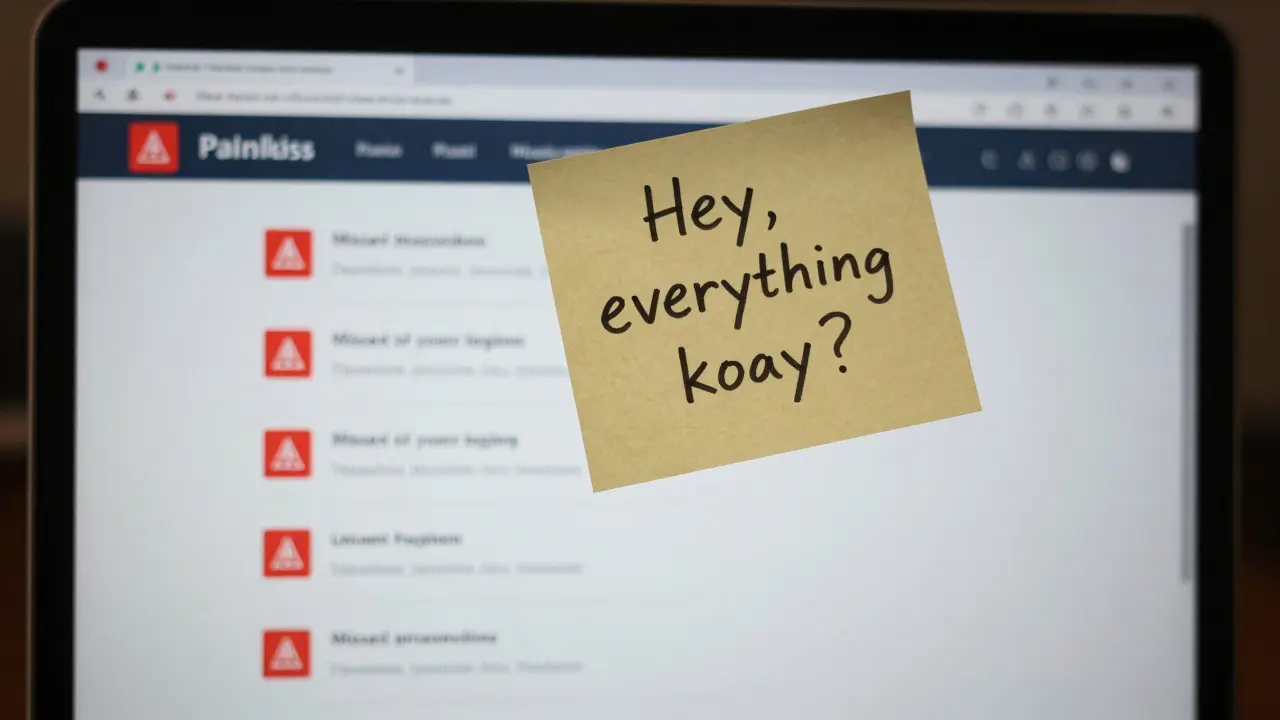
Reach out to them. Not with a stern "Where have you been?" but with a simple, "Hey, I noticed you haven’t been around lately. Everything okay? I’m here if you need help."
Many students won’t ask for help unless you ask first. Especially if they’re working full-time, caring for family, or dealing with anxiety. A short message can bring them back.
Be human, not perfect
Students don’t expect you to be a robot. They expect you to be real.
Share a quick story. "I struggled with this concept too when I was learning it." Admit when you don’t know something. "I’m not sure-let me check and get back to you."
Use humor. A meme in the forum. A funny typo in a lecture slide. A voice note that cuts off mid-sentence. These things make you relatable.
When students see you as a person, not just a grade-giver, they trust you. And trust is what keeps them showing up.
Measure what matters
Don’t just track completion rates. Track connection.
At the end of each module, ask one question:
- Did you feel heard this week?
- Did you get help when you needed it?
- Did you feel like you belonged in this course?
Use a simple 1-5 scale. Don’t overcomplicate it. Review the results every week. If three or more students rate "2" or below on any question, dig in. What’s going wrong?
These aren’t just surveys-they’re early warning signs. Fix small issues before they become dropouts.
What happens when you get it right
When communication works, you’ll notice it.
Students start replying to each other without being asked. They share resources. They ask deeper questions. They say things like, "I didn’t think I could do this, but I did."
And when they finish the course, they don’t just leave. They come back. They refer friends. They leave reviews that say, "This instructor actually cared."
That’s not magic. That’s communication done right.

Comments (10)
TIARA SUKMA UTAMA December 23 2025
I just replied to my student at 11:30 PM because they asked about the deadline. They texted back "thank u u saved me." Worth it.Jasmine Oey December 24 2025
OMG I literally cried reading this. Like, I was this student who got ignored for 3 days and almost quit. Then my prof sent a voice note saying "you’re not failing, you’re just tired." I finished the course and got an A+. This is ART.Marissa Martin December 25 2025
I think the part about silent students is the most important. I’ve seen so many just... disappear. And no one notices until it’s too late. It’s not laziness. It’s fear.James Winter December 25 2025
This is why American online schools are trash. In Canada we just call the student. No fluff. If they don’t answer, they’re done. Simple.Aimee Quenneville December 26 2025
So... you’re telling me we should actually *care*? Like, as humans? With feelings? And stuff? 😱 I’m shocked. Also, I love it.Cynthia Lamont December 27 2025
You said "use the sandwich method" but didn’t define it properly. It’s "positive-negative-positive" not "start with what worked, then one thing to fix, then encouragement." You’re missing the structure. Also, "meme in the forum" is not pedagogical. This whole thing is a mess.Kirk Doherty December 28 2025
I just send a text when they don’t log in. Works fine.Dmitriy Fedoseff December 29 2025
In my village in Siberia, we didn’t have internet. We walked 12km to the schoolhouse. We didn’t need voice notes or memes. We had silence. We had patience. We had each other. Maybe the problem isn’t the tools. Maybe it’s the expectation that learning should be entertaining.Meghan O'Connor December 31 2025
You say "survey them on day one" but you don’t mention GDPR compliance. Also, "1-5 scale" is statistically invalid without standard deviation reporting. This article is dangerously unscientific.Morgan ODonnell December 31 2025
I used to think I had to be the expert. Then I started saying "I don’t know, let’s find out together" and the class turned into this weird beautiful study group. Best thing I ever did.